Mastering the Art of Tree Pruning: A Comprehensive Guide for Healthy Landscapes
Mature, healthy trees are undeniably among the most valuable and cherished assets on any residential property, often representing decades of growth and natural beauty. A fifty-year-old tree, with its established canopy and deep roots, is not merely a plant but a living legacy that significantly enhances property value, provides shade, supports local ecosystems, and contributes to the overall aesthetic appeal of a home. Such majestic specimens cannot be easily or quickly replaced, underscoring the critical importance of their diligent care and maintenance. Despite their impressive size and apparent strength, trees are living organisms that require ongoing attention to thrive, remain healthy, and maintain their best appearance. Among the various aspects of tree care, pruning stands out as a crucial practice, essential for fostering robust growth, ensuring structural integrity, and mitigating potential hazards.
However, successful tree pruning is far from a one-size-fits-all activity. The optimal timing and specific techniques for pruning can vary considerably based on a tree’s species, age, current health, and even its geographical location. Understanding these nuances is key to effective tree care. This comprehensive guide, enriched with expert advice from two renowned horticultural professionals, will illuminate the best pruning times for various types of trees, helping you nurture your landscape investments for years to come.
Why Prune Trees? Unlocking Health, Safety, and Beauty
While a natural forest ecosystem largely manages itself, the trees within our cultivated landscapes often benefit immensely from regular, thoughtful intervention. As Suzanne DeJohn, a respected horticulturalist at KidsGardening.org, aptly puts it, “In the woods, trees do fine without us. In our landscapes, some trees benefit from regular pruning.” Pruning serves a multitude of vital purposes, ranging from preserving a tree’s health and controlling its shape to ensuring the safety of your property and family.
Without proper pruning, trees can quickly become overcrowded, leading to a dense canopy that restricts airflow and creates an ideal environment for the development and spread of fungal diseases. Poor air circulation within the crown can also make trees more susceptible to pest infestations. Beyond health, unchecked growth can result in an unkempt appearance, diminishing the tree’s aesthetic contribution to your landscape. More critically, pruning proactively removes dangerous dead, dying, or overhanging branches that pose a significant risk of falling, potentially causing severe damage to homes, vehicles, fences, or even personal injury. Furthermore, for those cultivating fruit trees, consistent pruning is non-negotiable, as failure to prune can lead to significantly reduced fruit production, smaller and lower-quality yields, and increased susceptibility to various tree diseases. Strategic pruning directs the tree’s energy towards producing high-quality fruit rather than excessive foliage, ensuring a bountiful harvest.
Essential Tools for Effective Tree Pruning
Approaching tree pruning with the right tools is paramount for both effectiveness and safety. Using the correct equipment ensures clean cuts that heal quickly, minimizing stress on the tree and reducing the risk of disease entry. Always prioritize safety by wearing appropriate gear and selecting tools suited for the task at hand.
- Safety Gear: Before making any cuts, equip yourself with essential safety gear. This includes durable safety glasses or goggles to protect your eyes from flying debris and protective gloves to shield your hands from thorns, splinters, and blisters. For larger pruning jobs, consider a hard hat and sturdy, non-slip footwear.
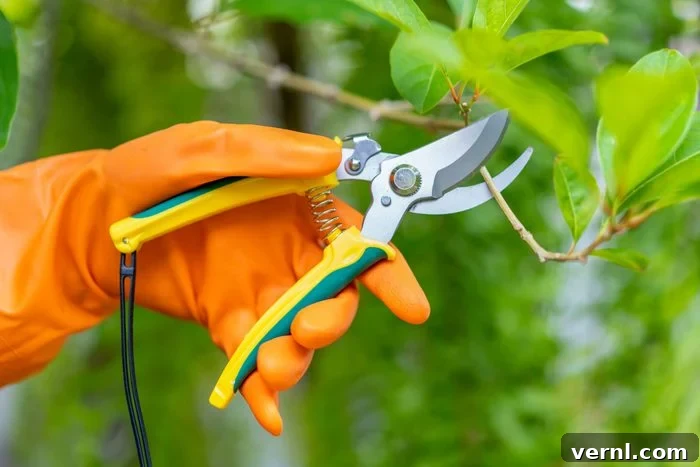
- Bypass Pruners/Pruning Shears: These hand-held tools are your go-to for precision work on smaller branches. Ideal for trimming suckers, watersprouts, and thin branches up to 3/4 inch thick, bypass pruners make clean, scissor-like cuts that promote quick healing. Always ensure blades are sharp and clean to prevent tearing.
- Loppers: Featuring longer handles, loppers provide enhanced leverage, making them perfect for cutting thicker branches up to 2 inches in diameter. The extended reach also allows you to access branches that might be just out of arm’s reach. Like pruners, loppers should be kept sharp and clean for optimal performance.
- Pruning Saw: For branches thicker than 2 inches, a specialized pruning saw is indispensable. Available with curved or straight blades, these saws are designed to cut through larger wood efficiently and cleanly. Choose a saw with sharp, aggressive teeth that can handle green wood without binding. Ensure a stable stance and firm grip when using a pruning saw.
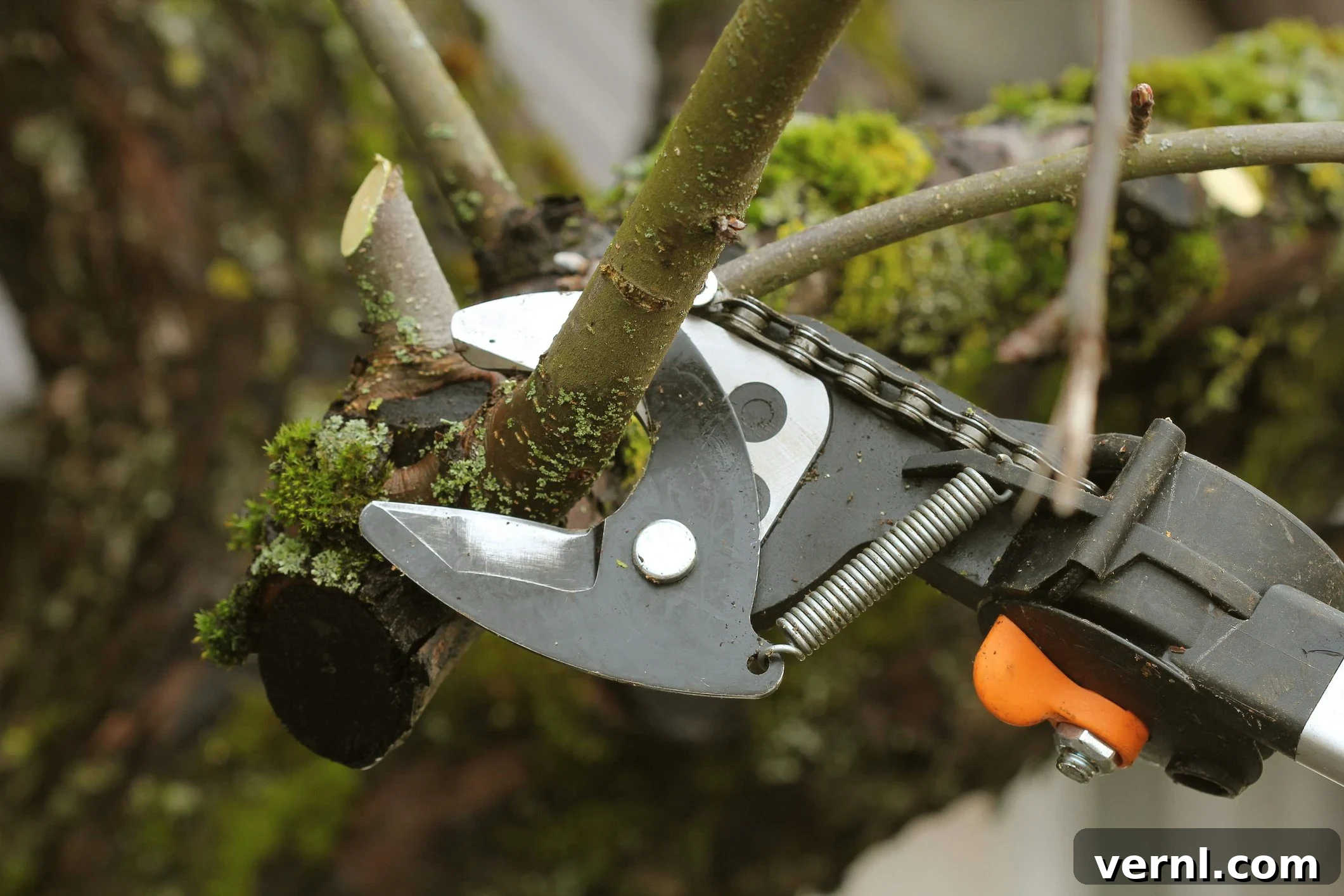
- Pole Pruner: “Pole pruners help reach higher branches safely from the ground,” advises Suzanne DeJohn. These versatile tools feature an extendable pole equipped with either a pruning saw blade or a set of shears at the end. They allow you to trim branches that are too high to reach with loppers or hand saws, significantly reducing the need for ladders and enhancing safety. Always be aware of overhead power lines when using a pole pruner.
When To Prune Most Trees: Timing for Optimal Health
The timing of pruning is arguably as important as the act itself, heavily influencing a tree’s recovery, growth, and overall health. For the vast majority of trees, including deciduous, evergreen, and most fruit trees, the optimal window for major pruning is during their dormant season, which typically spans from late winter to early spring. This period, often referred to as “dormant pruning,” offers several distinct advantages.
During dormancy, trees are not actively growing, meaning they experience significantly less stress from pruning wounds. Their energy reserves are directed towards root development rather than foliage production, allowing them to recover more efficiently once the growing season begins. Furthermore, with deciduous trees, the absence of leaves provides an unobstructed view of the tree’s full structure, making it easier to identify crossing branches, weak limbs, and areas needing thinning or shaping. The risk of disease transmission is also lower during cooler, drier dormant periods, as many pathogens are less active.
Deciduous Trees: Shaping and Structural Integrity
For deciduous trees, late winter or early spring dormant pruning is ideal for structural work. Focus on removing crowded or crossing branches that rub against each other, as this friction can create wounds that become entry points for pests and diseases. Thinning the canopy improves air circulation and allows more sunlight to penetrate, which benefits lower branches and the undergrowth. A crucial guideline from Samuel Schmitz, a horticulture professor at Triton College, states: “Never remove more than 20 to 25 percent of branches in one season.” Exceeding this limit can severely stress the tree and hinder its recovery. For young deciduous trees, pruning offshoots and secondary trunks is vital to encourage the development of a strong, central main trunk, which forms the tree’s permanent structure and ensures its stability for decades to come.
Evergreen Trees: Minimal Intervention, Maximum Health
Evergreen trees, which retain their foliage year-round, generally require less aggressive pruning than their deciduous counterparts. For most evergreens, pruning primarily consists of removing any dead, diseased, or damaged branches. Light dormant pruning over several seasons can be used for shaping or to maintain a desired size, but heavy pruning should typically be avoided, especially on conifers, as they often do not readily regenerate growth from old wood. The goal with evergreens is usually to preserve their natural form while ensuring their health.
Avoiding Fall Pruning: A Critical Caution
It is generally advisable to avoid significant pruning of any tree in the fall. Pruning during this time can stimulate a flush of new, tender growth that lacks the necessary hardiness to survive the harsh conditions of winter, leading to dieback and added stress on the tree. Moreover, fresh pruning wounds created in the fall remain open and vulnerable for an extended period, increasing the tree’s susceptibility to diseases and insect infestations that are still active before the deep cold sets in. However, one important exception to this rule is the removal of dead or diseased wood. “It’s fine to remove dead or diseased wood at any time,” Suzanne DeJohn clarifies, as these branches are already compromised and their removal prevents the spread of disease or eliminates a safety hazard regardless of the season.
When to Prune Fruit Trees for Abundant Harvests
For fruit trees, precise timing is essential for maximizing fruit production and maintaining tree health. “Most fruit trees should be pruned in late winter, after the coldest temperatures have passed but before the buds begin to swell and growth begins,” advises Suzanne DeJohn. This timing allows the tree to direct its energy towards fruit production rather than vegetative growth. Winter pruning helps establish a strong framework, removes unproductive wood, and encourages the formation of fruiting spurs. While winter is for structural pruning, fruit trees can also benefit from a light pruning in summer. This summer pruning helps to manage vigor, improve light penetration to ripening fruit, enhance air circulation, and can even contribute to better fruit color and quality by removing shaded leaves.
When to Prune Flowering Trees: Protecting Future Blooms
The timing for pruning flowering trees largely depends on whether they bloom on “old wood” (last season’s growth) or “new wood” (current season’s growth). This distinction is critical to avoid inadvertently removing the very buds that produce the next spectacular display of flowers.
For spring-blooming trees, which typically produce flowers on old wood, the rule is to prune them right after they finish flowering. “If you wait too long to prune, you’ll remove the buds that produce the next year’s flowers,” Suzanne DeJohn explains. Pruning immediately after flowering gives the tree ample time to develop new growth and set buds for the following spring, without sacrificing the current year’s floral show. Examples include magnolias, dogwoods, and many ornamental cherries.
Conversely, summer-blooming trees, which produce their flowers on the current season’s growth, can be pruned in late winter to early spring before new growth commences. “They produce their flowers on the current season’s growth, so you won’t be removing any flower buds at that time,” DeJohn notes. This allows you to shape the tree and remove any unwanted branches, knowing that the new growth will soon follow and produce an abundance of summer blooms. Examples include crape myrtles, roses, and some varieties of hydrangeas.
How Often to Prune Most Trees: A Rhythmic Approach to Tree Care
The frequency of tree pruning is not a static measure but rather a dynamic decision influenced by the tree’s age, species, growth rate, and desired aesthetic outcome. While there isn’t a universally rigid schedule, a good general rule of thumb for most established deciduous trees is once every three to five years. This periodic pruning helps maintain their structure, health, and appearance without over-stressing the tree.
“Larger trees may need to be pruned only as needed to remove dead branches or those that pose a hazard,” DeJohn states, emphasizing that mature, well-established trees often require less frequent intervention for purely aesthetic purposes. Their natural growth patterns are typically more stable. For such trees, pruning becomes more about safety and health than extensive shaping. Established evergreens, particularly conifers, frequently shed their dead branches naturally and generally require even less frequent pruning, often only for health or minor shaping. When in doubt, or for very large, valuable, or hazard-prone trees, consider consulting with a certified arborist. These professionals can provide tree-specific pruning recommendations tailored to your tree’s unique needs, ensuring its long-term vitality and safety.
How Often to Prune Fruit Trees for Consistent Yields
Fruit trees are a notable exception to the less-frequent pruning rule, benefiting significantly from annual pruning. A thorough pruning session in late winter or early spring is crucial to remove dead, diseased, or crossing branches, as well as water sprouts and suckers that divert energy from fruit production. This annual structural pruning encourages new growth, which is often where the best fruit will form, and helps maintain an open canopy for optimal light penetration and air circulation, both vital for fruit development and disease prevention. Beyond the main winter pruning, a light pruning in the summer is also beneficial for shaping the tree, thinning excessive growth, and improving the quality and color of ripening fruit. “Winter is best to do any structural or hard pruning,” Samuel Schmitz clarifies, underscoring its importance for the tree’s foundational framework. “Training and minor pruning can happen year-round,” allowing for ongoing adjustments and maintenance to support fruit production and tree vigor.
How Often to Prune Flowering Trees for Continuous Beauty
The pruning frequency for flowering trees also varies with their age and specific bloom characteristics. When young, flowering trees greatly benefit from annual pruning. “Young trees benefit from pruning to help guide their growth to the shape we desire,” DeJohn explains. This early training establishes a strong branch structure, encourages desirable growth habits, and can prevent future problems by addressing structural weaknesses early on. As flowering trees become established, the frequency of pruning can decrease. At this stage, they are typically pruned when necessary to maintain their desired shape, thin out crowded or crossing branches that could hinder air circulation or create rubbing wounds, or to remove spent blooms (deadheading) to encourage further flowering for certain species. The goal for established flowering trees is to preserve their aesthetic form and promote abundant, healthy blooms each season.
Your Year-Round Pruning Timeline: A Seasonal Guide
Understanding a general pruning timeline throughout the year can help you plan your tree care activities effectively and ensure your trees receive the right attention at the right time. Adhering to these seasonal guidelines will promote healthier, stronger, and more aesthetically pleasing trees.
- Late December to February (Late Winter/Early Spring): The Dormant Pruning Window
This is the prime time for major pruning for most trees. During these months, while trees are dormant, focus on removing dead, diseased, or damaged branches that can pose hazards or harbor pathogens. It’s also an excellent period for thinning dense canopies to improve air circulation and light penetration, which is vital for overall tree health. Young trees can undergo structural pruning to establish a strong central leader and scaffold branches, guiding their growth. This is also the ideal time to prune summer-flowering trees, as they produce blooms on new wood, ensuring you don’t sacrifice future flowers. - March to May (Early to Mid-Spring): Post-Bloom Care
For spring-flowering trees, the rule is simple: prune them right after they finish their blooming cycle. This ensures that you enjoy their spectacular floral display before making any cuts. Pruning at this time allows the tree to recover and set new flower buds for the following year on its “old wood” without interruption. Avoid pruning too late in this window if you have spring bloomers, as you risk removing next year’s potential flowers. - Late Spring to Early Summer: Light Maintenance and Training
This period is best reserved for light, aesthetic pruning, and minor maintenance tasks. It’s an opportune time to remove suckers (new shoots emerging from the base of the tree or roots) and watersprouts (vigorous upright shoots on branches), which divert energy from the main tree and fruit production. This type of pruning is minimal and aims to refine the tree’s shape or address very specific issues without causing significant stress. Any dead or diseased wood can also be removed during this time if spotted. - Hot Summer Months Through Fall: A Time to Avoid Major Pruning
Generally, it is crucial to avoid significant pruning during the hot summer months and throughout the fall. Trees are under considerable stress during summer heat and drought, and pruning wounds can be slow to heal, leaving them vulnerable to pests and diseases that are highly active in warmer temperatures. Fall pruning is particularly discouraged as it can stimulate a flush of tender new growth that won’t have time to harden off before winter, leading to potential dieback and further stress on the tree. The only exception during these periods is the immediate removal of dead, diseased, or dangerously broken branches, which should be addressed promptly regardless of the season to prevent further damage or disease spread.
About the Experts
- Samuel Schmitz is a full-time faculty instructor in the Horticulture Department at Triton College in Illinois. He brings extensive practical experience to his academic role, having formerly served as Ground Operations Supervisor for Ball Horticultural Company for 16 years. His expertise encompasses a broad range of horticultural practices, including advanced tree care.
- Suzanne DeJohn is a highly respected horticulturalist at KidsGardening.org, a national non-profit organization dedicated to fostering youth garden programs and gardening education since its inception in 1982. Prior to her current role, Suzanne contributed her knowledge and passion to the non-profit National Gardening Association’s Education Department as a prolific writer and enthusiastic program promoter.