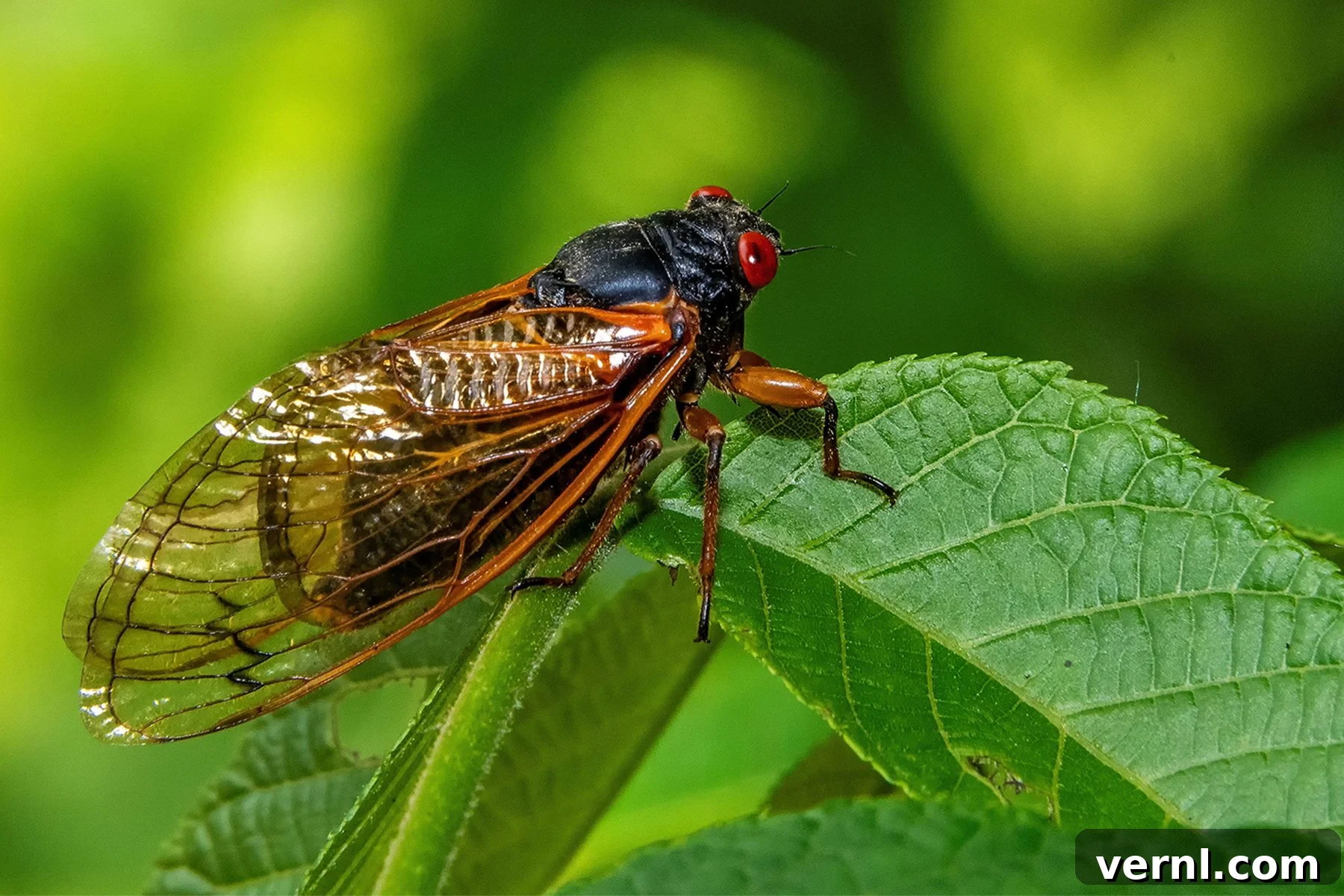
The Enigmatic Cicada: Understanding Their Life, Impact, and Ecological Significance
The thought of millions of insects emerging simultaneously can easily evoke a wince, especially when those insects are cicadas. Their sheer numbers, sometimes reaching into the millions per acre, create an almost deafening, rhythmic buzzing chorus that defines the springtime soundscape for many regions. It’s perfectly natural for questions like, “Will cicadas eat my plants?” to immediately spring to mind amidst such a spectacle. Yet, beyond their overwhelming presence and distinctive sound, cicadas are remarkably fascinating creatures that play crucial and often misunderstood roles within our ecosystems.
“Cicadas truly inspire a sense of wonder in our world!” exclaims Jennifer Hopwood, a Senior Pollinator Conservation Specialist at the Xerces Society for Invertebrate Conservation. “They spend the vast majority of their lives hidden underground, quietly feeding next to the roots of the same plants. What’s truly remarkable is their ability to somehow track the passing years, timing their synchronized emergence with other periodical cicadas in the region. This strategy allows them to overwhelm predators through sheer numbers, ensuring the survival of their species. They are, without a doubt, amazing little critters.”
This comprehensive guide offers an in-depth look at cicadas, exploring both their potential downsides and their many ecological benefits. We’ll address common concerns, such as whether they pose a threat to your plants, and provide practical advice on how to effectively protect your trees during a major emergence event.
What Exactly is a Cicada?
Cicadas are distinctive insects characterized by their broad, robust bodies and impressive wingspans, which can stretch up to three-and-a-half inches across. Shartrina White, Vice President of Education at the Butterfly Pavilion, highlights their most notable features: “They are easily recognized by their prominent, widely set eyes, their transparent, intricately veined wings, and, of course, the males’ remarkably loud and distinctive song.”
These fascinating creatures belong to the order Hemiptera, a diverse group commonly known as “true bugs.” Other members of this order include familiar garden inhabitants like aphids, as well as planthoppers and assassin bugs. A common characteristic shared by all insects in the Hemiptera order is their specialized piercing and sucking mouthparts, which they use to feed on plant fluids. Unlike chewing insects, cicadas do not consume plant tissue; rather, they tap into the xylem of trees to draw out sap.
The iconic sound produced by male cicadas is another unique aspect of their biology. This isn’t just any buzz; it’s a complex mating call generated by specialized organs called tymbals, located on their abdomen. These tymbals vibrate at incredibly high speeds, producing the characteristic chorus that can reach astounding decibel levels, rivaling the sound of a lawnmower or even a jet engine from a distance. Each species of cicada has its own distinct song, which helps females identify suitable mates of their own kind, ensuring successful reproduction amidst the cacophony.
The Cicada Lifecycle: When Do They Emerge?
The timing of cicada emergence is a captivating aspect of their biology and varies significantly depending on the species. While some cicadas, known as “annual” or “dog-day” cicadas, appear every summer, typically between July and September, it is the “periodical” cicadas that garner the most attention due to their dramatic, synchronized appearances. These remarkable insects adhere to strict subterranean schedules, emerging en masse every 13 or 17 years, usually between April and June.
The exact trigger for their mass emergence is a fascinating natural phenomenon tied closely to environmental cues. Daniel A. Herms, Vice President of Research and Development at The Davey Tree Expert Company, explains, “Adult cicadas are prompted to emerge when the soil temperature at a depth of about eight inches consistently reaches approximately 64°F.” This precise temperature threshold acts as a crucial signal, orchestrating the synchronized ascent of millions of nymphs from their underground tunnels. This incredible biological clock, combined with environmental triggers, ensures that entire broods emerge together, a survival strategy designed to overwhelm predators.
The cicada lifecycle begins when adult females lay their eggs in the tender twigs of trees. Once the eggs hatch, tiny nymphs drop to the ground and burrow into the soil. Here, they will spend the vast majority of their lives – anywhere from two to five years for annual species, and an astounding 13 or 17 years for periodical cicadas. During this lengthy subterranean phase, they feed by sucking nutrient-rich xylem fluid from tree roots. This prolonged nymph stage is a testament to their patience and the intricate timing mechanisms that govern their lives. When the time is right and the soil conditions are optimal, they tunnel their way to the surface, shed their exoskeletons in a final molt, and emerge as winged adults, ready to mate and continue their ancient cycle.
What Do Cicadas Eat? Understanding Their Feeding Habits
Understanding what cicadas eat is key to alleviating concerns about their impact on your garden. Cicadas feed in two distinct stages of their life: as nymphs underground and as adults above ground.
The immature, underground stage of cicadas, known as nymphs, subsists exclusively on fluids from tree roots. They use their specialized piercing-sucking mouthparts to tap into the xylem, extracting sap. While this might sound concerning, the feeding of cicada nymphs rarely poses a significant threat to the health of mature, established trees. Trees are generally robust enough to withstand this minimal drain on their resources over many years.
Adult cicadas also feed, primarily on sap, but their diet shifts to the above-ground parts of plants. They will suck sap from the tender twigs, young branches, and deciduous shrubs. Again, it’s important to remember that they are not chewing or consuming plant tissue. Instead, they are drawing out fluids, much like their nymph counterparts. The primary purpose of adult feeding is to sustain themselves during their relatively short reproductive period, rather than to cause widespread destruction to vegetation.
While their feeding can sometimes cause minor cosmetic damage or stress to very young or already vulnerable plants, healthy, mature trees are typically well-equipped to handle the adult cicadas’ feeding activity without long-term harm. Their feeding habits are part of a natural process and are not geared towards devastating plant life, unlike some other insect pests.
Are Cicadas a Threat to Your Garden and Landscape Plants?
The answer to whether cicadas threaten your garden and landscape plants is nuanced: possibly, but usually not severely, especially for established plants. The most noticeable impact cicadas have on plants is related to their egg-laying process, known as ovipositing.
During ovipositing, female cicadas create small, slit-like holes in small branches and twigs, into which they deposit their eggs. This activity can cause noticeable damage, particularly to young deciduous trees, newly planted saplings, and tender shrubs. Daniel A. Herms describes the most visible symptom: “It can kill the small twigs and leaves at the end of branches, causing flagging of foliage in the canopy.” This “flagging” refers to the sudden wilting and browning of leaves on affected branch tips, which can indeed look alarming and create cosmetic damage, making parts of the tree appear scorched or dead.
However, it’s crucial to put this damage into perspective. Herms clarifies, “Tufts of dead foliage may appear alarming, but this light pruning of a relatively small number of twigs has minimal impact on healthy, mature plants.” Most established trees can easily recover from flagging, often by shedding the damaged twigs and regrowing new foliage. The primary concern is for very young, immature trees that have not yet built up sufficient reserves to withstand such stress, as extensive damage could potentially stunt their growth or, in rare cases, lead to their demise.
Fortunately, cicadas typically leave mature trees largely unharmed, and they pose virtually no threat to most herbaceous plants, including garden vegetables and fruit-bearing plants. They also do not lay eggs in grasses, wildflowers, or most shrubs. Furthermore, the nymphs feeding underground on tree roots rarely pose any significant threat to the long-term health of their host plants, as the tree can typically compensate for the minor loss of sap.
In summary, while the visual impact of cicada damage can be striking, it is generally superficial for most healthy, mature plants. Proactive protection measures are primarily recommended for vulnerable young trees and saplings.
Effective Strategies to Protect Your Trees from Cicadas
While cicadas are not generally a severe threat, especially to mature plants, taking preventative measures can significantly reduce potential damage to vulnerable trees, particularly during a major periodical cicada emergence. Here are effective strategies to safeguard your landscape:
- Cover Small and Newly Planted Trees: Before an expected emergence, the most effective physical barrier for young and newly planted trees is fine mesh netting or cheesecloth. Ensure the netting is securely draped over the entire tree, from the top of the canopy down to the ground. Critically, secure the netting firmly around the tree trunk or base to prevent cicadas from crawling up from the ground into the branches. This physical barrier will protect tender twigs from female cicadas seeking places to lay their eggs.
- Avoid Insecticides: Resist the urge to use insecticides to combat cicadas. Marc Mayer, TruGreen’s Director of Technical Operations, advises, “Say no to insecticides, as they can make matters worse by getting rid of the cicadas’ natural predators.” Furthermore, insecticides are largely ineffective against the sheer numbers of emerging cicadas and can harm beneficial insects, pollinators, and even local wildlife that prey on cicadas. The chemical residue can also be detrimental to the environment.
- Gentle Water Spray for Deterrence: If you notice cicadas congregating in large numbers on specific plants and are concerned about feeding or egg-laying, a simple and environmentally friendly solution is to spray them with water from a garden hose. Mayer suggests, “If you see cicadas setting up camp on your plants, spray water from a garden hose on them to deter the critters from eating your plants.” This gentle spray can dislodge them and encourage them to move elsewhere without causing harm.
- Cover Outdoor Pools: While not a plant protection measure, it’s wise to keep outdoor pools covered during an emergence. Large numbers of cicadas can fall into pools, potentially clogging filters and affecting water quality.
- Time New Plantings Wisely: If a major periodical cicada emergence is anticipated in your area, consider delaying the planting of new trees and shrubs until after the emergence has concluded. Avoiding planting in the year prior to or during a mass emergence will protect sensitive young plants from the most significant risk of egg-laying damage.
- Post-Emergence Pruning: Once the egg-laying period is complete, usually within a few weeks, inspect your trees. Herms recommends, “Once egg-laying is complete, usually within a few weeks, prune away branches that appear significantly damaged to encourage new growth.” Removing heavily flagged or dead twigs can help the tree recover more quickly and maintain its aesthetic appeal.
Ultimately, it’s important to remember that cicada emergences are temporary natural events. As Herms aptly puts it, “Also, remember that the benefits cicadas provide outweigh the potential for harm.”
The Unsung Benefits of Cicadas in Our Ecosystem
While the temporary nuisance of cicada emergence might overshadow their contributions for some, these insects provide numerous vital benefits to our local ecosystems, playing a much larger and more positive role than many realize.
- A Critical Food Source: One of the most immediate and significant benefits of a mass cicada emergence is the massive infusion of protein into the food web. “Cicadas are food for an incredible array of animals,” notes Jennifer Hopwood. “This includes countless species of birds, chipmunks, foxes, raccoons, squirrels, mice, and other insects like the cicada killer wasp – a gorgeous, large wasp that carries cicadas into their underground nest to provide for their young.” This abundant, easily accessible food source provides a crucial boost to populations of various predators, helping them thrive and sustain their young. It’s a natural feast that rebalances the local food chain.
- Natural Soil Aerators: The extensive tunneling conducted by cicada nymphs during their subterranean lives, and the exit holes created by emerging adults, act as a natural form of soil aeration. Marc Mayer explains, “Cicadas leave exit holes in the ground after emerging, which can provide the same benefits as aeration by creating an easier path for nutrients and water to enter the soil.” This improves soil structure, enhances water infiltration, reduces runoff, and allows for better oxygen exchange in the soil, which is vital for healthy root growth and the activity of beneficial soil microorganisms.
- Nutrient Cycling and Soil Enrichment: Once adult cicadas have completed their reproductive cycle, their bodies fall to the ground and decompose. This decomposition process returns a significant amount of vital nutrients, such as nitrogen and phosphorus, back into the soil. This natural fertilization enriches the earth, providing essential sustenance for plants and contributing to overall soil health and fertility, especially after such a large-scale biomass event.
- Educational and Scientific Opportunities: Cicada emergences offer unparalleled opportunities for education and scientific study. Hopwood shares, “My kids enjoy picking them up off of tree trunks and setting them on their fingers to watch. Kids also enjoy looking out for the shells they leave behind on trees, the exoskeleton they shed when they transition from nymphs to the winged adults that we are most familiar with.” These events captivate curiosity, encouraging people of all ages to learn about insect lifecycles, ecology, and the wonders of the natural world. Scientists, too, gain invaluable insights into population dynamics, climate impacts, and evolutionary strategies from these unique insect cycles.
Far from being mere pests, cicadas are integral components of healthy ecosystems, providing essential services that contribute to the overall balance and vitality of our natural world.
Common Questions About Cicadas (FAQs)
How long do cicadas live?
The lifespan of a cicada varies significantly depending on whether it’s an annual or periodical species. Cicadas spend the overwhelming majority of their lives underground as nymphs, which can range from two to five years for annual species. For the famous periodical cicadas, this subterranean stage can last an incredible 13 to 17 years. Once they emerge from the ground, the adult cicadas have a much shorter lifespan, typically living only two to six weeks. During this brief adult phase, their primary purpose is to mate and lay eggs in trees, thus ensuring the continuation of their species. Shartrina White elaborates, “After six to 10 weeks, cicada nymphs emerge from the eggs and immediately fall to the ground. They then burrow underground and attach themselves to tree roots. Their emergence serves as a reminder of the natural cycle and resilience.”
Can cicadas bite humans?
No, cicadas cannot bite humans. Daniel A. Herms clarifies, “Cicadas have piercing and sucking mouthparts; they don’t have the ability to bite.” Their mouthparts are designed solely for drawing sap from plants, not for biting or defending themselves against larger creatures like humans. While they might occasionally mistake a human for a plant and attempt to “taste” with their proboscis, this sensation is more like a harmless prick or poke and causes no pain or injury.
Are cicadas harmful?
No, cicadas are not harmful to humans or pets. Jennifer Hopwood assures us, “Cicadas do not bite or sting and are harmless to handle.” They are not venomous, nor do they carry diseases that can be transmitted to humans. Their legs do possess small, velcro-like projections that help them grip onto tree bark, and these might feel a bit ticklish if a cicada walks on your skin, but they cause no harm. The primary “harm” they cause is cosmetic damage to young trees during egg-laying, which is temporary and rarely fatal for established plants.
Are cicadas and locusts the same?
No, cicadas and locusts are distinct insects and are not the same. They belong to entirely different orders of insects, differing significantly in their anatomy, behavior, lifecycle, and impact on the environment. Cicadas are part of the order Hemiptera (true bugs), known for their piercing-sucking mouthparts and lengthy underground nymphal stages. Locusts, on the other hand, are a specific type of grasshopper belonging to the order Orthoptera, characterized by chewing mouthparts and a lifecycle that includes egg, nymph, and adult stages, but without the prolonged subterranean period of cicadas.
Hopwood explains the key distinction in behavior: “Locusts refer to certain species of grasshoppers that form swarms, large groups that fly around to find vegetation to consume.” These swarms can be incredibly destructive, consuming vast quantities of crops and causing widespread agricultural devastation. Cicadas, while numerous, do not swarm in the same destructive manner, nor do they consume plant tissue. Their impact on plants is generally limited to sap feeding and egg-laying damage, which is typically far less severe than the wholesale consumption of vegetation by locust swarms. Therefore, while both can appear in large numbers, their ecological roles and potential for harm are vastly different.
What do cicadas sound like and why do they sing?
Cicadas are renowned for their incredibly loud and distinctive songs, which are produced exclusively by the males. The sound varies by species, ranging from a constant, high-pitched buzz to rhythmic chirps, clicks, and whines. This sound is generated by specialized organs called “tymbals,” located on either side of their abdomen. These tymbals are ribbed membranes that buckle rapidly when vibrated by powerful muscles, producing a series of clicks that resonate through the cicada’s hollow abdominal cavity, amplifying the sound. The primary purpose of this intense singing is to attract mates. Each species has a unique song, ensuring that females are drawn to males of their own kind for reproduction. The collective chorus of millions of cicadas can reach decibel levels exceeding 90-100 dB, comparable to a lawnmower or heavy traffic, making them one of the loudest insects in the world.
Meet Our Insect Experts
Shartrina White is the Vice President of Education at the Butterfly Pavilion in Westminster, Colorado. With nearly 25 years of experience, she guides a dynamic team of educators, interpreters, and volunteers in developing impactful curriculum and outreach initiatives. The Butterfly Pavilion holds the distinction of being the first standalone non-profit insect zoo in the United States.
Jennifer Hopwood serves as the Senior Pollinator Conservation Specialist at the Xerces Society for Invertebrate Conservation. In this role, she develops comprehensive training programs focused on beneficial insect management and landscape restoration. Ms. Hopwood is also a distinguished co-author of several highly regarded books, including Farming with Native Beneficial Insects and Farming with Soil Life.
Daniel A. Herms holds the position of Vice President of Research and Development at The Davey Tree Expert Company. He earned his Ph.D. in entomology and dedicated 21 years of his career as a professor of forest and shade tree entomology within the Department of Entomology at The Ohio State University.
Marc Mayer brings over 28 years of extensive experience in the horticulture and lawn care industry. He currently serves as TruGreen’s esteemed Director of Technical Operations, overseeing crucial aspects of their service delivery.