
Spider Web Types: A Guide to Identifying Webs in Your Home
Spotting a spider web in your home, whether it’s in a corner of your porch or on the kitchen ceiling, can be a bit unsettling for many. However, before you reach for a shoe, it’s important to remember that most spiders found in homes and yards across the US are harmless. In fact, many are beneficial, acting as natural pest control by preying on other insects.
This guide will help you understand the common types of spider webs and the spiders that create them. By learning more about these fascinating creatures, you can hopefully gain a new appreciation for the diverse world of spiders and the role they play in our environment.
Can You Tell What Spiders You Have Based On a Spider Web?
While examining a spider web can provide clues, it’s generally difficult to pinpoint the exact spider species just by its web. Many spider species construct similar webs, and web designs can vary based on environmental factors. However, the type of web can help you narrow down the possibilities, particularly when trying to determine if you might be dealing with a potentially dangerous species like a recluse spider or a black widow.
If you’re concerned about identifying a spider in your home, consulting a professional entomologist is the most reliable way to get an accurate species identification. They can also offer expert advice on safe spider control methods, if necessary. It’s also good to remember that most spiders are timid creatures and only bite if they feel trapped or threatened.
Types of Spider Webs
Let’s explore some of the most common types of spider webs you might find around your home and yard in the US. These descriptions, provided by experts in the field, will help you better understand the architecture of these intricate structures.
1. Orb Webs
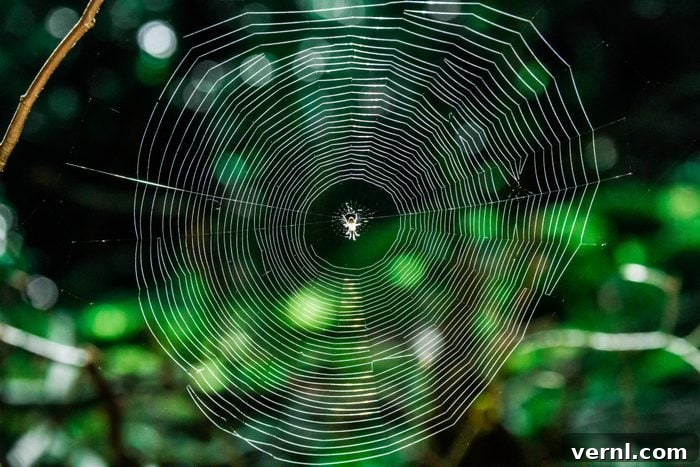
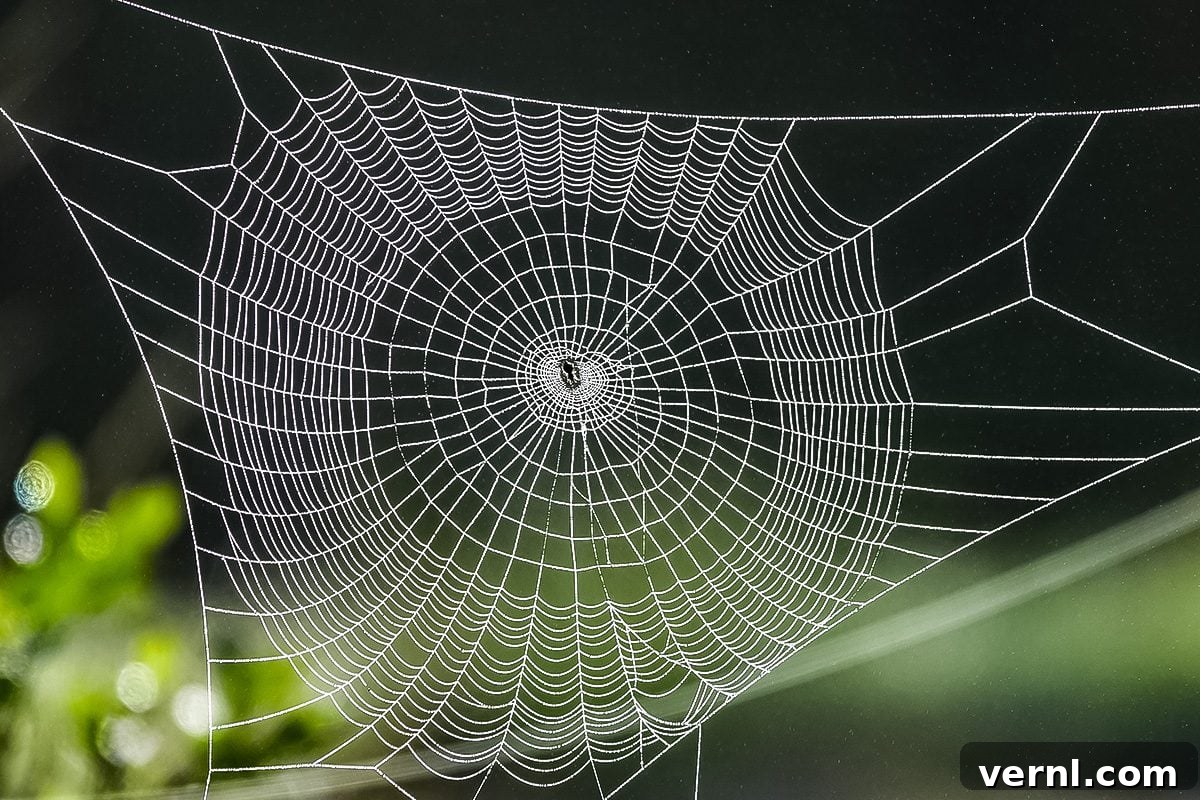
The classic image of a spider web – the spiral-shaped design – is an orb web. These webs are characterized by their radial silk lines that act as spokes and connecting threads that create the circular or oval shape. Many harmless orb-weaver spiders, belonging to the Araneidae family, create this type of web.
Orb webs are typically found outdoors, often near porch lights, windows, between buildings, or on plants. They are usually vertical, and the spider often hangs face down in the center, waiting for prey. These spiders often dismantle and rebuild their webs each night to maximize their hunting efficiency, so you might not always see a spider present during the day.
2. Cobwebs or Tangle Webs
Cobwebs, or tangle webs, are among the most frequently encountered web types in and around homes. These webs have a chaotic, three-dimensional structure and lack any distinct pattern. They are commonly found in the corners of ceilings, and often feature silk lines that extend to the ground to capture crawling insects.
A diverse range of spider species, specifically those within the Theridiidae family, create cobwebs, making precise identification difficult. These spiders often hang upside down within the web or nearby. This group includes widow spiders, which can pose a health risk. However, these spiders are usually reclusive and shy, tending to flee when disturbed.
If you prefer to remove these webs from your home and aren’t concerned about a dangerous species, you can gently capture the spider and relocate it outside. To do so, carefully knock the spider off its web, place a glass over it, slide a piece of paper underneath to trap it, then flip the glass and release it outdoors.
3. Funnel Webs
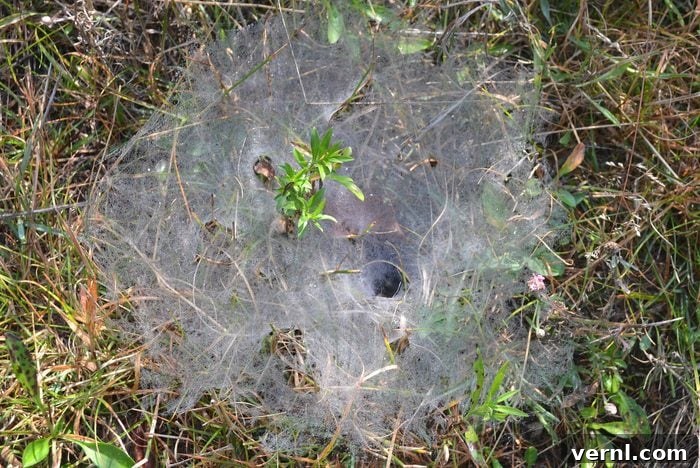
Funnel webs are often associated with the Sydney funnel-web spider (Atrax robustus), a large and venomous spider found in Australia. However, the funnel webs you find in the US are built by different, non-dangerous species. These spiders are common, and some can be quite large, but their bite is not considered medically significant.
These spiders create a flat sheet of dense silk, with a small, tubular retreat on one side where they wait to ambush their prey. They are generally timid creatures and not a cause for concern.
4. Lacy Webs
While not a formally recognized category by many entomologists, some webs are described as lacy due to their appearance. These webs resemble funnel webs but are constructed with a fluffier, more loosely woven silk.
Hacklemesh weaver spiders (Amaurobiidae), sometimes referred to as black lace weaver spiders, produce this type of frayed and fuzzy silk. They commonly build their webs along surfaces leading to hidden areas, such as cracks in tree bark or walls. Be aware that these webs can sometimes be associated with recluse spiders, so it’s essential to determine if these spiders are present in your region.
5. Purse Webs
Purse webs, also known as tubular webs, are constructed by a specific group of spiders called purseweb spiders (genus *Sphodros*). They are similar to funnel webs but are typically found on the ground at the base of trees. While some purseweb spider species are found in the US, you generally won’t find their webs inside your home.
6. Sheet Webs
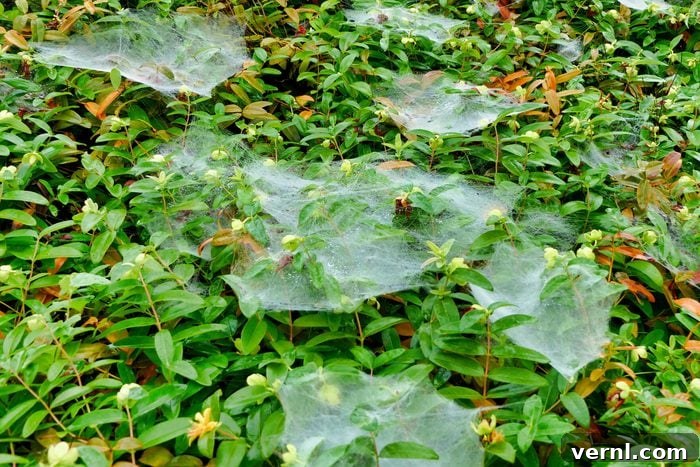
Sheet webs are often referred to as hammock webs, as they’re commonly built by hammock spiders (Pityohyphantes). These horizontal webs can be flat, concave, or have various other shapes, often with some three-dimensional webbing surrounding them.
The small, harmless bowl and doily spider (Frontinella pyramitela) frequently constructs these webs in the US. You’ll often find them around homes or on nearby bushes.
7. Cocoon-Like, Silken Retreat
While not technically a web, you might encounter small, tube-like structures of spider silk within your home. These are essentially sleeping bags or temporary retreats that certain spider species use for safety and rest.
Many hunting spiders, such as jumping spiders, which actively search for prey instead of catching it in webs, build these silken retreats. You might find them in corners or on surfaces inside your home, and sometimes, you can even see the small spider inside.
About the Experts
The information in this guide is based on expert insights from the following entomologists:
-
Matt Bertone, PhD: Director and Entomologist at the North Carolina State Plant Disease and Insect Clinic (PDIC), focusing on identifying insects and arthropods.
-
Wizzie Brown: Board Certified Entomologist and Senior Extension Program Specialist in Entomology at Texas A & M Agrilife.