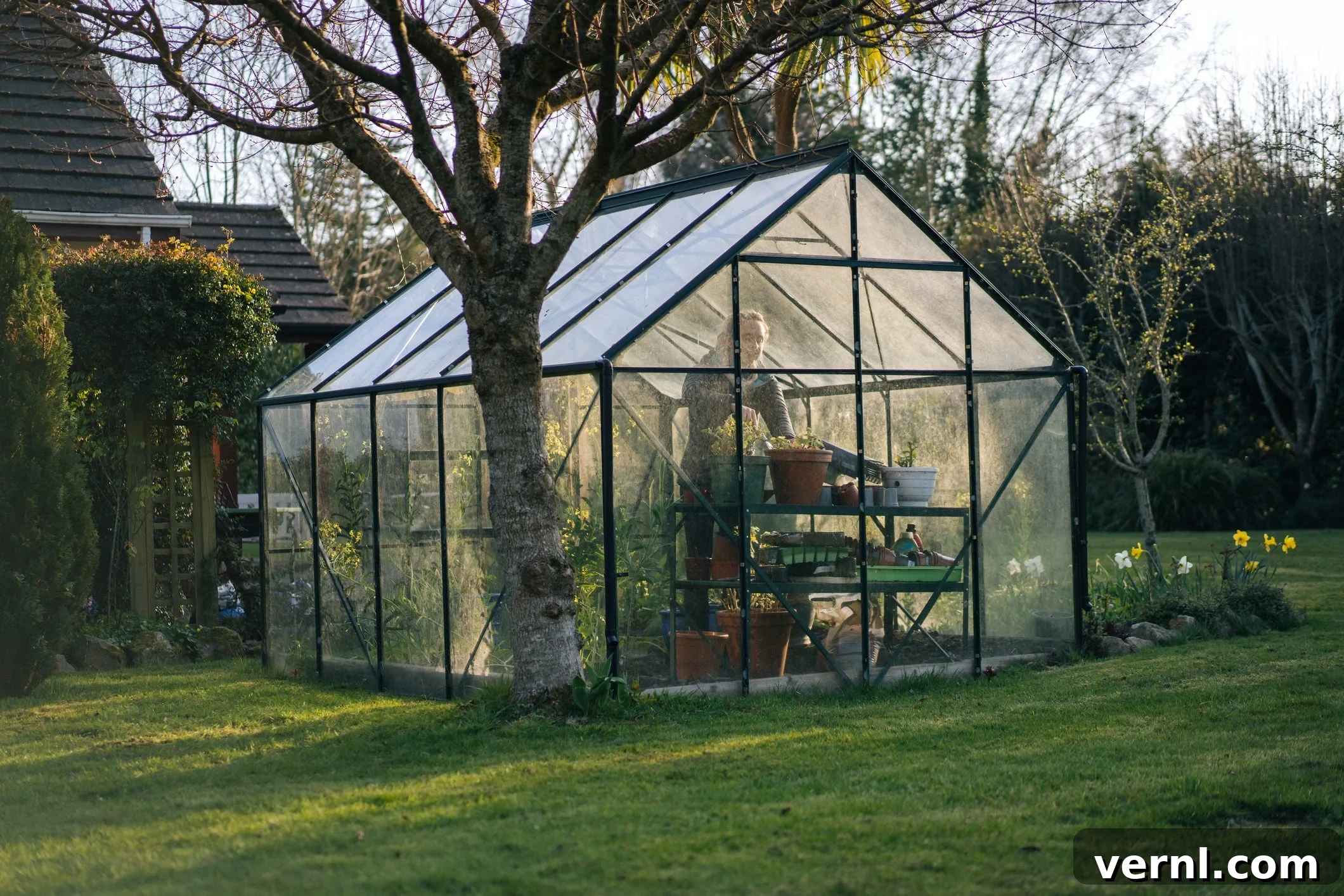
Embarking on the journey of building a greenhouse is a significant step toward achieving year-round gardening success. Unlike the flimsy, improvised structures that might suffice for temporary setups, a truly effective greenhouse demands careful planning and the selection of robust, high-quality materials. A rudimentary structure, perhaps cobbled together from salvaged wood and recycled door panels, might work for a mild climate, but it will quickly reveal its limitations when faced with harsh winters, intense sunlight, or strong winds. The difference between a structure that offers reliable protection and optimal growing conditions for decades, and one that requires constant repairs, lies squarely in the materials you choose.
The core elements of any successful greenhouse are its frame, covering, and flooring. Each component plays a vital role in creating a controlled environment for your plants, and each must be selected with specific considerations in mind. As Shelby DeVore, founder of the Garden. Farm. Thrive. Academy, rightly emphasizes, climate is paramount. However, it’s not the sole determinant. Factors such as light transmission, the specific needs of your crops, your budget, and even your DIY skills will heavily influence your decisions. Investing in the right materials from the outset ensures durability, energy efficiency, and a thriving horticultural haven tailored to your aspirations.
The Foundation of Success: Why Material Choice Matters for Optimal Plant Growth
Building a greenhouse is more than just erecting a shelter; it’s about crafting an optimized microclimate where plants can flourish regardless of external conditions. The longevity and performance of your greenhouse hinge entirely on the materials selected for its primary components. A well-chosen frame provides structural integrity against environmental stresses, while the covering dictates the quality and quantity of light and insulation. The flooring, often overlooked, contributes to thermal stability, hygiene, and ease of operation. Compromising on these foundational elements can lead to costly repairs, inconsistent growing conditions, and ultimately, disappointment.
Consider the long-term return on investment. While some premium materials might carry a higher upfront cost, their superior durability, better insulation properties, and minimal maintenance requirements often translate into significant savings over the lifespan of the greenhouse. Conversely, opting for cheaper, less resilient materials can result in frequent replacements, increased heating or cooling expenses, and potential crop losses due to inadequate protection. Therefore, a thoughtful approach to material selection is not just about construction; it’s about securing a sustainable and productive gardening future.
Choosing the Right Greenhouse Materials: A Holistic Approach to Design and Function
When planning your greenhouse, think of it as an integrated system. Every material choice impacts another, from the structural integrity of the frame to the specific light spectrum reaching your plants. Here’s a comprehensive look at the critical factors that should guide your decisions:
- Climate and Regional Weather Patterns: These are arguably the most crucial considerations. Your local climate dictates the required insulation value of your covering, the strength needed for your frame to withstand snow loads or high winds, and the necessary ventilation strategy. For example, a greenhouse in a harsh Midwestern winter will need significantly more insulation than one on the mild California Coast. Similarly, regions prone to hailstorms or intense UV radiation demand more resilient covering materials. Assess the average daily sunlight, maximum and minimum temperatures, and typical humidity levels throughout the year.
- Specific Plant Needs and Light Requirements: Different plants thrive under different light conditions. Fruiting plants, like tomatoes, peppers, or cucumbers, are often “high-light” demanding and require maximum light transmission. Conversely, leafy greens, herbs, or shade-loving ornamentals may prefer diffused light to prevent scorching and premature bolting. Understanding the Photosynthetically Active Radiation (PAR) needs of your intended crops will directly influence your choice of covering material – whether fully transparent or semi-transparent with diffusing properties. If you’re growing tropical plants in a temperate climate, you’ll need superior insulation and possibly supplemental heating, which impacts both frame and covering choices.
- Budget and Cost-Effectiveness: While it’s tempting to opt for the cheapest options, consider the long-term value. Initial cost versus durability, energy efficiency, and maintenance requirements is a critical calculation. For large greenhouses, balancing high-performance materials with budget constraints might mean choosing a slightly less expensive, but still effective, alternative. Factor in not just the material cost, but also potential installation expenses if you’re not DIYing, and ongoing operational costs like heating and cooling.
- DIYability and Ease of Assembly: If you’re building your greenhouse yourself, the workability of materials is key. Some materials, like wood, are easily cut and fastened with common tools, making them highly DIY-friendly. Others, such as certain metal frames, might require specialized equipment like grinders or welding gear. The complexity of installation can add significantly to the overall project time and cost.
- Structural Durability and Longevity: The frame is the backbone of your greenhouse. It must withstand the test of time, resisting rot, rust, and degradation from UV exposure. Similarly, the covering needs to maintain its transparency and integrity for many years without becoming brittle or discolored. A structure designed to last 10-20 years offers a much better investment than one requiring significant repairs or replacement every few years.
Crafting the Backbone: Best Greenhouse Frame Materials
The frame provides the essential structural support for your greenhouse, holding up the covering and resisting environmental forces. Selecting the right frame material is crucial for the stability and longevity of your investment. DeVore’s top recommendation is aluminum, followed by wood, with galvanized steel and PVC as other viable options depending on your specific needs.
- Aluminum: Renowned for its exceptional durability and resistance to rust and corrosion, aluminum stands out as a premier choice. “Aluminum is going to last the longest and be the most durable,” notes DeVore. It’s also remarkably lightweight, making it easier to transport and assemble. While it’s relatively easy to cut with a circular saw and drill, aluminum is a good conductor of heat. This means it offers minimal insulation value itself, and in cold climates, thermal breaks are essential to prevent heat loss through the frame. Many high-quality greenhouse kits feature aluminum frames due to their strength-to-weight ratio and maintenance-free nature. Anodized aluminum offers an extra layer of protection and aesthetic appeal.
- Wood: A popular choice for DIY enthusiasts, wood frames offer a classic aesthetic and are relatively easy to cut, shape, and fasten using standard woodworking tools. Wood also boasts natural insulating properties, which can be an advantage in climates with temperature fluctuations. However, the humid and often wet interior environment of a greenhouse can be harsh on wood. To ensure longevity, it’s critical to use decay-resistant species such as redwood, cedar, or cypress, or pressure-treated lumber (ensure it’s safe for edibles if growing food). All wood frames should be sealed, painted, or stained with a durable, non-toxic finish to protect against rot, mold, and insect infestation. Regular maintenance will be required.
- Galvanized Steel: Offering an excellent balance of strength and cost-effectiveness, galvanized steel frames are a robust alternative to aluminum. The galvanization process, which involves coating the steel with a layer of zinc, significantly enhances its resistance to rust and corrosion, although it can eventually rust over many years if the coating is compromised. While heavier than aluminum, galvanized steel provides superior strength, making it ideal for larger greenhouses or structures in areas prone to heavy snow loads or high winds. It is more challenging to cut and join than aluminum or wood, often requiring specialized tools like an angle grinder or hacksaw, and typically involves bolted or welded connections.
- PVC (Polyvinyl Chloride): PVC is often seen in very small, temporary, or budget-conscious greenhouse constructions. Its primary advantages are its low cost, lightweight nature, and extreme ease of assembly (often just requiring solvent cement or push-fit connectors). However, PVC plastic has limited structural strength and tends to become brittle over time due to UV degradation, especially if not UV-stabilized. Therefore, it is generally only suitable for miniature greenhouses, cold frames, or as an internal partitioning material within a larger structure. It is not recommended for permanent, robust greenhouse frames, particularly in areas with significant wind or snow. DeVore also warns that certain types of polyethylene coverings can deteriorate when in direct contact with unprimed PVC, highlighting a material incompatibility issue.
The Protective Envelope: Best Greenhouse Covering Materials
The greenhouse covering is arguably the most critical component, as it controls light transmission, insulation, and protection from the elements. While traditional glass remains a viable option, modern plastics offer a range of performance benefits, often at a lower cost and with greater durability.
- Glass: Glass offers superior clarity, allowing maximum light transmission and a pristine aesthetic. It is highly durable and resistant to scratching and UV degradation, maintaining its transparency for decades. However, glass is also the most expensive covering material and is susceptible to breakage, requiring tempered safety glass for most applications, which further increases cost. Its R-value (insulation) is relatively low unless using double or triple-paned units, making it less energy-efficient in cold climates compared to multi-wall plastics. While beautiful, its weight necessitates a very strong frame, and installation can be more complex. Diffused glass options are available to help scatter light evenly.
- Polyethylene Film: The most common and cost-efficient greenhouse covering, polyethylene film is essentially a specialized plastic sheeting. It offers good light transmission and is lightweight, making it easy to install. Modern greenhouse-grade polyethylene includes UV stabilizers to prevent degradation, anti-condensate additives, and often comes in various thicknesses (e.g., 6-mil). For improved insulation, many growers use a double layer of polyethylene with an air space in between (often inflated by a small blower), creating an effective R-value similar to double-pane glass. Woven polyethylene cloth is a stronger variant, preferred for areas with high winds due to its increased tear resistance. However, standard polyethylene typically has a shorter lifespan (3-5 years) than rigid plastics and, as DeVore cautions, can deteriorate upon contact with unprimed PVC frames.
- Polycarbonate: A high-performance plastic, polycarbonate is an excellent choice for a wide range of greenhouse applications. It is nearly as transparent as glass but significantly more impact-resistant, making it ideal for areas prone to hail, strong winds, or accidental impacts. Polycarbonate is available in both flexible sheets (often for curved designs) and rigid panels, most commonly in twin-wall or multi-wall configurations. These multi-wall panels trap air between layers, providing excellent insulation (R-values comparable to or better than double-pane glass), which greatly reduces heating costs. They also diffuse light effectively, preventing hot spots and scorching while promoting even plant growth. Polycarbonate is lightweight, easy to cut with common tools, and typically has a lifespan of 10-15 years or more, depending on quality and UV protection.
- Polyvinyl Carbonate (Rigid PVC Panels): While the term “polyvinyl carbonate” can sometimes be confused with general PVC products, in the context of greenhouse coverings, it generally refers to rigid PVC panels that offer excellent durability and transparency. These panels are known for their strong impact resistance, making them suitable for challenging weather conditions, including heavy snow and hailstorms. They are generally more robust and longer-lasting than polyethylene film and can maintain clarity for many years. However, rigid PVC panels tend to be more expensive than polyethylene and sometimes even polycarbonate. They can also become brittle over very long periods, especially if not adequately UV-stabilized, and may yellow slightly compared to glass or high-grade polycarbonate. They offer good light transmission and can be a strong, durable alternative, particularly where extreme weather resistance is a priority.
Grounding Your Growth: Best Greenhouse Flooring Materials
The flooring of your greenhouse serves multiple purposes: it affects insulation, drainage, cleanliness, and ease of movement. While leaving the ground uncovered or simply spreading mulch are options, they come with significant drawbacks, such as poor insulation, weed growth, and potential for harboring pests, fungi, or bacteria. Opting for a more structured floor will enhance the functionality and longevity of your greenhouse.
- Concrete: A highly durable and stable option, concrete floors are easy to clean, offer excellent drainage when properly sloped, and can significantly contribute to thermal mass. This thermal mass absorbs heat during the day and slowly releases it at night, helping to stabilize internal temperatures and reduce heating costs. Concrete can also be integrated with radiant heating systems for superior climate control. While the initial installation can be labor-intensive and expensive, a concrete floor provides a permanent, low-maintenance surface that can withstand heavy traffic and spills. Ensure adequate drainage channels or a slight slope to prevent standing water.
- Vinyl Tiles: Increasingly popular in greenhouses, vinyl tiles offer a waterproof, sanitary, and aesthetically pleasing flooring solution. They are relatively easy to install over a prepared subfloor, come in a variety of colors and patterns, and provide a comfortable walking surface. Vinyl is resistant to moisture, chemicals, and common greenhouse spills, making cleanup a breeze. Their non-porous surface helps prevent the growth of mold and mildew. When selecting vinyl tiles, ensure they are commercial-grade for durability and slip-resistant for safety in wet conditions.
- Crushed Stone and Gravel: An inexpensive and highly effective option, crushed stone or gravel floors provide excellent drainage and help regulate humidity by allowing water to evaporate slowly. They are easy to install, requiring a leveled base and typically a weed barrier fabric underneath to prevent unwanted plant growth. When combined with weed cloth, a gravel floor is comfortable to walk on and provides a stable surface for pots and equipment. The porous nature of gravel helps to prevent puddles and reduces the risk of root diseases that thrive in overly wet conditions. Periodically, the gravel may need to be raked level or refreshed.
- Permeable Pavers: Similar to crushed stone, permeable pavers allow water to drain through, preventing standing water. They offer a more refined and stable walking surface than loose gravel and can be laid in various patterns. They also provide some thermal mass benefits, though less than solid concrete.
Beyond Materials: Essential Considerations for Greenhouse Success
While material selection forms the bedrock of your greenhouse, other design elements are crucial for optimal functionality and plant health. Proper ventilation is vital for regulating temperature, humidity, and air circulation, preventing disease and promoting vigorous growth. This can be achieved through manual vents, automated louvers, or exhaust fans. Heating and cooling systems, whether active (heaters, evaporative coolers) or passive (thermal mass, shading), are necessary to maintain ideal temperature ranges, particularly in extreme climates. Integrated irrigation systems can simplify watering, ensuring consistent moisture levels. Finally, well-designed shelving, benches, and pathways will optimize your growing space, improve workflow, and enhance the overall user experience.
In conclusion, building a greenhouse that truly serves your gardening ambitions requires a strategic approach to material selection. From the enduring strength of the frame to the protective embrace of the covering and the practical utility of the flooring, each choice contributes to the overall success and longevity of your structure. By carefully weighing factors such as climate, plant needs, budget, and DIY capabilities, you can create a durable, efficient, and beautiful greenhouse that will provide a rewarding space for cultivation for many seasons to come.