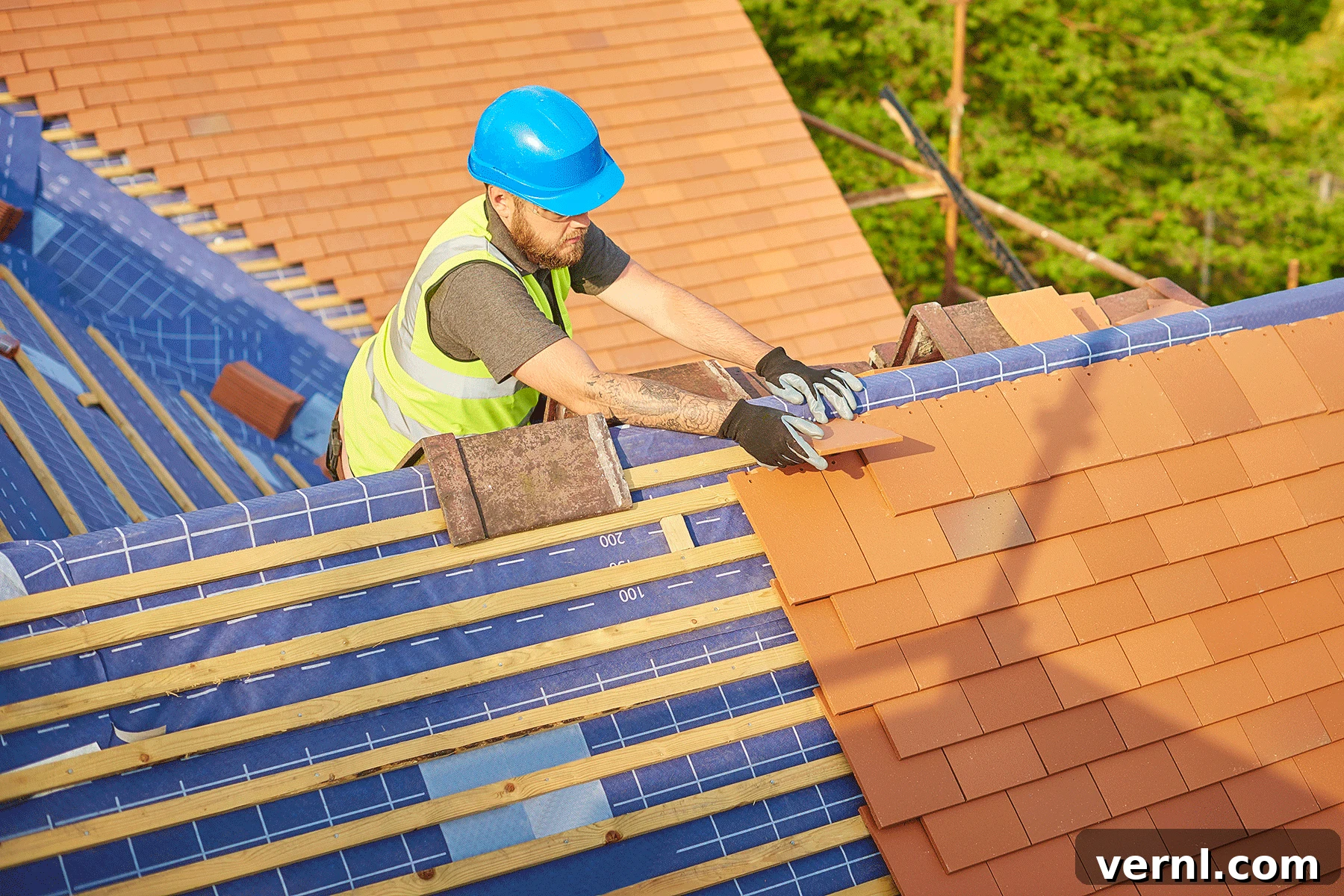
A properly functioning roof often goes unnoticed, seamlessly providing essential protection from the elements. It shields your home from the scorching sun, deflects torrential rain, and withstands harsh winds. However, when a roof begins to fail, the consequences can be swift and severe, transforming your sanctuary into a source of constant stress and potentially significant expense.
Even what appears to be a minor leak can initiate a cascade of problems, gradually compromising your home’s structural integrity. Unchecked moisture creates an ideal breeding ground for mold and mildew, leading to unhealthy indoor air quality and potential structural damage. Furthermore, it can attract unwanted pests, turning your home into an unwelcome habitat for critters. If you’ve noticed signs of wear and tear on your roof, or suspect it might be nearing the end of its lifespan, take solace in knowing you’re not alone. Most homeowners will face the decision of a roof replacement at least once. While this prospect can seem daunting, this comprehensive guide is here to provide clarity and support.
To bring you the most reliable and actionable advice, we consulted with two seasoned professional roofers, drawing on their extensive experience to answer your most pressing questions. We’ll explore the typical costs associated with roof replacement, provide expert tips for selecting a trustworthy contractor, and help you determine when a repair is sufficient versus when a full replacement is truly necessary.
Understanding National Average Roof Replacement Costs
When considering a new roof, understanding the financial investment is often the first step. A standard roof replacement project typically involves several key stages: the careful removal and disposal of the existing roofing material, meticulous spot repairs to the underlying roof decking, and the expert installation of a new protective underlayment, your chosen roofing material, and crucial flashing.
To establish a realistic cost estimate, we engaged with two highly experienced roofing professionals, each with over 25 years in the industry, operating in diverse markets: Matt Consolo, owner of Air Force Roofing in South Florida, and Richard Ala, founder of Six Brothers Contractors in New Jersey. Both experts independently arrived at a consistent figure: approximately $15,000 is the typical cost for an average-sized home in their respective primary service areas. In fact, this $15,000 benchmark serves as a robust national average for a new roof installation across the United States.
However, it’s crucial to remember that not all homes, or roofs, are “average.” The final cost of your roof replacement can fluctuate significantly based on various factors. For instance, a larger home with a highly complex roofline, featuring multiple peaks, valleys, and dormers, could easily incur costs of $22,000 or more. Conversely, if your home is a single-story dwelling with a straightforward, simple roof design, you might receive estimates closer to the $10,000 mark. These variations underscore the importance of understanding the specific elements that contribute to your overall roof replacement cost.
Key Factors That Determine the Cost of Your Roof Replacement
When a professional roofing contractor prepares an estimate for your project, they meticulously evaluate several critical factors. These elements directly impact the labor, materials, and time required, ultimately shaping your final quote for a new roof:
- Size of the Roof: This is arguably the most straightforward cost driver. Roofers typically measure the area of a roof in “squares.” One “square” is a unit equivalent to 10 feet by 10 feet, or 100 square feet. Naturally, the greater the number of squares your roof encompasses, the more extensive the material requirements and labor hours will be, leading to a higher overall roof replacement cost.
- Roofing Material: The choice of material significantly influences both the aesthetics and the expense of your roof. Asphalt shingles remain the most popular and generally the most budget-friendly option for residential properties, offering a good balance of durability and cost-effectiveness. However, homeowners have a wide array of alternatives, including durable metal roofing, elegant clay tiles, classic wood shakes, or the premium, long-lasting appeal of slate. Each material comes with its own price point, installation complexities, and longevity benefits.
- Condition of the Existing Roof: The state of your current roof plays a pivotal role in determining the scope of work. A severely dilapidated roof with extensive water damage or structural issues will likely require more intensive repairs to the underlying roof deck before a new system can be installed. In some fortunate instances, if the existing roof is in relatively good condition and local building codes permit, a roofer might suggest a “roof over.” This involves installing the new roof directly on top of the old one, which can dramatically reduce demolition and haul-away charges, offering substantial savings.
- Roof Complexity and Pitch: Architectural nuances greatly affect labor and material costs. A roof characterized by numerous peaks, valleys, dormers, skylights, and other obstructions (like chimneys or vents) demands more intricate flashing work, precise cutting, and extensive pre-planning. Similarly, a roof with a steep pitch or one covering a multi-story home presents greater safety challenges and requires specialized equipment, leading to longer installation times and consequently, higher costs compared to a simple, low-pitched roof.
- Local Regulations and Permits: Many municipalities mandate permits or licenses for roof replacement projects to ensure compliance with local building codes and safety standards. The associated fees for these permits are typically passed on to the customer. Furthermore, some homeowners associations (HOAs) or historical districts may impose stringent restrictions on the type, color, or style of roofing material allowed, potentially limiting your choices and affecting costs.
- Changing the Roof Structure: Some homeowners seize the opportunity of a re-roof to undertake significant architectural changes, such as altering the entire roof structure. While this can dramatically enhance your home’s curb appeal and overall aesthetic, it comes with a considerable price tag. As Richard Ala wisely advises, “If you’re opting for a new look, you’d have to factor in design costs and trusses. It’s costly to go from, let’s say, a flat roof to a pitched one.” Such structural modifications transform a standard replacement into a major renovation, requiring additional engineering and construction work.
What To Ask When Selecting a Trusted Roofing Contractor
Choosing the right roofing contractor is paramount to ensuring a successful and stress-free roof replacement project. Taking the time to thoroughly vet potential candidates can save you from costly mistakes and ensure that the job is done correctly, with the contractor standing by their workmanship if any issues arise.
We asked our expert roofers what advice they would give if they were in a homeowner’s shoes. Matt Consolo strongly recommends leveraging your personal network for trusted referrals. “Ask family, friends, or neighbors who’ve recently had a roof replacement which contractor they used, or if they’d vetted any you are considering,” he suggests. That second part of his tip is especially crucial! Sometimes, understanding which roofers your acquaintances *didn’t* select, and why, can be just as informative as finding out who they ultimately hired.
Richard Ala emphasizes the critical importance of proper documentation and a clear contract. “A reputable contractor will always work with a detailed contract as a standard practice,” he states. He advises homeowners to meticulously review the contract, paying close attention to the fine print, and ensuring that every verbal agreement or promise is explicitly documented. “If something you agreed upon is not in the contract, insist on adding it in writing before you sign,” Ala advises. This protects both you and the contractor and prevents misunderstandings down the line.
Beyond seeking personal recommendations and scrutinizing contracts, here are four additional, essential questions to ask when vetting a roofing contractor:
- What Type of Insurance Do You Carry? This is a non-negotiable question. You need to ensure the contractor carries sufficient insurance to protect both your property and their workers.
- General Liability Insurance: This covers any potential damage to your home or neighboring properties that might occur during the roofing project.
- Worker’s Compensation Insurance: This is vital for covering medical expenses and lost wages for workers who might sustain injuries on your property. Without it, you could be held liable.
- Surety Bond: While not mandatory in all locations, a surety bond offers an additional layer of protection, guaranteeing that the job will be completed according to the contract’s terms and on time. It’s definitely worth inquiring about. Most licensed contractors are legally required to carry the first two types of insurance.
- When Can You Start the Project, and What’s the Estimated Timeline for Completion? Roofing contractors often experience peak seasons, typically during spring, summer, and immediately following major storm events. Understanding their current workload and projected start date is important for your planning. Once the project commences, the contractor should provide a clear timeline for completion. However, it’s worth noting that outdoor projects like roofing are inherently susceptible to weather delays, so a degree of flexibility is always prudent.
- Do You Offer Gutter Installation, and Is That an Additional Cost? Not all roofing companies specialize in gutter installation, meaning you might need to coordinate with a separate contractor for this crucial component of your home’s drainage system. Some roofers may include gutter services as part of their package, while others might charge extra or simply remove and reinstall existing gutters to prevent damage during the roofing process.
- Matthew Consolo highlights a potential cost-saving tip: “If you can have a roofer install gutters, you’ll typically save money compared to hiring a separate contractor to come in afterward. [Roofing] contractors will often give you a better rate as they’re already set up on the job site.” This streamlines the process and can reduce overall project costs.
- What Type of Warranty Do You Provide? A comprehensive warranty offers peace of mind. Workmanship warranties, covering the quality of the installation, typically range from five to 25 years. Additionally, roofers who are certified by specific roofing manufacturers may be able to offer extended, more robust warranties that are underwritten directly by the manufacturer, providing superior long-term protection for your investment. Always clarify what is covered, for how long, and what conditions apply.
DIY Roof Replacement vs. Hiring Professional Roofers
While the idea of saving money through a do-it-yourself roof installation might be appealing, the reality is that roofing is a highly specialized and inherently dangerous task. For most homeowners, especially those new to roofing or with complex rooflines, entrusting the job to a professional is almost always the smarter and safer decision. Here’s a detailed look at why:
- Roofing Is Extremely Dangerous: This is the most critical factor. Roofing involves physically demanding work performed at significant heights, often on steep and slippery surfaces. Accidents involving falls from ladders or roofs are common and can result in severe injuries or even fatalities. Professionals are trained in safety protocols, use specialized safety equipment, and have the necessary experience to mitigate these risks.
- Different Roofing Materials Require Different Skills: Roofing is not a one-size-fits-all skill. While you might possess some general construction knowledge, expertise in installing asphalt shingles does not automatically translate to proficiency in laying down EPDM (ethylene propylene diene monomer) for a flat roof, intricate clay tiles, or durable metal panels. Each material has unique installation requirements, tools, and techniques that take years to master.
- Flashing on Complex Roofs Can Be Tricky: Flashing is the unsung hero of a watertight roof, directing water away from vulnerable areas like chimneys, skylights, vents, and valleys. Properly installed flashing is crucial to preventing leaks. This intricate work requires precision, specialized tools, and considerable experience. If you’re learning on the job, a small mistake in flashing can lead to significant leaks during the next rainstorm, potentially causing more damage than the cost of professional installation.
- It May Void the Manufacturer’s Warranty: Many roofing material manufacturers stipulate that their product warranties are only valid if the installation is performed by a certified or licensed professional. Attempting a DIY installation could inadvertently void these crucial warranties, leaving you responsible for the full cost of repairs or premature replacement if material defects or installation errors arise.
- Time and Effort: A professional roofing team can typically complete a residential roof replacement in a matter of days. For a DIY homeowner, this project could stretch into weeks or even months, exposing your home to the elements for extended periods and consuming a vast amount of your personal time and energy.
Roof Replacement vs. Roof Repair: Identifying the Tipping Point
Deciding between a targeted roof repair and a full roof replacement is a common dilemma for homeowners. If your roof exhibits only a few blown-off shingles or minor, isolated leaks, a precise repair might be all that’s needed to extend its lifespan. However, if you find yourself repeatedly performing repairs, or notice widespread signs of significant wear and tear across your roof, such as asphalt granules shedding excessively, multiple curled, cracked, or missing shingles, or recurring leaks in various areas, it’s likely a strong indication that it’s time for a new roof.
Proactive inspection is key to staying ahead of potential issues. Matt Consolo highly recommends inspecting your roof thoroughly every spring and fall. These seasonal checks allow you to identify any damage, debris, or anything that looks “off” after seasonal weather extremes. “Spotting signs of deterioration early,” he emphasizes, “can truly make the difference between a relatively simple, inexpensive repair and the necessity for a complete, costly new roof.”
Beyond immediate protection, a replacement roof offers significant long-term value to your property. While estimates can vary, numerous real estate experts and industry reports consistently show that the investment in a new roof is often substantially recouped in a home’s final selling price. Homeowners can potentially recover anywhere from 45% to an impressive 100% of the roof cost when it comes time to sell, making a new roof not just a maintenance item, but a valuable upgrade that enhances curb appeal and buyer confidence.
Financing Your Roof Replacement
A roof replacement is a significant investment, and understanding your financing options can make the process more manageable. Here are some common ways homeowners fund this essential upgrade:
- Home Equity Loans or HELOCs: If you have substantial equity in your home, a home equity loan or a home equity line of credit (HELOC) can be an attractive option. These typically offer lower interest rates because your home serves as collateral.
- Personal Loans: For those without significant home equity, a personal loan from a bank or credit union can provide the necessary funds. While interest rates may be higher than secured loans, they offer quick access to funds without using your home as collateral.
- Contractor Financing: Many reputable roofing contractors partner with financing companies to offer payment plans to their customers. These options can include deferred interest periods or low monthly payments, making it easier to afford the upfront cost. Always compare these offers with other loan options.
- Credit Cards: For smaller projects or in emergencies, a credit card might be an option, especially if you have one with a 0% APR introductory period. However, be cautious as standard credit card interest rates can be very high if the balance isn’t paid off quickly.
- Insurance Claims for Storm Damage: If your roof damage is a direct result of a covered event like a severe storm (wind, hail, etc.), your homeowner’s insurance policy might cover a significant portion, or even all, of the replacement cost. It’s crucial to document the damage thoroughly and file a claim promptly. Consult with your roofing contractor, as they often have experience working with insurance companies.
Conclusion: Securing Your Home with a New Roof
Your roof is your home’s first line of defense against the elements, a critical component that often goes unappreciated until it falters. Understanding the nuances of roof replacement costs, knowing how to select a reliable contractor, and distinguishing between necessary repairs and a full replacement are essential aspects of responsible homeownership. By heeding the advice of seasoned professionals like Matt Consolo and Richard Ala, and thoroughly researching your options, you can approach your roofing project with confidence and ensure your home remains a safe, secure, and valuable asset for years to come. Investing in a quality roof is not just about protection; it’s an investment in your home’s longevity, efficiency, and overall value.
About Our Esteemed Experts
- Matthew Consolo is the visionary founder and CEO of Air Force Roofing. With over 15 years of comprehensive roofing experience, Matt established Air Force Roofing with a clear mission: to deliver an unparalleled level of service and craftsmanship to homeowners and businesses throughout South Florida. His dedication ensures every project meets the highest standards of quality and customer satisfaction.
- Richard Ala’s extensive journey in the construction industry commenced in 1988, marking over 35 years of unparalleled expertise. This hands-on experience, coupled with a deep understanding of a homeowner’s perspective, ignited his passion for assisting fellow New Jersey residents with all their roofing needs. Since its inception in 1988, Six Brothers Contractors stands as a testament to Richard’s unwavering commitment to superior craftsmanship, integrity, and exceptional customer satisfaction.
Reliable Sources
- The National Association of Realtors’ 2023 Remodeling Impact Study
- Remodeling’s 2024 Cost vs. Value Report