
Mastering Lawn Health: A Deep Dive into Liquid vs. Granular Fertilizers
A lush, vibrant green lawn is often the pride of a homeowner, enhancing curb appeal and providing a beautiful outdoor space. Achieving this isn’t just about regular mowing, trimming, and edging. A crucial, yet often misunderstood, aspect of lawn care is proper fertilization. However, when faced with an array of choices, many homeowners find themselves confused by the options available on the market. The fundamental question often boils down to: what’s the difference between liquid and granular lawn fertilizer, and which one is right for my yard? This comprehensive guide will illuminate the distinctions, benefits, and drawbacks of each, helping you make an informed decision for a healthier, more beautiful lawn.
Why Fertilize Your Lawn?
Fertilization is essential for replenishing nutrients in your soil that grass needs to thrive. Over time, grass consumes existing nutrients, and mowing removes nutrient-rich clippings. Without regular feeding, your lawn can become thin, discolored, and more susceptible to weeds and diseases. A well-fertilized lawn is more resilient, can better withstand environmental stresses like drought or heavy foot traffic, and maintains a consistent green color. It supports vigorous growth, dense turf, and strong root development, all of which contribute to a beautiful, thriving landscape.
The Fundamental First Step: Conduct a Soil Test
Before you even think about which type of fertilizer to buy, the absolute first step in any effective lawn care regimen should be a soil test. Guessing what nutrients your lawn needs is not only wasteful but can also be detrimental, leading to nutrient imbalances, environmental runoff, and unnecessary expense. A professional soil test provides a detailed analysis of your soil’s pH level, as well as the concentration of vital macronutrients like nitrogen, phosphorus, and potassium, and essential micronutrients. Understanding your soil’s unique composition allows you to pinpoint exactly what it needs, ensuring you apply the correct type and amount of fertilizer.
You can easily take a soil sample to your local agricultural extension office for a comprehensive analysis and personalized recommendations. Alternatively, for convenience, you can purchase a DIY soil test kit. These kits offer a straightforward way to get a general understanding of your soil’s requirements right from your home. Once you have the results, you’ll possess the invaluable knowledge needed to select and apply the most effective nutrients for your specific lawn, leading to optimal growth and health.
Decoding Fertilizer Labels: NPK Ratios and Application Rates
Fertilizers are universally labeled with a three-number system, often referred to as the NPK ratio. These numbers represent the percentage by weight of three primary macronutrients critical for plant growth: Nitrogen (N), Phosphorus (P), and Potassium (K). For example, a label stating “5-5-5” indicates that the fertilizer contains equal parts of these three nutrients. A “16-4-8” ratio means it has 16% nitrogen, 4% phosphorus, and 8% potassium. Understanding what each nutrient does is key to choosing the right product.
Understanding Nitrogen (N), Phosphorus (P), and Potassium (K)
- Nitrogen (N): This is the nutrient most responsible for lush, green, leafy growth. It’s a vital component of chlorophyll, the compound plants use for photosynthesis. Lawns with plenty of nitrogen tend to be vibrant green and grow vigorously.
- Phosphorus (P): Essential for strong root development, seed germination, and flowering. While crucial for new lawns and repairing damaged areas, mature lawns generally require less phosphorus, especially if soil tests indicate adequate levels.
- Potassium (K): Often referred to as the “stress reliever” nutrient, potassium helps strengthen the grass against diseases, drought, and extreme temperatures. It also plays a role in overall plant vigor and nutrient transport.
Tailoring Ratios to Your Lawn’s Needs
The ideal NPK ratio for your lawn will depend heavily on your soil test results and the specific needs of your grass. For instance, a typical maintenance ratio for an established lawn is often around 3-1-2, meaning three parts nitrogen, one part phosphorus, and two parts potassium. This balance supports healthy green growth without over-stimulating root or flower development excessively. One significant advantage of using liquid lawn fertilizer is its remarkable versatility: you can easily mix in any additional micronutrients or soil amendments your soil test indicates are necessary, providing a truly customized feeding program for your lawn. This precision can be incredibly beneficial for addressing specific deficiencies or promoting particular growth characteristics.
The Lifespan of Liquid Fertilizer: How Often Should You Apply?
The frequency of fertilizer application is a common question among homeowners. While many lawn care experts suggest fertilizing your lawn up to four times a year, it’s crucial to understand that more isn’t always better. In fact, over-fertilization can harm your lawn and the environment. Most well-maintained lawns can thrive with just two applications per year, depending on your climate, grass type, and soil conditions. The key is to fertilize strategically, aligning your schedule with your lawn’s seasonal growth cycles.
Environmental Considerations and Responsible Application
It’s imperative to consider the environmental impact of lawn fertilization. Applying too much fertilizer, especially in areas with sandy soils or during heavy rainfall, significantly increases the risk of nutrient runoff. Excess nutrients can leach through the soil, contaminating groundwater, and making their way into local lakes, streams, and wetlands. This nutrient pollution can lead to harmful algal blooms, impacting aquatic ecosystems and water quality. Grasses, like all plants, only require a specific amount of food. Providing more than what they can absorb not only wastes product but also poses a serious environmental threat. Responsible application practices, guided by soil test results and proper timing, are essential for both a healthy lawn and a healthy planet.
Optimal Timing: When to Apply Liquid Lawn Fertilizer for Best Results
Timing is everything when it comes to fertilizing your lawn. Applying fertilizer at the right moment ensures your grass receives nutrients when it can best utilize them, leading to maximum benefit and minimal waste. An effective lawn fertilization schedule should align with the grass’s natural growth cycles throughout the year.
Spring Applications for Green-Up
In the spring, as temperatures consistently rise and your lawn begins to emerge from dormancy, a light application of fertilizer can give it a helpful boost. However, resist the urge to over-fertilize during this period. Your lawn naturally experiences rapid growth in late spring and early summer, so promoting even more growth with excessive fertilizer can stress the grass and divert energy away from root development. Aim for about half the normal amount of fertilizer, just enough to aid in a healthy green-up. This is also an ideal time to combine a spring application with a crabgrass preventer, tackling two tasks simultaneously.
Summer Strategies for Sustained Growth (and Caution)
A mid-summer application can be considered if your lawn shows signs of stress or needs a little extra help. However, extreme caution is advised. Fertilizing during hot, humid weather can actually scorch and damage your lawn, as the grass is already under significant heat stress. If you must fertilize in summer, opt for an organic fertilizer. Organic options release nutrients more slowly and gently, making them much more “lawn friendly” during the dog days of summer, reducing the risk of burn and promoting sustained health.
Fall Fertilization for Winter Preparedness
The most critical time to fertilize your lawn, especially if you’re aiming for a once-a-year schedule, is around Labor Day (early fall). This is when your lawn is “hungriest” and most receptive to nutrients. Fall fertilization helps replenish food reserves that were depleted during the long, stressful growing season and prepares the grass for the harshness of winter. It encourages deep root growth, which is vital for winter hardiness and a strong spring rebound. If your schedule allows for a second application, consider applying it around mid-October. This “second helping” provides additional nutrients that the grass can store, ensuring it has ample reserves to draw upon throughout the dormant winter months, leading to an earlier and more robust green-up in the spring.
Tackling Weeds: Integrating Liquid Weed Killers with Fertilization
Weeds can quickly diminish the beauty of your lawn, competing with grass for vital nutrients, water, and sunlight. When dealing with weeds, homeowners often consider “weed and feed” formulas. While these can be convenient, if your weed problem isn’t widespread, it’s often more effective to apply fertilizer and weed killer separately. The primary goal of fertilization is to foster healthy, dense grass. A thick, vigorous lawn is your best defense against weeds, as it naturally chokes out most unwanted intruders by outcompeting them for resources.
Weed and Feed vs. Separate Applications
Using separate products allows for more targeted treatment. You can select a fertilizer specifically tailored to your soil’s needs and apply a weed killer only where and when necessary. This reduces the overall chemical load on your lawn and the environment. Liquid weed killers are particularly effective for spot treatments or for achieving broad, even coverage when applied with a sprayer.
Top Liquid Weed Killer Options
For chemical solutions that effectively control a variety of broadleaf and grassy weeds without harming your lawn, several liquid weed killers are popular and highly rated. These typically contain active ingredients designed to target weeds specifically. Some top options include: Spectracide Weed Stop, Fertilome Weed Free Zone, Round Up Pro (for non-selective killing), Compare-N-Save, and Spectracide for grass killer. Always read labels carefully to ensure the product is suitable for your specific lawn type and weed issues.
Embracing Organic Weed Control
For those seeking environmentally friendlier alternatives, a growing number of natural and organic weed killers are available. These products often utilize ingredients like acetic acid (vinegar) or natural oils to effectively desiccate weeds. Popular organic choices include: Green Gobbler, Natural Armor, and Natural Elements. While often effective, organic weed killers may require more frequent applications and careful timing to achieve desired results.
Liquid vs. Granular Fertilizer: A Comprehensive Comparison
The choice between liquid and granular fertilizer ultimately depends on your specific needs, lawn size, budget, and desired outcome. Both have distinct advantages and disadvantages that make them suitable for different scenarios. Understanding these differences is key to selecting the best option for your lawn care strategy.
The Advantages of Liquid Lawn Fertilizer
Liquid fertilizers offer several compelling benefits that make them a preferred choice for many homeowners seeking quick and precise results.
Instant Nutrient Delivery and Rapid Response
Perhaps the most significant advantage of liquid lawn fertilizer is its immediate bioavailability. Because nutrients are already dissolved in liquid form, they are instantly available for absorption by the grass. This means the benefits, such as a noticeable greening effect, can often be seen within just a few days of application. This rapid response is ideal when your lawn needs a quick boost or a timely correction mid-season.
Achieving Uniform Coverage
Liquid fertilizers, when properly mixed and applied with a wide-sweep sprayer nozzle, facilitate a remarkably even application across your lawn. This consistency helps prevent the streaking or uneven patches that can sometimes occur with granular fertilizers, especially if a fertilizer spreader is not calibrated correctly or used improperly. The uniform distribution ensures that every blade of grass receives the same amount of nutrients, leading to a consistently healthy and vibrant lawn.
Unmatched Versatility in Application
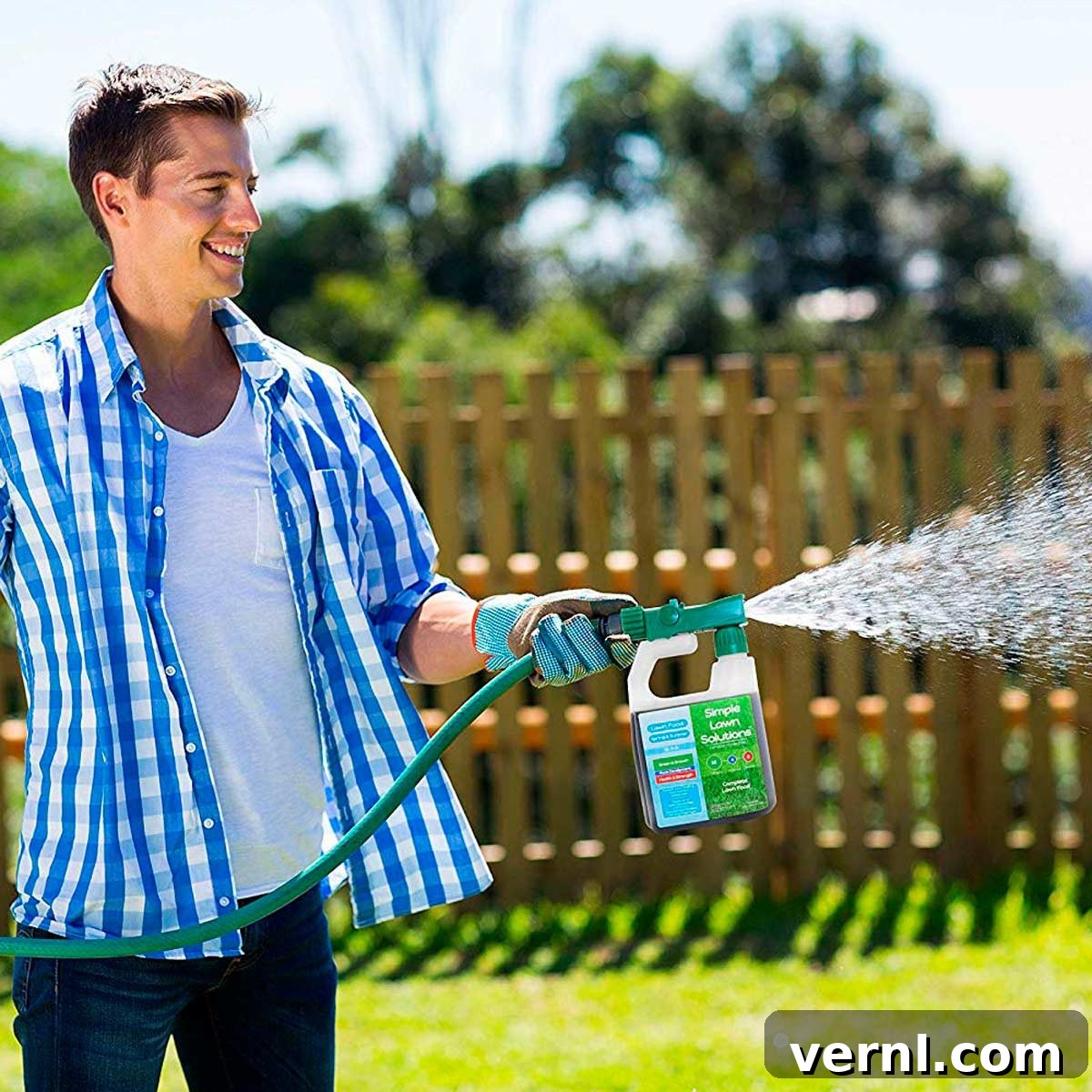
Liquid fertilizer boasts superior versatility. Whether you prefer to mix a concentrate in a gallon sprayer for targeted applications or attach a pre-mixed bottle directly to your garden hose for broader coverage, the application methods are adaptable to various needs. Furthermore, liquid fertilizers can be applied to both the ground (for root absorption) and directly to the foliage (foliar feeding). Foliar applications allow for even faster nutrient uptake, which is particularly useful when a rapid correction for a nutrient deficiency is needed.
Seamless Blending for Customized Nutrition
As previously mentioned, liquid lawn fertilizers are incredibly easy to blend. This characteristic allows you to precisely customize your nutrient mixture according to your soil test results. You can easily add specific micronutrients or adjust the NPK ratio to perfectly match your lawn’s requirements, creating a tailored feeding program that promotes optimal health and growth.
Exploring Organic Liquid Fertilizer Options
For those prioritizing natural and sustainable lawn care, organic liquid fertilizers offer an excellent solution. These products typically derive nutrients from natural sources and are designed to feed both the grass and the beneficial microbes in the soil, fostering a healthier overall ecosystem. They often provide nutrients in a slow-release manner, which is gentler on the lawn and reduces the risk of nutrient runoff. Some highly regarded organic liquid fertilizers include: Simple Lawn Solutions, Dr. Earth, and Simple Grow Solutions. These options are excellent for promoting long-term soil health and supporting environmentally conscious practices.
The Disadvantages of Liquid Lawn Fertilizer
Despite its many benefits, liquid fertilizer also comes with certain drawbacks that homeowners should consider before committing to this application method.
Frequent Applications Required
While the immediate results of liquid fertilizer are impressive, its fast-acting nature means the effects are often short-lived. Unlike granular fertilizers, especially slow-release varieties, liquid nutrients are quickly absorbed and utilized by the grass, and then they’re gone. This necessitates more frequent reapplications to maintain consistent nutrient levels and sustained lawn health. For busy homeowners, this increased frequency can be a significant time commitment.
Higher Cost Implications
Generally speaking, liquid fertilizer tends to be more expensive per application than its granular counterpart. The cost difference can become substantial, particularly if you have a large yard that requires extensive coverage. For homeowners on a tight budget or those managing vast areas, the cumulative expense of multiple liquid applications throughout the season can quickly add up, making granular fertilizer a more economical choice.
Temporary Results and Root Health Concerns
According to Michigan State University’s Extension Service, the instant gratification provided by water-soluble, fast-release liquid fertilizers often comes at a cost. While they quickly deliver a deeply colored, luxurious lawn, this rapid top growth can sometimes divert energy away from crucial root development. For greater long-term results and a more resilient lawn, experts often suggest using slow-release fertilizers (typically granular). These products nourish the grass over a longer period, promoting healthier, deeper root systems that are better equipped to handle environmental stresses.
Making the Right Choice: Liquid or Granular?
Ultimately, the “best” fertilizer type depends on your specific circumstances. If you prioritize immediate results, precise nutrient delivery, and don’t mind more frequent applications, liquid fertilizer is an excellent choice. It’s particularly well-suited for smaller yards or for addressing specific nutrient deficiencies quickly. However, if you have a large property, are working with a tighter budget, or prefer a less frequent application schedule that promotes long-term root health, granular fertilizers, especially slow-release varieties, might be more suitable.
Beyond Fertilization: Maintaining a Healthy Lawn
Fertilization is just one component of a holistic lawn care strategy. Proper mowing practices (cutting at the right height and frequency), adequate watering, and aeration are equally vital for maintaining a healthy, vibrant lawn. Understanding how each element contributes to your lawn’s overall well-being will ensure your efforts with fertilization yield the best possible results. For those choosing granular fertilizer, this guide will show you how to effectively use a fertilizer and seed spreader. And, if your lawn needs more intensive help beyond routine feeding, learn how to repair a damaged lawn for a complete rejuvenation.
Take the Guesswork Out: Get Your Soil Tested Today!
No matter which fertilizer type you choose, the foundation of an effective lawn care program always starts with understanding your soil. Avoid costly mistakes and environmental impacts by investing in a soil test. It’s the smartest first step toward achieving the beautiful, healthy lawn you desire.
Buy a DIY soil test kit now on Amazon.