
Mastering the Dutch Reach: A Simple Yet Profound Act for Safer Cycling
For many, cycling is more than just a hobby; it’s a vital mode of transportation, a source of invigorating exercise, and a pathway to personal freedom. As an ardent cyclist myself, who navigates city streets daily for both practical journeys and leisurely rides, I’ve unfortunately encountered numerous harrowing close calls with motor vehicles. Alarmingly, many of these incidents haven’t occurred in chaotic intersections but rather in seemingly safer zones, like designated bike lanes, where the sudden opening of a parked car door — a phenomenon widely known as “dooring” — creates an immediate and extreme hazard.
These unexpected moments of danger underscore a critical need for enhanced awareness and preventative measures from all road users. Thankfully, a straightforward and universally applicable method exists for drivers and passengers to dramatically reduce the risk of dooring accidents: the “Dutch Reach.”
“Adopting the Dutch Reach into your routine, whether you are the driver, a passenger, or even utilizing a rideshare service, should become an ingrained habit,” advises Monica Garrison, founder and Executive Director of Black Girls Do Bike, an organization dedicated to empowering women through the joy of cycling. “It requires only a fleeting moment, a mere second of conscious effort, but this small action possesses the profound ability to prevent a life-altering accident and safeguard vulnerable cyclists.”
This comprehensive guide will illuminate the perils of dooring and provide a detailed exploration of the Dutch Reach method, demonstrating why it’s an indispensable technique for fostering a safer, more respectful environment on our shared roads.
Understanding “Dooring”: A Significant Threat to Cyclist Safety
At its core, “dooring” transpires when an occupant of a stationary vehicle — be it the driver or a passenger — opens their car door directly into the path of an approaching cyclist. This sudden obstruction gives the cyclist minimal to no time to react, forcing them into a perilous situation. They might collide head-on with the door, sustaining direct impact injuries, or be compelled to swerve violently into adjacent traffic lanes to avoid the collision, thereby risking secondary accidents with moving vehicles.
“Dooring is far from a trivial matter; it represents a serious, preventable hazard with the potential to inflict severe physical injuries and emotional trauma,” Garrison emphasizes. The consequences can range from painful road rash and bruising to more serious injuries such as broken bones, concussions, dental damage, and even debilitating spinal injuries. Beyond the immediate physical harm, these incidents can leave lasting psychological scars, instilling fear and reluctance in cyclists to continue riding, particularly in urban settings. Moreover, depending on local ordinances and traffic laws, a dooring incident can result in substantial traffic fines, legal liability for the vehicle occupant, and significant increases in insurance premiums, highlighting the legal and financial repercussions alongside the human cost.
The Grave Consequences of Dooring Accidents:
- Direct Collision and Trauma: A cyclist hitting a suddenly opened door can be violently thrown from their bike, leading to severe injuries upon impact with the door, the road surface, or other fixed objects.
- Forced Swerve into Traffic: The instinctive reaction to avoid a door is to swerve. If this leads a cyclist into the path of active vehicular traffic, the resulting multi-vehicle collision can be far more catastrophic and potentially fatal.
- Secondary Collisions: Even if the cyclist avoids hitting the car door, their evasive maneuver might cause them to collide with other cyclists, pedestrians, or even inanimate objects like lampposts or parked cars.
- Extensive Property Damage: Dooring incidents frequently result in considerable damage to both the bicycle and the vehicle door, leading to costly repairs and often complex insurance claims.
- Lingering Psychological Impact: Victims of dooring often experience post-traumatic stress, anxiety, and a diminished sense of safety while cycling, which can impact their mobility and overall well-being.
The “Dutch Reach” Method: A Simple Solution for a Complex Problem
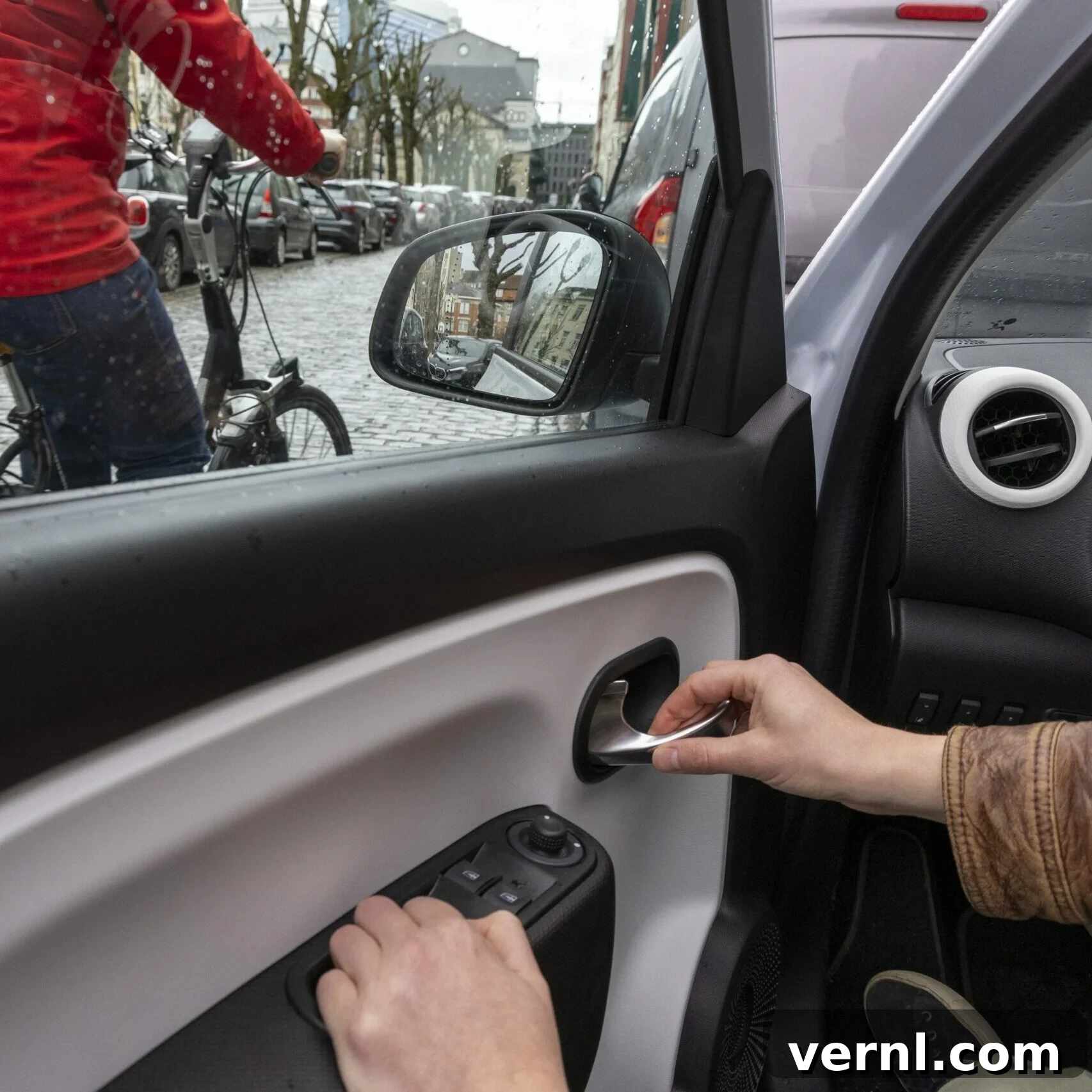
The “Dutch Reach” method offers an elegantly simple yet profoundly effective solution to prevent dooring incidents. The premise is intuitive: when preparing to open your car door, you use the hand that is farthest from the door handle. For instance, if you are the driver in a vehicle with the steering wheel on the left (common in the U.S.), you would reach for the door handle with your right hand. Conversely, if you are the front passenger, you would use your left hand to open your door.
“This seemingly minor adjustment in how you interact with your car door naturally encourages a complete reorientation of your upper body,” Garrison clarifies. “By compelling you to reach across your chest, it physically forces you to turn your torso and head, prompting an essential glance over your shoulder and into your side mirror. This involuntary movement ensures a critical visual sweep for approaching cyclists, pedestrians, or even other vehicles before the door is unlatched and opened even minimally.”
The Dutch Reach transforms an often thoughtless, almost automatic action into a deliberate safety protocol. It fosters a heightened state of awareness every time a vehicle occupant prepares to exit. Here’s a detailed, step-by-step guide to incorporating this life-saving technique:
How to Effectively Practice the Dutch Reach:
- Prioritize Safe Parking: Always ensure your vehicle is parked as close to the curb or shoulder as is legally permissible and safe, minimizing the width of the “door zone.”
- Engage Your “Far Hand”: Resist the natural urge to use the hand closest to the door. Instead, consciously reach across your body with the hand farthest from the door handle. (Right hand for the driver in left-hand drive cars; left hand for the front passenger).
- Initiate the Turn and Scan: As you extend your far hand, your upper body will naturally pivot. This motion facilitates an essential head turn, prompting you to check your side mirror and directly over your shoulder. This crucial visual scan allows you to detect any approaching cyclists, pedestrians, or other traffic.
- Open Slowly and With Deliberation: Only once you have confirmed that the path is absolutely clear, open the door just enough to create a safe exit passage. Avoid swinging the door open carelessly or forcefully. Maintain vigilance for any last-second approaches.
- Exit Promptly and Safely: Step out of the vehicle without delay and close the door, making sure to move out of the immediate path of traffic as efficiently and safely as possible.
This method goes beyond a mere physical action; it’s about cultivating a new, safer habit that becomes second nature. It instills a fundamental commitment to road safety with every exit from a vehicle.
The Proven Effectiveness and Global Adoption of the Dutch Reach
Does such a simple behavioral change genuinely yield significant results? Unequivocally, yes! “The efficacy of the Dutch Reach is extensively recognized and widely embraced, particularly in countries like the Netherlands, where cycling is not just a recreational activity but an deeply ingrained and pervasive aspect of daily life and cultural identity,” Garrison confirms. “In these nations, it is a standard and mandatory component of driver education and licensing programs, and consistent data has demonstrated its significant role in reducing the incidence of dooring accidents.”
The success story of the Dutch Reach is compelling evidence of how a minor, conscious adjustment in human behavior can translate into profound benefits for collective road safety. It serves as an exemplary model of proactive prevention, shifting the onus from vulnerable cyclists to constantly anticipate danger, to vehicle occupants actively taking preventive measures. By integrating this method, drivers and passengers directly contribute to creating a safer, more predictable environment for everyone sharing the road, reinforcing the vital concept that road safety is a shared responsibility.
Why the Dutch Reach is a Pivotal Innovation for Urban Road Safety:
- Proactive Accident Prevention: It empowers vehicle occupants to prevent dangerous situations before they escalate, rather than relying on cyclists to react to sudden threats.
- Universal Applicability and Scalability: This technique is easily taught and adopted by all drivers and passengers, irrespective of vehicle type, local driving side (left or right), or geographic location.
- Simplicity and High Adherence Rate: Unlike complex safety protocols, the Dutch Reach is straightforward to understand and practice, making it a highly sustainable and repeatable habit.
- Promotes a Culture of Awareness: Widespread adoption fosters a collective mindset of greater vigilance and respect for vulnerable road users, cultivating a more empathetic driving culture.
- Mitigates Accident Severity: Even in situations where a cyclist is still present, the deliberate and slow opening process enforced by the Dutch Reach provides crucial extra seconds, potentially reducing the severity of any potential impact.
Beyond the Dutch Reach: Fostering Holistic Road Safety for All
While the Dutch Reach is an indispensable tool, achieving truly comprehensive road safety necessitates unwavering awareness, mutual respect, and active cooperation from every road user. The responsibility extends beyond just preventing dooring. Here are additional, crucial tips for both drivers and cyclists to ensure safer, more harmonious journeys for everyone:
For Drivers: Expanding Your Safety Awareness and Practices
- Scan for Cyclists Religiously: Always operate under the assumption that cyclists may be present. This vigilance is paramount before initiating turns, changing lanes, merging, or, critically, opening your vehicle door.
- Maintain a Safe Passing Distance: When overtaking a cyclist, always provide a minimum of three feet (or more, as stipulated by local traffic laws) of clear space between your vehicle and the cyclist.
- Thorough Blind Spot Checks: Prioritize utilizing your side and rearview mirrors, and crucially, perform a quick head check (shoulder check) to confirm no cyclists are lingering in your vehicle’s blind spots, particularly before executing turns or lane changes.
- Signal Intentions Clearly and Early: Always use your turn signals well in advance of a turn or lane change. This clear communication provides cyclists and other road users ample time to anticipate and react safely to your maneuvers.
- Exercise Caution at Intersections: Intersections are inherently high-risk areas. Be exceptionally vigilant for cyclists who may be proceeding straight, making turns, or merging into traffic.
For Cyclists: Embracing Defensive Riding Strategies
- Maximize Your Visibility: Always use powerful front and rear lights, especially during dawn, dusk, night, or in inclement weather. Wear bright, contrasting, or reflective clothing to stand out to drivers.
- Ride Predictably and Adhere to Laws: Obey all traffic signals, stop signs, and road rules. Ride in a straight, consistent line, avoiding erratic weaving in and out of parked cars. Clearly signal all turns and stops.
- Maintain a Safe “Door Zone” Buffer: Ride at least three to five feet away from all parked cars. This crucial buffer space, often termed the “door zone,” provides you with essential reaction time if a car door suddenly opens.
- Seek Eye Contact with Drivers: Whenever possible, try to make direct eye contact with drivers at intersections, before turns, or in situations where potential conflicts might arise. This helps confirm that you have been seen.
- Anticipate Potential Hazards: Cultivate a constant awareness of your surroundings. Anticipate potential dangers from vehicle movements, pedestrian actions, and road conditions, always being prepared to react safely.
About Our Esteemed Expert
- Monica Garrison is the inspiring founder and Executive Director of Black Girls Do Bike. Under her passionate leadership, the organization has flourished, fueling over 100 chapters worldwide. Monica champions the profound belief that the simple, empowering act of riding a bicycle serves as a powerful catalyst for truly wonderful, transformative, and life-changing experiences, accessible to women of all ages, backgrounds, and abilities.
Key Sources and Further Reading
- Metropolitan Transportation Commission, “Using the Dutch Reach When Opening Doors.”
- Descriptive Analysis of Cyclist Dooring Events Using Data from the National Electronic Injury Surveillance System (NEISS).