Is Your Dishwasher Air Gap Spewing Water? Here’s How to Easily Fix the Clog!
Dishwashers have become indispensable kitchen appliances, transforming the dreaded chore of post-meal cleanup from a manual marathon into an automated, time-saving marvel. They allow us to spend less time scrubbing and more time enjoying our families or relaxing after a meal. However, like any other vital appliance connected to your home’s plumbing system, dishwashers are not immune to common plumbing issues. One frequently encountered, albeit often misunderstood, problem is when the dishwasher’s air gap starts spewing water. This can be a messy and frustrating experience, but fortunately, it’s usually a straightforward fix that you can tackle yourself.
Understanding the role of the dishwasher air gap is key to appreciating why it might clog and how to prevent future occurrences. This small, often overlooked component sits on your countertop, usually near your kitchen faucet, and plays a crucial role in safeguarding your home’s potable water supply. When water starts gushing out of it, it’s a clear signal that something isn’t right – specifically, you’ve got a clog that needs immediate attention.
What Exactly is a Dishwasher Air Gap and Why is it So Important?
Before diving into the fix, let’s clarify what a dishwasher air gap is and why it’s a standard feature in many homes. An air gap is a plumbing device designed to prevent contaminated water from backflowing into your clean drinking water supply. This protective measure is particularly important for appliances like dishwashers, which deal with dirty, food-laden water.
Essentially, the air gap creates a physical break, or an “air gap,” between the dishwasher’s drain hose and your home’s main drain line (often through the garbage disposal or a dedicated drain wye). If there’s a sudden drop in water pressure in your main plumbing system, or if the drain line becomes blocked downstream, the air gap ensures that the dirty dishwater cannot be siphoned back into the fresh water pipes. This backflow prevention is critical for public health and is often a mandatory plumbing code requirement in many regions, including California and various other states and municipalities. Without an air gap, there’s a risk of cross-contamination, which could potentially introduce harmful bacteria or chemicals into your potable water.
What Causes a Dishwasher Air Gap to Clog?
Given its vital role, it’s easy to see why keeping your air gap clear is essential. Clogs in the air gap typically develop over time due to the accumulation of various debris that passes through your dishwasher’s drain system. The most common culprits include:
- Food Particles: Even with pre-rinsing, small food scraps, especially ground-up food from a garbage disposal, can make their way into the drain line and eventually build up inside the narrow passages of the air gap.
- Grease and Oils: Fats, oils, and grease (FOG) from dirty dishes can solidify when they cool, adhering to the internal surfaces of the air gap and drain hoses, slowly constricting the flow.
- Soap Scum and Detergent Residue: While detergents are designed to clean, some residues can combine with minerals in hard water to create a sticky film that traps other debris.
- Mineral Deposits: Homes with hard water are more susceptible to mineral buildup (like calcium and magnesium) which can accumulate inside plumbing fixtures, including the air gap, leading to blockages.
- Infrequent Use: Dishwashers that aren’t used regularly can allow stagnant water and accumulated debris to dry and harden within the air gap, making it more prone to clogging when finally used.
Over time, these materials combine to form a stubborn blockage that restricts the flow of water, leading to the tell-tale sign of water spewing from the air gap’s vent holes.
Why Do I Need to Address a Dishwasher Air Gap Clog Promptly?
Ignoring a clogged dishwasher air gap is not advisable. What might seem like a minor nuisance of water splashing on your countertop can quickly escalate into more significant problems. Here’s why you need to fix this issue sooner rather than later:
- Water Damage: The most immediate and obvious consequence is the mess. Water spewing out of the air gap can drench your countertops, seep into cabinets, and potentially flood the area under your sink. This can lead to costly water damage, compromising the integrity of your cabinetry, flooring, and even drywall.
- Mold and Mildew Growth: Constant moisture from a leaking air gap creates an ideal breeding ground for mold and mildew. These fungi can cause structural damage, emit foul odors, and pose health risks, especially for individuals with allergies or respiratory issues.
- Unpleasant Odors: Stagnant water and decomposing food particles trapped within a clogged air gap or drain line will produce foul, rotting smells that can permeate your kitchen.
- Dishwasher Malfunction: A severely clogged air gap can hinder your dishwasher’s ability to drain properly. This can lead to standing dirty water at the bottom of your dishwasher after a cycle, causing dishes to remain dirty, and potentially damaging the dishwasher’s pump or motor over time.
- Compromised Hygiene: If dirty water isn’t draining correctly, or if there’s a risk of backflow, your dishwasher isn’t effectively sanitizing your dishes, and there’s a potential risk of bacterial growth on your dishware.
If you notice water squirting out the air gap’s vent holes, hear gurgling sounds from your sink drain during the dishwasher cycle, or detect a foul smell coming from the air gap, it’s a clear indication that it’s time to clean it. Fortunately, this repair is typically easy and doesn’t require a specialist or a hefty investment in fancy tools.
Tools You’ll Need for the Repair
Before you begin, gather these simple household items:
- Bottle Brush: A flexible bottle brush with sturdy bristles is ideal for reaching into the air gap’s narrow passages.
- Household Disinfecting Cleaner: A multi-purpose cleaner, dish soap, or even a vinegar solution can help break down grease and sanitize the area.
- Bucket or Towels: To catch any residual water or debris that might come out during the cleaning process.
- Screwdriver (Optional): Some air gap covers are screwed on, while others snap off.
- Flashlight (Optional): To help you see inside the air gap if needed.
- Gloves: To protect your hands from grime and cleaning agents.
How to Fix a Dishwasher Air Gap That’s Spewing Water: A Step-by-Step Guide
Addressing a clogged dishwasher air gap is a straightforward process that most homeowners can accomplish without professional help. Follow these steps carefully to clear the blockage and restore proper drainage.
Step 1: Prioritize Safety First
Before you begin any work on your dishwasher or its plumbing, ensure safety. It’s always a good practice to unplug your dishwasher from its electrical outlet or turn off the power to the dishwasher at your home’s circuit breaker. This eliminates any risk of electrical shock while you’re working near water and plumbing.
Step 2: Access the Air Gap
- Locate the air gap on your kitchen countertop. It’s typically a small, cylindrical fixture, often made of chrome or stainless steel, near your faucet.
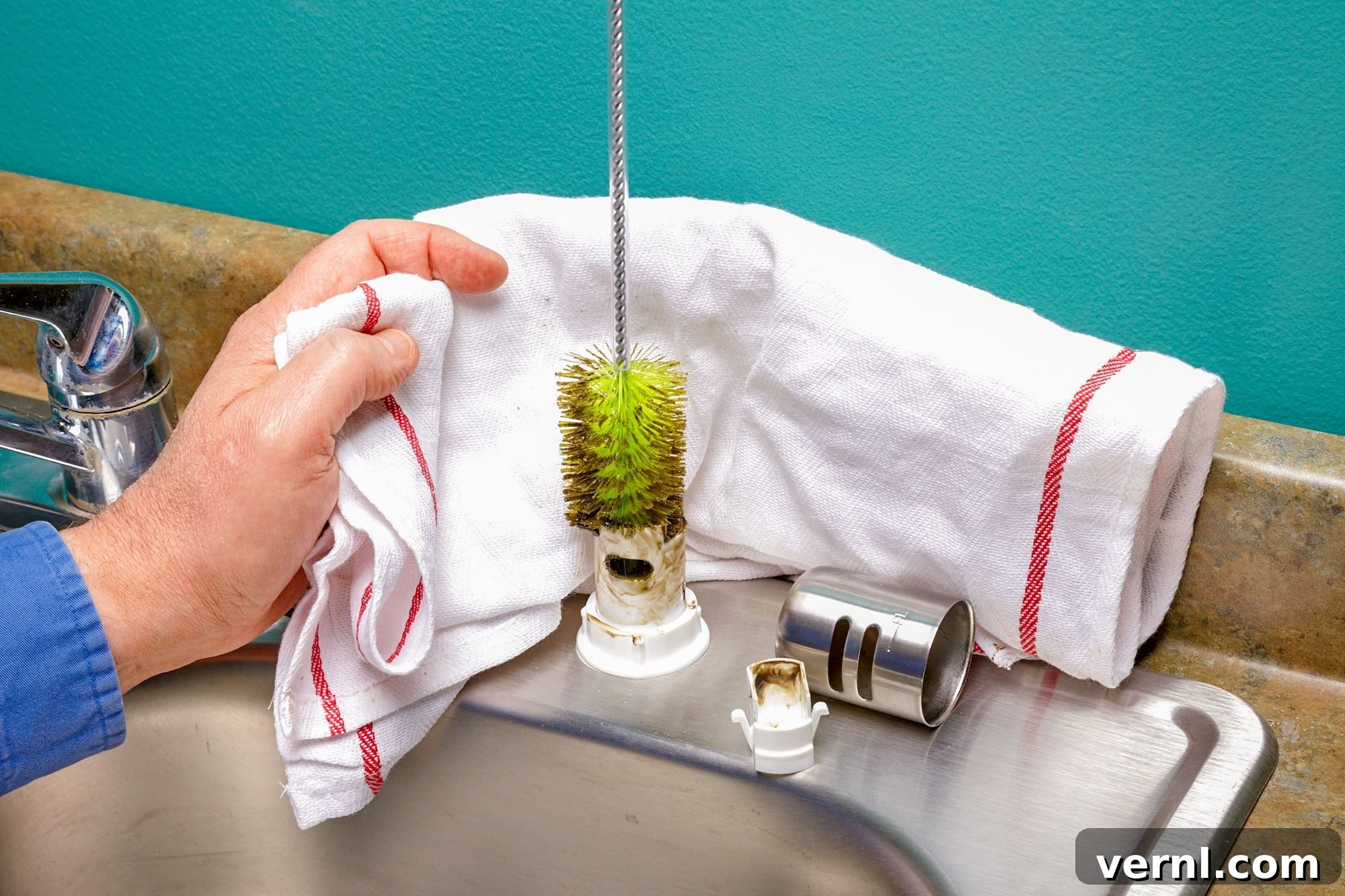
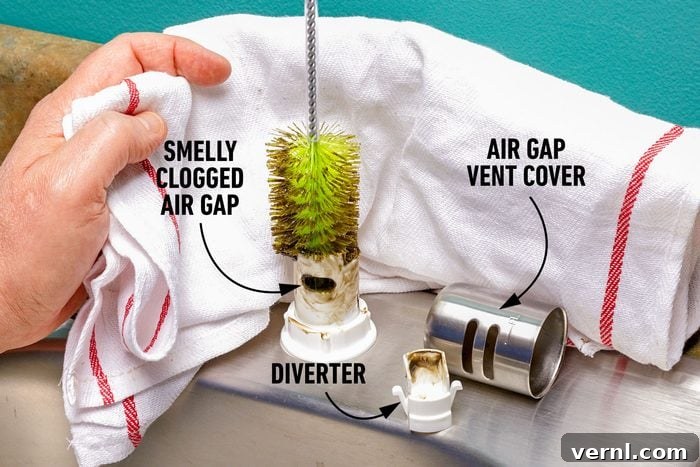
- Remove the cover: Most air gap covers simply pull straight up and off. Some might have a twist-lock mechanism, while others (less common) might be secured with a small screw. Gently twist or pull to remove it.
- Remove the inner diverter: Inside, you’ll find an inner cap or “diverter.” This piece usually snaps in or screws on. Remove it to expose the drain openings. You might need a screwdriver if it’s screwed in.
Step 3: Perform an Initial Inspection and Clear Loose Debris
- With the cover and diverter removed, visually inspect the inside of the air gap.
- You might immediately see obvious obstructions like large food particles, congealed grease, or even small pieces of plastic or labels that have gotten trapped.
- Carefully use your fingers (wearing gloves, of course), a paper towel, or a pair of pliers to remove any loose food particles or visible debris. This initial clearing can sometimes be enough for minor clogs.
Step 4: Deep Clean the Air Gap
- Pour a small amount of your household cleaner or dish soap into the air gap. Let it sit for a minute or two to help break down grease and grime.
- Take your bottle brush, soak it in more cleaner, and then vigorously plunge it up and down into the air gap’s openings. Work it around in a circular motion to ensure you scrape the sides of the internal pipes.
- You might feel resistance when the brush hits the clog. Continue to work the brush back and forth until the resistance lessens and the brush moves freely.
- Flush the air gap with a cup of hot water (not boiling) to help clear out dislodged debris and cleaner. Repeat the brushing and flushing process a few times until the water flows freely down the drain.
Step 5: Troubleshoot If the Clog Persists (Check the Drain Line)
This deep cleaning should resolve most air gap clogs. However, sometimes the backup is located further down the drain line, where the air gap connects to your garbage disposal or main drain pipe. If you still have a water leak or the dishwasher isn’t draining properly after cleaning the air gap itself, you’ll need to investigate further:
- Check the connection at the garbage disposal: Most dishwashers drain through the garbage disposal. Beneath your sink, locate the dishwasher drain hose connection to the side of the garbage disposal.
Ensure the knockout plug was removed if it’s a new installation. - Disconnect and clean the drain hose: If you’re comfortable with it, you might need to disconnect the dishwasher drain hose from the garbage disposal or drain wye (a “Y” shaped pipe fitting) and inspect it for clogs. Use a wire hanger or a small drain snake to clear any blockages in the hose or the disposal’s inlet.
- Inspect the P-trap: Sometimes the clog can be in the P-trap directly under your sink. This requires disassembling the P-trap to clear it, which is a slightly more advanced plumbing task.
Step 6: Reassemble and Test the Air Gap
- Once you’re confident the clog is cleared, wipe down all the components – the inner diverter and the outer cover – with a clean cloth and some disinfectant.
- Carefully reassemble the air gap vent: reinsert the inner diverter (snapping or screwing it back into place) and then place the outer cover back on.
- Plug your dishwasher back in or restore power at the circuit breaker.
- Run a short cycle on your dishwasher or simply run hot water into your sink and ensure the dishwasher pump activates to drain. Observe the air gap closely. There should be no water spewing out. The water should drain smoothly without issues.
Preventative Maintenance to Avoid Future Clogs
Once you’ve cleared the clog, adopting a few preventative habits can save you from future headaches:
- Scrape Plates Thoroughly: Always scrape off large food particles into the trash before loading dishes into the dishwasher. While dishwashers are efficient, they aren’t garbage disposals for large chunks of food.
- Pre-rinse Greasy Dishes: For heavily soiled or greasy dishes, a quick pre-rinse with hot water can prevent grease from solidifying in your drain lines.
- Run Hot Water: Before or after running your dishwasher, run hot water in your kitchen sink for a minute or two. This helps flush out any residual grease or food particles from the drain lines.
- Regular Cleaning: Periodically pour a cup of white vinegar down the air gap and let it sit for 30 minutes before flushing with hot water. This can help break down mineral deposits and minor grease buildups. You can also run an empty dishwasher cycle with a dishwasher cleaner once a month.
- Maintain Your Garbage Disposal: If your dishwasher drains through a garbage disposal, keep the disposal clean and free of clogs. Running the disposal regularly with cold water helps flush out food particles.
When to Call a Professional
While clearing an air gap clog is generally a DIY task, there are instances when professional help might be necessary:
- If you’ve followed all the steps and the air gap continues to leak, or if your dishwasher isn’t draining at all.
- If you suspect the clog is deep within your main drain line, beyond what you can reach with simple tools.
- If you’re uncomfortable with plumbing tasks or disassembling parts under your sink.
- If you notice other persistent plumbing issues alongside the air gap problem, it could indicate a larger underlying issue with your home’s drainage system.
By understanding the function of your dishwasher’s air gap, recognizing the signs of a clog, and knowing how to perform this simple repair, you’ve equipped yourself with valuable home maintenance knowledge. You’ve solved your problem, saved yourself the headache and expense of potential water damage, and ensured your kitchen remains a clean, functional space. A little proactive care goes a long way in keeping your dishwasher – and your entire kitchen – running smoothly!