

Master the Flame: Expert Charcoal Grilling Tips from World-Class Pitmasters
There’s nothing quite like the sizzle of food on a charcoal grill, the inviting aroma of smoke wafting through the air, and the rich, complex flavors that only open-flame cooking can deliver. For many, charcoal grilling is more than just a method of cooking; it’s a passion, a tradition, and an art form. But even the most seasoned grill masters can benefit from fresh insights and proven techniques.
To help you elevate your backyard barbecue game, we’ve gathered invaluable advice from three of the most respected names in the grilling world. These award-winning pitmasters and culinary experts have spent countless hours perfecting their craft, and they’re ready to share their secrets with you. Get ready to transform your grilling experience from good to legendary!
Meet the Grill Gurus
Our panel of experts brings a wealth of experience from competition circuits, renowned barbecue establishments, and best-selling cookbooks. Their collective wisdom will guide you through the nuances of charcoal grilling, ensuring delicious results every time.
Chris Lilly stands as a true titan in the barbecue universe. A world-champion pitmaster, he’s a celebrated spokesperson for Kingsford Charcoal and an astonishing five-time winner of the prestigious Memphis in May BBQ competition. Beyond the competitive stage, Chris serves as vice president, executive chef, and partner at the iconic Big Bob Gibson Bar-B-Q, where he also leads the Big Bob Gibson Bar-B-Q Competition Cooking Team. His expertise is built on decades of hands-on experience and an unwavering commitment to barbecue perfection.
Allen LeCuyer is the formidable pitmaster for the acclaimed competition BBQ team, Magnum P.I.G. Allen has been a prominent figure on the competitive backyard-grilling circuit since 2016, consistently demonstrating his skill and passion. His impressive list of achievements includes multiple Grand Championships, such as the coveted titles at Minnesota in May and Rotary Rock’n Ribs. Allen’s practical, competition-honed advice focuses on maximizing flavor and achieving consistent results.
Matt Moore is a highly respected BBQ professional and a prolific author, sharing his grilling wisdom through multiple popular books. Among his most notable works is “Serial Griller: Grillmaster Secrets for Flame-Cooked Perfection.” Matt’s culinary contributions have garnered international recognition, with his work being featured by esteemed media outlets such as the BBC, CBC, The New York Times, The Wall Street Journal, Washington Post, Atlanta Constitution, and the Chicago Tribune, among many others. His approach emphasizes innovative techniques and a deep understanding of flavor profiles.
We had the distinct pleasure of asking each of these barbecue gurus for their absolute best charcoal grilling tips. They had a wealth of knowledge to share, offering practical advice that can transform any aspiring grill master into a true outdoor cooking aficionado. But first, let’s establish a foundational understanding of what charcoal grilling truly entails.
What Is Charcoal Grilling? Unlocking Authentic Flavor
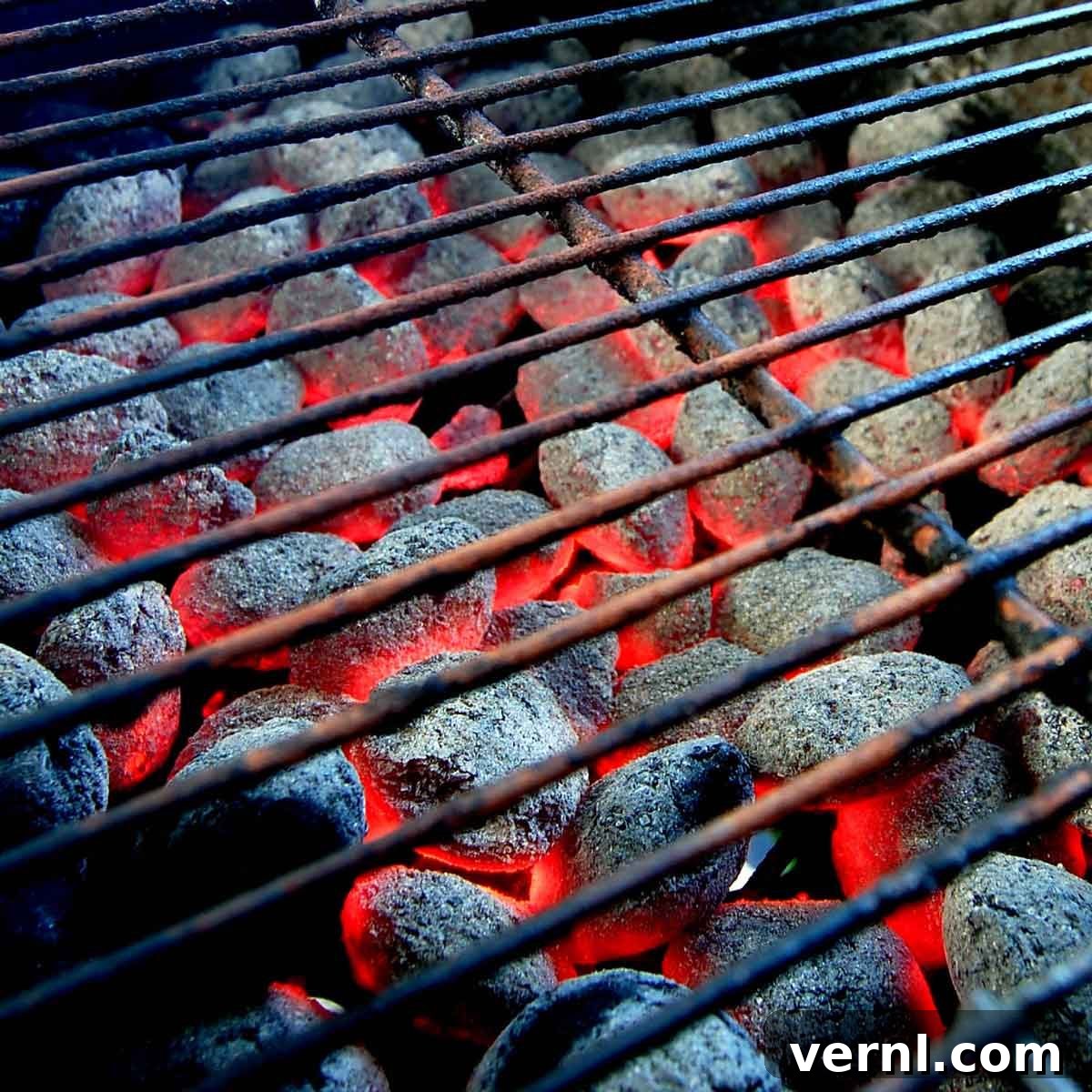
Charcoal grills are celebrated for their ability to infuse food with a distinctive smoky flavor and deliver a beautiful char that gas grills often struggle to replicate. While they come in a fascinating variety of shapes, sizes, and styles—from classic kettles to ceramic kamados—their fundamental principle remains the same: they harness the contained heat of burning charcoal or briquettes to cook food to perfection. Whether lidded or open, crafted from metal or ceramic, every charcoal grill features a reservoir for fuel at the bottom and a grate positioned above for your culinary creations.
On the surface, it sounds incredibly simple, yet there’s a profound depth to the art of charcoal grilling. It’s an experience that engages all the senses, from the smoky aroma to the satisfying crackle of the coals. Beyond merely cooking, charcoal grilling allows for precise temperature control through airflow, the creation of different heat zones, and the opportunity to impart complex flavors using various wood types. It’s this hands-on involvement and the superior flavor profile that makes charcoal grilling a cherished method for countless enthusiasts worldwide.
Essential Charcoal Grilling Tips from the Masters
Now, let’s dive into the expert advice that will help you achieve barbecue greatness:
Tip 1: Ditch the Lighter Fluid for Pure Flavor
Allen: “This is the easiest improvement a cook can make. Throw the lighter fluid away! Lighter fluid has a taste. If you don’t completely burn off all the fluid that you put on your coals, you’re at risk of tainting the flavor of your food. The best option is to use a charcoal chimney. They’re available at most stores that sell cooking equipment and most online retailers. It works by pouring unlit coals in the chimney and lighting from the bottom.”
Using lighter fluid is a common mistake that can instantly diminish the quality of your grilled food. The chemical residue can impart an unpleasant, artificial taste to anything you cook, masking the natural flavors you’re trying to achieve. A charcoal chimney starter, on the other hand, is an inexpensive and highly effective tool. It uses newspaper or a fire starter cube at the bottom to quickly and safely ignite the coals, allowing them to ash over uniformly without any chemical interference. This simple switch ensures that the only flavors you taste are from your delicious food and the natural smoke from the charcoal.
Tip 2: Enhance Smokiness with Hardwood and Lump Charcoal
Matt: “Lump charcoal can be lit quickly and reliably and reach high temperatures if it’s dry, producing very little ash. Though charcoal is composed of wood, it typically provides much less smoke compared to natural hardwoods. For that reason, lumps or chips of hardwood are often added to the lit coals to produce a more natural, wood-fired flavor. Grilling purists almost always prefer lump charcoal over the cheaper alternative, briquettes.”
While charcoal provides excellent heat, the smoky flavor it imparts can be subtle. To achieve that rich, complex wood-fired taste, integrating natural hardwoods is key. Lump charcoal, made from pure carbonized wood, offers quicker ignition and higher temperatures with minimal ash, making it an excellent base. However, for a more profound smoke profile, adding wood chunks or chips (such as hickory, apple, cherry, or oak) directly to your lit lump charcoal will release aromatic compounds that deeply penetrate your food. This technique is favored by grilling purists who appreciate the nuanced flavors and superior performance of natural lump charcoal combined with real wood.
Tip 3: Master Temperature with Air Dampers for High-Heat Cooking
Chris: “Regulating the temperature of your charcoal grill is controlled by airflow. Air intake, through the dampers near the fire, provides the oxygen needed to keep the fire burning. The air outflow through the top dampers pulls air through the grill. Open dampers result in higher temperatures. To maintain these high temperatures for a long period of time, I use 100 percent natural briquettes.”
Understanding and controlling airflow is paramount to successful charcoal grilling. Your grill’s dampers are not just vents; they are precision instruments for temperature management. The bottom dampers, or intake vents, feed oxygen to your coals, fueling the fire. The more open they are, the more oxygen reaches the coals, leading to a hotter burn. The top dampers, or exhaust vents, allow hot air and smoke to exit the grill, creating a convective draw that pulls fresh air in from below. Fully opening both sets of dampers creates maximum airflow, resulting in scorching high temperatures perfect for searing steaks or quickly cooking thinner cuts. For sustained high-heat cooking, high-quality, 100% natural briquettes are recommended as they burn more consistently and for longer durations than some lump charcoals.
Tip 4: Embrace Indirect Cooking for Large Meats
Allen: “With a standard grill, the best way to do a long low cook is to use the indirect method. Pour your hot chimney of coals to one side of your grill. This will create two zones, a very hot one on one side and a cooler zone on the other side. Put the meat on the side without coals. Without the heat directly on the meat, you will be able to cook at a lower temperature for a longer period of time. Indirect heat will allow a “slow and low” cook that will help tenderize large meats.”
For larger cuts of meat like whole chickens, briskets, or roasts, direct high heat can quickly burn the exterior while leaving the interior undercooked. The indirect cooking method is your secret weapon for achieving perfectly cooked, tender, and juicy results. By mounding your hot coals to one side of the grill, you create a two-zone cooking environment: a direct, high-heat zone over the coals and an indirect, cooler zone next to them. Placing your large meat in the indirect zone allows it to cook gently and evenly through radiant heat, preventing scorching and promoting moisture retention. This “slow and low” approach breaks down tough connective tissues, yielding incredibly tender meat that falls off the bone.
Tip 5: Utilize High Heat and an Onion for Grill Cleaning
Matt: “After you’ve finished grilling, open all the vents on your charcoal grill to drive up the temperature. After five minutes, the grates and surfaces will be super-hot, making it easy to clean them with a wire brush. No grill brush? How about an onion? Cut an onion in half and place the cut side down on the grill. Stick a fork in the onion and rub it up and down the grates — the natural oils from the vegetable will help clean and season the grill.”
Cleaning your grill immediately after use, while it’s still hot, is far more effective than trying to scrape cold, caked-on residue. By opening all the dampers after cooking, you’ll cause the remaining coals to flare up, burning off much of the food residue on your grates. A sturdy wire brush is ideal for this, quickly clearing away debris. For a natural, chemical-free cleaning and seasoning method, Matt suggests a clever trick: cut an onion in half, spear it with a fork, and rub the cut side vigorously across the hot grates. The onion’s natural acids and oils not only help loosen cooked-on food but also impart a subtle seasoning, preparing your grill for its next culinary adventure.
Tip 6: Implement Safe Shutdown Procedures
Chris: “After grilling, shut down all air dampers to snuff out the fire and preserve any unburned charcoal or briquettes. Do not throw away the ash from the grill for 24 hours to prevent unintended fires. You can reuse any unburned charcoal the next time you grill.”
Safety and efficiency are key components of a great grilling experience, even after the cooking is done. Once you’ve finished grilling, ensure you close all air dampers—both top and bottom. This cuts off the oxygen supply to the coals, effectively snuffing out the fire. This not only makes your grill safer but also preserves any unburned charcoal or briquettes, which can be reused in your next session, saving you money and reducing waste. Furthermore, it’s crucial to leave the ash in the grill for at least 24 hours before disposal. This ensures any lingering embers are completely extinguished, minimizing the risk of accidental fires when you empty the ash. Always prioritize safety when dealing with hot coals.
Tip 7: Invest in a Reliable Grill Thermometer
Allen: “The best grilling accessory is an easy choice for me. It isn’t charcoal-grilling specific, but applies to any cooking. A good thermometer is crucial. Undercooked meat isn’t safe and overcooked meat can be tough and unappealing. A good thermometer can help just about anyone become a grillmaster.”
Forget guesswork; a quality meat thermometer is the single most important tool for consistent and safe grilling. Relying on visual cues or poke tests is unreliable and can lead to either unsafe, undercooked food or dry, overcooked results. A digital instant-read thermometer or a wireless probe thermometer provides precise internal temperature readings, ensuring your food reaches the perfect doneness every time. This eliminates the risk of foodborne illness from undercooked poultry or pork, and prevents the disappointment of a tough, leathery steak. With a reliable thermometer, you can confidently cook everything from delicate fish to thick roasts, achieving juicy, tender perfection like a true professional.
Tip 8: Keep Food from Sticking by Oiling Your Grates
Matt: “To prevent sticking, dip a folded towel (an old terry cloth towel works best) in canola or vegetable oil and use tongs to rub the oil on the grates prior to adding your food.”
There’s nothing more frustrating than having your perfectly seared steak or delicate fish stick to the grill grates, tearing apart when you try to flip it. This simple yet effective tip can save you a lot of heartache and ensure your food comes off the grill looking as good as it tastes. Before placing any food on the hot grates, use a pair of tongs to hold a folded, oil-soaked towel (canola or vegetable oil works well) and carefully wipe down the cooking surface. This creates a non-stick barrier, allowing food to release easily and develop that beautiful, even crust without tearing. Ensure your grates are hot before applying the oil for the best results, as this helps to create a natural, non-stick patina.
Tip 9: Equip Yourself with the Right Grilling Tools
Chris: “My ‘must have’ tools and equipment include: a charcoal chimney, heavy grill gloves, a large heavy spatula (for big meats), a more delicate spatula (for fish and vegetables) and an internal meat thermometer to measure precise doneness.”
Having the correct tools makes all the difference in efficiency, safety, and the quality of your grilled dishes. Beyond the essential charcoal chimney mentioned earlier (which Chris also highlights as a must-have), heavy-duty grill gloves are crucial for protecting your hands from intense heat when adjusting coals or moving grates. A robust, large spatula is indispensable for handling hefty cuts like briskets and ribs, providing the leverage and surface area needed to turn them without damage. Conversely, a thinner, more delicate spatula (often called a fish turner) is perfect for fragile items like fish fillets or vegetables, ensuring they remain intact. And as reiterated, an internal meat thermometer is non-negotiable for achieving precise doneness and food safety.
Tip 10: Understand How to Cook Different Meats
Allen: “There are two main types of hamburgers: the thick ones (often called steak burgers), and thin ones, called diner burgers. Both are technically hamburgers, but they really are two different categories. Cooked properly, both can be fantastic, and I encourage people to try both. Chicken and other poultry has to be cooked to the right temperature — it really doesn’t have a range like beef does. Undercook and you could get yourself and your family sick. Overcook and you could chip a tooth on that crusty meat. Use a thermometer!”
Not all meats are created equal, and understanding their unique cooking requirements is essential for culinary success and food safety. As Allen points out, even something as seemingly simple as a hamburger comes in varieties that demand different approaches. Thick “steak burgers” benefit from a longer cook time, perhaps with an initial sear followed by indirect heat, to achieve a juicy medium-rare interior. Thin “diner burgers” are often cooked hot and fast for a crispy exterior and quick doneness. For poultry, there’s no wiggle room; it *must* reach a safe internal temperature (typically 165°F / 74°C) to prevent foodborne illness. Unlike beef, which can be enjoyed at various levels of doneness, undercooked chicken is a significant health risk. Overcooking, however, renders it dry and tough. A meat thermometer is your ultimate guide here, ensuring both safety and deliciousness across all meat types.
Tip 11: Exercise Patience – Stop Poking and Prodding
Matt: “Most folks have trouble with items sticking to the grill because their grill temperature is not hot enough, or they have not allowed sufficient time for the food to cook prior to flipping. Be patient, folks.”
The temptation to constantly poke, prod, or flip food on the grill is strong, but it’s often counterproductive. One of the most common reasons food sticks to the grates, as Matt highlights, is impatience. When meat, fish, or vegetables are placed on a grate that isn’t hot enough, or if they are moved too soon, they haven’t had a chance to properly sear and form a natural release layer. Allow your food to cook undisturbed for a sufficient period. This allows the proteins to denature and a crust to form, at which point the food will naturally release from the grates without sticking. Trust the process, maintain proper grill temperature, and resist the urge to fuss with your food unnecessarily.
Tip 12: Always Rest Your Meat for Maximum Juiciness
Chris: “For smaller cuts of meat, let them rest for five to 10 minutes after removing them from the grill and prior to cutting. For large cuts, wait 15 to 20 minutes. This time allows the temperature to equalize and gives the meat fibers time to reabsorb internal juices. You will appreciate the extra moisture.”
This final tip is often overlooked, but it’s one of the most critical for ensuring your grilled meats are as juicy and tender as possible. When meat cooks, its muscle fibers contract, pushing the internal juices towards the center. If you cut into the meat immediately after removing it from the grill, those juices will simply spill out onto your cutting board, leaving you with a dry, less flavorful meal. Resting the meat, even for a short period, allows these fibers to relax and reabsorb those delicious juices, redistributing them evenly throughout the cut. For smaller items like steaks or chicken breasts, 5-10 minutes is usually sufficient. Larger roasts or briskets benefit from a longer rest, typically 15-20 minutes, or even more for very large cuts. Covering the meat loosely with foil during this period can help retain heat. This simple act of patience promises a noticeably more succulent and enjoyable eating experience.
Ignite Your Grill Master Journey
Armed with these expert charcoal grilling tips from Chris Lilly, Allen LeCuyer, and Matt Moore, you’re now ready to transform your backyard into a haven of smoky, delicious flavors. From mastering the ignition process with a chimney starter to understanding the nuances of temperature control with dampers, and from ensuring food safety with a reliable thermometer to the final, crucial step of resting your meat, each piece of advice is designed to make you a more confident and capable grill master.
Charcoal grilling is a journey of discovery, where practice truly makes perfect. Experiment with different wood types, play with direct and indirect heat, and always remember the importance of patience. By applying these fundamental principles and insights from the pros, you’ll not only produce incredibly tasty food but also savor the rewarding process of cooking with fire. So, gather your coals, prepare your ingredients, and get ready to create unforgettable meals that will impress family and friends alike. Happy grilling!