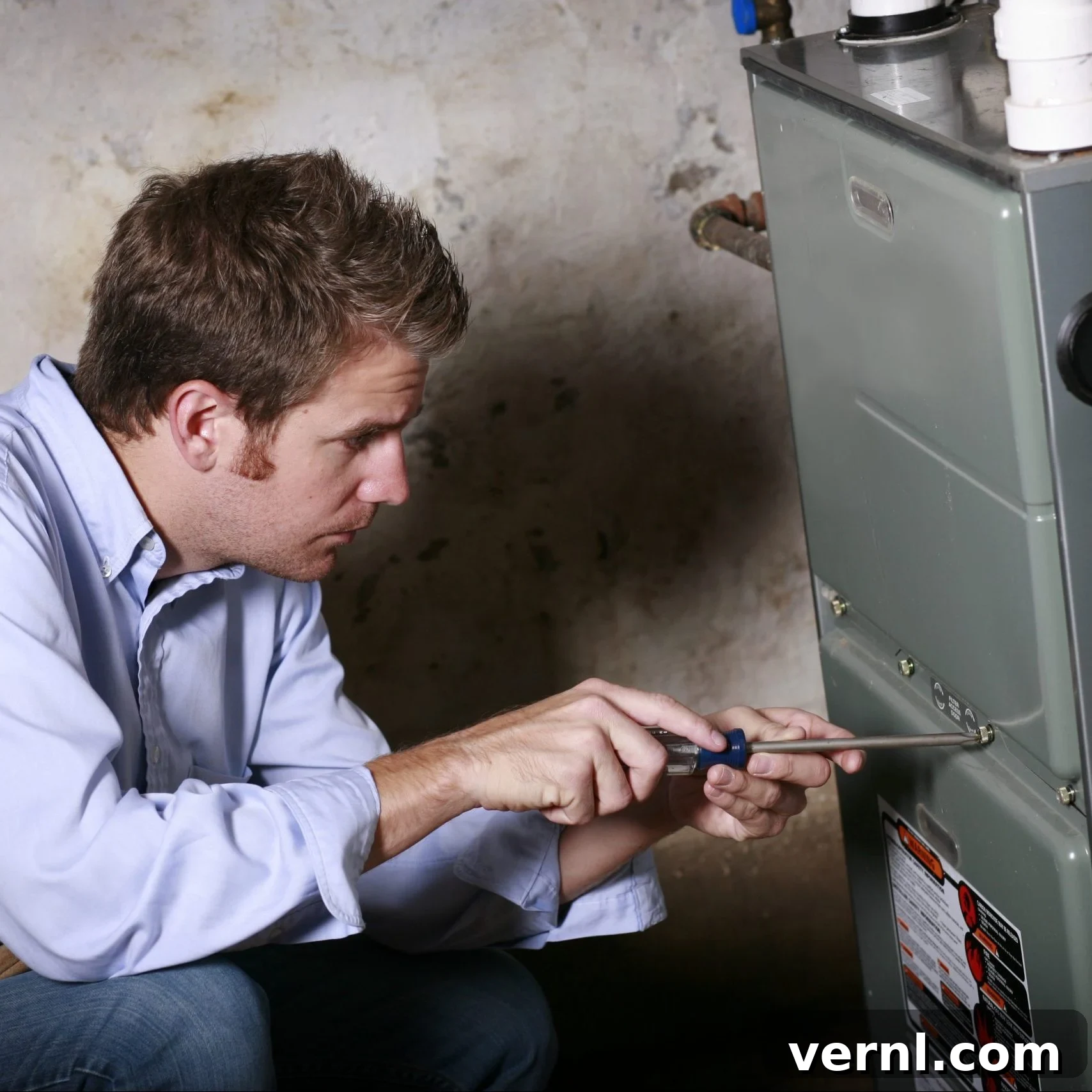
Optimize Your Furnace: A Simple Hack for Even Home Heating
Experiencing inconsistent temperatures throughout your home, with some rooms feeling significantly colder or hotter than others, is a frustratingly common issue, especially during the peak of winter or summer. This problem doesn’t just impact your comfort; it can also lead to higher energy bills as your heating or cooling system works harder to compensate for perceived temperature imbalances.
While many factors can contribute to uneven home temperatures—from inadequate furnace sizing and the presence of dirty furnace filters to compromised air ducts that fail to properly distribute conditioned air—one frequently overlooked culprit is the speed at which your furnace’s blower fan operates. If your furnace filters are clean, and your ductwork is well-insulated and free from obstructions, a sluggish blower might be failing to push air with enough force to reach the farthest corners and rooms of your home.
Fortunately, for homeowners with a specific type of heating system, there’s a surprisingly straightforward adjustment that can dramatically improve airflow and achieve more consistent indoor temperatures. This “hack” specifically applies to gas furnace systems equipped with a two-speed blower motor. If your system features a single-speed blower, or a more advanced variable-speed unit, this particular method won’t apply, and you’ll need to explore alternative solutions such as adjusting air dampers, ensuring all registers are fully open, utilizing supplemental space heaters, or, in extreme cases, considering a furnace upgrade.
Before diving into the solution, it’s beneficial to recognize the signs that your furnace might be struggling to perform optimally. These can include unusual noises, short cycling, insufficient heat, or indeed, the persistent issue of uneven heating.
Understanding Your Furnace Blower and the Integrated Furnace Control (IFC)
To implement this clever adjustment, it’s crucial to understand a bit about how your furnace’s blower motor is wired and controlled. The blower is the component responsible for circulating air throughout your home, pushing heated or cooled air through your ductwork system. At the heart of this operation is the Integrated Furnace Control (IFC) board, often referred to as the “brain” of your furnace.
The IFC board manages various furnace functions, including ignition, safety controls, and—pertinently for this discussion—the speed of the blower motor. Modern two-speed furnaces are designed with different blower speeds to optimize performance for both heating and cooling cycles. Cooling typically demands a higher airflow to effectively remove heat and humidity, while heating often utilizes a slightly lower speed for a more gentle and even heat distribution, or simply because warmer air rises more readily.
Identifying Blower Wires and Speeds
To access the IFC board and identify the relevant wiring, you’ll first need to open the control panel of your furnace. Inside, you’ll typically find several wires originating from your blower motor connected to the IFC board. These wires are color-coded, with each color corresponding to a different blower speed setting. While specific colors can sometimes vary by manufacturer, a common setup for blower motor wires and their associated speeds is as follows:
- Black: This wire typically controls the highest blower speed. It’s often designated for maximum airflow, commonly used during the air conditioning (cooling) cycle when powerful air circulation is needed.
- Yellow: Generally associated with a medium-high blower speed. This is a common default for the heating cycle in many systems, providing a balance of airflow and quiet operation.
- Blue or Brown: These colors usually indicate a medium-low blower speed, offering reduced airflow for specific applications or lower heat settings.
- Red: This wire is typically for the lowest blower speed, used in scenarios requiring minimal airflow, such as continuous fan operation or very low heating demands.
- White or Purple: This is your “common” wire. It provides the neutral connection for the blower motor and is essential for its operation. It should never be tampered with or moved to another terminal, as this can cause severe damage to your motor.
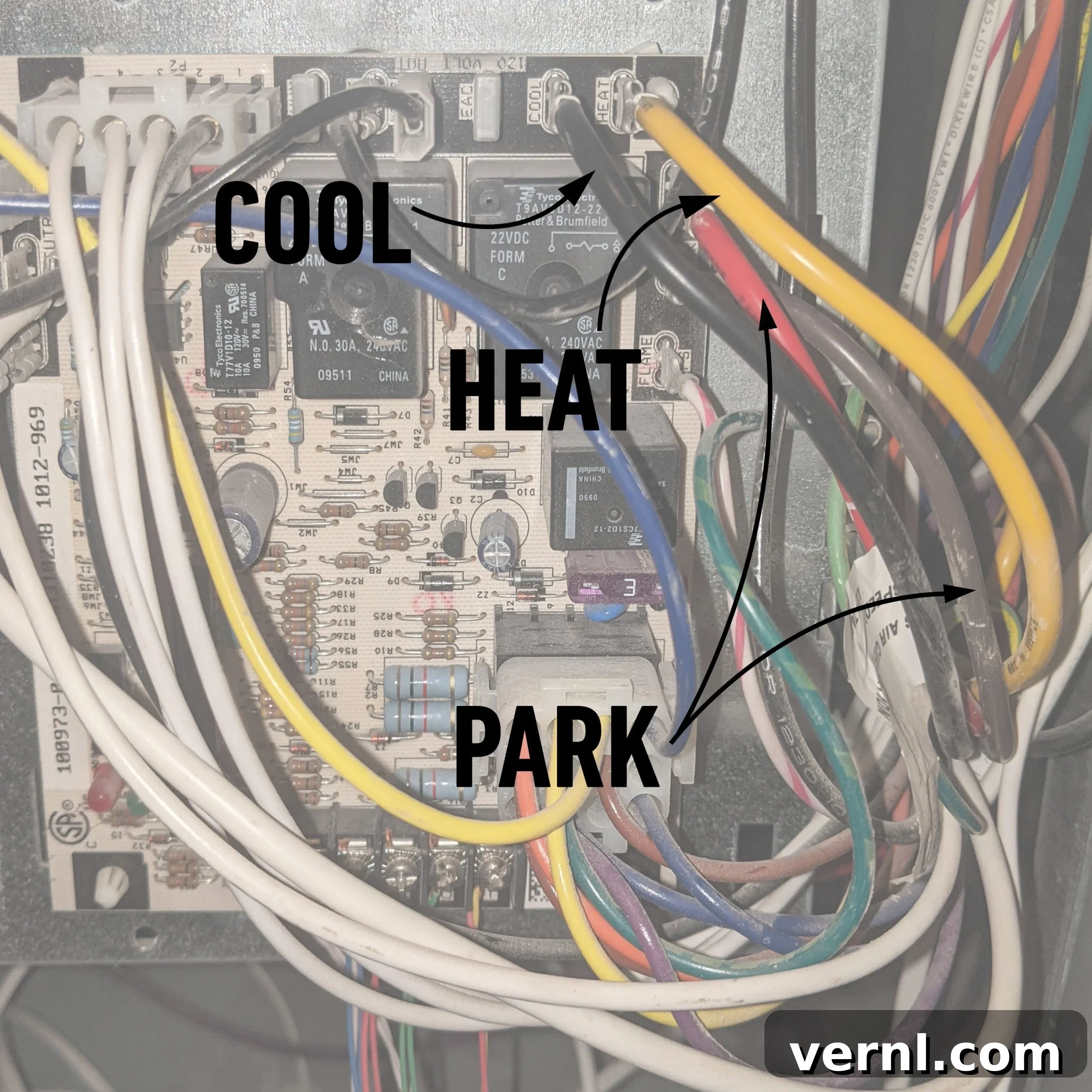
In standard configurations, the high-speed wire (often black) is connected to the air conditioning (COOL) terminal on your IFC board, while the medium-high speed wire (typically yellow) is connected to the heating (HEAT) terminal. The other speed wires (red, blue/brown) are usually connected to “PARK” terminals, meaning they are not actively used by the system for its primary heating or cooling functions.
The essence of this adjustment lies in leveraging the existing high-speed setting for your heating cycle. As the summer air conditioning season gives way to the cooler fall and winter heating season, we aim to increase the blower speed during heating by judiciously swapping these specific wires on the COOL and HEAT terminals, giving your furnace a much-needed boost for better heat distribution.
The Simple Furnace Blower Speed Adjustment Hack: Step-by-Step Procedure
Before you begin any work on your furnace, prioritize safety above all else. Incorrect wiring or accidental contact with live electrical components can result in serious injury or damage to your system. If you’re ever unsure or uncomfortable, please consult a qualified HVAC technician.
Safety First: Power Disconnection
- Turn Off Power: This is the most critical step. Locate the dedicated wall switch for your furnace, which is often found near the furnace itself, resembling a light switch. Flip it to the “off” position. If your home lacks a specific furnace switch, proceed to your main electrical breaker box and turn off the circuit breaker that controls your furnace. Many furnaces also have a safety relay switch integrated into the blower compartment door; opening this panel will typically cut power to the furnace automatically, but manually shutting off the power at the source provides an extra layer of safety.
Accessing and Identifying Wires
- Open the Control Panel: Carefully unlatch and open the access panel to your furnace’s Integrated Furnace Control (IFC) board. You will see a cluster of wires connecting various components.
- Locate Blower Wires: Identify the set of wires coming directly from your blower motor to the IFC board. These are typically thicker gauge wires than others on the board.
- Identify Current Connections: On most two-speed furnace IFC boards, you’ll find clearly labeled terminals for “COOL” (for air conditioning) and “HEAT” (for heating). In a typical setup, you’ll see the black wire (high speed) connected to the “COOL” terminal and the yellow wire (medium-high speed) connected to the “HEAT” terminal. You may also notice other speed wires (e.g., red, brown, blue) connected to “PARK” terminals, indicating they are not currently in use.
Performing the Wire Swap
- Initiate the Swap: The goal is to make the high-speed wire (black) control your heating cycle, and the medium-high speed wire (yellow) control your cooling cycle (should you use it).
- Remove Yellow Wire: Gently, but firmly, disconnect the yellow wire from the “HEAT” terminal.
- Connect Black Wire to HEAT: Take the black wire, which was previously connected to the “COOL” terminal, and connect it securely to the now-vacant “HEAT” terminal.
- Connect Yellow Wire to COOL: Now, take the yellow wire that you initially removed from the “HEAT” terminal and connect it to the “COOL” terminal, which was vacated by the black wire.
- Double-Check Connections: Ensure both wires are firmly seated in their new terminals. Verify that you have only swapped these two specific wires.
Crucial Warning: Do NOT Touch the Common Wire
Under no circumstances should you remove or attempt to swap the common wire (typically white or purple) from its terminal. This wire provides the neutral connection necessary for your blower motor’s operation. Misplacing or incorrectly wiring the common wire can cause irreversible damage to your blower motor, potentially burning it out and necessitating an expensive replacement. Stick strictly to swapping only the high-speed (black) and medium-high speed (yellow) wires if they correspond to your COOL and HEAT terminals.
Restoring Power and Testing
- Close Panel and Restore Power: Securely close the furnace control panel. Re-enable the power to your furnace at the wall switch or breaker box.
- Test Your System: Set your thermostat to heat and observe if the furnace cycles on and if the blower operates with increased force. You should notice a stronger airflow from your registers, particularly in those rooms that previously struggled to get warm.
Is This Furnace Blower Speed Hack Safe and Appropriate for Your System?
This blower speed adjustment can be an effective and safe DIY solution, but only under specific conditions. Understanding these conditions is paramount to prevent damage to your furnace or compromised safety.
Conditions for Safe Implementation:
- Two-Speed Blower System: This hack is exclusively designed for gas furnace systems that feature a simple two-speed blower motor (i.e., discrete high and medium-high speed settings for cooling and heating).
- Standard Wiring (or Clear Labeling): While wire colors can sometimes vary, the key is identifying the wires designated for “COOL” and “HEAT” on your Integrated Furnace Control (IFC) board terminals. As long as you can clearly read these labels and identify which wire corresponds to the higher fan speed (usually black) and the heating speed (usually yellow) by their terminal connection, you can proceed safely.
- Understanding the Swap: The procedure involves a direct swap of the wires connected to the “COOL” and “HEAT” terminals. The intent is to utilize the blower’s highest available speed for both cooling and heating, rather than the slightly lower speed typically defaulted for heating.
When NOT to Attempt This Hack:
- Variable Speed Blower Systems: If your furnace is equipped with a variable speed blower motor, DO NOT attempt this manual wire swap. Variable speed blowers are sophisticated systems that use electronics to continuously adjust their speed based on demand, often having “parked” wires that are still actively controlled by the circuit board. Manipulating these wires can cause significant, irreparable damage to the motor and its control module, leading to costly repairs.
- Uncertainty About Blower Type: If you are unsure whether your system has a two-speed or a variable speed blower, or if you cannot clearly identify the COOL and HEAT terminals or the corresponding wires, it is always best to err on the side of caution.
- Complex Wiring: If your furnace wiring appears unusually complex, or if the wire colors don’t match the typical setup described, it’s safer to avoid DIY adjustments.
When in doubt, or if you suspect you have a variable speed system, always consult a qualified HVAC technician. They can safely assess your system, make appropriate adjustments, or recommend professional solutions without risking damage.
FAQ: Enhancing Your Home’s Heating System
Should I ever slow down my furnace fan speed?
It is generally not advisable to intentionally slow down your furnace blower speed below its default or manufacturer-recommended settings, especially for the heating cycle. Reducing the airflow across your furnace’s heat exchanger can have serious consequences. Insufficient airflow can lead to the heat exchanger overheating, a condition that can cause premature wear, cracking, and ultimately shorten its lifespan. A cracked heat exchanger is a dangerous situation, as it can allow carbon monoxide to leak into your home. Always ensure your blower is operating at an appropriate speed for safe and efficient heat transfer.
Is this hack safe?
Yes, if performed correctly on the appropriate system, this hack is safe. As long as your furnace is a two-speed system and you precisely swap only the wires connected to the “COOL” and “HEAT” terminals (typically black and yellow, respectively), following all safety precautions, it should be safe. However, if you have a variable speed blower, or if you are unsure about any step, it is not safe. The primary risk is damaging your motor by miswiring the common wire or attempting this on a variable speed system. When in doubt, call a professional.
What are the benefits of increased blower speed for heating?
Increasing your furnace’s blower speed for heating can lead to several benefits, particularly in homes with uneven temperature distribution. It helps to push warm air more effectively throughout the entire duct system, reaching rooms farthest from the furnace or those with less direct airflow. This results in more consistent and comfortable temperatures across all living spaces, eliminating cold spots. Additionally, improved airflow can contribute to better air filtration and overall system efficiency, as the furnace doesn’t have to work as hard or run as long to achieve the desired temperature.
What are some other common reasons for cold rooms, and how can I fix them?
Beyond blower speed, several factors can cause cold rooms:
- Dirty Air Filters: A clogged filter restricts airflow. Change furnace filters monthly or as recommended.
- Closed or Obstructed Registers/Dampers: Ensure all supply registers are fully open and not blocked by furniture or curtains. Check duct dampers (if present) to ensure they are open for the cold rooms.
- Duct Leaks or Poor Insulation: Leaky or uninsulated ducts in unconditioned spaces (attics, crawl spaces) lose heat before it reaches the rooms. Sealing and insulating ducts can significantly help.
- Poor Room Insulation/Air Leaks: Rooms with inadequate wall or attic insulation, or those with drafts from windows and doors, will struggle to retain heat. Sealing air leaks and improving insulation can make a huge difference.
- Incorrect Thermostat Placement: If your thermostat is in a particularly warm area, it might satisfy too quickly, leaving other rooms cold.
- Undersized Furnace: If your furnace is too small for your home’s square footage or insulation level, it simply won’t be able to generate enough heat for all rooms. This often requires professional assessment.
When should I call an HVAC technician?
It’s always best to call an HVAC technician if you are uncomfortable with any aspect of troubleshooting or repairing your furnace, or if you suspect a more serious underlying issue. Specifically, contact a professional if:
- You have a variable speed blower and suspect issues with uneven heating.
- The hack doesn’t resolve the problem, or if new issues arise after attempting it.
- You hear unusual noises or detect strange odors from your furnace.
- Your furnace is constantly cycling on and off (short-cycling).
- You suspect a gas leak or carbon monoxide issue (immediately evacuate and call emergency services).
- Your furnace frequently breaks down or fails to ignite.
Regular professional maintenance is also crucial for ensuring the longevity, efficiency, and safety of your heating system.