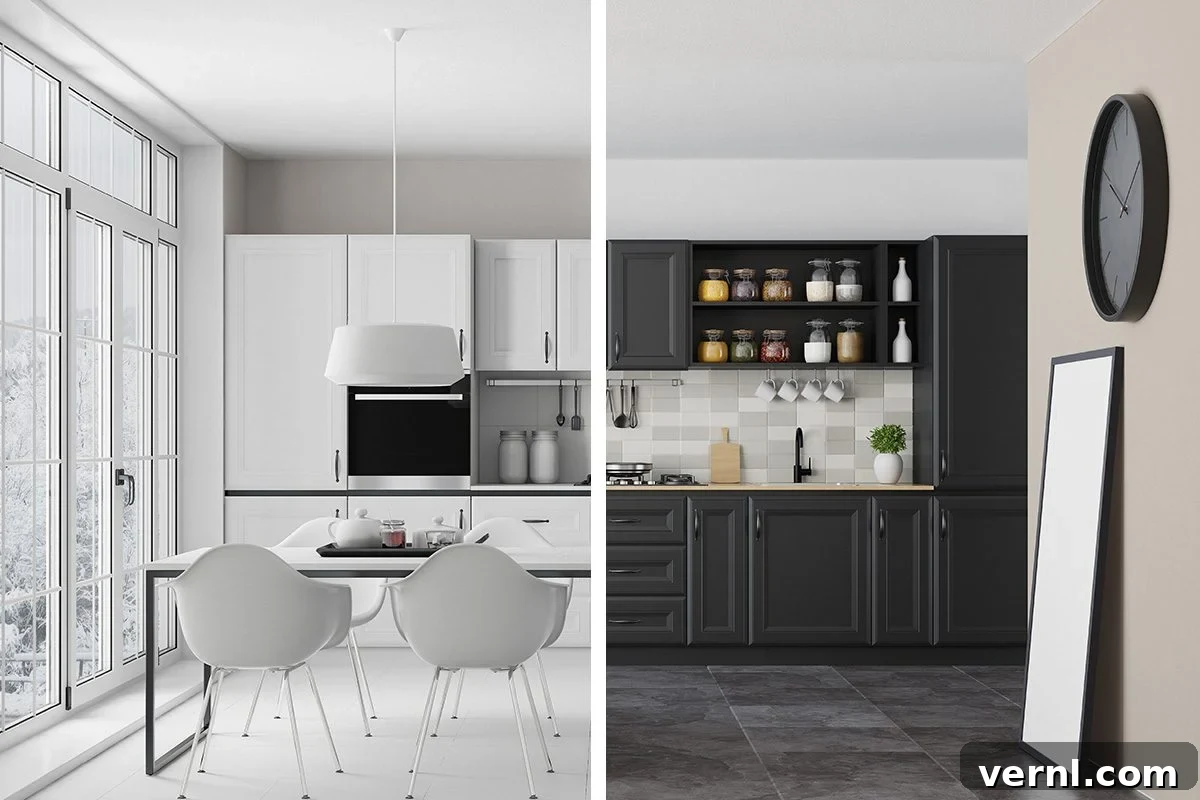
For many years, the quintessential white kitchen reigned supreme in the world of interior design. When embarking on a kitchen remodel, countless homeowners, including myself, gravitated towards the bright and airy appeal of white cabinets, pristine white countertops, and a classic white backsplash. This pervasive trend established white as the undisputed champion of kitchen aesthetics, symbolizing cleanliness, spaciousness, and timeless elegance.
However, the design landscape is ever-evolving. While the allure of white kitchens remains strong, a captivating challenger has emerged: the dark and moody kitchen. This sophisticated style is rapidly gaining traction, introducing a rich palette of deep hues and luxurious finishes. We’re seeing a notable rise in demand for dark green cabinets, opulent black countertops, and warm espresso wood tones, signalling a significant shift in homeowner preferences. This introduces a compelling dilemma for anyone contemplating a kitchen update: dark vs. white kitchen—which aesthetic best suits your home and personal style?
Navigating this decision requires a thoughtful exploration of both options. In this comprehensive guide, we’ll delve into the distinct advantages and potential drawbacks of white and dark kitchen designs, providing you with the insights needed to make an informed choice that perfectly aligns with your personality and desired kitchen ambiance. Prepare to discover the nuances of each style, ensuring your next kitchen transformation is a reflection of your unique vision.
Embracing Light and Bright: Should You Opt for a White Kitchen?
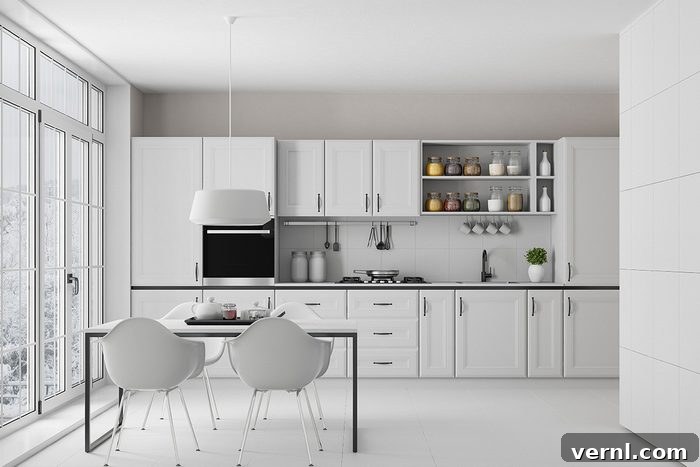
“White kitchens are beloved for a reason, and their enduring popularity is a testament to their inherent qualities,” explains designer Teri Simone. “They effortlessly convey a sense of cleanliness, a timeless aesthetic, and an undeniable brightness. Furthermore, white kitchens possess a unique ability to make even the most modest and constrained spaces feel remarkably more open, airy, and expansive.” For homeowners dealing with a compact footprint or seeking to maximize perceived space, an all-white kitchen design might indeed present the optimal solution, creating an illusion of grandeur where physical space is limited.
The Allure of White: Exploring White Kitchen Pros
- Magnifies Small Spaces: White is a master of illusion. Its reflective properties bounce natural and artificial light around the room, making walls appear to recede. This visual trick significantly enhances the feeling of spaciousness, making white an ideal choice for smaller kitchens or those lacking abundant natural light. It banishes the feeling of claustrophobia, inviting an expansive and comfortable atmosphere.
- A Versatile Blank Canvas: One of the most compelling advantages of a white kitchen is its unparalleled versatility. It serves as a neutral backdrop, a blank canvas upon which you can layer virtually any design style, color palette, or decorative theme. Whether your taste leans towards minimalist modernity, rustic farmhouse charm, Scandinavian simplicity, or industrial chic, a white kitchen can seamlessly adapt, allowing you to infuse personality through accessories, textiles, and artwork without clashing.
- Timeless and Enduring Appeal: White kitchens have transcended fleeting trends to become a true classic. Their simplicity and neutrality ensure they never go out of style, offering a design longevity that few other color schemes can rival. Investing in a white kitchen means creating a space that will remain elegant and relevant for decades to come, providing a sense of stability and enduring beauty in your home. This timeless quality also contributes to higher resale value, appealing to a broad range of prospective buyers.
- Enhanced Natural Light: White cabinetry and surfaces amplify the effects of natural light, making the kitchen feel brighter and more inviting throughout the day. This reduces the need for artificial lighting during daylight hours, contributing to energy efficiency and a more pleasant cooking environment.
- Perceived Cleanliness: While white does show dirt, its inherent brightness contributes to a perception of superior cleanliness and hygiene. A sparkling white kitchen feels fresh and well-maintained, promoting a sense of calm and order in the heart of the home.
The Challenges of White: Understanding White Kitchen Cons
- Prone to Showing Dirt and Smudges: The pristine nature of white can be a double-edged sword. Every speck of dust, grease splatter, or fingerprint stands out starkly against white surfaces. This demands more frequent cleaning and meticulous maintenance to preserve its immaculate appearance, which can be a consideration for busy households with children or pets.
- Risk of Feeling Sterile or Boring: Without careful design considerations, an all-white kitchen can sometimes tip from serene to sterile. If lacking in warmth, texture, or contrasting elements, it can feel cold, impersonal, or monotonous, resembling a laboratory rather than a welcoming hub of the home.
- Lacks Unique Character (if not personalized): Given its widespread popularity, a standard white kitchen might not feel particularly unique or distinctive. If you’re aiming for a highly personalized space that stands out from the crowd, a plain white design might require extra effort in accessorizing and detailing to truly reflect your individual style.
Crafting an Inviting White Kitchen: Expert Tips
To prevent your white kitchen from feeling monotonous or overly stark, it’s crucial to layer in depth and personality. “White acts as an exceptional backdrop, providing the perfect stage for layering in personality through the strategic use of colorful accessories, rich warm wood accents, or sophisticated bold hardware,” advises Simone. Think beyond just white walls and cabinets. Introduce vibrant artwork, sculptural fruit bowls, or a collection of artisan pottery to infuse life and color. Integrate a variety of textures to add visual interest and tactile warmth. Consider the organic charm of rattan bar stools, the natural elegance of wood cutting boards, or the handcrafted beauty of Zellige or subway tiles for your backsplash. Even small details like linen dish towels or woven placemats can make a significant difference. Don’t forget the power of greenery; houseplants bring natural life and a refreshing touch to any white space. Furthermore, select countertops and flooring that provide subtle contrast without overwhelming the bright aesthetic. Light gray quartz, a warm butcher block island, or natural oak flooring can ground the space beautifully.
Embracing Depth and Drama: Should You Opt for a Dark Kitchen?
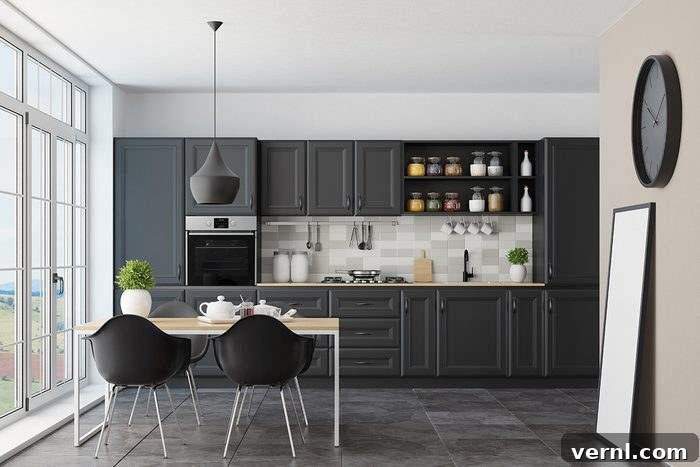
“Dark kitchens possess an incredible capacity to be both stunning and profoundly dramatic,” enthuses Simone. “A carefully chosen deep navy, a lush forest green, or an elegant charcoal hue can instantly conjure a cozy, moody vibe that feels incredibly rich and elevated. This effect is particularly potent when these dark tones are expertly paired with the warmth of brass or the sleek sophistication of matte black hardware.” The result is a space that feels curated, intimate, and luxurious, offering a striking departure from the traditional bright kitchen.
The Power of Dark: Unpacking Dark Kitchen Pros
- High-Impact, Sophisticated Look: Dark kitchens exude an undeniable sense of luxury and sophistication. They make a bold design statement, immediately capturing attention with their dramatic presence. This aesthetic choice communicates a discerning taste and a desire for a kitchen that is both functional and a true showpiece. It creates a powerful visual anchor in the home.
- Creates Cozy and Intimate Vibes: Unlike white kitchens that feel expansive, dark colors tend to create a more enclosed, intimate, and cozy atmosphere. This can be incredibly inviting, making the kitchen a warm and comforting sanctuary, ideal for both quiet family meals and lively entertaining. The feeling of being enveloped by rich tones can be wonderfully calming.
- Excellent at Hiding Dirt and Smudges: From a practical standpoint, dark surfaces are far more forgiving than white when it comes to everyday grime. Fingerprints, minor splatters, and dust tend to blend in, requiring less frequent visible cleaning and maintenance. This makes dark kitchens a pragmatic choice for busy households where constant upkeep is not always feasible.
- Accentuates Metallic Finishes: Dark cabinetry provides a stunning backdrop for metallic hardware and fixtures. Brass, gold, copper, and even polished chrome pop beautifully against deep hues, adding sparkle and luxury. Matte black hardware, on the other hand, creates a sleek, seamless, and ultra-modern look.
- Unique and Trend-Forward: Choosing a dark kitchen demonstrates a willingness to embrace contemporary design trends and move beyond the conventional. It offers a unique aesthetic that feels fresh and distinctive, setting your home apart.
The Considerations of Dark: Understanding Dark Kitchen Cons
- Can Make Small Kitchens Feel Cramped: The very quality that makes dark colors cozy can also be a drawback in smaller spaces. Dark hues absorb light, which can make a compact kitchen feel even smaller, more enclosed, and potentially claustrophobic if not balanced with sufficient lighting and lighter elements.
- Potential for Dating Quickly: While currently fashionable, certain dark color choices might be perceived as more trend-driven than timeless. There’s a risk that a highly specific dark shade could feel dated in a few years, requiring careful selection to ensure longevity in style.
- Demands Ample Natural Light: Dark kitchens thrive on natural light. Without a generous influx of sunshine, the space can quickly become dim, oppressive, and cave-like. It requires careful assessment of your kitchen’s natural light sources before committing to a dark palette.
- Higher Lighting Requirements: To counteract the light-absorbing nature of dark colors, these kitchens often necessitate a more robust and layered lighting scheme. This might translate to a greater investment in various types of artificial lighting to ensure the space remains bright and functional.
Illuminating Your Dark Kitchen: Expert Tips
If not designed with intention, dark kitchens can indeed run the risk of feeling overwhelming or visually constricting. To counteract this, “balance things out thoughtfully with light countertops, strategic metallic accents, or elegant glass cabinet fronts to maintain a sense of openness and visual breathing room within the space,” advises Simone. Consider lustrous marble, bright quartz, or light-colored butcher block for your countertops to provide a striking contrast and reflect light. Incorporate reflective surfaces through polished brass handles, chrome faucets, or stainless steel appliances. Glass-front cabinets are excellent for breaking up solid stretches of dark cabinetry, offering a glimpse of curated dishware and adding depth. While lighting is universally crucial in any kitchen, it becomes even more paramount in a dark color scheme. “Layered lighting is key,” Simone emphasizes. “Implement under-cabinet lights for task illumination, stylish pendant lights over an island for ambient glow, or even a chic little table lamp on the counter can elevate a dark kitchen color scheme, making it feel wonderfully thoughtful, inviting, and functional.” Beyond artificial light, consider lighter flooring options such as light wood, large format pale tiles, or even a strategically placed light-colored rug to anchor the space and prevent it from feeling too heavy.
The Ultimate Decision: White vs. Dark Kitchen—Which Is Right for Your Home?
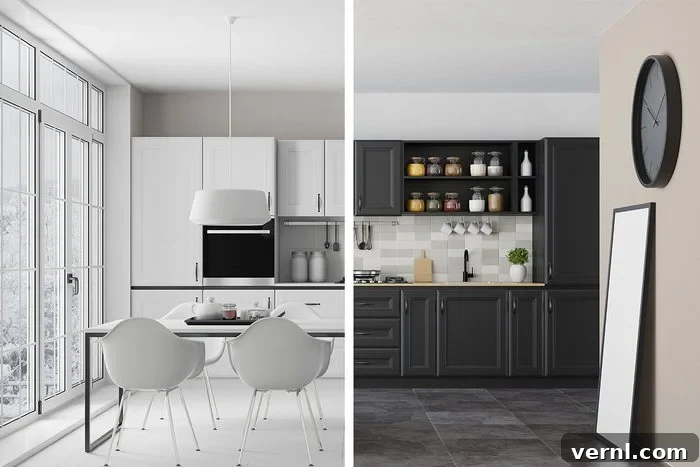
Just like any significant decorating decision within your home, the ultimate choice between a dark or white kitchen unequivocally boils down to your personal taste, lifestyle, and the unique characteristics of your space. To truly discern which palette resonates with you, engage in a visualization exercise: picture yourself going about your daily routine in both a bright, airy white kitchen and a dramatic, cozy dark kitchen. Which environment sparks joy? Which one feels more authentically “you”?
My own white kitchen, while perhaps not the most avant-garde design, consistently brings me immense pleasure with its bright openness. It feels immaculately clean and crisp, providing a welcome contrast to the frequent clutter of children’s belongings that often permeates the rest of my home. This personal preference highlights the subjective nature of kitchen design. However, a sophisticated dark kitchen might perfectly align with your distinct style and practical needs. If you find yourself consistently drawn to darker, richer hues in other areas of your home’s decor, chances are you’ll derive immense satisfaction from a dark kitchen. A critical factor to consider, though, is the existing natural light in your kitchen. A dark color palette absolutely thrives in spaces blessed with ample natural illumination; without it, the room can easily feel dim and uninviting.
Regardless of the palette you ultimately select, remember Simone’s crucial design principle: “No matter which palette you choose, contrast and texture are absolutely key to creating a dynamic and engaging space!” In a white kitchen, consciously strive to introduce warmth and depth. This can be achieved through natural wood elements, such as a stunning natural oak kitchen island (like mine), rustic floating shelves, or beautiful wooden bar stools. Layer in plenty of interesting textures with accessories – think woven baskets, ceramic vases, linen curtains, or a textured backsplash tile. These elements prevent the white space from appearing sterile and infuse it with character. Conversely, in a moody dark kitchen, if both your walls and cabinetry are dark, it becomes imperative to strategically incorporate lighter elements to provide crucial contrast and prevent the space from feeling overwhelmingly heavy. Opt for lighter flooring, such as pale wood or large-format light tiles, and select bright, reflective countertops like marble or light quartz. Metallic accents (brass, copper, or polished chrome) and glass-front cabinets are also excellent tools for bouncing light around, adding sparkle, and ensuring the dark kitchen remains inviting and vibrant.
Consider also the overall flow of your home. Do you want your kitchen to seamlessly blend with an open-plan light living area, or do you prefer it to be a distinct, more dramatic zone? Think about the long-term maintenance; while dark kitchens are more forgiving with smudges, white kitchens instantly highlight areas needing attention. Ultimately, your kitchen should be a reflection of your personality and a space where you feel comfortable, inspired, and truly at home. Taking the time to weigh these factors will ensure your kitchen renovation is a resounding success.
About the Expert
- Teri Simone is the distinguished Head of Design at Nieu Cabinet Doors. Nieu is a premier bespoke cabinet doors company that specializes in providing designer-advised, custom-made cabinet doors, drawers, panels, and trim solutions for a variety of spaces, including kitchens, laundry rooms, and bathrooms. With her extensive expertise, Teri is renowned for her ability to create functional yet exquisitely beautiful home design solutions. She is also a invaluable source of knowledge on both established and emerging interior design trends.