

Lineman’s Pliers: The Indispensable Tool for Electrical Professionals
In the vast world of hand tools, few are as iconic and essential to electricians and tradespeople as lineman’s pliers. Often referred to simply as “linemans” or “side cutters,” these robust tools are specifically engineered to tackle a myriad of tasks involved in electrical wiring, cable work, and general construction. Their unique design, characterized by a sturdy build and multi-functional features, makes them an invaluable asset for anyone working with wires and conduits.
What Exactly Are Lineman’s Pliers?
Lineman’s pliers are easily distinguished from other types of pliers by several key design elements. They feature a prominent stub nose, broad and flat gripping surfaces, robust cutting edges, and angular edges on the outside of their jaws, often designed for reaming. Primarily, these are the go-to pliers for electricians, dating back to the mid-1800s when the burgeoning telegraph industry created a demand for a durable tool capable of cutting, twisting, and gripping wires—thus earning them the enduring name “Lineman’s Pliers.”
Their construction is a testament to their intended heavy-duty use. Typically forged from high-carbon steel, these pliers are designed for maximum strength and durability, capable of withstanding the rigors of daily professional use. The handles are almost always insulated to protect against electrical shock, making them a critical safety device for live wire applications (though always verify insulation ratings and practice proper lockout/tagout procedures).
Key Components of Lineman’s Pliers: A Detailed Look
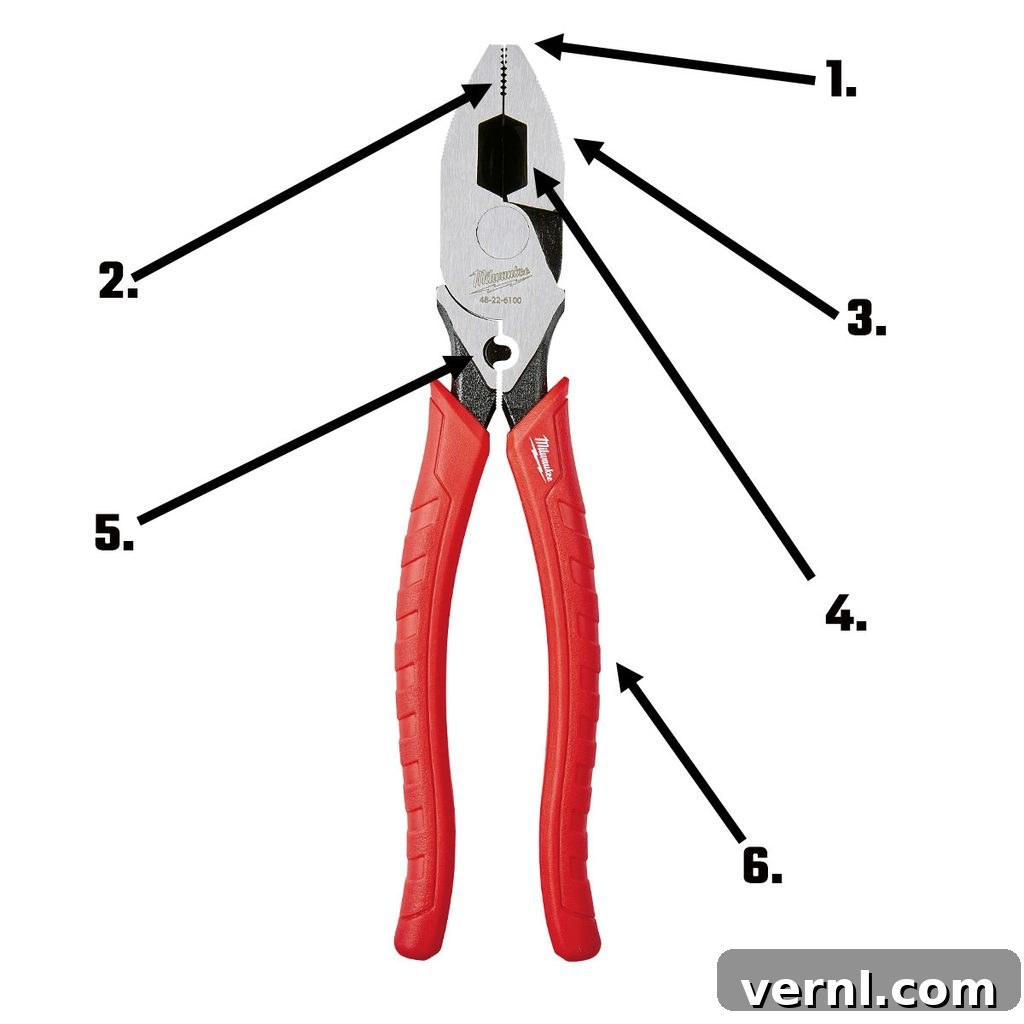
Understanding each part of lineman’s pliers illuminates their versatility and effectiveness:
- Stub Nose: The broad, flat tip of the jaws provides a large surface area for gripping, bending, and pulling wires or small objects with immense leverage. Its blunt design is ideal for reaching into tight spaces and securing a firm hold.
- Flat Gripping Surface: Located just behind the stub nose, these cross-hatched or serrated surfaces are engineered to provide maximum grip on various materials. They are perfect for twisting wires, holding fasteners, or straightening bent components, preventing slippage even when significant force is applied.
- Angular Outside Edge for Reaming: A crucial feature for plumbers and electricians alike, these sharp, angled edges on the exterior of the jaws allow users to smooth down rough edges and burrs on the inside lip of freshly cut metal pipes or conduits. This prevents wire insulation from being damaged during pulling and ensures a safer installation.
- Cutting Edges: Positioned closer to the pivot point for enhanced leverage, the hardened cutting edges are designed to effortlessly slice through various gauges of copper, aluminum, and even steel wire. High-quality lineman’s pliers feature precision-ground cutters that maintain their sharpness over extended use.
- Crimper (Optional Feature): Many modern lineman’s pliers incorporate a crimping die, typically located between the pivot and the handle. This allows electricians to securely attach non-insulated or insulated terminals to wires, creating reliable electrical connections without needing a separate tool.
- Insulated Handle: The most critical safety feature, the handles are sheathed in a thick layer of electrically non-conductive material, often rubber or plastic. This insulation protects the user from electrical shock when working on or near live circuits. It’s imperative that the insulation is always intact and rated for the voltage being worked with.
How Are Lineman’s Pliers Used in Practice?
The utility of lineman’s pliers extends far beyond simple cutting. Electricians and tradespeople leverage their robust design for a broad spectrum of tasks:
- Wire Manipulation: They are expertly used to straighten, cut, grip, twist, push, and pull various types of electrical wire. Whether it’s forming a perfect loop for a screw terminal, twisting multiple wires together for a secure connection, or pulling stiff wires through conduit, these pliers provide the necessary leverage and precision.
- Cutting and Bending Metal: Beyond electrical wires, the powerful cutting edges can snip light gauge metal, such as tie wire, strap, or small nails. The sturdy jaws are also adept at bending light metal components, making them useful in general construction and fabrication tasks.
- Fastener Removal: The strong gripping jaws are ideal for pulling staples, nails, and other stubborn fasteners from wood or other materials, saving time and effort compared to using a claw hammer in tight spots.
- Pipe Reaming: As mentioned, the angular edges on the outside of the jaws are specifically designed to ream down ridges and burrs on the inside lip of cut pipes and conduits. This ensures a smooth interior surface, preventing abrasion and damage to electrical wire insulation as it is pulled through the conduit, which is vital for safety and system longevity.
- Crimping Electrical Connectors: For models equipped with a crimper, lineman’s pliers streamline the process of attaching terminals and connectors, making them an all-in-one tool for many wiring jobs.
Their versatility means that a single pair of lineman’s pliers can often replace several specialized tools, making them a space-saving and efficient choice for any toolbag.
Exploring the Different Types of Lineman’s Pliers
While the classic lineman’s pliers design is ubiquitous, manufacturers have introduced several variations to cater to specific needs and enhance functionality:
- Standard Lineman’s Pliers: The most common type, offering a balance of cutting, gripping, and reaming capabilities. Available in various sizes, typically 7, 8, or 9 inches.
- High-Leverage Lineman’s Pliers: Engineered with the pivot point closer to the cutting jaws and a longer handle, these pliers significantly increase cutting power and gripping force with less effort, making them ideal for heavier gauge wires and demanding tasks.
- Lineman’s Pliers with Crimper: As previously discussed, these integrate a crimping die, adding an extra layer of functionality for electrical connections.
- Lineman’s Pliers with Fish Tape Puller: Some models include a specialized slot near the pivot designed to grip and pull fish tape, a common tool used by electricians to pull wires through conduit.
- Grip Options: While most have cross-hatched gripping surfaces, some feature finer serrations or specialized patterns for enhanced grip on specific materials.
- Insulation Ratings: All professional-grade lineman’s pliers should have insulated handles, but specific models might be rated for higher voltages (e.g., VDE 1000V rated), certified for maximum safety in high-voltage environments.
Choosing the right type depends on the primary tasks, desired leverage, and specific job site requirements.
What Makes a Pair of Lineman’s Pliers Exceptional?
Not all lineman’s pliers are created equal. Several factors contribute to the quality, performance, and longevity of an outstanding pair:
- Smooth Operation: High-quality pliers feature a precision-machined pivot point that allows for smooth, effortless opening and closing of the jaws. This reduces hand fatigue and ensures consistent performance over time.
- Well-Insulated Handles: Beyond being merely insulated, premium pliers boast multi-layer insulation that meets stringent safety standards (like VDE or ASTM F1505). The insulation should be durable, resistant to oils and chemicals, and provide a comfortable, ergonomic grip.
- Rust-Resistant Metal: Constructed from high-grade alloy steel, the metal components should be treated with corrosion-resistant finishes (e.g., black oxide, chrome plating) to withstand harsh working environments and prolong the tool’s lifespan.
- Bright Colors for Visibility: While not directly affecting performance, brightly colored handles or accents help prevent tools from getting lost on busy job sites, enhancing efficiency and safety.
- Durability and Precision: The jaws should align perfectly, and the cutting edges should remain sharp even after repeated use on tough materials. Minimal play in the pivot indicates superior manufacturing.
- Ergonomics: A comfortable handle design that fits well in the hand reduces strain and improves control, especially during prolonged use.
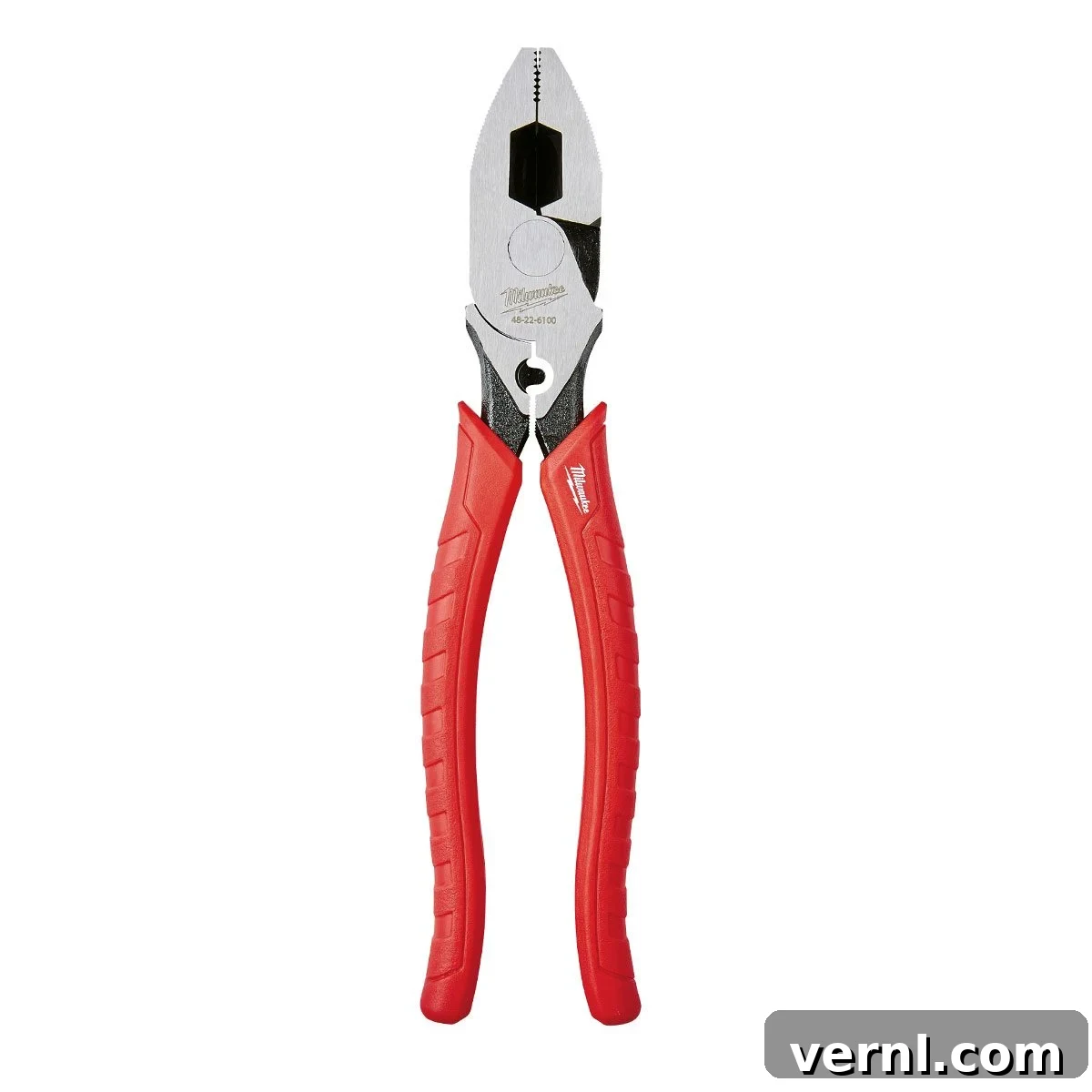
Brands like Milwaukee are renowned for manufacturing high-quality lineman’s pliers, such as the Milwaukee 48-22-6100 9 Inch Leverage Lineman Pliers with Crimper and Pipe Reaming Head Design, which exemplifies these desirable features, offering robust construction and enhanced functionality for the discerning professional.
Essential Tips for Using Lineman’s Pliers Effectively
Twisting Wires for Secure Connections
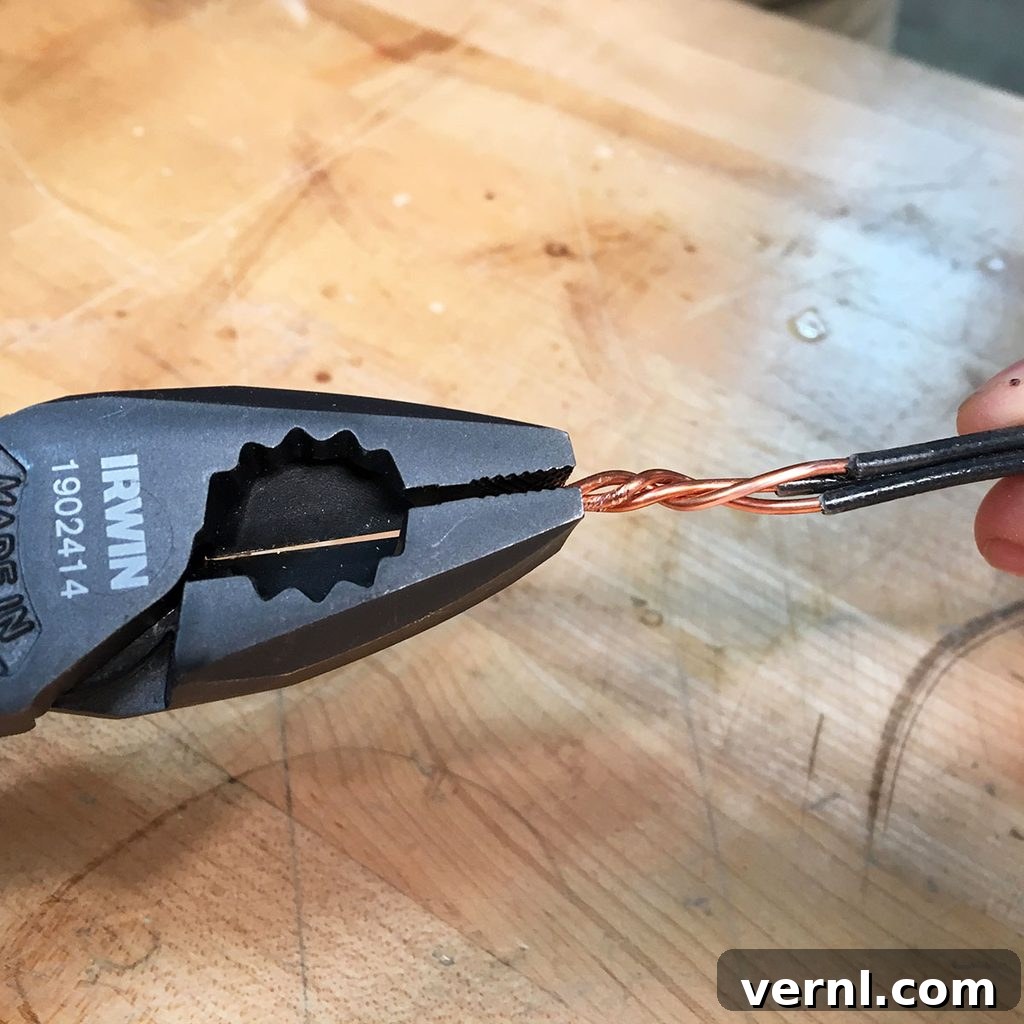
When connecting multiple wires, especially before capping them with a wire nut, proper twisting is crucial for a strong, reliable electrical connection. Here’s a pro tip:
Strip a little more insulation off the wires than is strictly required for the wire nut. This extra exposed wire provides a larger surface area for the jaws of your lineman’s pliers to grip, making it significantly easier to twist and braid the wires together securely. Aim for uniform twisting, ensuring each strand is tightly intertwined.
Clipping Wires for Optimal Wire Nut Fit
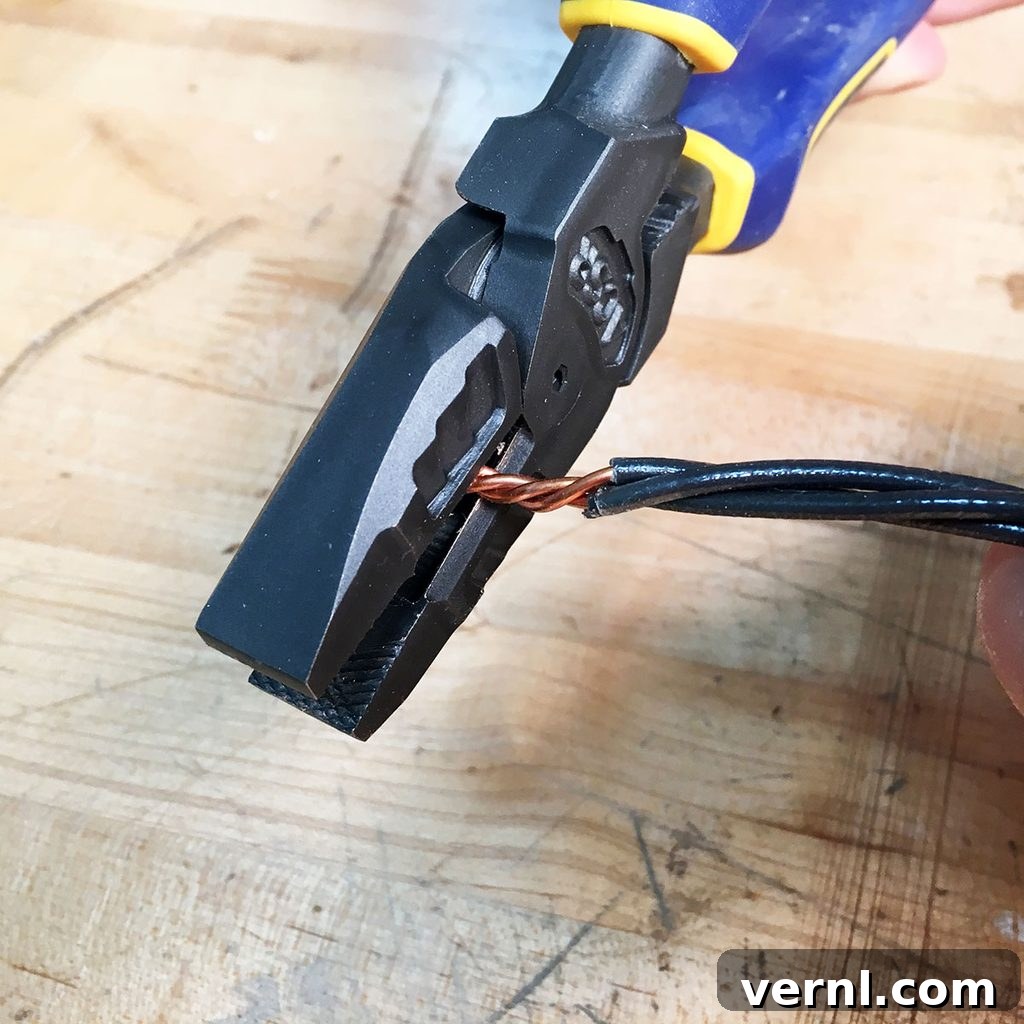
After you’ve braided the wires together securely:
Trim them all to the desired length that best fits inside the wire nut. This step is critical. Wires that are too long can bottom out in the wire nut without making full contact, or worse, expose bare wire outside the nut. Wires that are too short won’t provide enough contact surface. By trimming them precisely, you ensure that the twisted ends snugly fit within the wire nut, creating maximum contact and a more reliable and safer electrical connection. This prevents loose connections, which can lead to arcing and potential fire hazards.
Additional Lineman’s Pliers Tips:
- Maintenance is Key: Regularly clean your pliers, especially the pivot point, to remove dirt and debris. A drop of light oil on the pivot will ensure smooth operation and prevent rust.
- Inspect Insulation: Before each use, visually inspect the insulated handles for any nicks, cracks, or damage. Compromised insulation means the tool is no longer safe for electrical work and should be replaced immediately.
- Use for Intended Purpose: Avoid using lineman’s pliers as a hammer, pry bar, or wrench. Misuse can damage the tool, compromise its safety features, and potentially cause injury.
- Choose the Right Size: Smaller pliers offer more precision, while larger ones provide greater leverage. Select the size appropriate for the task at hand.
The Indispensable Role of Lineman’s Pliers in Modern Trades
From their origins in the nascent telegraph industry to their current form as highly refined, multi-functional instruments, lineman’s pliers have remained a cornerstone of any professional electrician’s toolkit. Their rugged construction, combined with specialized features for cutting, gripping, twisting, and reaming, makes them uniquely suited for the demands of electrical installation and repair.
Investing in a high-quality pair of lineman’s pliers is not just about acquiring a tool; it’s about investing in efficiency, safety, and reliability. By understanding their components, various applications, and best practices for use, tradespeople can maximize the potential of these essential pliers, ensuring precise work and enduring connections in every project they undertake. Always prioritize safety, maintain your tools, and choose the right pliers for the job.