
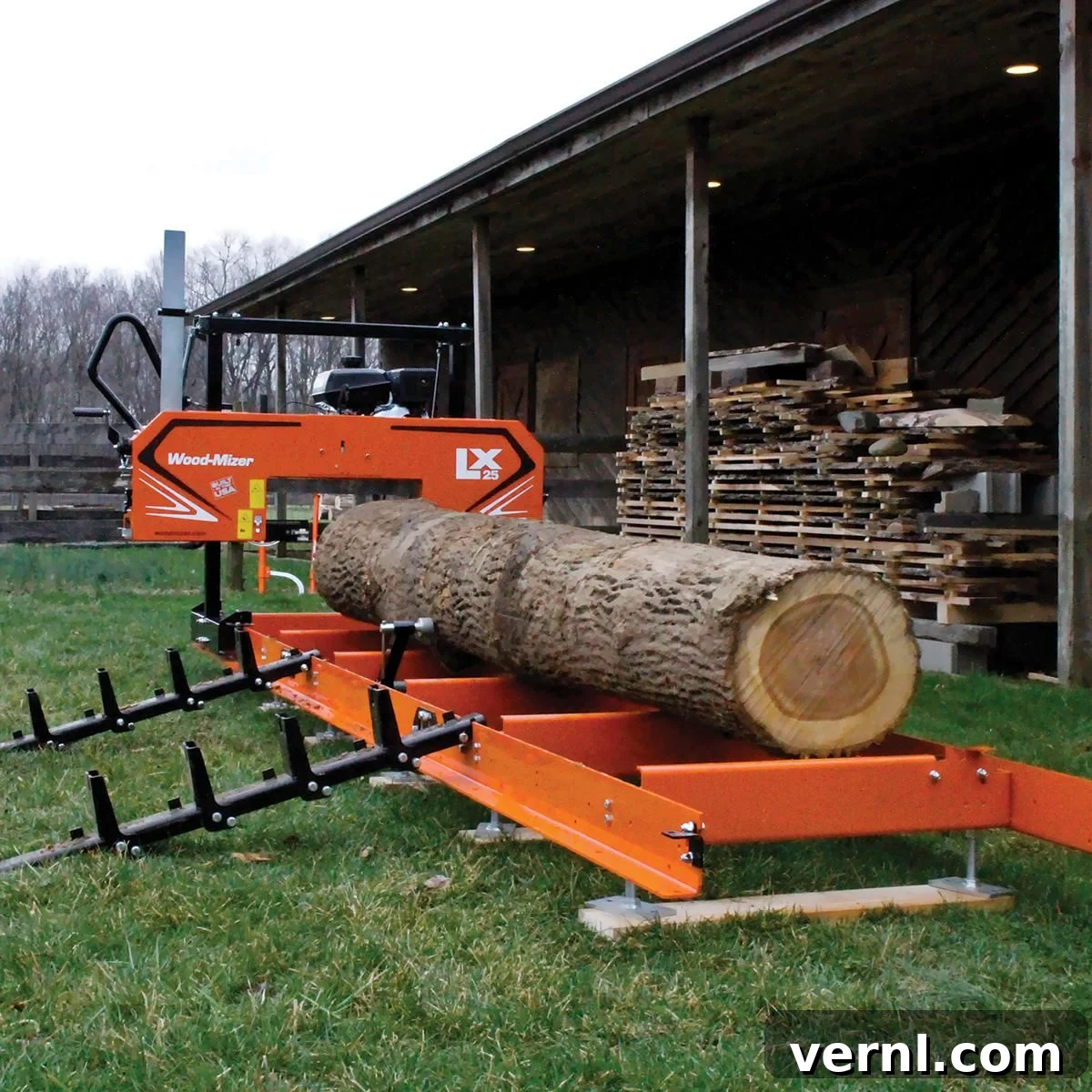
Unlock Your Wood’s Potential: The Complete Guide to Portable Sawmills for DIY Lumber Production
The landscape of the lumber market has been profoundly reshaped in recent years. What began with unprecedented surges during the pandemic, driven by shifts in housing demand and supply chain disruptions, has evolved into a period of sustained volatility. While some immediate shortages have eased, underlying factors such as dwindling global forest supplies, increased demand for sustainable materials, and fluctuating transportation costs continue to exert upward pressure on prices. For homeowners, contractors, and hobbyists alike, this means that reliable, affordably priced lumber is no longer a given.
In this challenging environment, the decision to process your own timber has transformed from a niche interest into a remarkably astute strategy. Provided you have access to a supply of suitable logs – whether from your own property, fallen trees, or responsibly sourced timber – investing in a portable sawmill empowers you to circumvent market fluctuations, significantly reduce project costs, and gain unparalleled control over your material quality. It’s an investment that pays dividends not only in financial savings but also in the satisfaction of self-sufficiency.
Traditional full-scale lumber producers operate by transporting logs to their centralized sawmills. However, for the individual looking to transform their own standing or fallen trees into usable lumber, this logistical model is impractical. The solution lies in bringing the sawmill directly to the logs. The market now offers a diverse range of portable sawmills, designed specifically for this purpose. While high demand for some of the most advanced models has occasionally led to extended wait times, there are readily available, efficient options for every need and budget.
For most DIY enthusiasts and those embarking on their first milling projects, a chainsaw mill stands out as the most accessible entry point. These units are by far the most economical portable option, incredibly easy to deploy, and typically available without the long lead times associated with larger, more complex machines. They offer a straightforward path to turning raw timber into valuable construction materials, opening up a world of possibilities for custom projects and significant savings.
What is a Portable Sawmill and Why Do You Need One?
At its core, a portable sawmill is a versatile piece of equipment designed to cut logs into various lumber dimensions – planks, beams, siding, and more – directly at the logging site. Unlike stationary industrial sawmills, these machines are built for mobility, allowing you to mill timber where it falls, eliminating the costly and labor-intensive process of transporting heavy logs. This “mill-to-the-log” approach is a game-changer for anyone with access to timber resources.
A basic portable sawmill typically consists of a track or guide system that clamps securely to a log, along with a cutting mechanism, often a chainsaw, bandsaw, or circular saw, which moves along this track to produce straight, consistent cuts. More sophisticated models incorporate cradles or decks to hold logs, while others are designed to cut logs directly where they rest on the ground. The range of features varies widely, from manually operated systems requiring simple log-turning tools like a log peavey or cant hook, to top-of-the-line units equipped with advanced hydraulic log loading and turning systems for effortless operation.
The primary motivation for acquiring a portable sawmill is simple yet powerful: to gain an independent, cost-effective source of lumber. The alternative, selling your seasoned logs to a commercial sawmill, may generate some income and spares you the milling effort. However, this convenience comes at a price. By milling your own timber, you retain the full value of the wood, transforming what would otherwise be a raw material into finished lumber at virtually no material cost. Considering the persistently high and unpredictable prices of commercial lumber, a portable sawmill can quickly pay for itself, often within just a few projects. It represents not just an investment in equipment, but an investment in self-sufficiency, sustainability, and substantial long-term savings for any woodworking or construction endeavor.
Understanding the Types of Portable Sawmills
When you begin exploring portable sawmills, you’ll discover a spectrum of options, each with distinct advantages and ideal applications. While a quick search might predominantly highlight chainsaw mills due to their popularity and affordability, it’s crucial to understand the three main categories available. These range from simple, DIY-friendly setups to more robust, production-oriented machines, offering different levels of efficiency, precision, and investment. Here’s a detailed rundown of the types of portable sawmills you’ll encounter:
Chainsaw Mill: The Accessible Entry Point
The chainsaw mill is the most straightforward and budget-friendly option for converting logs into lumber. Essentially, it’s a specialized metal guide system that clamps onto a log, providing a stable track for your existing chainsaw. You supply the chainsaw, and the mill attachment directs the saw blade through the wood, allowing you to achieve remarkably straight and consistent cuts that would be impossible freehand. These mills are incredibly user-friendly, require minimal setup, and are highly portable, making them ideal for remote locations or occasional use.
A reliable chainsaw mill typically accommodates guide bars ranging from 10 to 36 inches or even longer, enabling you to tackle impressively large diameter logs. Their primary advantage lies in their ability to mill logs exactly where they’ve fallen, eliminating the need for heavy lifting equipment to transport timber to a stationary mill. While chainsaw mills operate slower than other types and produce a wider kerf (the width of the cut, meaning slightly more wood waste), their low cost and ease of deployment make them an excellent choice for individuals who need to mill a few custom beams, slabs, or dimensional lumber pieces without significant capital investment.
Band Saw Mill: Efficiency and Precision for Production
Stepping up in capability, the band saw mill is a heavy-duty, super-sized version of a shop band saw, engineered for log milling. The core difference is its orientation: the continuous loop blade is positioned horizontally over a conveyor track. The blade housing, often powered by a gas or electric engine, glides along this track to cut a stationary log into precise boards. This design allows for significantly faster milling speeds and produces a much thinner kerf compared to a chainsaw mill, resulting in less sawdust waste and more usable lumber from each log.
Band saw mills are renowned for their accuracy and the smooth finish they leave on boards, often requiring less planing afterwards. They are available in various configurations, from entry-level manual models to advanced hydraulic systems that assist with log loading, turning, and precise blade height adjustments. These mills are particularly well-suited for individuals or small businesses engaged in moderate to large-scale lumber production, whether for personal construction projects, custom furniture making, or selling timber to local markets. While less portable than chainsaw mills, many band saw mills are trailer-mounted, making relocation straightforward for larger operations.
Circular Saw Mill: Speed and Durability
Circular saw mills are the workhorses of large-scale lumber production, prized for their exceptional speed and durability, especially when cutting through challenging timber or logs that might contain hidden metal. To adapt this technology for portability, a robust circular saw blade is typically mounted on an overhead, moveable track. This system allows the saw to traverse a stationary log, rapidly slicing it into lumber. Circular blades are less prone to damage from knots or embedded debris than delicate band saw blades, making them a robust choice for varied log quality.
An innovative and highly efficient variant of the circular saw mill is the swing-blade sawmill. This unique design features a single circular blade that can be rotated 90 or even 180 degrees. This capability allows the operator to make both horizontal and vertical cuts with a single pass without moving the log, enabling the production of accurately dimensioned boards from all four sides of a log. Swing-blade mills are celebrated for their efficiency, precision, and the ability to produce perfectly square lumber quickly. They represent a significant investment but offer substantial returns in speed and accuracy for dedicated milling operations, particularly those focusing on consistent, high-volume board production.
Choosing the Right Portable Sawmill for Your Needs
Selecting the ideal portable sawmill hinges entirely on your specific requirements, project scope, and budget. There’s no one-size-fits-all answer, as each type of mill excels in different scenarios. By carefully considering various factors, you can make an informed decision that maximizes your efficiency and return on investment.
If your needs are modest – perhaps you have one or two large logs you wish to transform into custom beams, mantelpieces, or unique slabs for a personal project – a chainsaw mill is an excellent and cost-effective choice. It operates at a slower pace, and the wider kerf of the chainsaw blade does result in more sawdust and less usable wood compared to other options. However, its affordability, extreme portability, and the ability to mill logs in situ without heavy lifting equipment often outweigh these drawbacks for occasional users. It’s perfect for those who prioritize convenience and minimal upfront cost over sheer production speed or maximum lumber yield.
For individuals genuinely interested in consistent lumber production, whether for ongoing personal projects, building a cabin, or even generating income by selling timber, a band saw mill or a swing-blade sawmill represents a far superior investment. These advanced tools cut significantly faster and with much greater accuracy than a chainsaw mill. Their thinner kerfs are a key advantage, dramatically reducing wood waste and increasing the amount of usable lumber you get from each log. This efficiency becomes critical when processing multiple logs or aiming for commercial-grade output.
Among these two higher-capacity options, the band saw mill remains the more popular choice for many. Its continuous loop blade boasts the thinnest possible kerf, ensuring maximum lumber recovery. Band saw blades are also less susceptible to damage from hidden metal within the wood compared to circular blades, and they can be conveniently sent to specialized shops for re-sharpening, typically at an affordable cost (around $10 per blade, plus shipping). This ongoing maintenance makes them a sustainable and economical choice over the long term, provided you handle blades carefully.
On the other hand, circular sawmills, particularly swing-blade models, are renowned for producing exceptionally straight and accurate cuts at impressive speeds. They truly excel when processing large-diameter logs, powering through tough timber with ease. While they may not be as nimble or efficient as a band saw for milling smaller logs, their robust nature and rapid cutting capabilities make them an indispensable asset for high-volume operations or those frequently dealing with challenging wood species and oversized logs.
Beyond the type of mill, consider other critical factors: the typical diameter and length of logs you’ll be processing, your available power source (gasoline, electric, or tractor PTO), the level of automation you desire (manual vs. hydraulic assists), and the importance of specific features like debarkers, log loaders, or precise digital setworks. Your choice should align with your long-term milling goals and the specific characteristics of your timber supply.
The Investment: How Much Do Portable Sawmills Cost?
The cost of a portable sawmill varies dramatically, reflecting the differences in technology, capacity, features, and level of automation across the three main types. Understanding these price points is crucial for budgeting and determining the return on investment for your specific milling aspirations.
As you might anticipate, chainsaw mills are unequivocally the most affordable entry into the world of DIY lumber production. These basic attachments typically average around $100, making them highly accessible for hobbyists and occasional users. While some more robust or specialized models can reach up to $300, they remain a fraction of the cost of other sawmill types. This low initial investment allows you to begin milling without significant financial commitment, quickly recouping the cost even from a single log.
Band saw mills represent a significant step up in price, commensurate with their enhanced efficiency, precision, and production capabilities. Entry-level band saw mills, often manually operated with basic log handling, typically start around $4,000. These are excellent choices for serious hobbyists or those starting a small-scale lumber business. As you climb the ladder of features and capacity, prices can escalate rapidly. Top-of-the-line band saw mills, equipped with powerful engines, extensive hydraulic loaders, automated log turning, and optional attachments for planing and sanding, can handle extra-wide and long logs with ease. These professional-grade machines can command prices as high as $70,000, offering industrial-level performance in a portable package.
Swing-blade sawmills, known for their speed and unique ability to produce perfectly dimensioned lumber in a single pass, typically fall into a similar price bracket as mid-to-high-end band saw mills. Prices for a quality swing-blade sawmill can range from $6,000 for more basic models to $40,000 for highly advanced units. The average cost for a well-equipped swing-blade mill often hovers around $20,000. Additionally, manufacturers frequently offer attractive add-ons that can further increase the investment, such as planer attachments for finishing boards, orbital sanders for smooth surfaces, and specialized router bits for producing tongue-and-groove boards directly off the mill. These features, while adding to the initial outlay, can significantly enhance productivity and the value of your finished lumber.
When considering the cost, it’s also important to factor in ongoing expenses that contribute to the overall investment. These include the cost of replacement blades (which can vary significantly depending on type and quantity), fuel or electricity for operation, routine maintenance, and safety gear. However, the potential for substantial savings on lumber purchases, coupled with the ability to monetize your timber, means that portable sawmills often offer an excellent return on investment, making them a wise choice for long-term wood processing needs.
Discovering the Best Portable Sawmills for Personal Use
Finding the “best” portable sawmill ultimately depends on aligning the machine’s capabilities with your personal milling goals, the type of timber you have access to, and your budget. For individuals focused on milling lumber for personal projects, farm use, or occasional custom orders, there are several top-tier choices within each category that consistently deliver performance and reliability. Here, we highlight some highly-regarded options that exemplify the best in their class for home and small-scale operations:
Best Chainsaw Mill: Imony 36-inch Portable Chain Saw Mill
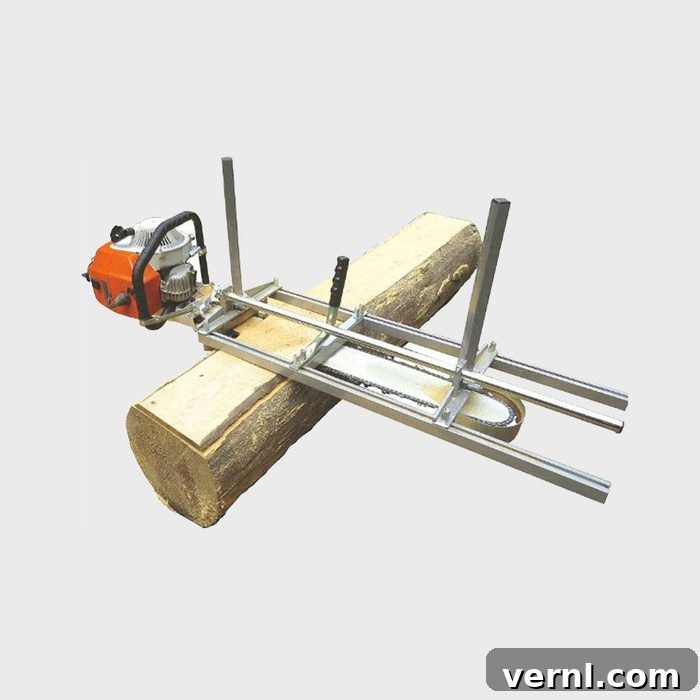
For those seeking an entry-level, highly portable, and incredibly versatile option, the Imony 36-inch Portable Chain Saw Mill stands out. This unit is celebrated for its ease of deployment and robust construction, crafted from a combination of lightweight aluminum and durable steel. It’s designed to accept a wide range of chainsaw bars, accommodating lengths up to 36 inches, making it suitable for processing even quite hefty logs. Its lightweight nature makes it easy to transport and set up in remote locations, allowing you to mill timber precisely where it falls. The Imony mill is an excellent choice for DIYers, homesteaders, and anyone needing to produce custom lumber pieces without the need for extensive equipment or a large investment. When choosing a chainsaw mill, look for solid, easy-to-adjust clamping mechanisms and a sturdy frame that ensures consistent cuts.
Best Band Saw Mill: Wood-Mizer LX2515 Portable Sawmill
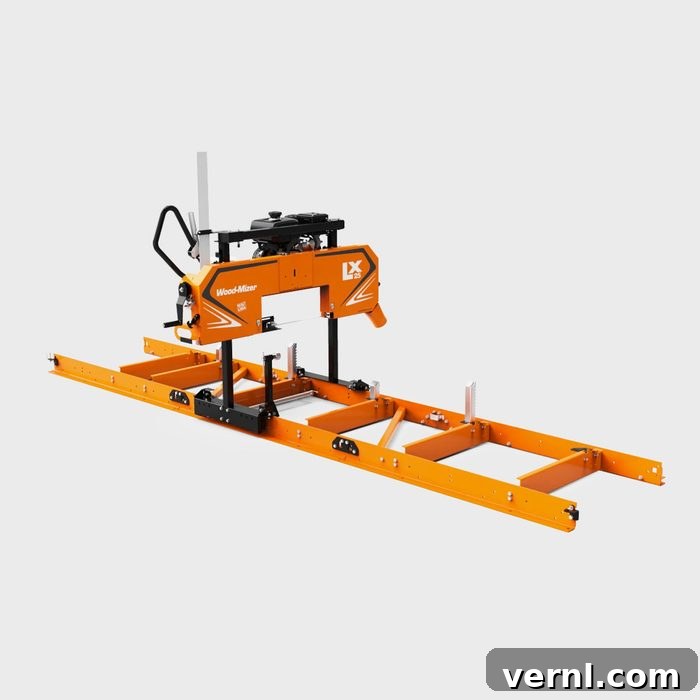
If your ambitions extend to moderate to large-scale lumber production with greater efficiency and precision, the Wood-Mizer LX2515 Portable Sawmill is an exemplary choice. This model is engineered to accept logs up to an impressive 26 inches in diameter, making it suitable for a wide variety of timber. The LX2515 features a sturdy log cradle that firmly clamps the log in place, while the operator precisely moves the saw head along a track using a crank to slice logs into high-quality boards. It represents a fundamental yet highly effective machine offered at a competitive price point, providing an excellent balance of performance and affordability.
Beyond its robust design and efficient operation, one of the most compelling reasons to choose the Wood-Mizer LX2515 is the company’s long-standing reputation for outstanding customer service and readily available parts. This ensures that your investment is protected and that you’ll have reliable support for the lifespan of your sawmill. When evaluating band saw mills, always consider the engine horsepower, maximum log diameter and length capacity, the ease of blade changes, and the availability of replacement blades and expert support.
Best Swing-Blade Saw Mill: Junior Peterson Sawmill
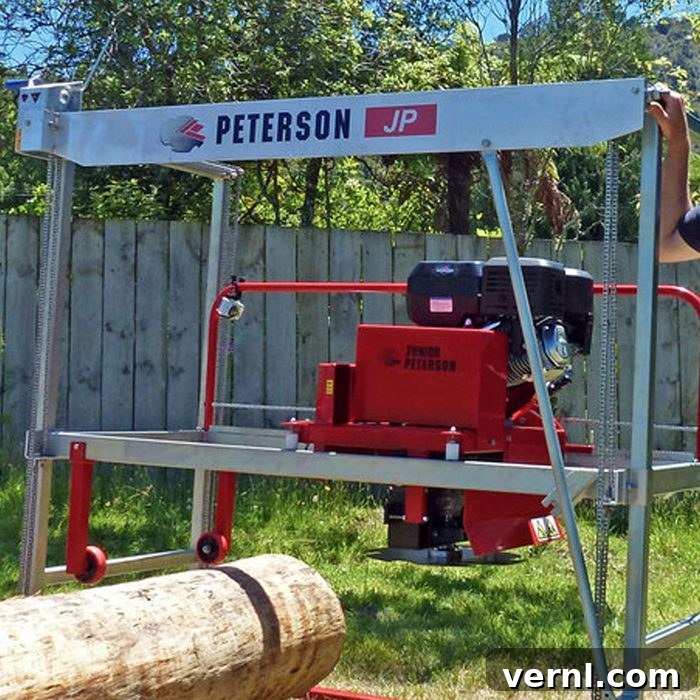
Swing-blade sawmills are specialized machines, and while they might not be as widely available in conventional retail outlets as other types, sourcing them directly from manufacturers like Peterson is well worth the effort for their unique capabilities. The Junior Peterson Sawmill is specifically designed with home and farm use in mind, making it an outstanding choice for those seeking high-precision and efficiency in a portable package. One of its most impressive features is its rapid setup time – you can typically have it ready to mill in just five to ten minutes. Crucially, the Junior Peterson allows you to mill logs in place, eliminating the need for heavy machinery like forklifts or winches to position timber, streamlining your entire milling process. This model exemplifies the benefits of a swing-blade system, offering unparalleled accuracy and the ability to produce perfectly squared lumber with minimal effort.
When considering a swing-blade mill, prioritize models that offer robust construction, intuitive controls, and proven durability. The ability to make both horizontal and vertical cuts with a single blade pass, without moving the log, is a defining advantage of this type of mill, making it highly efficient for producing dimensional lumber and maximizing yield from each log.