
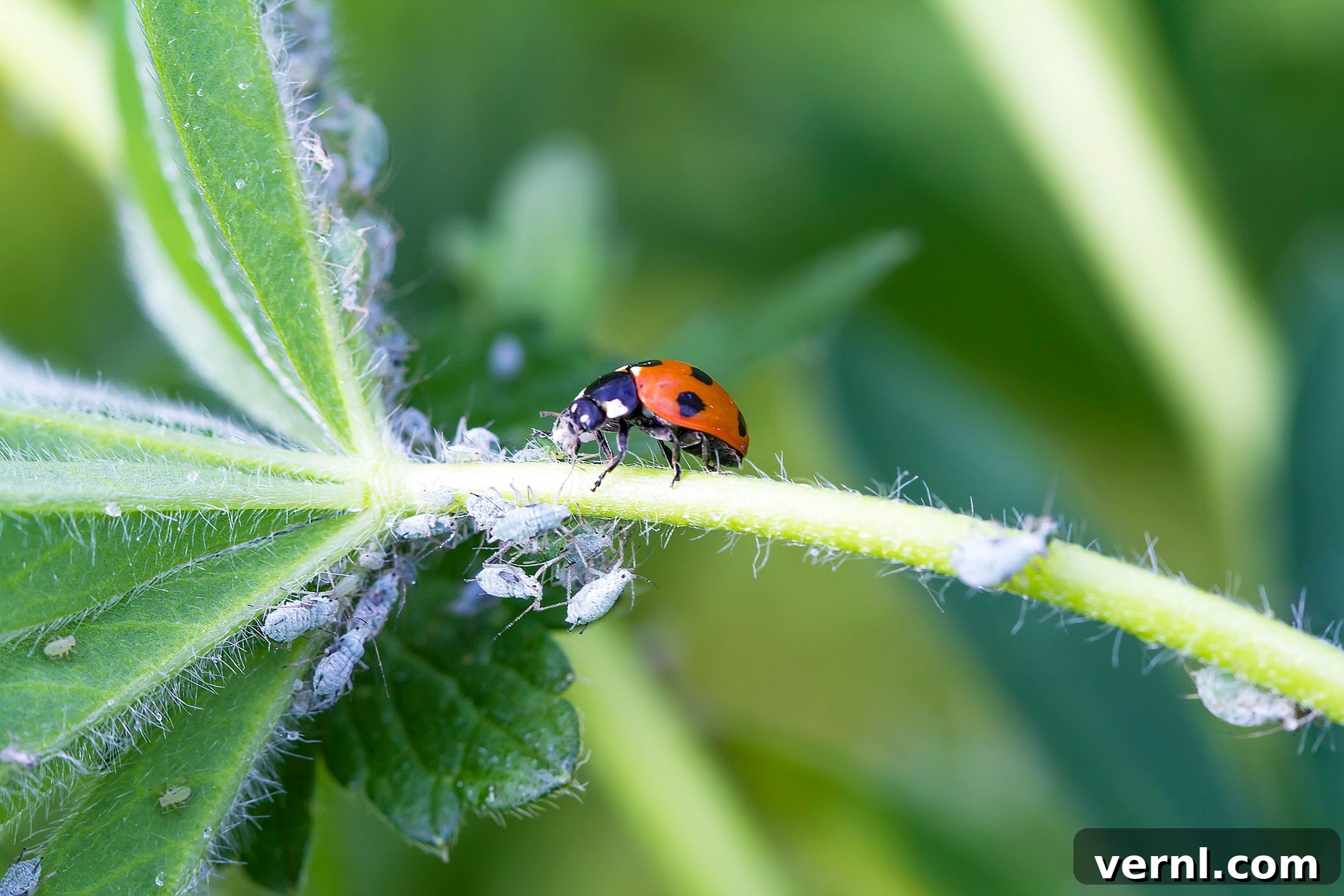
There’s a universally frustrating moment for every gardener: spotting thousands – or at least hundreds – of tiny invaders crawling all over the tender stems and leaves of your beloved plants. My immediate, gut reaction often involves a protective shout, “Leave my flowers alone!” These unwelcome guests are, of course, aphids.
Aphids are small, soft-bodied insects, often pear-shaped, that come in various colors including green, black, white, gray, yellow, or pink. They are notorious for their specialized mouthparts, which act like tiny straws, piercing plant tissues to suck out vital sap. This parasitic feeding depletes the plant’s nutrients, leading to stunted growth, distorted leaves, and overall weakened health. Beyond this direct damage, aphids excrete a sticky substance called honeydew, which can attract other pests like ants and encourage the growth of sooty mold, further hindering photosynthesis.
After the initial shock of discovering an aphid infestation, my second response is to scan the vicinity for any signs of their natural predators. Specifically, I’m looking for ladybugs nearby. These charming, spotted beetles are true heroes in the garden, with an insatiable appetite for aphids. Some sources claim that a single adult ladybug can devour as many as 50 aphids in just one day, while their larvae, often overlooked, are even more voracious predators.
The efficacy of ladybugs as biological pest control agents is well-documented, making them a popular topic among gardeners seeking natural solutions. This often leads to a pressing question: if my garden isn’t teeming with ladybugs naturally, should I take matters into my own hands and buy some to release, as suggested in this TikTok video?
Understanding Aphids: The Garden’s Persistent Pest
Before delving into ladybug strategies, it’s crucial to understand the adversary: the aphid. These diminutive insects may be small, typically ranging from 1 to 3 millimeters, but their impact can be significant due to their rapid reproduction rate. Aphids can reproduce asexually, giving birth to live young without needing a mate, allowing their populations to explode in a very short time. This makes early detection and intervention critical.
Aphid damage manifests in several ways. Beyond the visible presence of the insects themselves, gardeners might notice curled, yellowed, or distorted leaves as the sap is drained. New growth can be stunted, and flower buds may fail to open. The honeydew they secrete not only makes leaves sticky but also provides a breeding ground for black sooty mold, which coats leaves and reduces the plant’s ability to photosynthesize. Some aphid species can also transmit plant viruses, leading to even more severe and often incurable plant diseases. Identifying the signs of an aphid infestation promptly is the first step toward effective management.
Ladybugs: Nature’s Tiny Aphid Patrol
Ladybugs, scientifically known as coccinellids, are often the first line of defense many gardeners think of when facing an aphid problem. These iconic insects are far more than just pretty garden ornaments; they are highly efficient predators throughout most of their life cycle. A typical ladybug life cycle includes four stages: egg, larva, pupa, and adult. It’s important to recognize that both the larval and adult stages are predatory.
Ladybug larvae, which resemble tiny alligators or spiky grubs, are particularly voracious and can consume hundreds of aphids before pupating. Adult ladybugs, with their distinctive dome-shaped bodies and often bright red or orange exoskeletons adorned with black spots, also feed heavily on aphids, mites, and other soft-bodied insects. Their presence in your garden is a strong indicator of a healthy, balanced ecosystem. Encouraging natural populations of ladybugs is a cornerstone of integrated pest management (IPM) because they provide continuous, self-sustaining pest control without the need for chemical intervention.
The Allure of Purchased Ladybugs: A Quick Fix?
The idea of buying ladybugs and releasing them into your garden is undeniably appealing. It promises a quick, natural, and environmentally friendly solution to aphid problems. Many garden centers and online retailers offer ladybugs for sale, often in small containers or mesh bags. The premise is simple: you buy ladybugs to put in your garden, release them near your aphid-infested plants, and in theory, they will get straight to work, devouring the pests and solving your problem. This seems like an instant, organic answer to a frustrating challenge.
The concept aligns with a desire for minimal effort and maximum reward, offering a perceived “biological bomb” against pests. Gardeners envision a flurry of red and black beetles immediately tackling the aphid menace, leading to healthier plants and less worry. However, as with many seemingly simple solutions in gardening, “in theory” is the crucial phrase here, and the reality can be far more complex and often disappointing.
The Hidden Downsides: Why Buying Ladybugs Can Backfire
While the prospect of unleashing a battalion of ladybugs sounds like a perfect solution, there are significant drawbacks and ethical concerns associated with purchasing and releasing them.
1. Flight Risk and Retention Issues
The primary issue is that there’s no guarantee the introduced ladybugs will actually stick around and make your garden their new home. Ladybugs are wild creatures driven by instinctual needs for food, water, shelter, and breeding sites. If your garden isn’t a naturally welcoming habitat with ample resources beyond just aphids, these bought ladybugs will quickly disperse. They have a natural inclination to fly away, often traveling great distances in search of optimal conditions. Releasing them can be akin to releasing a wild bird in a strange environment; it will likely fly off to find familiar territory or more suitable conditions rather than staying put to address your specific pest problem. This often means that the money spent on purchased ladybugs essentially goes to waste as they simply migrate elsewhere.
The TikTok video mentioned earlier showed a gardener releasing ladybugs in a greenhouse. While a contained environment like a greenhouse might reduce the immediate flight risk, it introduces other long-term challenges. Ladybugs still require diverse food sources (pollen and nectar for adult diet, not just aphids), proper humidity, temperature, and suitable overwintering sites to thrive and complete their life cycle. If the greenhouse environment doesn’t meet their comprehensive needs for survival and reproduction, they won’t live long or establish a sustainable population, making the initial release a temporary, ineffective fix.
2. Ecological Impact & Disease Spread
Beyond their tendency to fly away, a more profound concern lies in the ecological implications of purchasing ladybugs. As author Jessica Walliser explains in her book Plant Partners, Science-Based Companion Planting Strategies for the Vegetable Garden, consumers should generally avoid buying ladybugs. She writes, “In most cases they are convergent ladybugs (Hippodamia convergens) that are wild collected from their overwintering sites on sunny mountaintops in the western United States and shipped around the country for sale.”
This practice raises several ethical and environmental flags:
- Disturbance of Wild Populations: The mass collection of ladybugs from their natural overwintering sites disrupts wild ecosystems and can deplete local populations, impacting their natural role in those environments.
- Spread of Disease and Parasites: Wild-collected ladybugs can carry diseases, parasites, or fungal infections that may be benign in their original habitat but could be devastating to indigenous ladybug species in your garden or local area. This introduces a significant risk of harming the very beneficial insects you’re trying to encourage.
- Introduction of Non-Native Species: While Hippodamia convergens is native to North America, widespread distribution across regions where it might not naturally occur can still have unforeseen ecological consequences. There’s also the risk of inadvertently purchasing non-native species (like the Asian lady beetle, which can outcompete native ladybugs and become a nuisance itself), further disrupting the local balance.
- Reduced Effectiveness of Local Populations: By releasing stressed, displaced, or diseased ladybugs, you could inadvertently weaken existing healthy, native ladybug populations that are already adapted to your local climate and conditions.
Considering these points, buying ladybugs often proves to be an inefficient, potentially harmful, and unsustainable approach to pest control. A more thoughtful and effective strategy involves creating an environment that naturally attracts and supports existing local ladybug populations.
Cultivating a Ladybug Sanctuary: Sustainable Pest Control
Instead of buying ladybugs, the most effective long-term solution is to transform your garden into an inviting sanctuary that naturally attracts and retains ladybugs. By providing for their essential needs, you encourage them to establish resident populations that will continuously patrol for aphids and other pests.
-
Provide Nectar and Pollen Sources: Adult ladybugs, while predatory, also feed on nectar and pollen for energy and protein, especially when aphid populations are low. Planting a diverse array of flowers, particularly those with shallow, accessible blossoms, is key. Excellent choices include:
- Umbellifers: Dill, fennel, cilantro, parsley, yarrow, and queen Anne’s lace produce umbrella-shaped flower clusters that are perfect for ladybugs.
- Composites: Sunflowers, cosmos, marigolds, and daisies offer abundant pollen and nectar.
- Small-flowered plants: Sweet alyssum, calendula, and coreopsis are highly attractive.
Strategic planting of these “beneficial insect hotels” near plants regularly attacked by aphids will draw ladybugs precisely where they are needed.
-
Offer Shelter and Overwintering Sites: Ladybugs need places to hide from predators, adverse weather, and to overwinter during colder months. A tidy, sterile garden offers little refuge. Instead, embrace a slightly wilder, more natural approach:
- Fallen Leaves and Plant Debris: Keep some fallen leaves and spent plant stems in garden beds, especially in corners or along edges. Ladybugs love to shelter and overwinter in these natural accumulations.
- Tall Grasses and Ground Covers: Provide dense foliage where they can hide.
- Bug Hotels/Insect Houses: While not always necessary, purpose-built insect houses can provide additional shelter, particularly if natural debris is scarce.
Allowing a bit of “mess” in your garden is one of the most effective ways to support a thriving ladybug population year-round.
- Avoid Spraying Pesticides: This is arguably the most critical step. Broad-spectrum pesticides, whether conventional or organic, cannot differentiate between pests and beneficial insects. If you spray your plants to kill aphids, you’ll likely get rid of ladybugs and their larvae along with your targeted pests. Even seemingly “natural” pesticides can harm ladybugs if applied indiscriminately. Opt for targeted treatments or manual removal methods whenever possible to protect your beneficial insect allies. If pesticides are absolutely necessary, choose the least toxic option, apply only to affected areas, and do so in the evening when ladybugs are less active.
- Ensure a Water Source: Like all living creatures, ladybugs need water. A shallow dish of water with pebbles or marbles for landing spots can provide a safe drinking station during dry periods.
- Promote Garden Diversity: A biodiverse garden with a variety of plants creates a more stable ecosystem, making it more resilient to pest outbreaks and more welcoming to beneficial insects. Companion planting can also play a role, as certain plants can attract ladybugs or deter aphids.
Immediate & Non-Chemical Aphid Control Strategies
While establishing a ladybug-friendly garden is a long-term goal, sometimes you need immediate solutions for an active aphid infestation. Fortunately, several non-chemical methods can effectively reduce aphid populations without harming beneficial insects.
- Manual Removal: For smaller infestations or more manageable plants, simply put on a pair of garden gloves and physically wipe the aphids off the plants. Aphids are slow-moving and won’t fly away when disturbed, making them easy to crush or dislodge by hand. Be sure to check the undersides of leaves and in crevices where they often congregate. This method is surprisingly satisfying and highly effective for small populations.
- Spray with Water: A simple yet powerful tool is your garden hose. Use a strong enough spray of water from a garden hose to blast the aphids off the plants. Aim for a stream that is forceful enough to dislodge the insects but not so strong that it damages the delicate plant tissues. Repeat this process every few days, especially in the morning, as aphids that are knocked off often struggle to return to the plant and become vulnerable to predators.
- Insecticidal Soap: For slightly larger or more persistent infestations, insecticidal soap can be a very effective organic option. These soaps work by breaking down the waxy coating on the aphid’s body, causing dehydration. You can purchase commercial insecticidal soaps or make your own by mixing a few teaspoons of mild dish soap (ensure it’s soap, not detergent) with a gallon of water. Spray directly onto the aphids, ensuring thorough coverage, especially on the undersides of leaves. Insecticidal soap only works on contact, so reapplication may be necessary. Always test on a small area of the plant first to ensure it doesn’t cause damage. Once dry, it typically poses little threat to beneficial insects.
- Neem Oil: Derived from the neem tree, neem oil is another organic pesticide that acts as an antifeedant, repellent, and insect growth regulator. It disrupts the aphid’s life cycle, preventing them from feeding and reproducing. Mix neem oil according to package directions with water and a small amount of mild soap (as an emulsifier). Spray thoroughly onto affected plants, again focusing on covering the aphids. Apply in the late evening or early morning to avoid burning leaves in direct sunlight and to minimize impact on beneficial insects that are typically less active during these times.
- Diatomaceous Earth (DE): Food-grade diatomaceous earth is a natural powder made from fossilized diatoms. When aphids come into contact with the fine, sharp particles, it scratches their exoskeletons, leading to dehydration and death. Apply DE as a fine dust to affected plant parts, especially when plants are dry. Reapply after rain. While generally safe for beneficials once dry, apply carefully to target only the pests to avoid coating flowers where pollinators might land.
- Companion Planting for Deterrence: Certain plants can naturally deter aphids or act as “trap crops.” Planting garlic, chives, or mint nearby can repel aphids with their strong scents. Nasturtiums, on the other hand, are often used as trap crops, as aphids are highly attracted to them. Planting nasturtiums a short distance from your main crops can draw aphids away, concentrating them on an expendable plant that can then be easily treated or removed.
Integrated Pest Management (IPM) for Long-Term Success
The most successful approach to aphid control and overall garden health is through Integrated Pest Management (IPM). IPM is not about eradicating every single pest; it’s about balance. It combines various strategies to manage pests in an environmentally sound and economically sensible way, prioritizing prevention and biological controls.
Key principles of IPM include:
- Regular Monitoring: Consistently inspect your plants for early signs of pests. Catching an aphid problem when it’s small makes it much easier to manage.
- Prevention: Choose pest-resistant plant varieties, ensure good air circulation, and maintain healthy soil to grow robust plants that are naturally more resistant to pests.
- Cultural Controls: Proper watering, fertilizing, and pruning practices contribute to plant vigor, making them less susceptible to aphid attacks.
- Biological Controls: This is where encouraging ladybugs and other beneficial insects shines. Creating a habitat that supports these natural predators is a sustainable, long-term solution.
- Mechanical/Physical Controls: Methods like hand-picking, hosing off, or using row covers fall into this category.
- Chemical Controls (Last Resort): If all else fails, and the problem is severe, use the least toxic pesticides, applied precisely and only when necessary, to minimize harm to beneficial insects and the environment.
Ultimately, a thriving garden is one that fosters a harmonious ecosystem. Instead of resorting to quick, often ineffective, and potentially harmful fixes like buying ladybugs, invest your efforts in cultivating an environment where nature’s pest controllers can flourish. Patience, observation, and a commitment to sustainable practices will lead to a healthier, more resilient garden, teeming with life – the good kind, that is!