
Understanding the Essential Role of a Storm Door in Home Protection and Energy Efficiency
In the quest for a comfortable, energy-efficient home, every detail matters. An old, worn, or poorly installed exterior door can become a significant weak point, allowing valuable conditioned air to escape and outside elements to intrude. This is where a storm door steps in, serving as a vital second layer of defense. Installed directly in front of your primary entry door, a storm door is designed to provide an additional barrier against the elements, enhance insulation, and offer a multitude of other benefits that contribute to your home’s overall well-being. However, even the most robust storm door can fall short of its intended purpose if not properly installed or maintained. Understanding its function and knowing how to address common issues is crucial for maximizing its effectiveness.
If you’re looking to keep your home insulated from harsh weather, a storm door is an excellent investment. It acts as an airlock, creating an insulating pocket of air between itself and your main door, thereby reducing heat loss in winter and heat gain in summer. This translates directly into lower energy bills and a more consistent indoor temperature throughout the year. Beyond insulation, storm doors offer increased security, improved ventilation options, and protection for your expensive primary door from rain, wind, and sun exposure. For those considering an upgrade or new installation, learning how to install a storm door with ease can be a rewarding DIY project, though professional installation is always an option for complex setups.
Why Every Home Can Benefit from a Well-Maintained Storm Door
The advantages of incorporating a storm door into your home’s exterior are extensive and contribute significantly to comfort, safety, and economic savings. Far more than just an aesthetic addition, a well-chosen and properly functioning storm door is a strategic component of home maintenance and energy management.
Enhanced Energy Efficiency and Cost Savings
One of the primary reasons homeowners invest in storm doors is their capacity to boost energy efficiency. By creating an insulating buffer zone between the storm door and your main entry door, it minimizes drafts and heat transfer. In colder months, this air pocket helps trap warm air inside, preventing it from escaping through your primary door. Conversely, during warmer seasons, it blocks hot air from penetrating your home and reduces the load on your air conditioning system. This dual-action insulation can lead to noticeable reductions in your heating and cooling costs, making a storm door a smart long-term investment that pays for itself over time.
Superior Home Protection Against the Elements
A storm door acts as an formidable shield for your main entry door, protecting it from the brunt of severe weather conditions. Rain, snow, sleet, hail, and harsh winds can all take a toll on your primary door’s finish and structural integrity. By taking the direct impact, the storm door preserves your more expensive and often more decorative main door, extending its lifespan and maintaining its aesthetic appeal. This protection also extends to preventing dirt, dust, and debris from accumulating on your main door and its threshold, reducing the frequency of cleaning required.
Improved Ventilation and Natural Light
Many modern storm doors are designed with interchangeable or retractable screens, offering excellent ventilation options. On pleasant days, you can open your main door and rely on the storm door’s screen to allow fresh air to circulate through your home, reducing the need for air conditioning and expelling stale indoor air. This not only makes your home feel breezier and fresher but also helps in regulating indoor humidity. Full-view storm doors, featuring large glass panels, also maximize natural light entry into your foyer or entryway, brightening your interior without compromising security or insulation.
Added Layer of Security
While not a substitute for a robust primary door, a storm door does provide an additional layer of security. The extra lock and sturdy frame of a storm door can deter potential intruders, making forced entry more difficult and time-consuming. This added barrier can give homeowners greater peace of mind, knowing there’s an extra obstacle for anyone attempting unauthorized access.
Extended Lifespan of Your Primary Entry Door
Protecting your main entry door from continuous exposure to sun, rain, and extreme temperatures significantly extends its life. UV rays can fade and crack finishes, while moisture can lead to warping, rot, or corrosion. A storm door shields your primary door from these damaging effects, reducing the need for frequent repainting, refinishing, or even premature replacement, thereby saving you money and effort in the long run.
Common Storm Door Types and Features
Storm doors come in various styles and configurations, each designed to meet specific needs and preferences:
- Full-View Storm Doors: These feature a single, expansive glass panel that maximizes natural light and visibility. They often come with an interchangeable screen for ventilation during warmer months.
- Ventilating (Screen-Away) Storm Doors: Highly popular for their versatility, these doors incorporate a retractable screen that slides up or down, allowing for ventilation without having to remove and store separate glass or screen panels.
- Mid-View and Half-View Storm Doors: These designs feature a glass panel that covers only a portion of the door, with a solid panel or decorative kickplate at the bottom. They offer a balance of light, protection, and durability, often preferred in homes with pets or high traffic.
Beyond style, consider features like tempered glass for safety, low-E coatings for enhanced energy efficiency, durable hardware, and strong frames made from materials like aluminum, vinyl, or wood.
Addressing Common Storm Door Issues: Focusing on the Sweep
Even the most robust storm door requires periodic inspection and maintenance to perform optimally. One of the most common points of failure, yet often the easiest to fix, is the door sweep. The sweep is a crucial component located at the bottom edge of the storm door, designed to create a tight seal against the threshold. This seal is vital for preventing drafts, keeping out moisture, and blocking insects and debris.
What is a Door Sweep and Why is it Important?
The storm door sweep, typically made of rubber, vinyl, or brushes, runs along the entire bottom edge of your door. Its primary function is to close the gap between the bottom of the door and the threshold when the door is closed. A properly adjusted sweep ensures that cold air, hot air, blowing snow, rain, and even small pests cannot easily infiltrate your home. When the sweep is damaged, worn out, or incorrectly positioned, it compromises the storm door’s insulating capabilities and overall effectiveness. If you notice cold drafts entering your home, hear whistling sounds near the door, or see light peeking through the bottom gap, the sweep is likely the culprit.
How to Inspect and Adjust Your Storm Door Sweep
If your storm door drags on the threshold, makes an annoying scraping sound when opening or closing, or, more critically, lets in blowing snow or noticeable drafts, the first thing to check is the lower edge. Most metal storm doors feature an adjustable sweep mechanism that allows it to slide up or down to achieve the perfect seal. Here’s a step-by-step guide to inspect and adjust it:
- Visual Inspection: Begin by closing the storm door and kneeling down to eye level with the bottom edge. Look for any visible gaps between the sweep and the threshold. You can also try sliding a piece of paper under the door; if it passes through easily, your sweep isn’t making sufficient contact. A particularly effective method is to perform this inspection on a sunny day. Position yourself inside the house and look for any slivers of sunlight peeking through the gap beneath the door. Even a small line of light indicates a potential pathway for air and moisture.
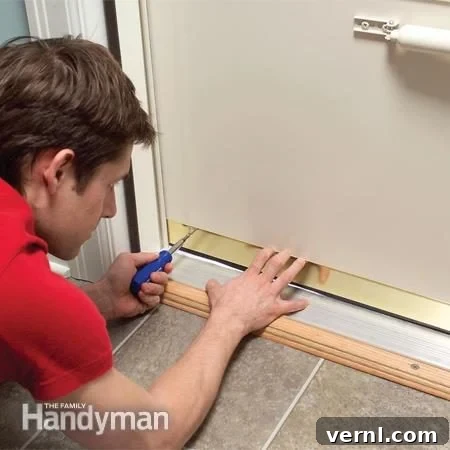
- Locate Adjustment Screws: Open the storm door fully. On the inside face of the door, near the bottom edge, you will typically find a series of small screws that hold the sweep in place. These screws usually pass through elongated slots in the sweep’s mounting bracket, allowing for vertical adjustment.
- Loosen the Screws: Using an appropriate screwdriver, carefully loosen these screws. You don’t need to remove them entirely, just loosen them enough so that the sweep can slide freely up or down. Be gentle to avoid stripping the screw heads.
- Free a Stuck Sweep (If Necessary): Sometimes, a sweep can become stuck due to accumulated dirt, corrosion, or paint. If the sweep doesn’t move easily after loosening the screws, try this trick: Open the door, firmly grab the underside of the sweep with both hands, and gently pull up, as if you were trying to slightly lift the door. This action can help to break the sweep free from any sticking points.
- Adjust the Sweep’s Position: With the screws loosened, you can now raise or lower the sweep. The goal is to position the sweep so that its rubber or vinyl strip presses firmly but not excessively against the threshold when the door is closed. Re-close the door carefully after each small adjustment to check the seal. The “sunlight test” mentioned earlier is ideal here: adjust until no sunlight is visible under the door. If the sweep is dragging, raise it slightly. If there’s a gap, lower it. A good seal means the sweep is compressed just enough to block light and drafts, but not so much that it causes friction and makes the door difficult to open or close.
- Tighten the Screws: Once you’ve achieved the perfect position, hold the sweep firmly in place and re-tighten all the screws. Ensure they are snug but do not overtighten, which could strip the screws or crack the door material. Re-test the door’s operation to ensure it opens and closes smoothly and the seal remains intact.
When to Replace Your Storm Door Sweep
While adjustment can solve many issues, sometimes the rubber gasket or brush material under the sweep becomes worn, torn, brittle, or cracked over time. A damaged gasket will not provide a good seal, regardless of how perfectly you adjust its height. In such cases, you may need to order a new sweep or just the replacement gasket/insert. To do this:
- Identify the Manufacturer: Look for the manufacturer’s nameplate, which is usually a small sticker or engraved plate found on the hinge side of the metal frame, often near the top or bottom hinge. This plate will provide critical information, including the manufacturer’s name and possibly a model number.
- Search for Replacement Parts: Once you have the manufacturer’s information, search online for their contact information or parts ordering section. Many major manufacturers have dedicated online order forms or customer service lines that can help you identify and purchase the correct replacement sweep or gasket for your specific storm door model.
- Installation of New Sweep: Replacing a full sweep usually involves removing the old one by unscrewing it, sliding it out, and then sliding the new one into place before securing it with screws and performing the final adjustment. Replacing just the rubber insert might involve pulling the old one out of a channel and pushing the new one in.
General Storm Door Maintenance Tips
Beyond the sweep, regular maintenance ensures your storm door continues to function effectively:
- Clean Regularly: Wipe down the glass and frame with mild soap and water to keep it looking good and prevent dirt buildup from affecting moving parts.
- Lubricate Hardware: Periodically apply a silicone-based lubricant to hinges, closers, and latches to ensure smooth operation and prevent squeaking or sticking.
- Inspect Glass and Screen: Check for cracks in glass panels or tears in screens. Promptly repair or replace damaged sections to maintain functionality and aesthetics.
- Check Closers: Ensure the door closer operates smoothly and holds the door open at the desired angle. Adjust the closer’s tension if the door slams or doesn’t close fully.
Conclusion: A Worthwhile Investment for a Better Home
A storm door is a remarkably effective and versatile addition to any home. From bolstering energy efficiency and providing crucial protection for your main entry door to offering flexible ventilation options and an extra layer of security, its benefits are manifold. However, its effectiveness hinges on proper installation and consistent maintenance. By understanding the critical role of components like the door sweep and knowing how to adjust or replace them, homeowners can ensure their storm door continues to perform its essential functions, contributing to a more comfortable, secure, and energy-efficient living environment for years to come. Investing a little time in checking and maintaining your storm door can yield significant returns in comfort and savings.