
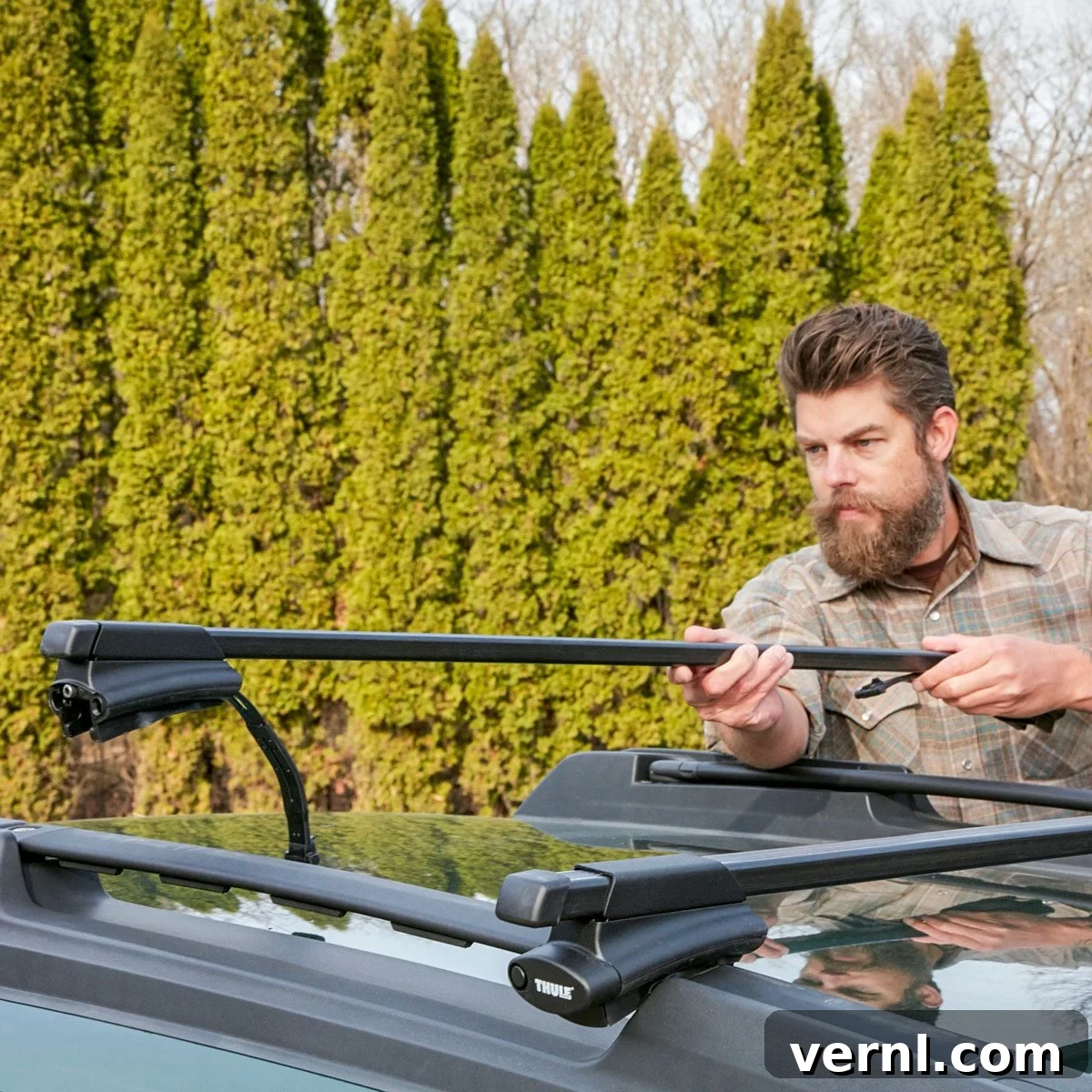

Maximize Your Vehicle’s Hauling Potential: A Comprehensive Guide to Roof Racks
For many DIY enthusiasts and adventurers, a vehicle’s cargo space often feels insufficient. Whether you’re hauling lumber for a weekend project, transporting camping gear for an outdoor escape, or simply needing extra room for luggage, a robust roof rack system can be an invaluable asset. This guide will walk you through upgrading your existing factory roof rack, installing a new removable system, and crucially, how to safely load and secure your cargo to ensure a smooth, secure journey. Understanding the right equipment and proper loading techniques is paramount for both your safety and the longevity of your vehicle and gear.
Upgrade Your Factory Roof Rack for Enhanced Capacity
Many modern vehicles come equipped with factory-installed roof racks. While these often appear sturdy and capable, their load rating is frequently much lower than anticipated. Typically, a factory roof rack might only handle around 100 lbs., which is equivalent to just a few pieces of lumber or a lightweight kayak. For minor hauling needs, this capacity might suffice, and no modifications would be necessary.
However, if your projects or adventures demand carrying more than 100 lbs., relying solely on your factory setup is not advisable and can be dangerous. The solution lies in upgrading to heavy-duty crossbars. These aftermarket crossbars are specifically designed to retrofit onto your existing factory side rails, significantly enhancing your vehicle’s cargo-carrying capabilities. Unlike their factory counterparts, which are often curved and less robust, heavy-duty crossbars are typically wider, flatter, and engineered to support greater weight—often as much as 200 lbs., though this can vary by vehicle model and crossbar manufacturer. This increased capacity provides the peace of mind needed when transporting heavier materials or multiple items.
Before purchasing, carefully examine your vehicle’s factory roof rack. Some cars feature versatile designs where the crossbars can be converted into side rails. If your vehicle has this feature, simply adjust them into the side rail configuration. Otherwise, you will need to remove the existing factory crossbars to make way for the new, more robust units. The installation process for retrofit crossbars usually involves securing them onto the factory side rails using specialized mounting hardware provided by the manufacturer. Always consult your vehicle’s owner’s manual and the aftermarket crossbar instructions to ensure proper fit and safe installation. This upgrade is a cost-effective way to significantly boost your vehicle’s utility without investing in an entirely new roof rack system.
Install a Removable Roof Rack System Without Drilling
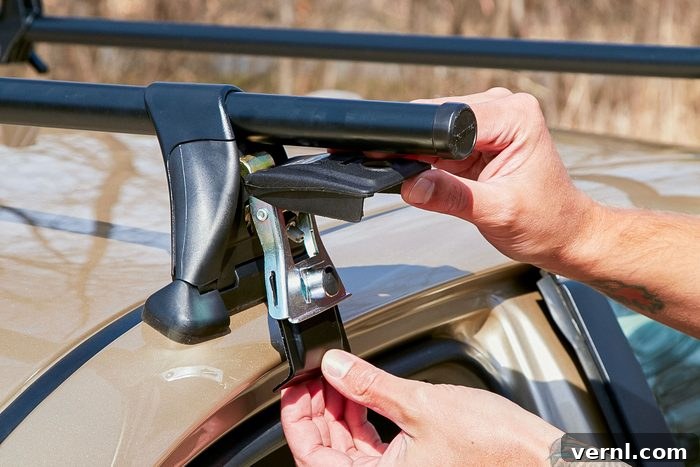
Not every vehicle comes with a factory roof rack, and some owners prefer the flexibility of adding a system only when needed. The good news is that you can install a fully functional and secure roof rack without drilling a single hole into your car’s roof. This is achieved through universal crossbar systems combined with vehicle-specific mounting clamps and towers.
The process for installing these removable roof racks is straightforward. Begin by opening all four doors of your vehicle. The instruction manual provided with your universal crossbars will specify the recommended locations for mounting the rubber-cushioned feet and towers. These locations are critical for optimal weight distribution and security. Once positioned, swing the locking lever down firmly to secure the clamp to the roof frame. If your car has existing factory side rails, you will lift the front and back crossbars onto these rails, spacing them precisely according to the crossbar manufacturer’s guidelines. Then, use the provided wrench to secure the feet firmly to the rails.
For vehicles without any factory rails, you will attach vehicle-specific clamps to the door frames or other designated points on your roof. The versatility of universal crossbars is a major advantage; they can be transferred between different vehicles by simply purchasing new vehicle-specific clamp sets for the towers. This makes them a wise investment for multi-car households or if you plan to upgrade your vehicle in the future.
Consider whether you want the crossbars to remain on your car permanently. If so, investing in a set of lock cylinders for the towers is highly recommended to deter theft. Otherwise, removing the crossbars when not in use can offer a slight improvement in gas mileage by reducing aerodynamic drag. To install or remove, simply adjust the tension screw on the tower, then snap the lever down or up to lock or unlock the system in place. Always double-check that all components are securely fastened before driving.
Mastering Safe Roof Rack Loading Techniques
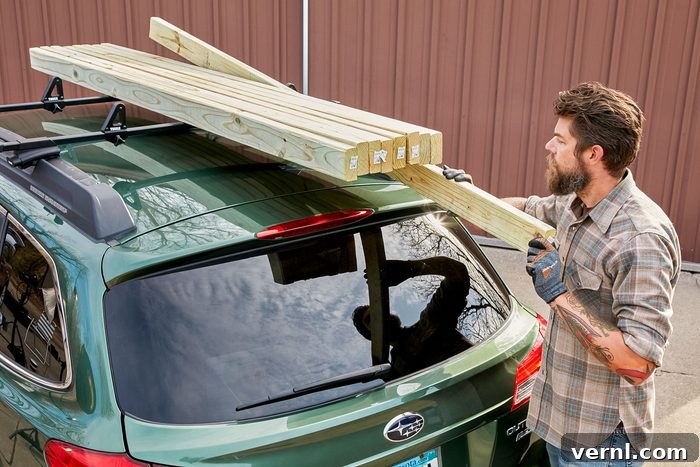
One of the most critical aspects of using a roof rack, often overlooked by DIYers, is how to effectively and safely secure the load. Many make the grave mistake of relying on flimsy twine offered at store checkouts or purchasing cheap bungee cords, believing they are sufficient. This common oversight can lead to disastrous consequences, including damage to your vehicle, loss of cargo, or even serious accidents.
It’s crucial to understand the distinction between static and dynamic load ratings. A roof rack’s specified load rating, such as 100 lbs. or 200 lbs., refers to a ‘static load’—the maximum weight the rack can support when the vehicle is stationary. However, once your vehicle is in motion, the forces acting on your cargo change dramatically. When you accelerate, brake, turn corners, or encounter bumps and dips in the road, inertia can multiply the effective weight of your load by four to five times, or even more. This means a seemingly modest 50-pound load can exert 200-250 pounds of force against your tie-downs. Therefore, your securing straps must be exceptionally strong and properly applied to prevent items from shifting, bouncing, or dangerously flying off your roof. For reliable and secure transport, you will typically need a minimum of four 14-ft., 1,000-lb.-rated ratchet straps to get your load home safely and securely.
Secure the Load to Itself First
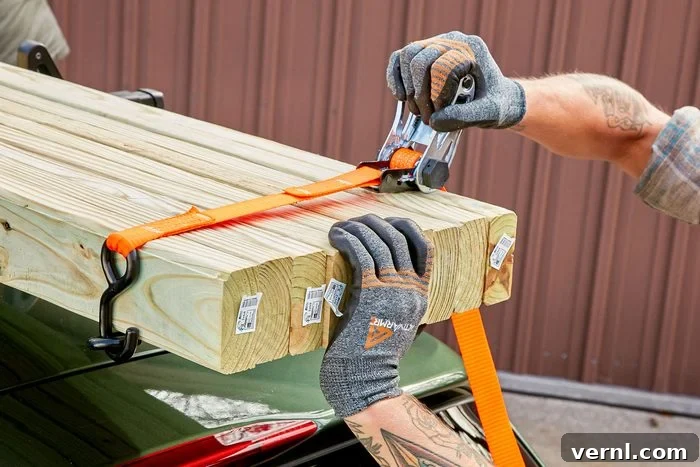
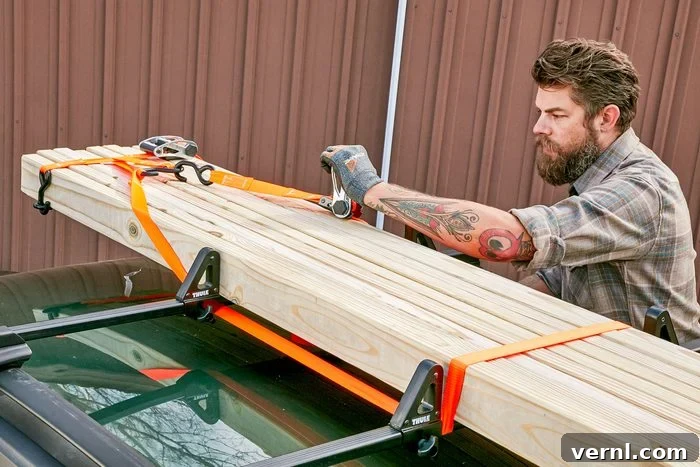
The initial step in safe cargo transport is to ensure that the individual items within your load are bundled and secured to each other, forming a single, cohesive unit. This three-point tie-down and bundling method might appear to be excessive, but it is truly the safest and most effective strategy for preventing damage to your materials or injury to others on the road. For example, when loading dimensional lumber onto the rack, always place it with the narrow edges resting on the crossbars for maximum stability. Then, use straps to create tight bundles at both the front and rear ends of the lumber. Wrap these straps firmly around the entire lumber bundle and tighten them until there is absolutely no movement among the middle pieces. This ensures that the individual pieces cannot shift independently, which could lead to them slipping out or destabilizing the entire load. This same principle applies to other long items like pipes, siding, or trim – always consolidate them into tight, immovable bundles before securing them to the rack itself.
Secure the Bundled Load to the Roof Rack

Once your cargo is securely bundled, the next critical step is to firmly attach the entire bundle to the roof rack itself. Begin by hooking a high-quality ratchet strap to the front bundle strap that you previously applied. Then, meticulously wrap this strap around both the cargo bundle and the front crossbar of your roof rack, ensuring a tight, secure fit. Ratchet the strap down until it is extremely taut and the bundle cannot shift. Repeat this exact process for the rear end of your bundled cargo, hooking another ratchet strap to the rear bundle strap and wrapping it around both the cargo and the rear crossbar, tightening it securely.
There’s one more crucial step, especially for longer loads or those on factory racks, to counteract aerodynamic forces. Open the rear doors of your vehicle. Take a separate ratchet strap and run it over the very top of the entire roof rack and the secured cargo. Thread this strap through the rear seat area of the passenger compartment. Ensure that this strap is positioned behind the driver’s headrest to prevent it from obstructing your view or causing injury in case of sudden braking. Tighten this strap firmly. This essential step directly counteracts the ‘lift’ phenomenon created by air flowing off your windshield and over the cargo. Without this strap, high speeds can generate significant upward force, potentially loosening or even ripping the entire rack (especially factory units held by small rivets) off your vehicle. This additional security measure is non-negotiable for safe roof rack transport.
Advanced Tips for Using Your Car Top Carrier Safely and Efficiently
Utilizing a car top carrier or roof rack effectively goes beyond just strapping items down. Careful planning, strategic loading, and an understanding of vehicle dynamics are essential for maximizing utility while ensuring safety on every journey.
Meticulous Trip Planning
One of the most prevalent and dangerous errors DIYers make is overloading their roof racks, even those equipped with heavy-duty crossbars. Before embarking on any hauling task, meticulous planning is paramount. Begin by making a comprehensive shopping list of all the materials you intend to transport. Then, take the time to research the precise weight of each item, particularly lumber, aggregates, or other construction materials, by checking the home center’s website or other online resources. Remember, the total weight of your cargo must never exceed the stated load capacity of your roof rack, nor should it push your vehicle beyond its Gross Vehicle Weight Rating (GVWR).
Armed with this weight information, you can strategically plan what you will carry on each trip. For substantial projects, it is highly probable that you will require multiple trips to avoid overloading and ensure safe transport. Distribute the weight as evenly as possible across the crossbars, placing heavier items in the center and lighter items towards the front and rear. Proper planning not only prevents dangerous overloading but also optimizes fuel efficiency and reduces wear and tear on your vehicle.
Securing Lighter Items with Tape
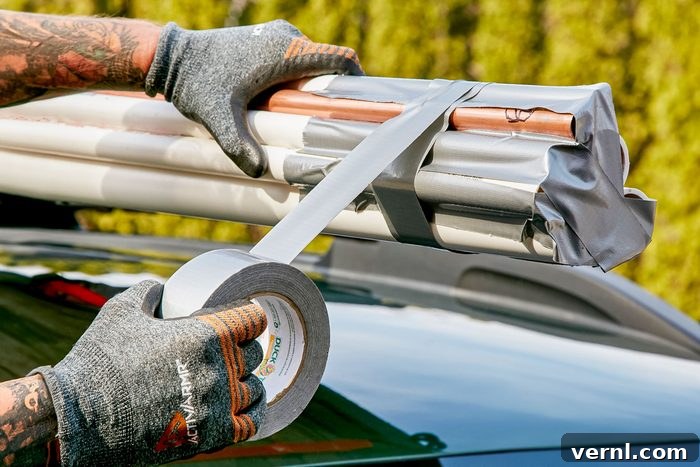
When transporting lighter, longer items such as trim pieces, PVC pipes, or thin metal strips, wind resistance can be a significant factor. Even if securely bundled with straps, the ends of individual pieces can flutter and become damaged, or worse, detach during transit. To prevent this, employ a taping strategy. Start by applying strong duct tape or nylon filament tape approximately 6 inches back from the end of the bundle. Wrap it tightly around to the opposite side, completely covering the end of each item within the bundle. Repeat this process for all exposed ends.
After securing the individual ends, apply several tight wraps of tape around the entire bundle at both the front and rear, ensuring these wraps cover the smaller pieces of tape applied earlier. This creates a cohesive, aerodynamic unit that is less susceptible to wind shear and vibration. Once taped, proceed to secure the entire bundle to the roof rack using your reliable ratchet straps, following the methods outlined previously. This extra step provides an additional layer of security and prevents potential damage to your cargo.
Properly Securing Overhanging Loads
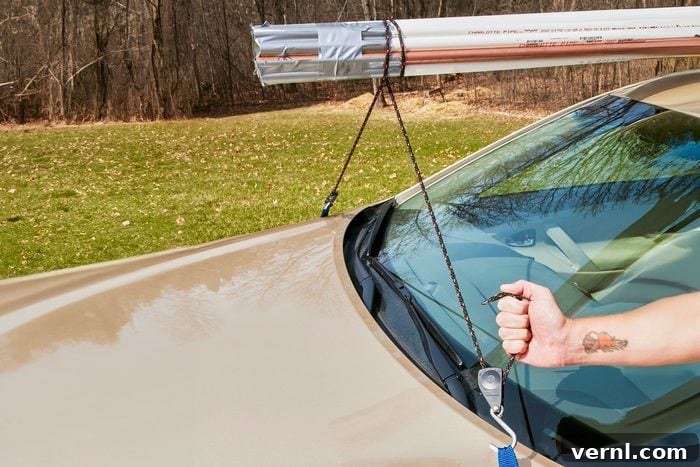
When your cargo, especially long items like lumber or kayaks, extends significantly over the hood of your car, it creates an additional leverage point that needs to be secured. This forward overhang can be susceptible to upward forces from wind, potentially bending the cargo or even stressing the roof rack system. To counteract this, utilize hood loops and cinch straps.
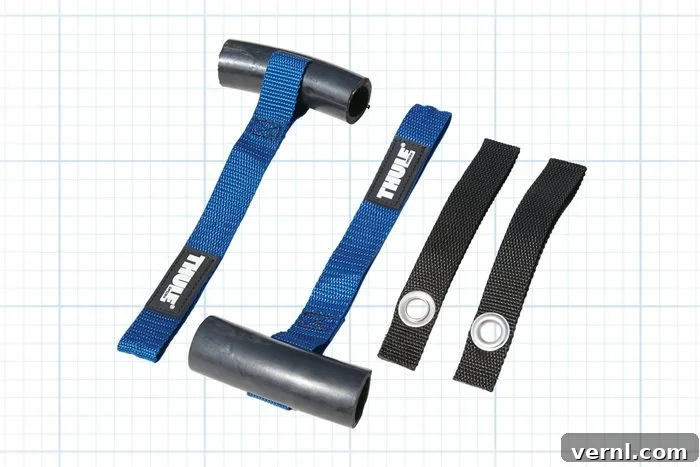
Hood loops are simple fabric straps designed with a sturdy grommet or loop at one end. You can temporarily install them by simply popping open your hood and dropping the looped end under the hood, allowing the other end to emerge from the front. Close the hood to secure them. For a more permanent solution, hood straps can be mounted under a fender bolt, providing a readily available attachment point. Once the hood loops are in place, run a rope or a cinch strap through them and over and around the leading edge of your overhanging load. Snug the cinch strap just enough to prevent any upward movement or vibration of the cargo, but be careful not to overtighten it to the point where it could bend your hood or damage the car’s body panels. This forward anchor point is crucial for stabilizing the entire load and preventing aerodynamic lift, especially at higher speeds.
Essential Roof Rack Safety Guidelines
- Specialized Attachments are Non-Negotiable: Never attempt to “jury-rig” items like bikes, kayaks, canoes, or camping gear directly to standard roof rack crossbars. These items have unique shapes and aerodynamic properties that require specific, manufacturer-designed attachments. These specialized carriers (e.g., bike racks, kayak cradles) ensure the item is held securely, distributed correctly, and does not create dangerous instability or drag. Contact your rack manufacturer to purchase the correct attachments for your specific gear.
- Understand Vehicle Dynamics: Adding a load to your roof significantly alters your vehicle’s center of gravity. This increased height and weight will impact handling, braking, and cornering. Expect increased stopping distances, especially with heavy loads. Drive slower than usual, anticipate turns and brake sooner, and make wider, more deliberate turns. Whenever possible, avoid highways or maintain significantly reduced speeds. Always perform a quick check of your load’s stability after a few miles of driving.
- Be Mindful of Overhead Clearances: With cargo on your roof, your vehicle’s overall height increases dramatically. This is a common cause of accidents. Always pay close attention to overhead clearances, particularly when entering garages, parking structures, drive-thrus, or navigating under low-hanging branches or awnings. A simple measuring tape can save you from costly damage.
- Evaluate Cost vs. Professional Delivery: Before committing to hauling heavy or bulky items yourself, objectively weigh the true costs. Heavy-duty crossbars, specialized attachments, and high-quality ratchet straps can represent a significant investment. When you factor in your time, fuel costs, and crucially, the inherent risks of potential damage to your vehicle, cargo, or even personal injury, it might often be more economical and safer to opt for professional store delivery services.
- Never Use Bumpers or Fenderwells as Anchor Points: Under no circumstances should you connect hooks, ropes, or straps to your vehicle’s bumper or fenderwells. These components are not designed to withstand the dynamic forces of a shifting roof load. Doing so can easily result in cracked plastic, scraped paint, or bent body panels, leading to expensive repairs and compromising your vehicle’s structural integrity. Always use the designated structural points of your roof rack system.
- A Bare Roof Cannot Carry a Load: Placing any significant load directly on your vehicle’s bare roof will inevitably cause damage. Car roofs are designed to distribute weight to the vehicle’s pillars and door frames, not to bear direct weight themselves. Without a proper roof rack system, the concentrated pressure of cargo can dent, scratch, or even deform the roof panel, leading to costly repairs and potential leaks.
- Avoid Hauling Sheet Goods or Mattresses: Despite the seemingly flat surface, attempting to haul large sheet goods (like plywood or drywall) or mattresses on a roof rack is extremely dangerous. Their expansive surface area creates immense aerodynamic lift, akin to an airplane wing. At even moderate speeds, this lift can generate enough force to rip the entire roof rack system, along with its cargo, clean off your vehicle, posing an extreme hazard to other road users and causing severe damage. For such items, consider a utility trailer or professional delivery.