
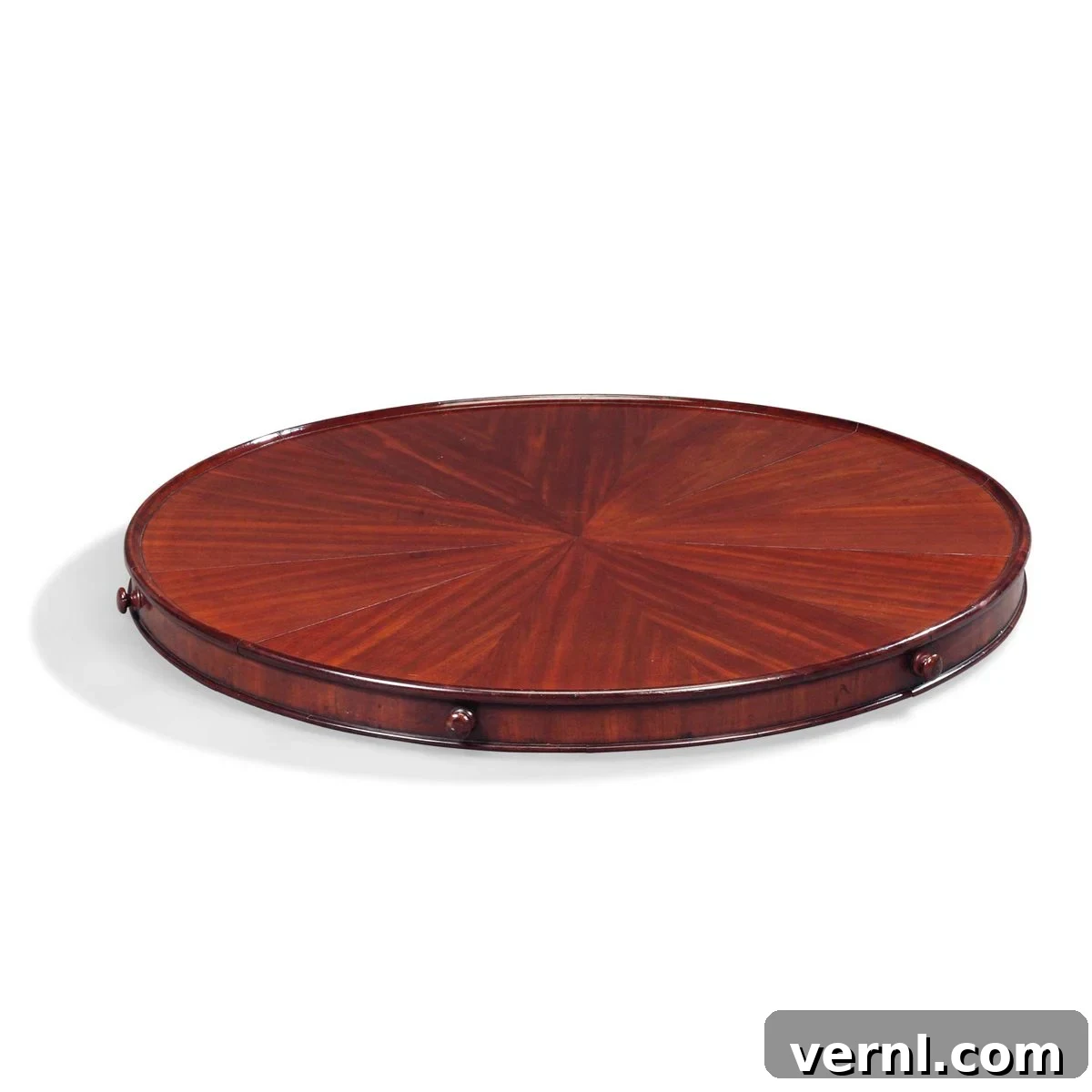
The Timeless Charm of the Lazy Susan: A Revolving Tale of Convenience and Mystery
The Lazy Susan, an ingenious rotating tray designed to sit gracefully on a countertop or table, has long been a staple in homes and restaurants worldwide. Its simple yet brilliant mechanism allows multiple diners to effortlessly access food, condiments, and relishes without the need for constant passing, promoting a more fluid and enjoyable shared dining experience. This unassuming household helper, however, carries with it a rich and often debated history, its very name shrouded in a charming enigma.
The Enduring Appeal of the Lazy Susan: More Than Just a Spinning Tray
At its core, a Lazy Susan is a practical device engineered for ease of access and efficient organization. Typically circular, though sometimes found in other shapes, it consists of a top platform mounted on a bearing mechanism that allows it to spin freely. This fundamental design offers immediate and profound benefits, transforming everyday tasks from mere chores into seamless interactions. It eliminates awkward stretches, prevents spills caused by reaching across a table, and fosters an atmosphere of effortless sharing. Beyond its primary role in serving food, the Lazy Susan has evolved to become an indispensable tool for organization across virtually every room in the modern home, proving its enduring utility and adaptability.
Unraveling the Mystery: The Storied Origins of the Lazy Susan
The origins of the Lazy Susan’s name and initial invention are as multifaceted as they are fascinating, with various theories spanning centuries and continents. What is clear is that the concept of a revolving serving mechanism predates the popularization of the term itself, pointing to a universal need for accessible shared items.
Ancient Roots in China: The Revolving Table
Many historians trace the concept of a revolving serving table back to 13th-century China. Long before it became a ubiquitous fixture in Chinese restaurants, an early form of a “revolving table” facilitated communal dining in a culture rich with shared culinary traditions. As noted by The Smithsonian, this early innovation was perfectly suited for banquets where numerous dishes were presented simultaneously, allowing everyone at the table to sample various offerings with dignity and ease. Over centuries, this concept gained considerable popularity and eventually found its way into Chinese restaurants in the Western world, particularly in the 1960s, where it was lauded as a “hygienic dining tray.” Its adoption was a natural fit for family-style dining, making the array of delicious dishes accessible to everyone without constant interruption or the need to pass heavy platters.
European Evolution: From Dumbwaiter to Dining Aid
Across the globe, in 18th-century England, a similar concept emerged, though under a different name: the “dumbwaiter.” As recounted by the Los Angeles Times, these early dumbwaiters were typically multi-tiered stands, often tall, that allowed food and drink to be placed on their revolving shelves. They became particularly popular during a period when household servants were in declining supply, or when hosts desired more private conversation amongst their guests without the constant presence of staff. In the absence of maids or footmen to refill wine goblets or deliver condiments, diners could simply spin the device to access what they needed, thus avoiding the awkwardness of having to “pass the pimientos please” and interrupt important discussions. While initially a floor-standing piece of furniture, the functionality of the revolving shelves clearly laid conceptual groundwork for the tabletop device we recognize today.
American Innovation: Elizabeth Howell’s Self-Waiting Table
The late 19th century saw formal patenting of revolving table designs in the United States. A notable instance dates back to 1891, when Elizabeth Howell of Missouri was granted a patent for a “self-waiting table.” Howell’s invention refined the concept with specific improvements. Her patent description highlights these enhancements: “This invention relates to certain new and useful improvements in self-waiting tables of that class in which the movable portion is supported upon rollers and mounted on a central pivot; and it has for its objects among others to provide an improved table of this character in which provision is made for preventing crumbs or dishes or other articles from getting between the table proper and the revolving part, the said provision adding also to the neat and tasteful appearance of the table.” This patent not only underscores the ongoing quest for dining convenience but also showcases a focus on practical design details like cleanliness and aesthetics, crucial elements that continue to define quality Lazy Susans today.
The Elusive “Susan”: Naming Theories and Marketing Prowess
While the mechanical origins are somewhat traceable, the specific etymology of “Lazy Susan” remains stubbornly elusive, fueling various charming, if unverified, anecdotes. One popular theory, often cited but lacking definitive proof, credits historical figures like Thomas Jefferson or Thomas Edison. The Los Angeles Times mentions the claim that these prominent Thomases allegedly named the invention after sluggish daughters, though historians largely dismiss this as speculative folklore. “Susan” was a common name during the era, making it a plausible, albeit generic, choice for a personified domestic aid.
Perhaps the most widely accepted theory regarding the popularization of the name points to a marketing campaign. The Chicago Tribune notes that the name can be definitively traced to an advertisement in the December 1917 issue of Vanity Fair magazine. This two-page Christmas promotion, run by Ovington’s, a now-defunct New York department store, spotlighted various fancy household items as potential gift ideas. Item No. 365, a mahogany tabletop tray measuring 16 inches in diameter and priced at $8.50, was explicitly advertised as a “Lazy Susan.” This early 20th-century marketing push likely played a pivotal role in embedding the quirky name into the American lexicon, demonstrating the power of advertising to shape product identity and consumer language.
Beyond the Dinner Table: Modern Applications and Versatility
Despite its ambiguous naming, the Lazy Susan’s function is anything but lazy. Its design offers unparalleled versatility, making it a beloved organizational tool far beyond its initial use for dining. Today, Lazy Susans are found in various materials—wood, plastic, glass, and metal—and in countless sizes and configurations, adapting to myriad needs throughout the home.
The Kitchen Connoisseur’s Best Friend
In the kitchen, the Lazy Susan truly shines as a hero of efficiency. It’s the ultimate solution for those awkward corner cabinets, bringing otherwise inaccessible items to the forefront with a simple spin. Spices, oils, condiments, baking supplies, and even canned goods become instantly visible and reachable, eliminating rummaging and reducing clutter. Multi-tiered Lazy Susans maximize vertical space, while those with non-slip surfaces keep bottles and jars secure as they rotate. From storing vitamin bottles in a medicine cabinet to organizing cleaning supplies under the sink, its practical applications are boundless.
Organizing Every Corner of Your Home
The utility of the Lazy Susan extends well beyond the kitchen. In the pantry, it neatly organizes dry goods, sauces, and snacks, making inventory checks a breeze. Inside the refrigerator, smaller Lazy Susans keep jars, bottles, and dairy products from getting lost in the back, ensuring nothing gets forgotten or expires unnoticed. In bathrooms, they corral cosmetics, toiletries, and cleaning products, maintaining a tidy countertop or cabinet. Even in bedrooms, they can be used to organize jewelry, perfumes, or small accessories on a dresser or in a drawer.
Crafting Spaces and Creative Hubs
For hobbyists and crafters, a Lazy Susan is an indispensable tool. It keeps art supplies, sewing notions, beads, threads, and small tools perfectly organized and within arm’s reach. Whether you’re painting, scrapbooking, or assembling models, having all your materials accessible with a gentle spin saves time and fosters creativity. Similarly, in a workshop or garage, it can organize screws, nails, small parts, and glues, transforming a chaotic workspace into an efficient hub of productivity.
Why We Love Them: The Undeniable Benefits of a Lazy Susan
The enduring popularity of the Lazy Susan can be attributed to a combination of practical and psychological benefits:
- Unmatched Accessibility: Eliminates stretching, reaching, and asking, making items available to everyone.
- Superior Organization: Keeps items tidy, categorized, and visible, reducing clutter and wasted time searching.
- Optimized Space Utilization: Particularly effective in maximizing storage in tight or awkward spaces, such as corner cabinets or deep shelves.
- Enhanced Efficiency: Streamlines meal preparation, dining, crafting, and other tasks by putting everything within easy reach.
- Reduced Spills and Accidents: Minimizes the need to lift and pass heavy or precarious items across a table.
- Aesthetic Appeal: Can serve as an elegant centerpiece, displaying items beautifully while maintaining functionality.
- Hygienic Dining: Especially in communal settings, it limits the number of hands touching shared serving dishes.
A Testament to Timeless Value: The Lazy Susan’s Lasting Legacy
Despite the charmingly muddled history of its name, one truth remains unequivocally clear: the Lazy Susan is a cherished and highly valued household item. Its combination of practical utility, organizational prowess, and understated elegance has cemented its place in homes across the globe. This enduring appreciation is sometimes reflected in its market value, particularly for antique or finely crafted pieces. Indeed, prestigious auction houses like Christie’s have seen these domestic helpers fetch significant sums, occasionally soaring into the hundreds, if not thousands, of dollars. One notable George IV mahogany Lazy Susan, for instance, commanded £3,000 GBP, which translated to over $3,800 in U.S. dollars at the time of sale. This testament to its perceived worth underscores the Lazy Susan’s status not merely as a functional tool, but as a timeless piece of design, a small marvel that continues to spin its way into the hearts and homes of people everywhere, proving that true convenience never goes out of style.