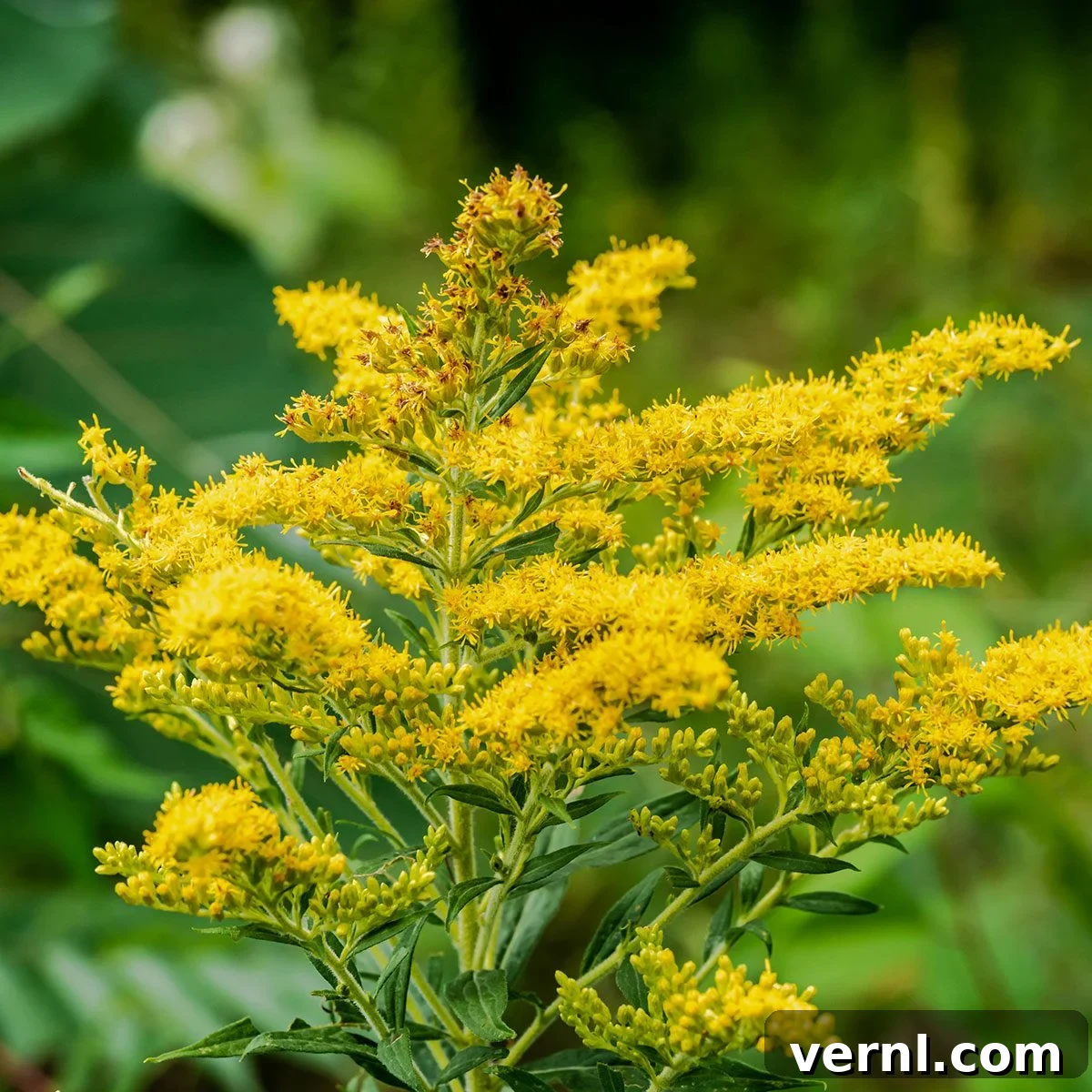
Did you know that the United States is home to over 100 species of goldenrod, each a unique marvel of nature? While these vibrant fall-blooming plants frequently adorn wild landscapes, growing goldenrod has become a profound passion for countless gardeners. This resilient native perennial is a cornerstone in many perennial gardens, celebrated for its spectacular autumn color and invaluable support for pollinators.
“Goldenrod is an absolute staple in the perennial garden because it’s a tough native that delivers stunning fall color and critically supports pollinators,” explains Mary Jane Duford, a certified Master Gardener and the visionary founder of Home for the Harvest. “Its late-season bloom provides a vital source of nectar and pollen for bees, butterflies, and a host of other beneficial creatures, extending their sustenance from late summer well into the crisp days of fall.”
Are you captivated by the brilliant yellow hues of this native plant, or perhaps by its profound contributions to our delicate ecosystem? Then consider this your definitive guide to cultivating goldenrod. We’ll cover everything from precise planting techniques and essential pruning strategies to optimal watering practices, ensuring your goldenrod thrives and enriches your garden.
Goldenrod: Unraveling the Myth of a “Weed”
The term “goldenrod” collectively refers to the magnificent flowering plants within the genus Solidago. For many, encountering goldenrod in an expansive field or along a bustling roadside immediately conjures the image of a common weed. However, this perception dramatically shifts within the gardening community. Increasingly, discerning gardeners are deliberately cultivating goldenrod, not merely for its aesthetic appeal but primarily because it is a native plant that bestows a wealth of natural benefits upon both the gardener and the environment.
Goldenrod typically bursts into bloom from late summer, continuing its vibrant display through late fall, with exact timing varying by specific cultivar and regional climate. During its peak flowering period, goldenrod becomes an irresistible beacon for a diverse array of pollinators, including essential bees, graceful butterflies, and various other beneficial insects. This robust activity significantly boosts local biodiversity, forming a critical link in the food web that supports a wider spectrum of wildlife. Furthermore, as a native plant, once established, goldenrod demands remarkably little maintenance, requiring minimal (if any) supplemental watering and fertilization, making it an ideal choice for sustainable and eco-conscious gardening.
The Indispensable Role of Goldenrod in Ecosystems
Beyond its visual charm, goldenrod plays a pivotal role in maintaining healthy ecosystems. As a native species, it is perfectly adapted to local conditions, forming symbiotic relationships with native fauna. Its abundant late-season nectar and pollen are a lifeline for pollinators when other food sources dwindle. This ensures the survival of bee colonies and butterfly populations, which are vital for the pollination of countless other plants, including many food crops. By planting goldenrod, gardeners directly contribute to strengthening the local food web, enhancing biodiversity, and creating a more resilient natural environment.
Embracing Diversity: Understanding the Different Types of Goldenrod
The world of goldenrod is remarkably diverse, encompassing numerous types, each possessing its own distinct characteristics. As Mary Jane Duford wisely points out, “Some types of goldenrod can spread quite aggressively and have the potential to take over garden beds, especially under harsh summer conditions that might challenge other perennials.” She adds, “While this characteristic can be highly beneficial in large-scale rewilding projects and expansive meadow landscaping, it might not be the preferred trait for gardeners with limited space who wish to cultivate a variety of perennials in their beds.”
However, it is crucial to understand that not all goldenrod varieties exhibit such vigorous spreading habits. “The key to successful integration is choosing a species or cultivar that perfectly aligns with your specific gardening needs and available space,” Duford emphasizes. “One outstanding choice is the cultivar ‘Goldenmosa,’ which is celebrated for its compact growth, exceptionally low-maintenance requirements, and its ability to remain aesthetically attractive well into the late autumn months.”
With this crucial distinction in mind, here are a few highly favored goldenrod varieties that have been specifically cultivated and made readily available for home gardeners, offering a range of sizes and growth habits suitable for diverse garden designs:
- Stiff Goldenrod (Solidago rigida): This robust variety typically grows to an impressive height of three to five feet. Its upright, architectural form makes it an excellent choice for planting at the back of a perennial border, where it can provide a strong vertical element and a vibrant splash of color. Stiff Goldenrod is remarkably hardy, thriving in USDA Zones 3 through 9, making it a reliable performer across a wide range of climates. It’s known for its broad, flat-topped flower clusters that attract a myriad of pollinators.
- Dwarf Goldenrod (Solidago’Little Lemon’): As its name suggests, ‘Little Lemon’ is a much more compact cultivar, typically reaching only about a foot in height. Its petite stature and cheerful lemon-yellow blooms make it a superb selection for smaller gardens, rock gardens, or even for planting along the front edge of a border. It flourishes in USDA Zones 5 through 8 and offers the beauty of goldenrod without the concern of aggressive spread.
- ‘Solar Cascade’ Goldenrod (Solidago shortii): Growing up to two feet tall, ‘Solar Cascade’ is particularly admired for its graceful, arching stems that create a beautiful cascading effect as it blooms. This characteristic makes it an ideal candidate for mass planting, where its flowing form can create a stunning visual impact. It exhibits excellent hardiness in USDA Zones 3 through 8 and is cherished for its rich golden flowers that bloom profusely.
Mastering Goldenrod Cultivation: A Comprehensive Growing Guide
Goldenrod is most commonly introduced into gardens as a pre-grown plant, purchased from a nursery or garden center. While it can be successfully planted at almost any time of year, the optimal periods are typically during the milder weather of spring or fall. For best results, most goldenrod varieties thrive in full sun exposure, requiring at least six hours of direct sunlight daily, and well-drained soil. When selecting your planting site, remember that some goldenrod species can spread effectively via underground roots known as rhizomes, so it’s wise to provide ample room for their potential growth and expansion, or opt for a non-spreading cultivar.
Site Selection and Soil Preparation: The Foundation for Success
While goldenrod is remarkably adaptable, ideal conditions will ensure the most vigorous growth and abundant blooms. Choose a location that receives full sun, as insufficient light can lead to leggy growth and fewer flowers. The soil should be well-drained; goldenrod generally tolerates a range of soil types, from sandy to loamy, but struggles in heavy, waterlogged clay. If your soil is particularly heavy, consider amending it with organic matter like compost to improve drainage and aeration, though often, goldenrod will perform adequately without extensive amendments.
Steps for Planting Goldenrod: Ensuring a Strong Start
- Prepare the Planting Hole: Dig a hole that is slightly wider than the diameter of the goldenrod’s nursery container, and just as deep. This provides ample space for the roots to spread outwards.
- Remove from Container: Gently ease the goldenrod plant out of its container. If the roots appear densely packed or are circling the pot (root-bound), gently tease them apart and spread them out a bit. This encourages them to grow into the surrounding soil rather than continuing to circle.
- Position the Plant: Carefully place the goldenrod into the prepared hole, ensuring the top of the root ball is level with the surrounding soil surface.
- Backfill and Tamp: Begin to backfill the hole with the soil you dug out, gently firming the soil around the roots as you go. This eliminates air pockets and ensures good contact between the roots and the soil.
- Thorough Watering: Water the newly planted goldenrod deeply and thoroughly immediately after planting. This helps settle the soil and provides essential moisture for root establishment.
- Establishment Watering: For the first several weeks after planting, particularly during dry spells, keep the goldenrod consistently watered. This crucial period allows new roots to establish themselves firmly in the garden soil. Once established, most goldenrod varieties are quite drought-tolerant.
Ongoing Care for Established Goldenrod: Low Maintenance, High Reward
- Watering: Once your goldenrod plants are well-established, they become remarkably self-sufficient. Most varieties will tolerate periods of drought with ease, meaning that supplemental watering is rarely necessary, except perhaps during exceptionally prolonged dry spells or in very hot climates.
- Fertilizing: One of the many benefits of growing native goldenrod is its minimal nutrient requirements. It can generally thrive and produce abundant blooms without any supplemental fertilizer. Over-fertilization, especially with high-nitrogen formulas, can sometimes encourage excessive leafy growth at the expense of flowers, and may even cause plants to become leggy or flop.
- Dividing: Like many robust perennial plants, goldenrod can benefit from periodic division. This practice helps to rejuvenate older, less vigorous clumps, manages their spread, and provides new plants for other areas of your garden or to share. The ideal time to dig up, divide, and replant goldenrod is in early spring, just as new growth is emerging.
- Pests and Diseases: Goldenrod is renowned for its hardiness and general resistance to most common garden pests and diseases. While occasional visitors like aphids or other minor insects might be observed, infestations are rarely severe enough to cause significant damage or prove fatal to the plant. Its natural resilience makes it a low-concern plant for pest management.
- Winter Care: In most climates, goldenrod requires very little winter care. Many gardeners choose to leave the spent flower heads standing through the winter months, as they provide both visual interest against a snowy backdrop and a source of seeds for birds and other wildlife. Cutting back the entire plant can be done in late fall after a hard frost or in early spring before new growth begins.
The Art of Pruning Goldenrod: Enhancing Form and Bloom
Pruning goldenrod is an invaluable practice that contributes significantly to the plant’s overall health, appearance, and bloom production. As Mary Jane Duford advises, “If you’re contending with an existing goldenrod plant that appears leggy or unruly, strategic pruning is certainly beneficial. This not only aids in shaping the plant and managing its size but also actively encourages the production of more flowers. Furthermore, cutting back the stems early in the growing season can effectively prevent flopping, ensuring the plant maintains a neat and tidy appearance throughout its season.”
When and How to Prune Goldenrod for Optimal Results:
- Early Season Pruning (The “Chelsea Chop”): In late spring or early summer (typically around late May or early June, coinciding with the timing of the Chelsea Flower Show, hence the name), prune goldenrod stems back by approximately one-third of their total height. This technique, often referred to as the “Chelsea chop,” encourages the plant to branch out more extensively, leading to a bushier growth habit and a greater number of flower stems. It can also delay flowering slightly, extending the bloom season in your garden.
- Deadheading for Aesthetic and Spread Control: In the fall, after the flowers have faded, you can choose to remove the dead flower heads. This practice, known as deadheading, helps to reduce self-seeding, which can be particularly useful for managing the spread of more aggressive varieties. However, Duford adds a nuanced perspective: “That said, many gardeners prefer to leave the seed heads standing throughout winter, appreciating their architectural interest against a snowy landscape and recognizing their crucial role in supporting local wildlife through the colder months.”
- Cutting Back for Rejuvenation: To prepare the plant for the next growing season and to remove all spent growth, the entire goldenrod plant can be cut down to the ground. This can be done either in late fall, once the foliage has completely died back, or in early spring, just before new growth begins to emerge. This practice clears the way for fresh, vigorous stems and maintains a tidy garden appearance.
Additionally, should a vigorous clump of goldenrod begin to encroach upon neighboring plants, you can easily manage its spread by removing outer stems. By pulling these stems out or cutting them off at ground level as they emerge in early spring, you can effectively contain the plant without causing damage to the main clump.
Propagating Goldenrod: Expanding Your Garden’s Beauty
Growing Goldenrod From Seed: A Patient Gardener’s Path
Yes, growing goldenrod from seed is an entirely viable and rewarding endeavor. However, goldenrod seeds require a specific environmental condition to germinate successfully: a period of cold stratification. This process mimics the natural chilling that seeds experience during winter, signaling to them that spring has arrived and it’s time to sprout. You can achieve stratification artificially by placing the seeds in a refrigerator for approximately 60 days, often mixed with a bit of damp sand or peat in a sealed bag. Alternatively, you can sow the seeds outdoors in late fall, allowing nature to handle the stratification process as they experience the natural cold weather. Another popular method is winter sowing, where seeds are planted in mini-greenhouses (like repurposed milk jugs) outdoors during winter, allowing them to naturally stratify and germinate as temperatures warm in spring.
Division: Rejuvenating and Expanding Existing Plants
As mentioned in the care section, dividing goldenrod is an excellent method for propagation and plant invigoration. This involves carefully digging up a mature clump, typically in early spring before significant new growth appears. The root ball can then be gently separated into smaller sections, each with a healthy portion of roots and shoots. These divisions can then be replanted elsewhere in the garden, effectively creating new goldenrod plants from an existing one. Division is also an effective way to control the size and vigor of more aggressive goldenrod varieties.
The Prudent Approach: Why Not to Dig Up Wild Goldenrod
While the allure of transplanting a beautiful wild goldenrod into your garden may be strong, it is generally not recommended. There are several compelling reasons to avoid digging up goldenrod from wild settings. Firstly, given the potentially aggressive spreading habits of some wild varieties, you are likely to experience greater long-term satisfaction and less maintenance by choosing named, cultivated varieties specifically selected for garden performance and often exhibiting more controlled growth. These cultivars have been bred for desirable traits, including tidier habits and enhanced bloom displays.
Secondly, and perhaps more critically, if you are not intimately familiar with the numerous species of goldenrod, you could inadvertently be disturbing a rare or endangered species. Many regions have native plant protection laws, and removing plants from the wild can have negative ecological impacts on local biodiversity. Opting for nursery-grown plants ensures you’re getting a species suitable for cultivation and minimizes harm to natural habitats.
Debunking the Myth: Goldenrod and Hay Fever
For decades, goldenrod has been unjustly blamed as a primary culprit for autumn hay fever symptoms. However, contrary to this deeply ingrained popular belief, it is highly unlikely that goldenrod is the cause of seasonal allergies. Mary Jane Duford clarifies this common misconception: “When hay fever sufferers look for the source of their autumnal discomfort, they often mistakenly point to goldenrod, frequently confusing it with ragweed.” She adds, “People are naturally drawn to goldenrod’s bright yellow, showy flowers and instinctively associate vibrant blooms with pollen allergies. Yet, goldenrod pollen is distinctly heavy and sticky, a characteristic that makes it unsuitable for wind dispersal; it typically requires insect vectors for pollination.”
The true culprit behind most cases of hay fever during goldenrod’s bloom season is far more likely to be ragweed (Ambrosia artemisiifolia). Ragweed, which blossoms concurrently with goldenrod, possesses small, inconspicuous greenish flowers that produce copious amounts of incredibly light, powdery pollen. This fine pollen is perfectly adapted for wind dispersal, easily becoming airborne and readily inhaled, thus triggering the classic symptoms of hay fever in susceptible individuals. Goldenrod, with its insect-attracting pollen, is innocent of the charges.
Frequently Asked Questions About Goldenrod
Is goldenrod aggressive or invasive?
The term “aggressive” is often used to describe certain wild varieties of goldenrod due to their vigorous growth habits and ability to spread rapidly, sometimes outcompeting other plants in natural settings. In some ecosystems, where it is not native, certain goldenrod species can indeed become invasive. However, it’s crucial to distinguish between wild species and the many commonly cultivated types of goldenrod available to gardeners. These garden-friendly cultivars have often been bred or selected for less aggressive spreading habits, making them far more manageable and recommended for home landscapes where uncontrolled growth is undesirable.
Can I grow goldenrod in containers?
Typically, goldenrod is not the first choice for container gardening, primarily because of its growth habit. “These are generally larger plants that tend to be much more impactful and useful when integrated into the landscape rather than confined to a pot,” Duford observes. “I personally prefer goldenrod planted in the garden bed, where it can function as a vital piece of the overall design puzzle, adding rich texture, vibrant color, and compelling form to a meticulously planned perennial bed.”
That being said, growing goldenrod in containers can serve a specific purpose: it can effectively help to limit the plant’s spread, preventing it from crowding out other plants in a mixed bed. “If I were to cultivate goldenrod in a container,” Duford elaborates, “I would unequivocally opt for a compact cultivar, planting it in a generously sized pot equipped with ample drainage holes. The potting medium should be one that doesn’t retain excessive moisture, similar to a high-drainage succulent potting mix, to ensure the roots do not become waterlogged.” This approach allows gardeners to enjoy goldenrod’s benefits even in limited spaces while controlling its natural vigor.
About Our Expert
Mary Jane Duford is a distinguished certified Master Gardener, an innovative permaculture garden designer, and the founder of the esteemed gardening website, Home for the Harvest. Her unique background as a civil engineer enriches her approach, bringing a meticulous scientific perspective to all aspects of plant care and soil management, bridging the gap between practical gardening and ecological science.