
Mastering Your Car: Easily Find Your Gas Tank Side Every Time
Stepping into a new, or new-to-you, car presents a host of exciting discoveries and minor challenges. Among the trickiest, yet surprisingly common, is the simple act of remembering which side the gas tank is on. This seemingly minor detail can lead to awkward maneuvers at the gas station, wasted time, and unnecessary frustration. While some might assume a standard placement based on the car’s country of origin or its driver’s side, the truth is there’s no universal rule you can easily memorize across all makes and models.
The problem is that car manufacturers don’t strictly adhere to a consistent side for fuel filler necks. Some place it on the driver’s side, others on the passenger side, regardless of whether the car is left-hand drive or right-hand drive. Trying to recall the specific design choice for every brand, especially when driving a rental or a friend’s car, is an impractical and unnecessary mental burden. Fortunately, modern vehicle design has accounted for this common dilemma, providing a simple, ingenious solution right where you need it most.
Most contemporary cars come equipped with a handy, often overlooked, gas tank locator. Once you know where to look and how to interpret it, you’ll never again have to play a guessing game at the fuel pump, ensuring smooth, hassle-free refuels no matter what car you’re driving.
What is a Gas Tank Locator and Why Is It So Useful?
Simply put, a gas tank locator is a small, intuitive symbol or icon found on your car’s dashboard that clearly indicates which side of the vehicle your fuel tank opening is located. This clever visual cue is designed to eliminate uncertainty, providing immediate confirmation of the correct side. Its primary function is to guide you, the driver, to position your car at the gas station pump correctly on the first attempt, preventing those common “wrong side” scenarios.
Imagine pulling into a busy gas station, only to realize you’ve parked on the wrong side for your fuel cap. This often necessitates either a tight, awkward turnaround, backing out and re-entering, or stretching the hose precariously across your vehicle, potentially scratching the paint or inconveniencing other drivers. While usually manageable, these situations are easily avoidable. The gas tank locator streamlines your fueling experience, transforming a potentially stressful moment into a simple, confident routine. It’s a testament to good automotive design – a small detail that makes a big difference in everyday driving convenience.
This feature isn’t just about saving a few seconds; it’s about reducing minor stresses and enhancing the overall user experience. For new car owners, it eliminates the initial learning curve. For those driving rental cars, it’s an indispensable tool, as every new vehicle presents this same puzzle. Even for cars you’ve owned for years, this indicator serves as a quick confirmation, especially if you occasionally drive different vehicles or simply have a momentary lapse of memory.
Where to Find Your Gas Tank Locator on the Dashboard
Locating your gas tank locator is surprisingly straightforward once you know where to focus your attention. It is universally positioned on your car’s instrument panel, typically integrated within or very close to your fuel gauge. The precise placement can vary slightly from one car manufacturer to another, but its proximity to the fuel gauge is a consistent design element. This logical grouping ensures that all fuel-related information is available in one glance.
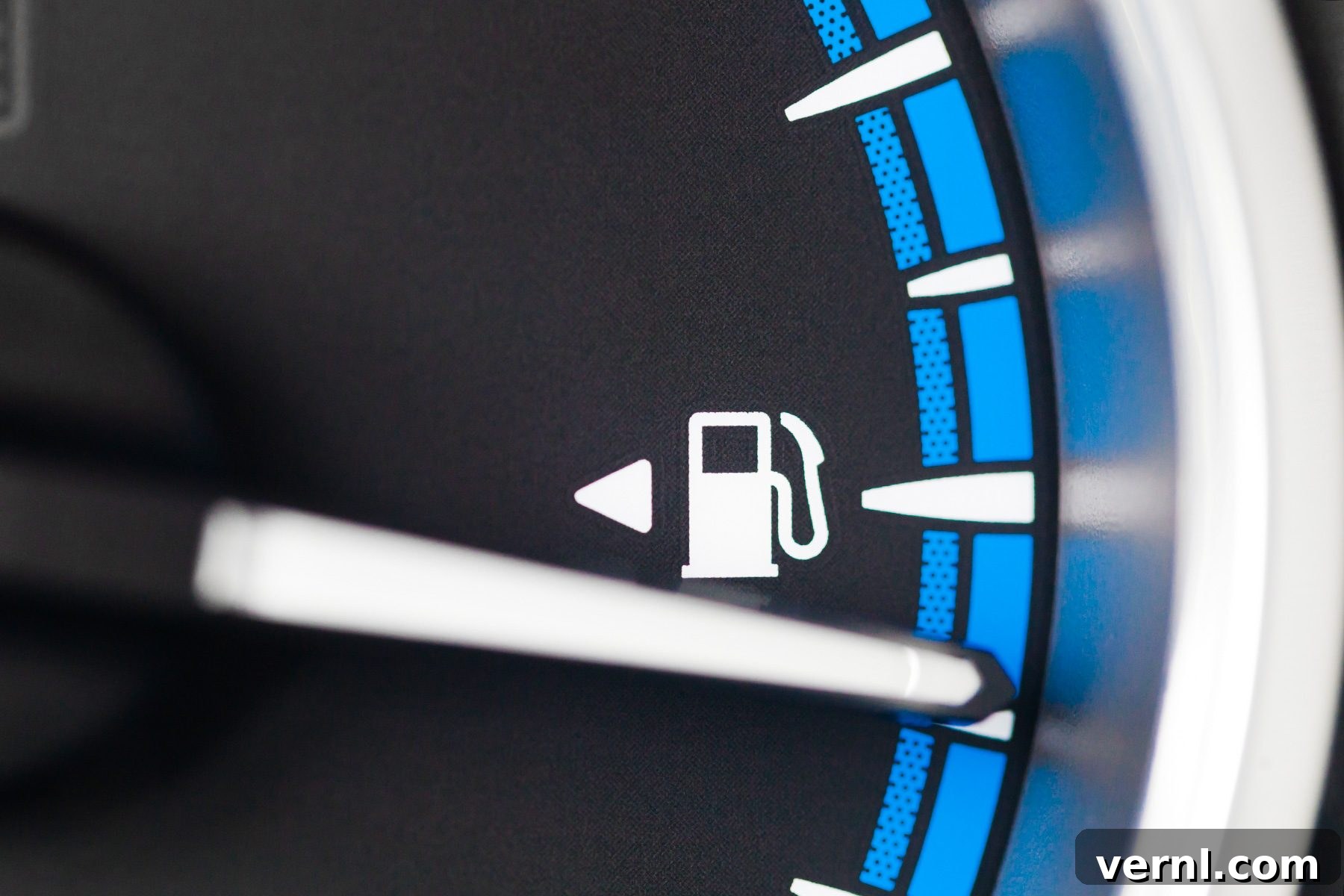
To find it, look for the small, universally recognized gas pump icon. This icon is a standard symbol indicating your fuel level. Right next to this gas pump icon, you will see a small arrow. This arrow is your gas tank locator. It’s often subtle, sometimes just a tiny triangle, but it holds the crucial information you need. Don’t confuse it with other arrows or indicators that might appear on your dashboard for different functions, such as navigation prompts or directional signals. The key is its direct association with the fuel gauge and the gas pump symbol.
This deliberate placement ensures that drivers instinctively look at the fuel gauge when they consider refueling, and right there, they find the directional hint. It’s a brilliant piece of ergonomic design that leverages existing driver habits.
How to Read the Gas Tank Locator: The Simple Arrow Guide
Once you’ve spotted the gas pump icon and the accompanying arrow, interpreting it is incredibly simple and intuitive. The direction in which this small arrow points directly tells you which side of your car the fuel filler cap is on. It’s a visual shorthand that requires no text or complex symbols, making it universally understandable.
- If the arrow points to the left: Your gas tank is on the left side of your vehicle. In most left-hand drive countries (like the U.S. or Europe), this means your fuel cap is on the driver’s side.
- If the arrow points to the right: Your gas tank is on the right side of your vehicle. In left-hand drive countries, this typically means your fuel cap is on the passenger’s side.
For example, in my Subaru, the arrow consistently points to the right, indicating that the gas tank is on the passenger side. Conversely, many Ford or Chevrolet models often feature an arrow pointing to the left, signaling a driver’s side fuel tank. This simple visual cue empowers you to pull up to the correct side of the pump with confidence, whether you’re at a busy city station or a remote roadside stop. This small arrow eliminates the need for guesswork, reducing stress and improving efficiency during a routine task that every driver performs regularly.
The Unbeatable Convenience Factor
The beauty of the gas tank locator lies in its universal utility. It’s not just for those moments when you’ve just picked up a brand-new vehicle from the dealership. Consider these common scenarios where this little arrow proves invaluable:
- Rental Cars: Perhaps the most common use case. When you’re driving an unfamiliar rental car in a new city, the last thing you want is the added stress of fumbling at the gas pump. The arrow provides instant clarity.
- Borrowed or Shared Vehicles: Driving a car belonging to a friend, family member, or through a car-sharing service? This indicator is your reliable guide.
- Multi-Car Households: If your household owns multiple vehicles, especially from different manufacturers, it can be easy to mix up which car has its tank on which side. A quick glance at the dash resolves any confusion.
- Infrequent Drivers: For individuals who don’t drive frequently, or those who alternate between driving and being passengers, the arrow serves as a helpful reminder.
- Saving Time and Avoiding Embarrassment: No more pulling into the wrong lane, having to reverse, or awkwardly stretching a hose over your car. You save time, avoid potential scrapes, and maintain a smooth flow at the station.
Troubleshooting and Clarifying Misconceptions
While the gas tank locator is straightforward, some newer cars, particularly those with advanced digital dashboards, can present a wealth of information that might cause momentary confusion. Many modern vehicles now feature sophisticated displays that cycle through various data points, including estimated miles remaining in the tank, average fuel economy, and other trip-related statistics. If you’re navigating through these displays and notice an arrow, it’s crucial to differentiate it from your actual gas tank locator.
The arrows within these dynamic displays typically serve other purposes. For instance, an arrow might indicate a menu selection, a direction for navigation, or simply point to a specific data field being highlighted. **These are not your gas tank locator.** The true gas tank locator is permanently affixed next to the static gas pump icon on your main fuel gauge, usually part of the primary instrument cluster, not a changeable digital readout. If the arrow is part of a constantly updating or scrolling information screen, it’s most likely not the indicator you’re looking for to determine your fuel cap’s side.
Always look for the small arrow directly adjacent to the traditional fuel pump symbol, which itself accompanies the actual fuel level gauge. This ensures you’re getting the correct, unchanging information about your car’s physical fuel filler location. Familiarizing yourself with your car’s specific dashboard layout when you first get it can save you precious minutes and minor headaches down the line.
Beyond the Arrow: Other Fueling Tips
While the dashboard arrow is your best friend for quickly finding the fuel tank side, here are a few other tips to enhance your fueling experience:
- Consult Your Owner’s Manual: Your car’s owner’s manual contains a wealth of information, including diagrams and descriptions of all dashboard indicators and features. If you’re ever unsure, the manual is the definitive guide.
- Look at the Fuel Door: While the internal indicator is more convenient, if you’re outside the car, a quick glance at the fuel door itself can often confirm its position. However, this method requires you to exit the vehicle before confirming, which is less efficient than the dashboard arrow.
- Pre-Plan Your Pump Approach: Before entering the gas station, quickly glance at your dashboard arrow. This allows you to select the appropriate pump lane with confidence, ensuring you approach from the correct side.
- Know Your Fuel Type: Modern cars often require specific fuel types (e.g., regular unleaded, premium, diesel). Always double-check your car’s requirements, typically found on the fuel cap or inside the fuel door, to prevent costly mistakes.
The Design Philosophy Behind This Small Feature
Why do car manufacturers include such a seemingly minor detail? It stems from a core principle of user-centric design. In an increasingly complex automotive landscape, designers strive to make essential functions as intuitive and error-proof as possible. The gas tank location is a fundamental aspect of vehicle operation, and making it immediately clear enhances driver convenience and safety.
Historically, there might have been slight advantages to placing the fuel tank on one side or another for weight distribution or safety in certain regions, but modern design has largely standardized these considerations. The persistent variation in filler neck placement across different brands and models meant that a universal indicator became a practical necessity rather than a mere luxury. This little arrow is a silent nod to thoughtful engineering, acknowledging a common user frustration and providing a simple, elegant solution.
Conclusion: Drive Smarter, Fuel Easier
Once you’re aware of its existence and understand how to read it, the gas tank locator will transform your fueling experience. This small but powerful arrow on your dashboard is a prime example of thoughtful automotive design, making a significant difference in daily convenience. It frees you from the need to remember arbitrary details about every car you might drive, reducing stress and saving valuable time at the gas pump.
Whether you’ve just picked up a shiny new vehicle, are navigating a rental car in an unfamiliar city, or simply need a quick refresher for your everyday drive, this simple indicator ensures you’ll always pull into the gas station the right way. So, next time you’re about to refuel, take a quick glance at your dashboard. Find that arrow next to the gas pump icon, and confidently approach the pump knowing exactly which side your fuel tank awaits. Drive smarter, fuel easier, and enjoy the peace of mind that comes with mastering this small but essential car feature.