
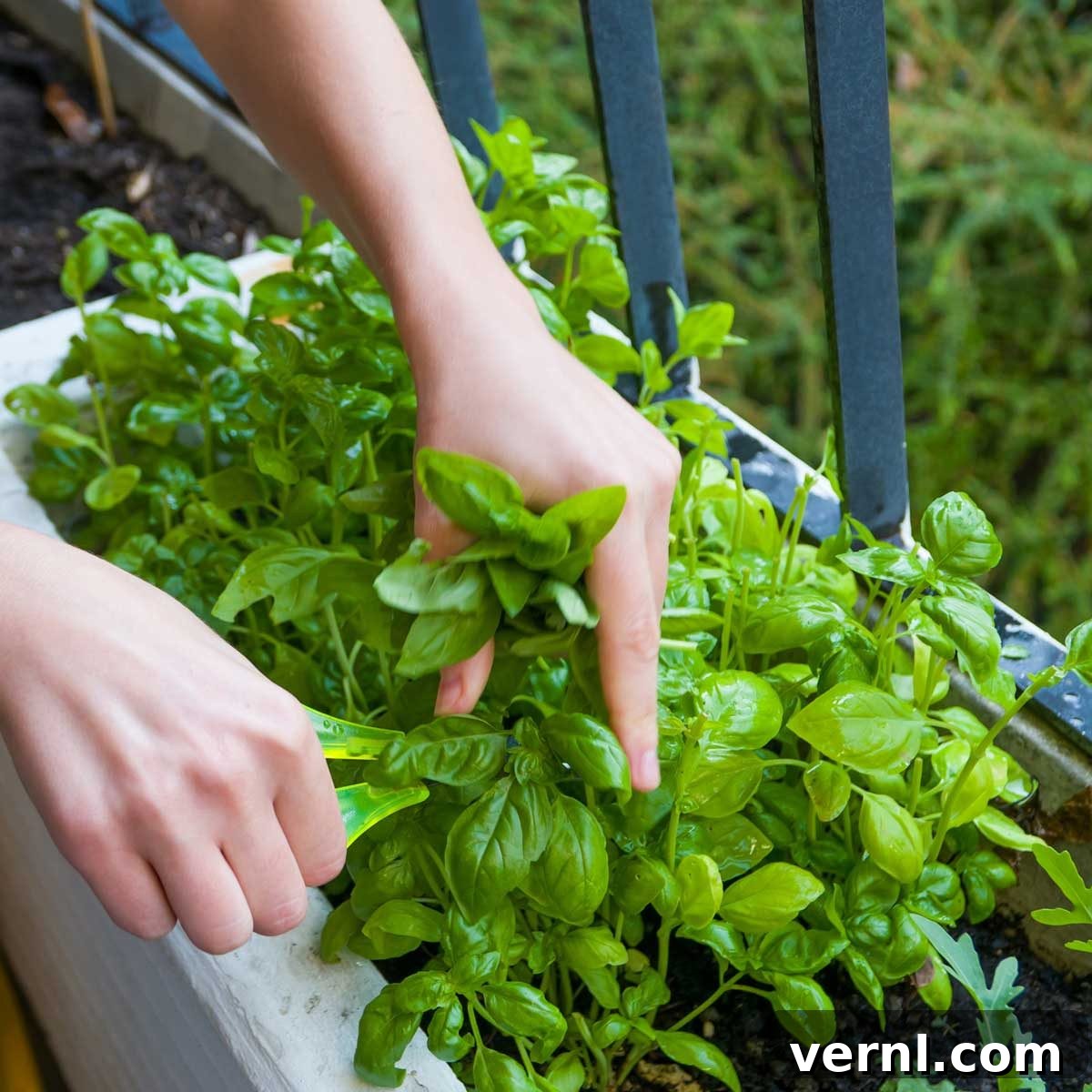
There’s nothing quite like the aromatic delight and fresh flavor that basil brings to countless culinary creations. Whether you’re whipping up a vibrant pesto, garnishing a simple Caprese salad, infusing sauces with its unique taste, or adding a fragrant touch to homemade pizza, having a steady supply of this beloved herb is a true kitchen luxury. For many home chefs and garden enthusiasts, cultivating basil offers a continuous source of fresh leaves, enhancing both indoor and outdoor spaces with its lush greenery and enticing fragrance.
You might consider growing a basil plant on your kitchen windowsill, where it can thrive with adequate sunlight and convenient access. If you opt to plant basil outdoors, remember that it’s a tender annual, meaning it flourishes only in warm weather and cannot withstand cold temperatures or frost. Its preference for summer growing conditions makes it a suitable choice for most USDA Plant Hardiness Zones during the warmer months.
Beyond its culinary appeal, basil offers a delightful bonus for outdoor gardeners: it naturally acts as a deterrent for common garden pests such as flies and mosquitoes. This makes it an exceptional addition to garden beds situated near outdoor dining and entertaining areas, allowing you to enjoy alfresco meals with fewer buzzing interruptions. To ensure a continuous and bountiful harvest of fragrant, flavorful leaves, understanding the art of pruning basil is essential. While it might seem daunting, it’s a straightforward process that encourages robust growth and maximizes your yield.
When the time comes to harvest or trim your basil, a gentle approach yields the best results. Proper pruning techniques not only provide you with fresh herbs but also invigorate the plant, promoting fuller, bushier growth and preventing it from prematurely going to seed. Read on for comprehensive, expert tips on how to prune basil effectively, ensuring your plants remain healthy and productive throughout the growing season.
When to Prune Basil for Optimal Growth and Flavor
Understanding the right timing for pruning basil is crucial for its health and productivity. Whether you’ve nurtured your basil from tiny seeds or started with young plants, they typically won’t be ready for their first significant trim until late spring, once they’ve established a healthy root system and developed several sets of true leaves. The ideal window for initial pruning is when your basil plant reaches a height of about six to eight inches, signaling that it’s strong enough to handle trimming and will respond by producing more vigorous new growth.
Because basil is a fast-growing herb that benefits immensely from consistent attention, regular pruning is a practice you’ll engage in throughout the entire summer. Think of it as a cycle of nurturing and harvesting: you prune, the plant grows back stronger, and you prune again. This continuous process not only provides you with an abundant supply of fresh leaves but also extends the plant’s productive life. Most basil plants have a lifespan of approximately four to five months from the time they are planted, making the summer months your prime time for cultivation and enjoyment. By consistently pruning, you encourage the plant to put its energy into leaf production rather than flowering, which can make the leaves bitter and signal the end of its growing cycle. So, embrace the pruning process, savor your harvests, and plan to replant your basil next year to continue enjoying this fantastic herb.
Beyond the initial pruning, keep an eye on your basil plants every one to two weeks during peak growing season. As soon as you notice signs of rapid vertical growth or the formation of flower buds, it’s time to prune again. Consistent, light pruning is far more beneficial than infrequent, heavy cuts, as it minimizes stress on the plant and maintains a steady rhythm of growth. This regular interaction with your basil plants will not only yield a more bountiful harvest but also strengthen your connection with your garden.
Mastering the Art of Pruning Basil: A Detailed Guide
Pruning basil doesn’t require complex tools or advanced gardening skills; in fact, a delicate touch is often all that’s needed. As garden designer Amy Fedele, author of the popular blog Pretty Purple Door—a highly recommended resource for home gardeners—emphasizes, “Basil is a delicate herb that doesn’t need vigorous pruning.” She suggests that the only tools you truly need are your thumb and forefinger, perfectly adequate for the gentle pinching required. However, for those who prefer, clean, sharp pruning shears or small scissors can also be used, especially for thicker stems or larger harvests. Always ensure your tools are sterile to prevent the spread of plant diseases.
Here are Amy Fedele’s expert tips, expanded and elaborated, for effectively pruning your basil plants:
- Wait for the Right Size: Begin pruning only after your basil plant has reached a height of at least six inches. This ensures the plant has sufficient foliage to photosynthesize effectively and enough energy stores to recover and thrive after pruning. Attempting to prune smaller plants can stunt their growth or even cause irreparable damage. Patience in the initial stages will lead to a more robust and productive plant in the long run.
- The Pinching Technique: For smaller stems and younger growth, your thumb and forefinger are indeed the perfect tools. Gently pinch off individual leaves or small clusters of leaves. The key is to pinch cleanly at the stem, avoiding tearing, which can stress the plant and make it vulnerable to pests or diseases. This method is ideal for everyday harvesting and encouraging a bushier habit.
- Encouraging Lateral Growth for a Bushier Plant: “If the plant is growing too tall,” says Fedele, “pinch stems at the top of the plant to encourage more lateral growth.” This is perhaps the most critical tip for achieving a lush, bushy basil plant with abundant leaves. When you pinch off the central stem (the growing tip), you remove the apical bud, which is responsible for vertical growth. This action signals the plant to divert its energy into developing the dormant side shoots located at the leaf nodes below the cut. The result is a plant that spreads outwards rather than upwards, producing more leaves and a denser canopy. Aim to remove about one-third of the plant’s height during this process.
- Promoting Vertical Growth (Less Common): Conversely, if your goal is to encourage the plant to grow taller, perhaps for a specific aesthetic or to allow it to reach a certain height before a major harvest, you would pinch off the side shoots. By removing the lateral growth, you direct the plant’s energy back into the main stem, promoting upward development. This technique is less commonly used for culinary basil, as most gardeners prefer a bushy plant for higher leaf yield.
- Preventing Bolting by Removing Flowers: This is a non-negotiable step for maintaining flavorful basil. If you notice tiny flower buds beginning to form at the tips of your basil stems, pinch off those little blooms right away. “I know it’s sad, but flowering takes a lot of energy from your plants,” Fedele advises. “You want basil to focus on leaf growth so you have more to harvest. The goal is to get full and bushy foliage.” When basil flowers, it transitions from vegetative growth (producing leaves) to reproductive growth (producing seeds). This process, known as “bolting,” dramatically alters the flavor of the leaves, often making them bitter and less palatable. Prompt removal of flowers redirects the plant’s energy back into producing more delicious leaves, extending your harvest season. (Note: If you really hate to waste the basil flowers, they are edible and can be tossed into salads for a mild basil flavor and decorative touch, though their primary purpose is to be removed.)
- Precision Harvesting for Sustained Production: When you’re ready to harvest a significant amount of basil, the technique is slightly different from a simple pinch. Pinch or cut basil stems approximately one-quarter inch above a node. A node is the junction where the main stem meets two side branchlets or where leaves emerge. By cutting above a node, you leave a pair of dormant buds that will soon sprout into new stems, ensuring continuous growth. Additionally, avoid cutting more than three inches from the base of the plant during any single harvest. This ensures enough foliage remains to support the plant’s recovery and continued photosynthesis. A good rule of thumb is to never remove more than one-third of the plant’s total foliage at once.
Continue to Harvest: The Secret to Basil’s Abundance
One of the most important principles to remember when growing basil is that it not only tolerates constant pruning but actually requires it to thrive. More specifically, it requires consistent pinching. You must continually pinch off leaves and growing tips to encourage new growth, even if you don’t immediately have a culinary use for the harvested basil. This seemingly relentless harvesting prevents the plant from bolting prematurely and keeps it in a state of vigorous leaf production.
Amy Fedele shares a common gardener’s dilemma: “Most of the time, I find that I have to harvest basil a lot more frequently than I can actually use it.” This highlights the plant’s incredible productivity when properly maintained. In such cases, she wisely suggests sharing her abundant harvests with family and friends, a delightful way to spread the joy of fresh herbs. But even if you can’t share, it’s better to prune and potentially compost or preserve the excess than to let the plant become leggy and bitter. Regular harvesting keeps the plant compact, healthy, and perpetually offering fresh, tender leaves.
What if You Stop Pruning? Understanding Basil’s Natural Cycle
While consistent pruning is key for maximizing culinary harvests, it’s also important to understand what happens if you choose to let your basil plant follow its natural course without intervention. If you decide to stop pruning your basil, particularly by not pinching off the developing flower buds, the plant will quickly begin to flower. These small, delicate blooms, often white or lavender, will soon emerge from the tips of the stems.
Once basil blooms, it transforms into a valuable addition to the garden ecosystem in a different capacity. Its flowers will readily attract bees and hummingbirds, along with other beneficial pollinators, contributing to the biodiversity of your garden space. For those interested in supporting local wildlife and enhancing their garden as a pollinator plant and insect repellent, allowing basil to flower can be a fulfilling choice. However, there’s a significant trade-off for the culinary enthusiast: once basil blooms, the leaves undergo a profound chemical change, turning noticeably bitter and tough. At this stage, they are generally no longer good for consumption, as their desirable sweet and peppery notes are replaced by an unpleasant astringency.
So, if your primary goal is a continuous supply of delicious basil leaves for cooking, consistent removal of flower buds is paramount. But if you’re content with your basil serving as an attractive, fragrant pollinator plant and a natural insect repellent, then by all means, let it bloom. Even if you allow it to flower, occasional pruning of the overall plant structure can still be beneficial to encourage it to spread out and maintain a more appealing form rather than growing excessively tall and spindly. This helps keep the plant somewhat compact while still allowing it to serve its ecological purpose.
Creative Ways to Utilize and Preserve Your Basil Harvest
With consistent pruning and a healthy basil plant, you’ll likely find yourself with an abundance of fresh leaves, often more than you can use immediately. This presents a wonderful opportunity to get creative in the kitchen and ensure you can enjoy the taste of summer basil long after the growing season has ended. Preserving your basil properly locks in its vibrant flavor and aroma.
Amy Fedele offers a fantastic tip for preserving that extra basil, making it readily available for future culinary adventures. After you’ve dried your basil—which can be done simply by spreading the leaves on a clean kitchen counter in a well-ventilated area until crisp, or using a dehydrator on a low setting—you can transform it into a convenient frozen option. Mix the dried, crumbled herb with a high-quality olive oil, pour this aromatic mixture into an ice cube tray, and then freeze it. “(Then) anytime you need some,” she advises, “just pop a basil cube out of the freezer and throw it in your pan.” This method creates flavorful individual portions that are perfect for sautéing, adding to sauces, or infusing dishes with a burst of basil flavor.
Beyond Fedele’s ingenious method, here are a few more ways to preserve and utilize your bountiful basil harvest:
- Classic Pesto: This is arguably the most popular way to use large quantities of basil. Blend fresh basil leaves with pine nuts (or walnuts), garlic, Parmesan cheese, and olive oil. Pesto can be stored in the refrigerator for a week or frozen in small containers or ice cube trays for several months.
- Blanching and Freezing: For a simple preservation method, quickly blanch basil leaves in boiling water for 10-15 seconds, then immediately plunge them into an ice bath to stop the cooking process. Drain thoroughly, pat dry, and then puree with a little water or olive oil. Freeze the puree in ice cube trays or small freezer bags. This method helps maintain the vibrant green color and fresh flavor.
- Basil Infused Olive Oil: Gently bruise fresh basil leaves and place them in a clean jar. Cover completely with good quality olive oil. Let it infuse in a cool, dark place for about a week, then strain out the leaves. Use this aromatic oil for dressings, marinades, or dipping bread. Be mindful of botulism risk with fresh herbs in oil; for long-term storage, heat the oil with the basil and refrigerate, or freeze.
- Drying Methods: Aside from air drying, you can use a food dehydrator set to a low temperature (around 95-105°F / 35-40°C) until the leaves are crumbly. You can also carefully dry basil in a conventional oven on its lowest setting, with the door slightly ajar, though this requires careful monitoring to prevent scorching.
- Basil Butter: Chop fresh basil finely and mix it into softened unsalted butter with a pinch of salt. Roll it into a log using parchment paper and freeze. Slice off medallions as needed to melt over grilled meats, vegetables, or spread on warm bread.
- Basil Vinegar: Infuse white wine vinegar or apple cider vinegar with fresh basil sprigs for a couple of weeks. This makes a delightful addition to salad dressings.
By implementing these creative preservation techniques, you ensure that the essence of your summer garden can be enjoyed throughout the year, adding a touch of sunshine to even the dreariest winter dishes. Proper pruning is not just about keeping your plant healthy; it’s about unlocking its full potential to provide you with a continuous supply of this magnificent herb, ready to be transformed into countless culinary delights.