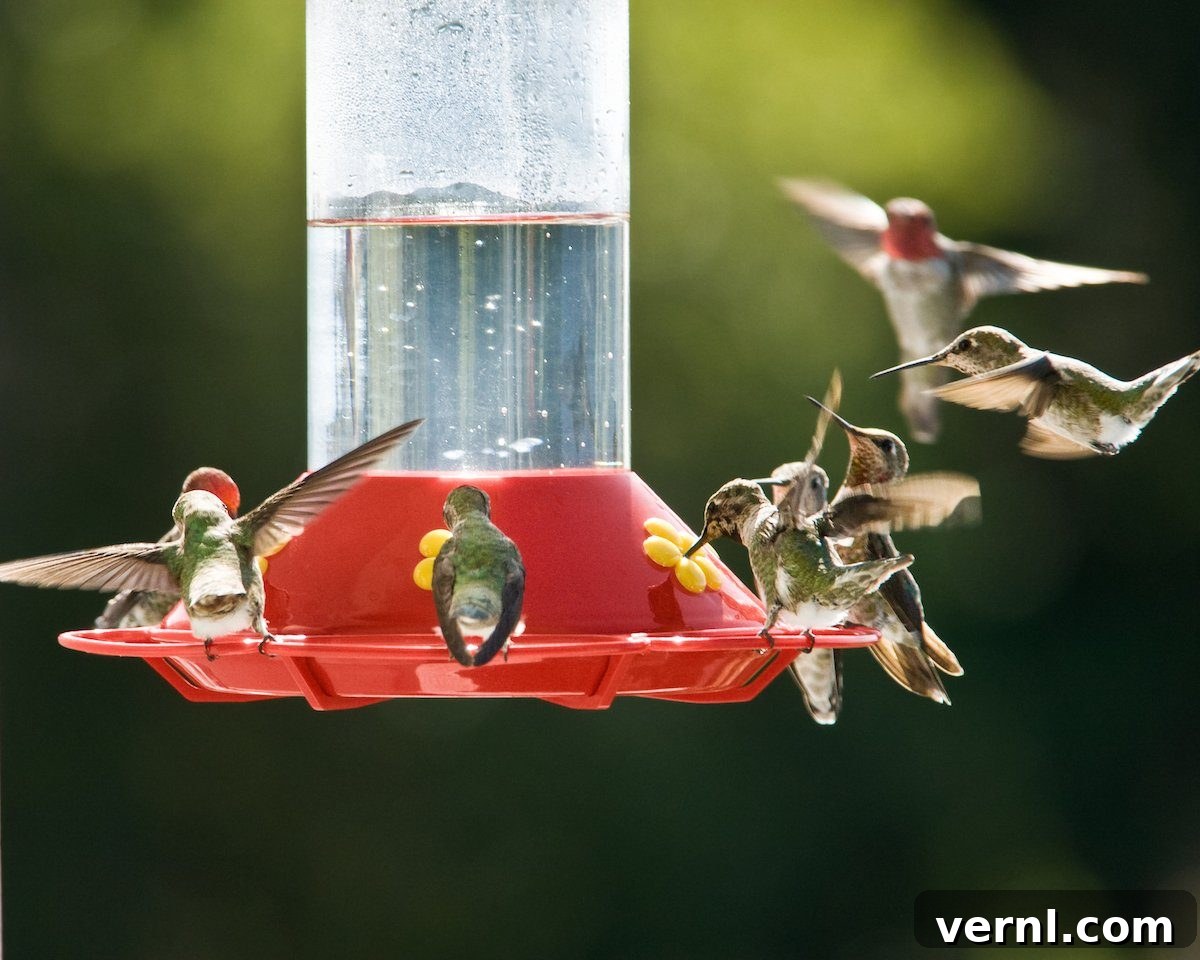
The enchanting world of hummingbirds comes alive when you provide them with a reliable and healthy food source. These tiny, iridescent marvels are not just a delight to watch; they are also incredibly active, requiring constant refueling. According to the National Audubon Society, these jewel-feathered “whirling dervishes” consume roughly half their body weight in nectar and small insects daily. To put that into perspective, it’s like visiting over a thousand flowers every single day! Providing a well-maintained hummingbird feeder can significantly aid them in meeting their intense energy demands, transforming your backyard into a bustling hub of activity.
While setting up a feeder might seem straightforward, there are several common pitfalls that can diminish your chances of attracting these fascinating birds or, worse, inadvertently harm them. By understanding and avoiding these eight frequent mistakes, you can ensure your feeding station is a safe, inviting, and effective haven for hummingbirds.
Crafting the Perfect Hummingbird Nectar at Home
Making your own hummingbird nectar is surprisingly simple and ensures you provide a pure, healthy energy source. The universally recommended recipe for homemade hummingbird nectar consists of four parts water to one part granulated white sugar. This precise ratio closely mimics the natural sugar content found in the floral nectar hummingbirds seek in the wild. For example, if you’re using a smaller feeder, two cups of water combined with half a cup of sugar would be appropriate. For larger feeders, four cups of water to one cup of sugar is ideal. And that’s all there is to it – no complicated ingredients or lengthy processes.
When it comes to the water, ordinary tap water is generally perfectly fine to use. However, if you live in an area with particularly hard water or a high mineral content, it’s a good practice to boil it first. Heating the water in a glass measuring cup until it reaches a boil helps dissolve the sugar more quickly and effectively, ensuring a uniform solution. Additionally, preparing a slightly larger batch and storing the leftover nectar in the refrigerator can keep it fresh for up to a week, making your daily feeder maintenance much more convenient.
The Critical Importance of the Correct Nectar Ratio
One of the most crucial aspects of providing a safe and beneficial food source for hummingbirds is adhering strictly to the recommended nectar ratio. It’s imperative to double-check your measurements when preparing homemade hummingbird nectar, especially if you’re mixing a larger batch for multiple feeders or a bigger feeder. An incorrect ratio can have detrimental effects on these tiny birds. If the solution is too dilute (not enough sugar), it won’t provide the high-octane energy hummingbirds desperately need to fuel their incredibly fast metabolism and hovering flight. Conversely, if the solution is too concentrated (too much sugar), it can be difficult for them to digest and may even cause dehydration. To simplify the process and ensure accuracy, many experienced birders find it easiest to start with the sugar amount and then multiply it by four to get the water quantity, rather than starting with water and attempting to divide accurately. Precision is key to their well-being.
Why Honey and Other Sweeteners Are Harmful
In our human diets, honey and maple syrup have gained popularity as natural alternatives to refined sugar, often lauded for their “no sugar added” benefits. However, when it comes to hummingbirds, these alternatives are strictly off-limits. The National Audubon Society strongly advises against using anything other than plain, refined white granulated sugar. Honey, when diluted with water, creates an environment highly susceptible to the growth of harmful bacteria and fungi, which can be lethal to hummingbirds if ingested. Similarly, organic, natural, or raw sugars, while seemingly healthier, often contain levels of iron that are far too high for a hummingbird’s delicate system and can lead to iron toxicity. Furthermore, molasses, brown sugar, and artificial sugar substitutes should also be avoided completely. These substances can cause digestive problems, fermentation, or lack the necessary caloric density to sustain these high-energy birds. Stick to pure cane sugar for their safety and health.
Avoiding Red Food Dye: A Potential Health Risk
It’s a widely known fact that hummingbirds are strongly attracted to the color red, which is why many commercial feeders incorporate red components. However, this doesn’t mean you should add red food dye to your homemade nectar. While the visual appeal of red is undeniable, adding artificial dyes to the sugar solution is an unnecessary and potentially harmful practice. Most commercially available feeders already feature red or yellow accents – colors that are more than sufficient to catch a hummingbird’s discerning eye. There is ongoing debate within the ornithological community about the long-term effects of food dyes on hummingbirds, but why take the risk when safer alternatives exist? If you wish to draw more attention to your feeder without compromising the birds’ health, consider hanging it near a vibrant display of hummingbird-friendly flowers, such as petunias, salvias, or impatiens. Their natural beauty and nectar will serve as an irresistible lure.
The Importance of Frequent Nectar Changes
Unlike human food that can sit for days, hummingbird nectar, being a simple sugar solution, is highly susceptible to spoilage. Leaving nectar in the feeder for too long is a common mistake that can lead to the proliferation of bacteria and mold, which are extremely harmful to hummingbirds. Therefore, plan to change out the nectar every three to four days as a standard practice. However, this frequency needs to increase significantly during certain periods. In the peak heat of summer, when temperatures soar, nectar can ferment and spoil much faster, sometimes requiring daily refills to ensure birds have access to fresh, safe hydration. Similarly, near the end of summer and into early fall, when hummingbirds are actively bulking up for their arduous migration, they visit feeders more frequently, and the nectar depletes quicker. Always be vigilant: if you notice the nectar turning cloudy, developing visible mold, or seeing black spots, replace it immediately, regardless of how recently it was changed. Freshness is paramount for their health.
Never Top Off Hummingbird Nectar
It can be tempting to simply top off the nectar in your hummingbird feeder when it looks low, but this seemingly convenient practice is a critical mistake that can endanger the birds. Topping off old nectar allows harmful bacteria, yeasts, and molds that have begun to grow in the residual solution to contaminate the fresh sugar water you add. This creates a breeding ground for pathogens that can make hummingbirds very sick. According to the International Hummingbird Society, it is absolutely essential to completely empty the feeder each time you refill it. After emptying, clean the feeder thoroughly with a mild detergent and a brush designed for feeders, ensuring all previous residue is removed. Rinse it meticulously to remove all soap traces, and then refill it with entirely fresh, clean sugar water. This diligent cleaning routine is vital for preventing the spread of disease and ensuring your feeders are truly beneficial.
The Crucial Step of Feeder Sterilization
Beyond routine cleaning, periodic sterilization of your hummingbird feeder is an indispensable step for maintaining a healthy feeding station. At least once a month, you should soak your feeders in a diluted bleach solution. A common recommendation is one tablespoon of bleach per cup of water. Allow the feeder parts to soak for 15-30 minutes, which will effectively kill any lingering bacteria, mold spores, or fungi that regular washing might miss. Following the bleach soak, it is absolutely critical to rinse the feeder thoroughly, multiple times, with hot water until you can no longer detect any bleach odor. Any residual bleach can be toxic to hummingbirds. This sterilization process prevents fermentation and the growth of harmful microorganisms that can sicken or even kill these delicate birds. Some glass hummingbird feeders are designed to be dishwasher safe, which can make sterilization easier; however, always refer to your feeder’s manufacturer recommendations to avoid damage and ensure proper cleaning.
Optimal Hummingbird Feeder Placement for Safety
While aesthetics might lead you to hang a feeder on a shepherd’s hook amidst garden flowers or at eye level near your outdoor seating, improper placement can inadvertently expose hummingbirds to unnecessary dangers. The ideal hummingbird feeder placement should be at least four feet off the ground, and ideally even higher, up to six or seven feet. This elevated position helps deter ground predators such as roaming cats, raccoons, and even curious squirrels, which can easily ambush hummingbirds feeding at lower levels. Furthermore, avoid placing feeders too close to tree trunks, retaining walls, dense shrubbery, or steps. These structures provide excellent hiding spots for predators to lurk unseen. Instead, choose an open location where hummingbirds have a clear line of sight for approach and escape, and where you can easily observe them from a distance. A safe environment encourages more frequent visits and provides peace of mind.
Preventing Feeder Wars: Strategic Placement
While a super-sized feeder with multiple nectar ports might seem like a good idea to attract more hummingbirds, it can often lead to unexpected territorial conflicts. Male hummingbirds, in particular, are famously territorial and can be quite aggressive. A single alpha male hummingbird might claim a large feeder as his exclusive domain, fiercely chasing away any other birds that dare to approach, including less aggressive females and juveniles. This can effectively monopolize the food source and prevent other hummingbirds from feeding. To mitigate these “feeder wars” and allow more birds to enjoy your nectar, consider setting up more than one feeder. Critically, place these feeders in different locations around your yard, preferably out of sight of each other. This spatial separation helps to break up a single bird’s ability to defend an entire feeding area, allowing multiple hummingbirds to feed simultaneously and peacefully. More feeders mean more happy hummers for everyone.