Mastering Your Garden: A Comprehensive Guide to Plant Hardiness Zones and How to Thrive Beyond Them
For passionate gardeners across the United States, a common opening question often surfaces in conversation: “What’s your Plant Hardiness Zone?” This seemingly simple query holds immense significance, dictating the very foundation of successful gardening and plant selection. It’s a moment of shared understanding, often followed by a delightful surprise when gardeners from vastly different geographical locations — say, a seasoned enthusiast in Indiana and a desert dweller in New Mexico — discover they share the same zone. But does this mean they can cultivate identical plants? The answer, as many experienced green thumbs will tell you, is a nuanced blend of “maybe” and “maybe not.”
Understanding your Plant Hardiness Zone is not merely a piece of trivia; it’s a fundamental tool that empowers you to make informed decisions about your garden. It helps determine which beloved plants will reliably return year after year as perennials, gracefully weathering the winter chill, and which are destined to be cherished as annuals, completing their life cycle within a single growing season. By embracing the insights provided by the USDA Plant Hardiness Zone Map, you unlock the potential to select plants that are not just surviving, but truly thriving, in your specific regional climate, leading to a more vibrant and rewarding gardening experience.
What Exactly is a Plant Hardiness Zone?
At its core, a Plant Hardiness Zone is a geographically defined area in which a specific category of plant life is capable of growing, as determined by climatic conditions. Specifically, the zones you see on the map are primarily defined by the average annual extreme minimum winter temperature. This isn’t about the absolute lowest temperature ever recorded, but rather the average of the coldest temperatures over a significant period. This crucial metric helps gardeners understand which plants are robust enough to withstand the coldest part of their local winter without being damaged or dying.
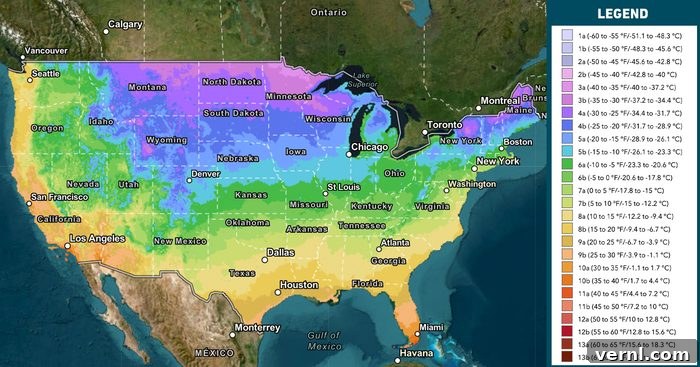
In the United States, these zones are meticulously charted on the United States Department of Agriculture (USDA) Plant Hardiness Zone Map. The latest iteration of this indispensable resource was updated in 2023, reflecting more recent climate data. This updated map is a product of extensive data collection, basing its zones on the average lowest winter temperatures recorded from 1991 to 2020. This comprehensive dataset ensures the map is as accurate and current as possible, providing gardeners with the most reliable information available.
The U.S. is systematically divided into 13 distinct zones, with each zone representing a 10-degree Fahrenheit difference in average annual extreme minimum temperature. To offer even greater precision, each of these 13 primary zones is further subdivided into two smaller sections: an “A” area and a “B” area. The “A” subzone covers the lower five degrees of the zone’s temperature range, indicating a slightly colder average minimum. Conversely, the “B” subzone encompasses the highest five degrees, signifying a comparatively milder average minimum winter temperature. This granular detail allows gardeners to fine-tune their plant selections, maximizing their chances of success.
Navigating the USDA Plant Hardiness Zone Map: Finding Your Zone
Determining your specific Plant Hardiness Zone is a straightforward process, made incredibly user-friendly by the USDA. To discover the zone that corresponds to your garden, simply follow these easy steps:
- Visit the Official Map: Navigate your web browser to the official United States Department of Agriculture Plant Hardiness Zone Map website.
- Access the Interactive Map: Once on the site, look for a prominent button or link labeled ‘View Maps’ or similar. Clicking this will take you to the interactive mapping tool.
- Enter Your Location: In the search bar provided, accurately input your address, zip code, or even your precise coordinates. The map will then zoom directly to your specific location.
- Identify Your Zone: Observe the color that overlays your property on the map. To the right or bottom of the map, you’ll find a corresponding color legend or chart. Match the color of your location on the map to the identical color in the chart. This will clearly indicate your assigned Plant Hardiness Zone, including its ‘A’ or ‘B’ subzone designation.
Knowing your zone with such precision is invaluable. It’s the first, critical step in selecting plants that are inherently suited to withstand your local winter conditions. This knowledge reduces guesswork, minimizes plant loss, and fosters a more resilient and beautiful garden landscape.
Beyond Borders: International Hardiness Zones
While the USDA map is the authoritative standard for the United States, it’s important to recognize that it’s a national system. Other countries around the globe maintain their own hardiness zone maps, each developed based on their specific climatic criteria and data collection methods. For example, Canada has its own plant hardiness zones, often factoring in not just minimum temperatures but also factors like frost-free days and summer heat.
This global variation becomes particularly relevant when you’re drawing inspiration from international gardening literature, especially books written by British gardeners. Great Britain, for instance, generally boasts a warmer overall climate with a longer, cooler growing season compared to many regions of the U.S. Consequently, a plant hardy in a particular zone in the UK might not be hardy in a numerically similar USDA zone. For those seeking to cross-reference or explore global hardiness zones, resources like Plantmaps can be incredibly helpful, offering insights into various international zone systems.
Why Your Plant Hardiness Zone is Your Garden’s Best Friend
Armed with the knowledge of your Plant Hardiness Zone, you gain a significant advantage in the gardening world. This information serves as a crucial filter, guiding your plant purchases and increasing the likelihood of success in your garden. Here’s why understanding your zone is indispensable:
- Perennials vs. Annuals: The Winter Survival Guide: Your hardiness zone primarily dictates whether a plant will survive your winter and return in the spring (a perennial) or if it will complete its life cycle in one season (an annual). Choosing plants hardy enough for your zone ensures that your perennial investments will flourish for years, avoiding the disappointment of losing plants to frost.
- Saving Time, Money, and Effort: Imagine investing significant time and money in a collection of beautiful plants, only for them to succumb to the first severe frost. Knowing your zone prevents this heartache. It allows you to focus your resources on plants that are genuinely suited for your climate, leading to less waste and more gardening joy.
- Optimizing Plant Health and Growth: Plants that are within their ideal hardiness zone are not just surviving; they are thriving. They experience less stress from extreme cold, allowing them to put more energy into robust growth, abundant blooms, and healthy foliage. This leads to a more vibrant and resilient garden.
- Navigating the Online Plant Marketplace: The convenience of online plant shopping has expanded our horizons, offering a vast array of species from around the world. However, this accessibility comes with a caveat. Reputable online nurseries often integrate hardiness zone checks, prompting you for your address to verify if a plant is suitable for your region. They might even issue warnings if you select a plant unlikely to survive. Unfortunately, not all vendors offer this protective measure. Many will ship you any plant you desire, regardless of its hardiness in your area, potentially leading to costly mistakes and plant loss. Your personal knowledge of your hardiness zone becomes your primary defense against such regrettable purchases.
In essence, knowing your Plant Hardiness Zone is about making intelligent, proactive choices that set your garden up for sustained beauty and success. It’s about working with nature, not against it, to cultivate a landscape that truly flourishes.
Beyond the Zone: Other Critical Factors for Plant Success
While Plant Hardiness Zones are a cornerstone of gardening knowledge, they represent just one facet of a plant’s environmental needs. A plant’s ability to thrive is a complex interplay of various factors. Overlooking these additional elements can lead to disappointing results, even if you’ve chosen a plant within its recommended hardiness zone. Here are other crucial considerations:
Summer Heat Zones (AHS Heat Zone Map)
Just as plants have limits to how much cold they can endure, they also have thresholds for intense summer heat. The American Horticulture Society (AHS) developed a Heat Zone Map to complement the USDA Hardiness Zone Map. This map divides the country into 12 zones based on the average number of “heat days” – days when temperatures exceed 86 degrees Fahrenheit (30°C) – in an average year. A plant might survive the winter in your zone but struggle or die during a scorching summer. Increasingly, plant labels are including heat tolerance alongside hardiness information, providing a more complete picture of a plant’s resilience.
Annual Rainfall and Moisture Needs
Two regions within the same Plant Hardiness Zone can experience vastly different amounts of annual rainfall and humidity. A plant that thrives in a rainy, temperate Zone 7 might struggle with drought in an arid Zone 7, even if winter temperatures are comparable. Understanding your local precipitation patterns, soil drainage, and the specific water requirements of your chosen plants is vital. Selecting drought-tolerant species for dry climates or ensuring adequate irrigation for moisture-loving plants can make all the difference.
The Insulating Power of Winter Snow Cover
Snow is nature’s blanket for your garden. A consistent layer of snow acts as a powerful insulator, protecting the crowns and root systems of plants from frigid air temperatures and harsh winter winds. Plants covered with a thick blanket of snow can often survive significantly colder air temperatures than those left exposed. In regions where snow cover is intermittent or unreliable, gardeners may need to provide artificial insulation through heavy mulching or protective coverings to mimic snow’s insulating effect, particularly for borderline hardy plants.
Soil Type and pH
The very ground your plants grow in plays an enormous role in their health and survival. Soil type (clay, loam, sand) affects drainage, aeration, and nutrient retention. Soil pH, a measure of its acidity or alkalinity, dictates how well plants can absorb essential nutrients. Even if a plant is perfectly hardy for your zone, it won’t thrive in waterlogged clay soil if it prefers sharp drainage, or in highly acidic soil if it’s an alkaline-loving species. Understanding your soil and amending it as necessary is crucial.
Sun Exposure and Light Requirements
The amount of sunlight a plant receives directly impacts its ability to photosynthesize and grow. Plants are categorized by their light needs: full sun, partial sun, or shade. A plant hardy for your zone might fail if planted in deep shade when it requires full sun, or vice versa. The intensity of sunlight can also vary geographically; the sun in a high-altitude desert might be more intense than in a humid, temperate zone. Mapping the sun patterns in your garden throughout the day and across seasons is essential for proper plant placement.
Unlocking the Secrets of Microclimates in Your Garden
Even within a single property, conditions can vary dramatically from one spot to another. These localized variations in climate are known as microclimates, and understanding them can profoundly impact your gardening success. A microclimate is essentially a small area that experiences a different climate from its surrounding region due to local topography, proximity to water, buildings, or other features.
For instance, an area adjacent to a south-facing brick wall will typically absorb and radiate more solar heat. This spot might warm up significantly faster in winter and remain warmer through cold spells, never quite reaching the lowest temperatures of the rest of your garden. Conversely, a north-facing corner shaded by dense evergreens might stay colder longer, even experiencing later frosts than exposed areas. Other common microclimates include sheltered nooks protected from prevailing winds, areas near large bodies of water that moderate temperatures, or even raised garden beds that drain better and warm up faster than surrounding ground.
By carefully observing your garden throughout the year – paying attention to where snow melts first, where frost lingers, or where direct sunlight hits – you can identify these unique microclimates. Once you pinpoint them, these zones of difference present exciting opportunities. You might be able to successfully grow plants that are considered marginally hardy for your official USDA zone by placing them in a warmer, protected microclimate. Experimentation is key here; a well-chosen microclimate can effectively “push” your zone, allowing you to cultivate a wider array of species and add unexpected diversity to your landscape.
The Art of “Zone Pushing”: Expanding Your Gardening Horizons
For many gardeners, the Plant Hardiness Zone map is a guide, not a rigid rule. These adventurous souls, affectionately known as “zone pushers,” revel in the challenge of cultivating plants that are technically a bit too tender for their assigned zone. It’s a common aspiration for dedicated gardeners, who often find themselves eyeing that one special plant – perhaps a unique rose, a exotic shrub, or a prized fruit tree – that falls just outside their hardiness comfort zone.
Zone pushing is an art form, combining careful observation, strategic planning, and a little bit of horticultural ingenuity. It involves manipulating the microenvironment around a plant to provide just enough protection to see it through the colder months. Here are several well-proven methods employed by zone pushers:
- Winter Wrapping and Protection: Wrapping delicate evergreens or marginally hardy shrubs in burlap or specialized plant blankets is a classic technique. This acts as a barrier against drying winter winds, which can be just as damaging as cold temperatures by dehydrating plant tissues. It also provides a slight insulating effect, buffering against extreme cold snaps.
- Insulating the Root Zone with Thick Mulch: The roots are often the most vulnerable part of a perennial plant. Applying a generous, thick layer (4-6 inches) of organic mulch – such as shredded leaves, straw, or wood chips – over the plant’s root zone before winter sets in provides excellent insulation. This layer helps to moderate soil temperatures, preventing deep freezes and protecting the crown of the plant.
- Overwintering Tender Plants Indoors: For certain very tender perennials, such as some fuchsias, geraniums, or exotic bulbs, zone pushers opt for a more intensive strategy: digging them up. These plants are carefully lifted from the garden before the first hard frost, their roots are trimmed, and they are stored in a cool, dark, and unheated but frost-free space (like a garage, basement, or shed) over winter. Come spring, they are replanted outdoors.
- Leveraging Natural Microclimates: As discussed earlier, utilizing existing warm microclimates – such as the south side of a building, a sheltered courtyard, or near heat-retaining rock walls – is a smart, low-effort form of zone pushing. These spots offer a natural buffer against cold.
- Container Gardening for Mobility: For plants that are highly valued but unequivocally not hardy for a specific zone, growing them in containers offers ultimate flexibility. Containerized plants can be enjoyed outdoors during the warm season and then easily moved indoors to a greenhouse, sunroom, or even a brightly lit living space when winter approaches. This allows for the cultivation of tropicals or other sensitive species far outside their native range.
While zone pushing can be immensely rewarding, it’s not without its risks. There’s always the possibility of losing a plant to an unexpectedly severe winter or an oversight in protection. However, for many, the joy of defying expectations and nurturing a truly unique plant makes the occasional setback well worth the effort.
Frequently Asked Questions (FAQ) about Plant Hardiness Zones
Can I grow plants outside my hardiness zone?
Absolutely, you can definitely grow plants outside of your designated hardiness zone, but it requires a careful understanding of their specific needs and some strategic gardening practices. As Kelly Funk, President & CEO of Jackson & Perkins, emphasizes, “Hardiness zones matter because they determine whether they can survive year-round in your climate or need to be treated as annuals.” Many plants, especially tropical varieties like cannas, impatiens, or certain salvias, are commonly planted as annuals even in colder zones. This means you would plant them in the spring after the danger of frost has passed, allow them to thrive and provide beauty throughout the warm-weather growing season, and then accept that they won’t survive the winter. For marginally hardy perennials, techniques like heavy mulching, winter protection, or container gardening (as discussed in ‘Zone Pushing’) can extend their life beyond their typical zone.
Are USDA hardiness zones and regional climate maps the same thing?
No, USDA hardiness zones and regional climate maps are not the same thing, although they are related and often used in conjunction. USDA hardiness zones are highly specific and primarily focus on a single metric: the average annual extreme minimum winter temperature. Their purpose is to predict whether a perennial plant can survive the winter in a specific location. Regional climate maps, on the other hand, provide a much broader and more comprehensive overview of a location’s weather patterns. These maps consider a multitude of factors, including average monthly temperatures (highs and lows), precipitation levels (rainfall, snowfall), humidity, wind patterns, frost-free days, and even historical weather events. While hardiness zones tell you about winter survival, regional climate maps give you a holistic understanding of the year-round environment, allowing for more nuanced gardening and landscape planning.
How often does the USDA map get updated, and why?
The USDA Plant Hardiness Zone Map is updated periodically, not on a fixed schedule, but rather when significant new climate data becomes available and warrants a revision. The most recent update was in 2023, based on 30 years of data from 1991 to 2020. Previous updates occurred in 2012 and 1990. The primary reason for these updates is climate change. As global and regional climate patterns shift, so too do average minimum winter temperatures. Regular updates ensure the map remains an accurate and reliable tool for gardeners, reflecting the most current climatic realities and helping them make the best plant choices for a changing world.
What’s the difference between a perennial and an annual in relation to hardiness zones?
The distinction between perennials and annuals is fundamental to understanding hardiness zones. A **perennial** plant is one that lives for more than two years, typically returning year after year from its rootstock. Hardiness zones are primarily designed to indicate which perennials will survive the winter cold in a given area. If a perennial is rated for your zone or colder, it’s expected to live through the winter. An **annual** plant, however, completes its entire life cycle – from seed to flower to seed – within a single growing season and then dies. Annuals are grown for their seasonal beauty and do not need to be hardy enough to survive winter, as they are not expected to return the following year, regardless of the zone. Some plants can be grown as perennials in warmer zones but are treated as annuals in colder zones.
How do nurseries and garden centers use hardiness zones?
Nurseries and garden centers rely heavily on hardiness zones to stock their inventory and guide their customers. They primarily purchase and sell plants that are well-suited for their local hardiness zone, ensuring that customers have the best chance of success. Plant labels often prominently display the recommended hardiness zone range for that particular species. Knowledgeable staff at these centers will frequently ask customers for their location or provide guidance based on the local zone, helping them select plants that will thrive. For online nurseries, they often use customer zip codes to automatically filter or suggest appropriate plants, or even issue warnings about plants that may not be suitable for a buyer’s zone.
About Our Expert Contributor
- Kelly Funk is the esteemed President & CEO of Jackson & Perkins, a renowned name in the horticultural industry, bringing extensive expertise and insight to the world of gardening.