The Essential Guide to Woodworking Rasps and Files: Shaping and Smoothing Your Projects with Precision
For many aspiring DIYers and even some seasoned craftspeople, the initial focus often lies on acquiring powerful machinery, advanced saws, and elaborate workbenches. Yet, much like the humble clamp, rasps and files are woodworking essentials that subtly yet inevitably become cornerstones of any well-equipped workshop. These often-unsung heroes of the woodworking world are indispensable for tasks ranging from aggressive material removal to delicate shaping and refining surfaces. Experienced woodworkers understand their profound utility, accumulating a diverse array as their projects demand more nuanced control over wood. This comprehensive guide will delve into the critical roles these hand tools play, explaining why they are so highly valued, how to select the right ones, and what you’ll need to start your own collection for achieving professional results in your projects.
From custom furniture building to intricate carving, precise joinery, and sculptural elements, rasps and files offer unparalleled tactile feedback and precision that power tools often cannot replicate. They empower the artisan to shape wood with a level of detail and control that defines true craftsmanship. Understanding their distinct characteristics and applications is key to unlocking their full potential and elevating the quality of your finished pieces. Let’s explore these fundamental tools in depth, transforming your approach to wood shaping and finishing.
What Is a File? The Finely Toothed Instrument for Woodworking Precision
A file is a meticulously crafted hand tool characterized by its hardened steel body and precise rows of cutting teeth across its face. These teeth are designed to abrade and remove minute amounts of material with each forward stroke, leaving a progressively smoother surface. The design of these teeth—their size, pattern, and spacing—is the primary determinant of how aggressively the file cuts and the quality of the finish it imparts. Files are typically made from high-carbon steel, heat-treated to ensure their sharpness and durability, allowing them to effectively cut through various wood species, as well as plastics and even some soft metals.
Files are broadly categorized by their distinct tooth patterns:
- Single-Cut Files: These files feature parallel rows of teeth running in a single diagonal direction across the file’s face. The teeth are essentially individual chisels arranged uniformly. They are designed for lighter material removal and are excellent for producing exceptionally smoother finishes. The single cutting edge creates a shaving action, making them ideal for delicate contouring, precise deburring, sharpening tools (such as saw blades or chisels), and fine finishing on wood where exacting control and a pristine surface are paramount. They excel at creating a uniform, scratch-free surface.
- Double-Cut Files: In contrast, double-cut files boast a crisscrossing pattern of teeth. A primary set of diagonal teeth is overlaid with a secondary set running in the opposite direction, creating a series of diamond-shaped cutting points. This intersecting pattern creates a multitude of smaller, sharper cutting edges that remove material much more aggressively and rapidly than single-cut files. While they inherently leave a coarser finish due to their more aggressive action, double-cut files are invaluable for quick stock removal, initial shaping, and preliminary smoothing, especially on larger woodworking projects or when significant reshaping is required. They are efficient workhorses for faster progress.
The file’s face is typically solid, with small channels or “gullets” meticulously engineered between the rows of teeth. These gullets serve a crucial purpose: they collect the waste material, or “swarf,” as it’s removed from the workpiece. This prevents the file from becoming “loaded” or clogged with debris, which would significantly reduce its cutting efficiency and potentially scratch the workpiece. Regular cleaning of these gullets with a specialized tool known as a file card is essential for optimal performance, ensuring a consistent cutting action and extending the tool’s lifespan.
What Is a Rasp? The Powerhouse for Rapid Wood Material Removal
While often grouped with files due to their similar function and general shape, rasps are distinctly different in their tooth configuration and primary application. Rasps are the heavy lifters of the wood-shaping world, specifically engineered to make coarse, rapid cuts on wood surfaces, removing significant amounts of material quickly and efficiently. They are the ideal choice when aggressive stock removal is needed, prior to the finer refinement provided by files or sandpaper, much like using a roughing gouge before a finishing tool in carving.
The key distinguishing feature of a rasp lies in its teeth. Instead of the neat, uniform, and blade-like rows found on a file, rasps feature individually raised, sharp teeth, often likened to tiny chisels, pyramids, or points protruding directly from the tool’s surface. These individual teeth are designed to tear and rip away wood fibers rather than shave them, which accounts for their speed, their ability to remove a substantial amount of material, and the coarser finish they inevitably leave behind. This makes them indispensable for rough shaping, removing large amounts of excess wood, and achieving initial contours.
Different types of rasps offer varying levels of aggressiveness and unique features:
- Stitched or Hand-Cut Rasps: These are the traditional, high-quality rasps, often hand-forged, with individual teeth raised and sharpened by skilled artisans using punches. The spacing and height of these teeth determine the rasp’s cutting aggression. Widely spaced, larger teeth remove material faster and leave a coarser finish, making them suitable for initial hogging out of material. More closely spaced, smaller teeth offer slightly finer control and a less aggressive cut, used when approaching the final shape. Hand-stitched rasps are highly prized for their unparalleled sharpness and ability to avoid clogging.
- Milled or Machine-Cut Rasps: These rasps are produced using machinery, offering consistent tooth patterns and often a more uniform appearance than hand-cut rasps. While often less expensive, they are still highly effective for general woodworking tasks, providing reliable performance for everyday material removal.
- Surform Tools: A unique and widely popular category, surforms (a portmanteau of “surface form”) are often colloquially referred to as “cheese grater” rasps due to their distinctive appearance. They feature a perforated metal blade with numerous small, sharp-edged holes, each acting as a miniature cutting tooth. The ingenious design allows large amounts of material to shed away easily through the holes, minimizing clogging – a common issue with traditional rasps when working with softer woods or resins. Surforms come in various forms, including traditional handheld rasp shapes, as well as those integrated into block plane-like bodies (often called “plane-type surforms”) for working on flatter or slightly curved surfaces. They are exceptionally good for rapidly shaping wood, foam, plaster, and even drywall, offering a unique blend of speed and control.
Understanding the fundamental difference – files for precision, refinement, and smoothing, while rasps are for aggressive shaping and rapid material removal – is the first critical step in mastering these versatile tools and applying them effectively in your woodworking projects.
When To Harness the Power of Rasps and Files in Your Woodworking Projects
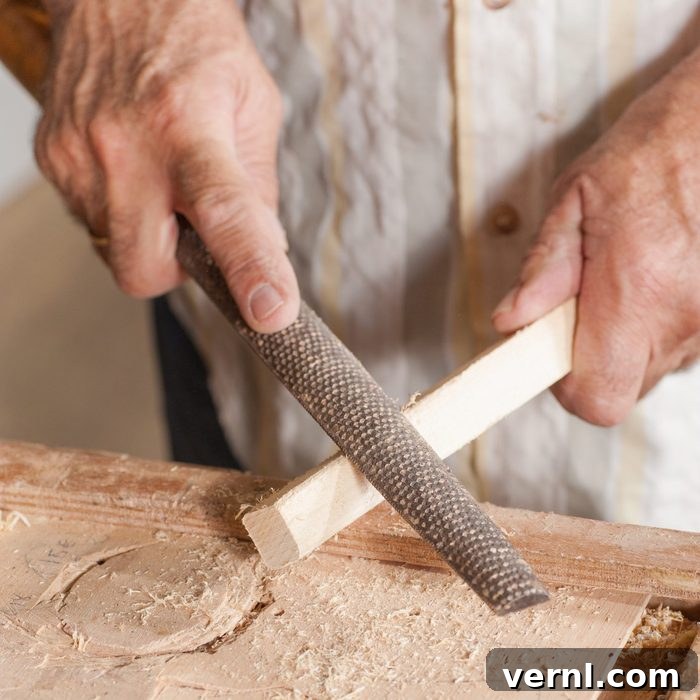
The sequential use of rasps and files in woodworking mirrors the logical progression of sanding: you always begin with a coarser abrasive to remove material quickly and then move to progressively finer grits to refine the surface. Similarly, rasps are generally employed before files. Rasps excel at rapidly removing excess material, shaping initial curves, and bringing a workpiece closer to its final form. However, they inevitably leave a rough, textured surface with visible tooth marks. This is where files step in, providing the necessary smoothing and refinement to prepare the wood for subsequent steps like fine sanding, staining, or finishing. By choosing the right tool for each stage, you ensure efficiency and a superior final product.
Choosing the Right Tool Based on Size, Shape, and Cut
The versatility of rasps and files stems from their diverse range of sizes, shapes, and tooth profiles or “cuts,” each meticulously tailored for specific woodworking tasks. Understanding these characteristics is crucial for optimal tool selection and achieving desired results. Manufacturers typically describe these tools by:
- Size: This primarily refers to the length of the tool’s cutting surface, excluding the tang (the pointed part that fits into the handle). Longer tools cover more area, making them suitable for larger projects and broad shaping tasks, while shorter tools offer greater control and maneuverability for intricate or detailed work. Common lengths range from 4 inches for needle files to 12 inches or more for cabinet rasps.
- Shape: The cross-sectional profile of the tool determines the type of surfaces it can effectively work on. As we will explore, common shapes include flat, round, half-round, and various specialty profiles like square, triangular, or knife-edge. Each shape is designed to access and effectively shape different contours and angles.
- Tooth Profile (or “Cut”): This describes the aggressiveness and fineness of the teeth, dictating the rate of material removal and the resulting surface finish. For both files and rasps, the coarseness is graded, typically from smoothest to coarsest:
- Smooth Cut: Offers the finest finish, removing minimal material with each stroke. Ideal for delicate work, deburring sharp edges, sharpening fine tools, and final surface preparation where only subtle refinement is needed.
- Second Cut: A versatile medium grade, balancing efficient material removal with a relatively smooth finish. This is often a good all-around choice for general tasks, bridging the gap between aggressive shaping and fine finishing.
- Bastard Cut: A coarse grade that removes material more aggressively than a second-cut but is generally finer than a true coarse rasp. Excellent for initial shaping, stock reduction, and preparing surfaces that require significant material removal before moving to finer tools.
- Coarse Cut: The most aggressive grade available, designed for maximum material removal. This cut quickly eliminates large amounts of wood but leaves a very rough surface, absolutely requiring subsequent refinement with finer files or sandpaper.
Practical Applications in the Woodworking Workshop
These indispensable tools are invaluable across a spectrum of woodworking scenarios, offering solutions where power tools might be too aggressive or lack the necessary finesse:
- Shaping Curves and Contours: From the elegant curves of chair legs and armrests to ergonomic contours of tool handles and decorative mouldings, rasps are unmatched for quickly creating and refining these organic shapes. Files then smooth the transitions.
- Joinery Refinement and Fitting: When tenons need to be slightly eased to fit mortises perfectly, or dovetails require minor adjustments for a snug fit, files offer the precision needed to pare away small amounts of material without overcutting.
- Easing Edges: Sharply defined edges on furniture or built-ins can be uncomfortable to touch or prone to chipping. A quick, controlled pass with a file can create a subtle chamfer or a gentle round-over, enhancing both aesthetics and durability.
- Creating Sculptural Elements and Carving: For carvers and sculptors, rasps and files are fundamental for bringing out intricate details, softening transitions, and achieving the desired forms in wood. They bridge the gap between initial roughing out with gouges and final detailing with carving knives.
- Flush Trimming and Leveling: When a piece of wood, such as a dowel or a plug, slightly protrudes beyond an adjacent surface, a flat file can carefully and precisely bring it flush without damaging the surrounding area, resulting in a seamless finish.
- Correcting Imperfections: Minor alignment issues, high spots, or glue squeeze-out in corners can often be effectively addressed and corrected with the judicious use of a file or rasp.
Exploring Common Types of Woodworking Rasps and Files
To effectively utilize these tools, it’s crucial to understand the specific characteristics and optimal applications of their various forms. Each shape is designed to tackle particular challenges in wood shaping and finishing:
Flat Rasps and Files: The Foundation for Leveling and Planing Surfaces
Flat rasps and files are arguably the most fundamental and frequently used shaping tools in a woodworker’s arsenal. Their straight, broad profile makes them ideal for leveling uneven surfaces, truing edges, and bringing larger sections of wood to dimension. A flat rasp acts much like a small, aggressive hand plane or a heavy-duty sanding block, quickly removing high spots and shaping broad, flat or convex areas. Flat files, on the other hand, are perfect for smoothing these same level surfaces, refining joinery, or bringing edges to a crisp, clean finish after initial shaping.
A notable and highly practical feature of many flat files and rasps is that one side often has cutting teeth (known as the “cut” side), while the other side is left completely smooth (known as the “uncut” or “safe” side). This uncut side is incredibly useful when working in corners, against an adjacent finished surface, or when shaping a profile where you only want to remove material from one specific area. It allows the tool to touch the unworked surface without removing any material, providing precision and preventing accidental damage or unwanted alterations to already-finished sections.
Round Rasps and Files: Masters of Curves, Holes, and Concave Shapes
As their name suggests, round rasps and files feature a circular cross-section. This unique profile makes them indispensable for working on concave curves, enlarging and smoothing holes, or creating precise internal radii. They are often tapered along their length, allowing them to fit into various hole or curve sizes, from smaller pilot holes to larger arcs and intricate cutouts. The tapering also aids in controlling the depth and width of the cut, allowing for gradual material removal. Thin, highly tapered round rasps and files are sometimes specifically referred to as “needle files” (when very fine and used for delicate detail work) or “rat tail files” (for their resemblance to a rat’s tail, typically coarser and longer). These tools are crucial for shaping complex internal contours in cabinetry, instrument making, boat building, or artistic carving where smooth, consistent curves are essential.
Half-Round Rasps and Files: The Versatile All-Rounders for Diverse Contours
Half-round rasps and files offer the best of both worlds, featuring one flat side and one curved (half-circle) side. This hybrid profile grants them exceptional versatility, making them a staple in any woodworking shop. The flat back provides excellent stability and control for working on flat or slightly convex surfaces, allowing for precise leveling and smoothing. Concurrently, the curved front is perfectly suited for concave shapes, internal curves, and enlarging holes, much like a round file, but with the added advantage of the flat side for leverage and guidance. Often, a half-round tool will feature a different coarseness or cut pattern on its flat side compared to its curved side, or even an uncut ‘safe’ edge, further enhancing its adaptability for a wide range of tasks. They are an excellent choice for a beginner’s toolkit due to their ability to tackle a wide array of shaping and smoothing tasks on various wood surfaces and contours.
Detail and Specialty Rasps and Files: For Intricate and Fine Work
Beyond the standard shapes, there exists a world of specialized rasps and files designed for intricate and delicate work, where precision and access are paramount. Detail tools typically have narrower faces, finer teeth, and often unique profiles, allowing them to fit into tighter spots and fine contours that larger, more conventional tools cannot reach. Many detail rasps and files may also feature curved profiles, unusual cross-sections (like square, triangular, oval, or knife-edge), or an angled handle (tang) to provide easier access to hard-to-reach areas, such as in tight joinery, relief carving, or model making. Examples include:
- Needle Files: These are very small, slender, and fine files, often sold in sets with a variety of profiles (round, square, triangular, flat, half-round, oval). They are indispensable for highly detailed work in carving, jewelry making, precision fitting of small components, and finishing delicate joinery.
- Riffler Files/Rasps: These are highly specialized tools characterized by their long, slender bodies with curved and often double-ended working surfaces. Their intricate, often artistic shapes allow carvers and sculptors to reach deep into recesses, work around complex curves, and sculpt intricate forms that would be impossible with straight files or rasps. They are essential for advanced carving and sculptural woodworking.
- Cabinet Rasps: Often hand-stitched, these rasps are designed with a specific tooth pattern and profile that makes them ideal for fine furniture making. They offer precise control for shaping and fitting components where a clean, controlled cut is required, providing a smoother finish than general-purpose rasps.
These specialty tools become invaluable once a woodworker begins to tackle more complex, artistic, or highly detailed projects, requiring a greater degree of finesse and specialized access to achieve professional-grade results.
Caring for Your Rasps and Files: Essential Maintenance for Longevity and Performance
To ensure your rasps and files remain effective, sharp, and last for many years of dedicated service, proper care and maintenance are absolutely crucial. Neglecting these simple steps can lead to dull tools, inefficient work, and even damage to your valuable woodworking projects:
- Regular Cleaning (Decr-Clogging): After each use, or whenever the tool begins to feel less effective or shows signs of clogging, it is imperative to use a file card (a specialized brush with stiff wire bristles) to remove accumulated wood dust, debris, and resin from the teeth. Clogged teeth significantly reduce cutting efficiency, can lead to scratching your workpiece, and can permanently damage the file’s cutting edges. For very sticky resins, a brass brush or a solvent can sometimes be used carefully.
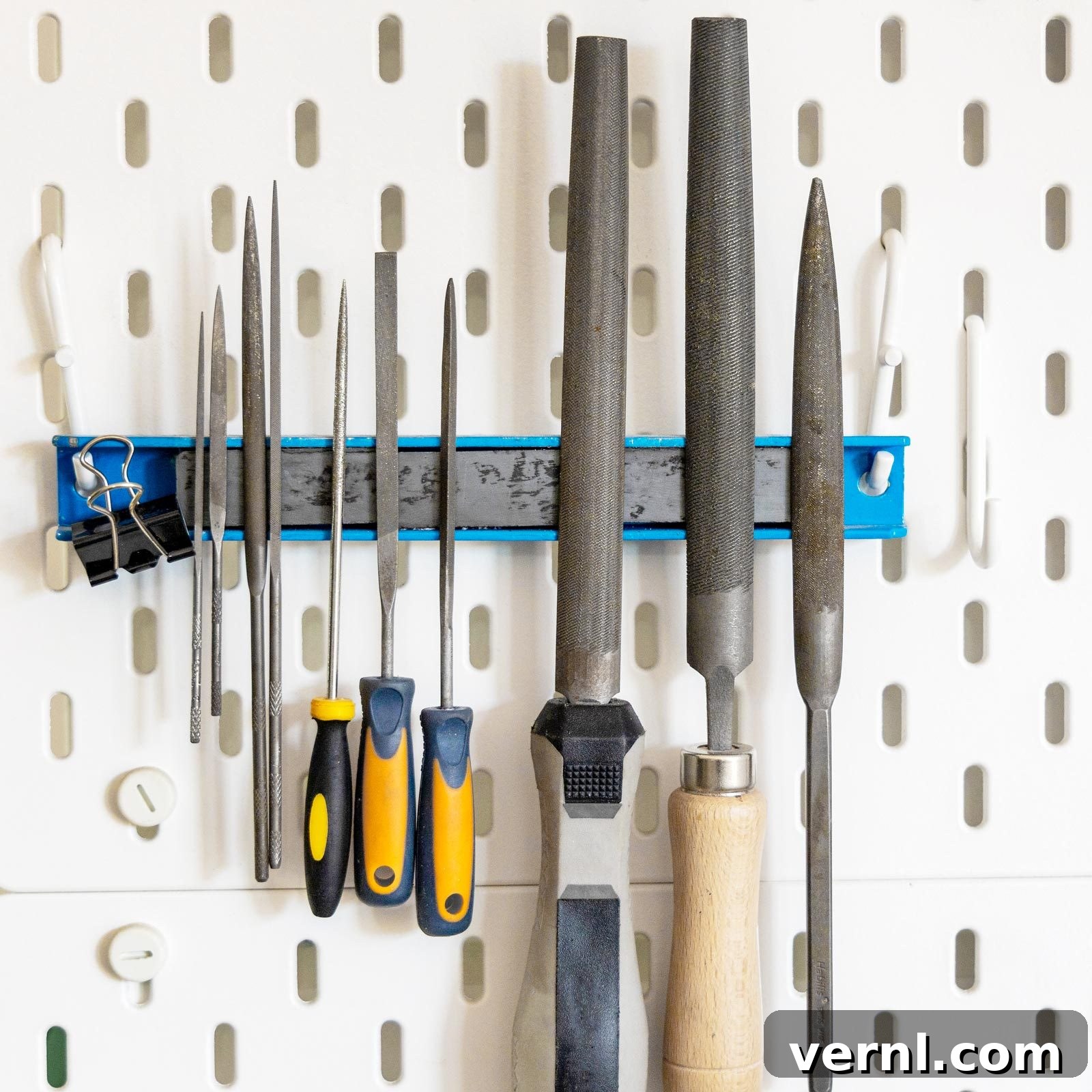
- Proper Storage: Never store rasps and files loosely in a drawer or tool box where they can rub against each other or other metal tools. This is a common mistake that quickly dulls their delicate teeth. Ideally, hang them on a pegboard, store them in a dedicated rack or stand, or keep them in individual leather sleeves or wraps to protect their cutting surfaces from impact and abrasion. This preserves their sharpness and extends their life.
- Secure Handles: Always ensure your files and rasps have securely fitted handles. A loose handle can be extremely dangerous, leading to loss of control during use, potential injury, and inaccurate work. Wooden handles can be traditional and comfortable, while ergonomic plastic handles offer modern grip and often come pre-attached. If a handle is loose, replace it or re-epoxy it securely.
- Oil and Rust Prevention: While primarily used on wood, these tools are made of high-carbon steel and are susceptible to rust, especially in humid environments. After cleaning, an occasional light wipe with an oily rag (e.g., mineral oil, camellia oil, or a rust-inhibiting oil) can prevent corrosion. Ensure any oil is wiped clean before the next use on wood to avoid staining.
- Avoid Drops: Dropping a file or rasp, especially on a hard surface, can chip or break its teeth, rendering it useless or requiring significant re-sharpening, which is often impractical for files.
Building Your Essential Collection: Best Rasps and Files for Beginners
With the vast array of file and rasp variations available, filling an entire workshop is certainly possible. However, if you’re just starting your woodworking journey, the best approach is to acquire a few basic sizes and shapes that offer maximum versatility, and then expand your collection with specialty tools as your project needs evolve. Prioritize quality over quantity, as good tools make the work more enjoyable, more efficient, and the results more satisfying. Investing in durable, sharp tools will save you frustration and lead to better craftsmanship in the long run.
Here are some highly recommended choices for beginners, offering a solid foundation for any aspiring woodworker looking to master the art of hand shaping and finishing:
Libraton Three-Piece Rasp Set: This excellent starter set provides immediate utility and covers a range of common shaping tasks with a flat rasp and two different sizes of half-round wood rasps. What makes this set particularly appealing for beginners is the thoughtful dual-purpose design: the back side of each rasp features a finer-toothed metal file. This functionality means you effectively get both aggressive wood shaping and finer metal work or subtle wood refining capabilities within the same tool. As an added bonus, the set often includes a generous 28-piece selection of sandpaper, further equipping you for comprehensive surface preparation from rough shaping to final smoothing.
Andgoo Two-Piece Combo Rasp and File: Maximize efficiency and save trips to the toolbox with these innovative combo tools. Each tool in this set offers a robust rasp on one end for quick material removal and a versatile double-cut file on the other, allowing you to transition seamlessly from aggressive shaping to finer finishing without needing to switch tools. The set typically includes one flat tool and one half-round tool, making it incredibly versatile for a wide range of shaping and smoothing tasks on both flat and curved surfaces. It’s an ideal solution for compact workshops, for those who value convenience, or for quick, on-the-spot adjustments.
Kalim Six-Inch Double-Cut Flat File: A classic and indispensable profile for any woodworker, this six-inch double-cut flat file is a true workhorse for general stock removal, surface leveling, and achieving flat, true surfaces. Its double-cut pattern ensures efficient material removal, making it a reliable choice for preparing surfaces for finer work or for bringing components to precise dimensions. It’s important to note that this file typically ships without a handle, meaning you’ll need to acquire a comfortable, securely fitting handle separately to ensure safe and effective use. With the tang included, the file’s full length measures approximately 7-1/2 inches, providing a good balance between reach and controlled application.
Kobalt Three-Piece File Set: This is an excellent introductory set for those looking to build a versatile file collection, covering a wide range of common filing needs. It thoughtfully includes three eight-inch files, each equipped with its own comfortable handle, making them ready for immediate use straight out of the package. The set typically comprises: a flat mill file featuring a smooth single-cut pattern on one side for ultra-fine finishing and a second-cut tooth pattern on the other for general smoothing; a half-round file with a second-cut pattern, offering superb versatility for both flat and curved surfaces; and a round file with a bastard pattern, ideal for faster removal of material in holes, concave curves, and for initial shaping tasks. This comprehensive set covers a broad spectrum of filing needs, making it a smart and practical investment for beginners.
Conclusion: Embrace the Craft with Rasps and Files
Rasps and files, while often overlooked in the initial excitement of acquiring woodworking tools, are truly the bedrock of detailed shaping and meticulous finishing. They offer a level of control, feedback, and precision that is unmatched by many power tools, allowing woodworkers to truly “feel” the wood as they work and respond to its unique grain and characteristics. By understanding the distinct characteristics of files (for smoothing, precision, and fine detail) and rasps (for aggressive material removal and initial shaping), and by diligently selecting the appropriate size, shape, and tooth profile for your specific task, you empower yourself to tackle a vast array of woodworking challenges with confidence and skill.
Investing in a foundational set of these versatile hand tools and dedicating time to learning their proper application, techniques, and care will not only significantly enhance the quality and finish of your woodworking projects but also deepen your connection to the timeless craft itself. So, next time you’re in your workshop, consider reaching for a rasp or a file. You might just discover your new favorite tools for bringing your woodworking visions to life with unparalleled finesse and a truly handcrafted touch.