Laminate vs. Vinyl Flooring: Choosing the Ideal Floor for Your Home
In the dynamic world of flooring, resilient materials have significantly transformed home design and renovation choices. Commanding almost 29 percent of the market share in 2020, according to Statista, vinyl flooring has surged in popularity, leaving laminate far behind with a 12.5 percent share. While vinyl’s rise has been impressive, laminate still holds a significant place in millions of homes across North America.
These two popular options, vinyl plank flooring and laminate, share a fascinating history. Both were introduced to the North American market around the same time, emerging as cost-effective and aesthetically pleasing alternatives to traditional materials like hardwood and tile. Their similar appearances and price points often lead to confusion for homeowners making renovation decisions.
While they may seem alike at first glance, laminate and vinyl flooring possess crucial differences that can significantly impact their performance in various areas of your home. Understanding these distinctions is key to making an informed choice that aligns with your lifestyle, budget, and design preferences. This comprehensive guide will delve into the characteristics, advantages, and disadvantages of each, helping you navigate the options with confidence.
What Is Laminate Flooring?
The journey of laminate flooring began in 1977 when the Swedish company Perstorp innovated by incorporating plastic laminate into a flooring product. They launched Pergo in the European market in 1984, bringing its unique blend of durability and design to North America in the mid-1990s. Its Euro-design heritage and practical benefits quickly propelled its popularity. Today, numerous manufacturers offer a wide array of laminate flooring options, making it a ubiquitous choice for budget-conscious homeowners seeking the look of natural materials.
Laminate flooring boards are engineered with a sophisticated multi-layer construction designed for both aesthetics and resilience. Typically, they feature four distinct layers:
- Wear Layer: This is the uppermost layer, a transparent, incredibly durable coating made from melamine resin and aluminum oxide. It protects the floor from scratches, dents, fading, and general wear, determining the floor’s AC (Abrasion Class) rating.
- Design Layer: Beneath the wear layer lies a high-resolution photographic image that meticulously replicates the appearance of natural wood, stone, or other materials. Advances in printing technology have made these designs incredibly realistic, often including grain patterns and textures that mimic the original material.
- Core Layer: This is the thickest and most crucial layer, providing stability and impact resistance. It’s typically made from medium-density fiberboard (MDF) or high-density fiberboard (HDF). The quality and density of this wood composite core significantly influence the laminate’s durability and moisture resistance.
- Backing Layer: The bottom layer, often infused with melamine, provides structural stability, balances the plank, and helps prevent warping. It also offers a barrier against moisture from the subfloor, though it does not make the floor waterproof.
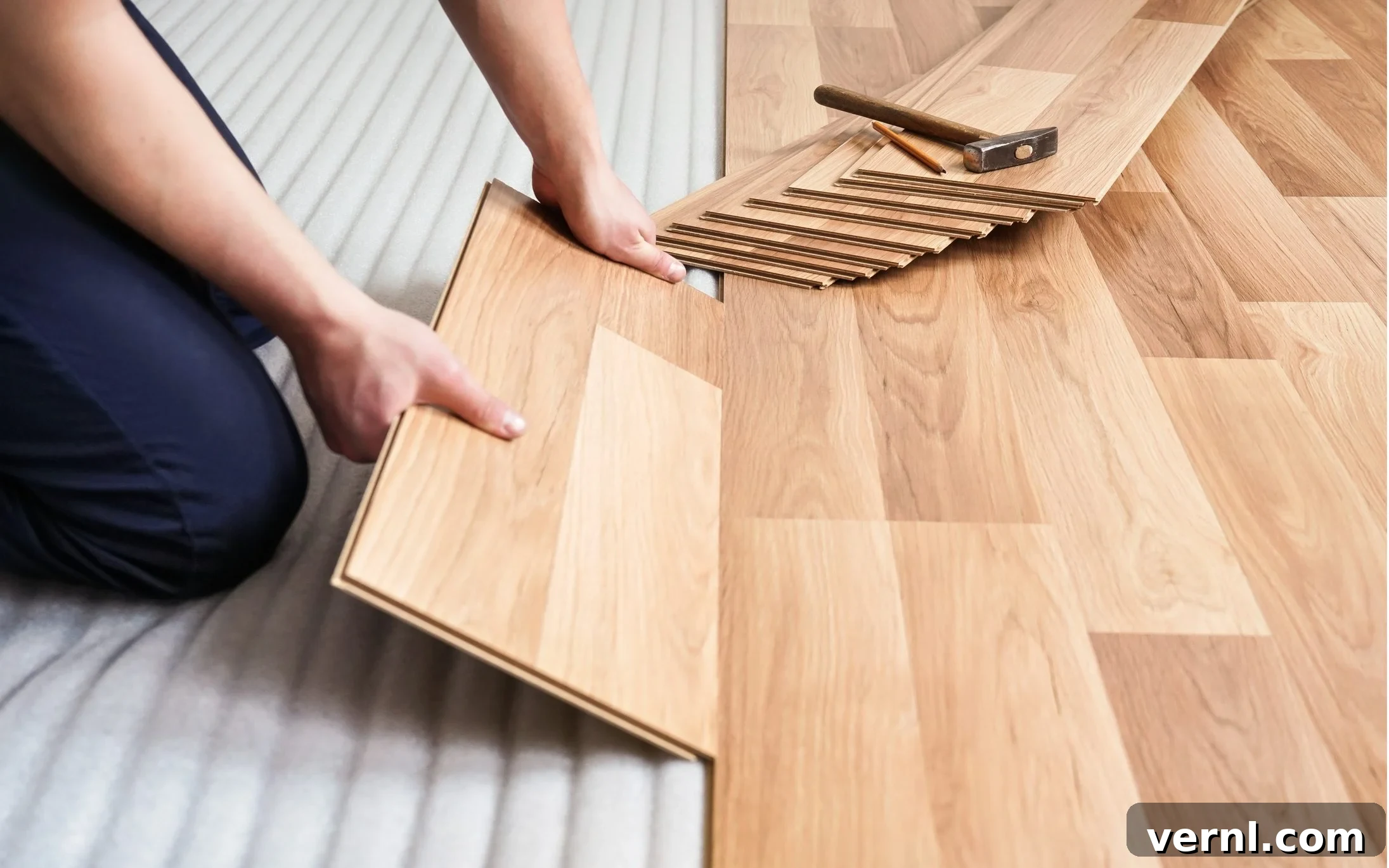
A defining characteristic of laminate flooring is its installation method. The core in laminate boards is precisely milled with a tongue-and-groove profile. This interlocking system allows installers to simply snap the boards together without the need for adhesives, creating a unified surface that rests on top of the subfloor. This results in what is known as a “floating floor” installation, which offers flexibility and ease, especially for DIY enthusiasts. While convenient, this installation type means the floor is not directly adhered to the subfloor, necessitating the use of an underlayment for sound absorption and moisture protection.
What Is Vinyl Flooring?
Vinyl flooring has a longer history than laminate, with its initial forms serving practical rather than aesthetic purposes. For many years, vinyl composite tiles (VCT) and sheet vinyl were the primary options available. These traditional forms, still used today, offered excellent durability and water resistance but often lacked the sophisticated designs many homeowners desired.
The 1970s marked a revolution in the vinyl flooring market with the introduction of Luxury Vinyl Tiles (LVT) and Luxury Vinyl Planks (LVP). These innovations brought vinyl flooring much closer to the aesthetic appeal and structured design of laminate, offering realistic depictions of wood and stone with enhanced performance. LVT and LVP quickly became popular for their blend of beauty and practicality.
Like laminate, LVT and LVP are constructed in layers, but with a distinct composition that grants them superior characteristics. From the top down, a typical luxury vinyl plank or tile includes:
- Performance Wear Layer: A clear, durable top coating, usually enhanced with urethane, that protects against scratches, scuffs, and stains. Its thickness (measured in mils) directly correlates with the flooring’s durability.
- Design Layer: A high-definition photographic film that replicates natural materials like wood or stone with impressive realism. Modern techniques allow for rich colors and detailed patterns.
- Core Layer: This is where modern vinyl truly differentiates itself. Early LVT/LVP cores were made solely of PVC (polyvinyl chloride). However, contemporary advancements have led to two prominent core types:
- Wood Polymer Composite (WPC): A blend of wood flour, thermoplastic resins, and a foaming agent, creating a rigid, lightweight, and highly water-resistant core.
- Stone Polymer Composite (SPC): Composed of natural limestone powder, PVC, and stabilizers, resulting in an ultra-dense, rigid, and virtually indestructible core that offers superior impact resistance and dimensional stability.
Both WPC and SPC cores offer significant rigidity and enhanced moisture resistance, making them ideal for challenging environments.
- Backing Layer: The base layer provides stability and often includes an attached underlayment for added comfort, sound absorption, and moisture protection.
While some vinyl flooring varieties can still be glued directly to the subfloor, the most popular and DIY-friendly options feature interlocking tongue-and-groove systems, similar to laminate. This click-lock mechanism allows for a floating floor installation, simplifying the process and making it accessible for many homeowners. This versatility in installation, combined with its inherent properties, makes vinyl flooring an incredibly adaptable choice for various spaces.
Laminate vs. Vinyl Flooring: How Are They Alike?
Despite their underlying differences, laminate and vinyl flooring share several characteristics that often make them interchangeable in the eyes of the consumer. During installation and even after, it can be quite challenging to tell the difference between these two resilient flooring types, particularly with the advancements in luxury vinyl products:
- Similar Installation Methods: Both laminate and modern luxury vinyl planks (LVP) are predominantly installed using a click-lock, floating floor system. This method allows for easy, glue-free installation over most subfloors, making both popular choices for DIY projects. The planks simply snap together, creating a seamless surface without permanent attachment.
- Realistic Aesthetic Appeal: Thanks to advanced photographic printing technologies, both laminate and vinyl planks offer incredibly convincing depictions of natural materials like hardwood, stone, and ceramic tile. Manufacturers constantly refine these designs, incorporating textures, bevels, and variations that enhance their authenticity, making it difficult to distinguish them from the real thing without close inspection.
- Comparable Cost-Effectiveness: Both flooring types are celebrated for their affordability compared to natural alternatives. On average, laminate and vinyl flooring costs about the same, typically ranging from $1 to $2 per square foot for basic products and up to $6 or more per square foot for high-quality, premium options with advanced features. The average installation cost, including materials, often settles around $3 to $5 per square foot, making them accessible to a broad range of budgets.
- Low Maintenance Requirements: Both laminate and vinyl are renowned for their ease of care. They are generally considered low-maintenance, stain-resistant flooring options that require only occasional sweeping, vacuuming, and damp mopping to keep them looking pristine. Their durable wear layers protect against spills and dirt, simplifying daily upkeep for busy households.
- Excellent Thermal Conductivity: Both flooring materials conduct heat equally well, making them ideal choices for homes with radiant heating systems. They allow heat to permeate efficiently, providing a comfortable and energy-efficient solution for warming a space.
- Impressive Lifespan: High-quality laminate and vinyl flooring products are built to last. With proper installation and maintenance, both can easily endure from 10 to 25 years, sometimes even longer for premium grades. Many manufacturers offer extensive warranties, reflecting their confidence in the products’ longevity.
- Potential for Increased Resale Value: While not as significant as genuine hardwood, investing in top-quality laminate or vinyl plank flooring can positively impact a home’s resale value. Modern, aesthetically pleasing, and well-maintained synthetic flooring is a desirable feature for many potential homebuyers, especially when offering the look of natural materials at a more affordable price point.
Laminate vs. Vinyl Flooring: How Are They Different?
While their similarities are compelling, the true distinction between laminate and vinyl flooring lies in their core composition and inherent properties. Understanding these differences is paramount for choosing the right material for specific areas and needs.
- Core Composition and Water Resistance: This is arguably the most significant difference. Both laminate and vinyl planks feature plastic design and wear layers for protection and aesthetics. However, vinyl planks (especially modern LVT, WPC, and SPC) have cores made from plastic or stone polymer composites, which are inherently waterproof. In contrast, laminate cores are made from wood composites (MDF or HDF). While laminate often has a water-resistant top layer and backing, its wood-based core is highly vulnerable to moisture. Prolonged exposure to water can cause laminate planks to swell, delaminate, or warp, leading to irreparable damage. Vinyl, particularly WPC and SPC, can withstand significant moisture, making it suitable for areas where laminate cannot be installed.
- Available Formats and Designs: Laminate flooring is almost exclusively available as click-lock planks, mimicking hardwood boards. Vinyl flooring, on the other hand, offers a much wider range of formats, including traditional glue-down VCT and flexible sheet flooring, in addition to click-lock LVT and LVP. This versatility extends to design options as well; while both offer realistic wood and stone patterns, vinyl often provides a broader spectrum of colors, patterns, and sizes, including contemporary designs that don’t mimic natural materials, allowing for greater creative freedom.
- Surface Texture and Realism: Laminate flooring often features a flatter, smoother surface that closely resembles the feel of real hardwood. High-quality laminates can even incorporate “embossed-in-register” textures that align perfectly with the wood grain pattern, enhancing realism. Vinyl, while often textured to mimic natural materials, can sometimes have a more noticeable plastic feel or a slightly softer underfoot sensation. While advancements in luxury vinyl have significantly improved its authenticity, some homeowners might still perceive laminate as having a more traditional or premium “wood-like” feel.
- Comfort Underfoot and Sound: When installed with a suitable underlayment, laminate flooring can offer a slightly more rigid and comfortable feel underfoot than some vinyl options, and can also be quieter. This makes it a preferred choice for living rooms and bedrooms where comfort and acoustics are important. Vinyl, particularly thinner LVT, can sometimes feel harder or transmit more sound without an integrated or separate underlayment.
- Repairability: While both are generally difficult to repair if a single plank is severely damaged, laminate can sometimes be more challenging due to its rigid locking system requiring planks to be lifted from the nearest wall. Vinyl, especially glue-down tiles, can sometimes allow for individual plank replacement, though it can still be a complex process.
When Is Laminate the Better Choice?
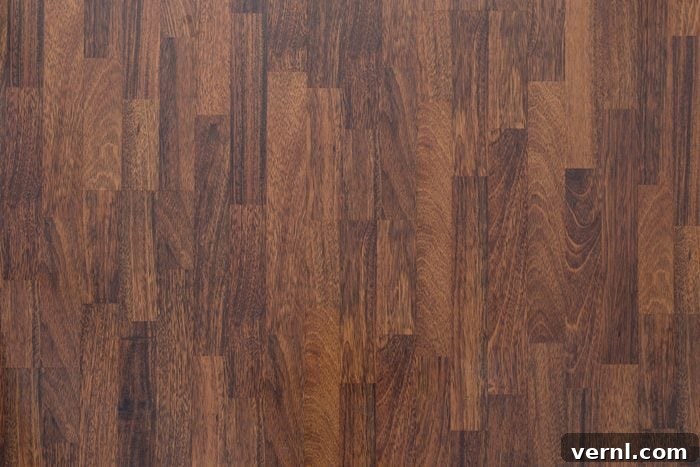
Laminate flooring remains an excellent choice for many homeowners, particularly those who prioritize aesthetics and certain environmental considerations. Its ability to convincingly replicate natural materials at a fraction of the cost makes it a compelling option. Here are specific scenarios where laminate shines:
- Aesthetic Preference for Hardwood Look: If your primary goal is to achieve the classic and timeless appearance of hardwood without the associated expense and maintenance, laminate is an outstanding alternative. Its smooth surface and detailed photographic layer often provide a more authentic wood look and feel than some vinyl options, making it perfect for those who want elegance on a budget.
- Ideal for Dry Living Areas: Laminate performs best in rooms with minimal moisture exposure. It is an excellent choice for living rooms, bedrooms, dining rooms, and hallways, where spills are less frequent and humidity levels are stable. These relatively dry parts of the house allow laminate to maintain its structural integrity and beauty for years.
- Eco-Conscious Homeowners (with caveats): For environmentally aware consumers, laminate flooring can offer certain advantages. Many top brands incorporate recycled materials in their HDF/MDF cores, reducing demand for virgin wood. Furthermore, because its core is wood-based, laminate is more biodegradable than vinyl, meaning it will decompose in landfills over time, albeit slowly. It’s important to research specific brands for their sustainability practices and certifications.
- Enhanced Comfort and Quieter Performance: When installed with an appropriate underlayment (which often comes separately), laminate can offer a more comfortable underfoot feel than some thin vinyl options. The underlayment also provides superior sound absorption, making laminate a quieter flooring choice, especially beneficial in bedrooms, nurseries, or multi-story homes where reducing noise transmission is desired.
- Budget-Friendly Durability: While not as indestructible as some high-end vinyl, quality laminate flooring offers impressive durability against scratches, dents, and fading, making it a robust choice for active households with children and pets (in dry areas).
When Is Vinyl the Better Choice?
Vinyl flooring, particularly luxury vinyl plank (LVP) and tile (LVT), excels where durability, moisture resistance, and versatility are paramount. It makes up in sheer resilience and practical benefits for what it might occasionally lack in the most authentic aesthetic appearance compared to some high-end laminates. Here are the scenarios where vinyl truly shines:
- Superior Moisture Resistance for Wet Areas: This is vinyl’s strongest advantage. Due to its entirely waterproof (or highly water-resistant) plastic or stone polymer composite core, vinyl plank flooring can be confidently installed in moisture-prone areas where laminate would fail. This includes basements, bathrooms, kitchens, laundry rooms, and mudrooms. Its ability to withstand spills and humidity makes it an ideal, worry-free choice for these demanding environments.
- Pet-Friendly Homes: The inherent waterproof nature of vinyl, coupled with its excellent stain resistance, makes it a superior choice for homes with pets. Accidents are easily cleaned up without fear of damaging the subfloor or the flooring itself. Furthermore, the slightly softer surface of vinyl flooring provides more “give” and better traction, making it easier and more comfortable for pets to navigate, reducing the risk of slips and falls.
- DIY Installation Convenience: For the enthusiastic DIYer, vinyl often presents an easier and more forgiving installation process than laminate. While both feature click-lock systems, vinyl planks can typically be cut with a simple utility knife, whereas laminate often requires a saw. This simplifies tricky cuts around doorframes or irregular spaces, saving time and effort.
- Versatile Design and Application: Because it’s available in a wider range of formats (sheets, tiles, planks) and a vast array of designs, vinyl flooring is often the better choice for homeowners looking for specific patterns, colors, or textures beyond traditional wood or stone replicas. It offers greater flexibility to match existing décor, make a bold design statement, or achieve unique visual effects that might not be possible with laminate.
- High-Traffic Commercial Settings: The extreme durability of SPC and WPC vinyl, combined with its water resistance, makes it an excellent choice for light commercial applications or very high-traffic residential areas where maximum resilience is required.
Installation and Maintenance Tips for Both Flooring Types
Installation Considerations
While both laminate and vinyl planks are popular for DIY installation, proper preparation is key to a successful outcome and long-lasting floor.
- Subfloor Preparation: A clean, dry, level, and structurally sound subfloor is crucial for both. Imperfections in the subfloor can transfer through the new flooring, leading to an uneven appearance or even damaging the locking mechanisms over time. Minor inconsistencies may require patching or sanding.
- Acclimation: Both laminate and vinyl planks need to acclimate to the room’s temperature and humidity for at least 48 hours before installation. This prevents expansion or contraction after installation, which could lead to gapping or buckling.
- Underlayment: For laminate, a separate underlayment is almost always required to provide moisture protection, sound deadening, and a slight cushion. Many luxury vinyl products come with an attached underlayment, but additional underlayment might be beneficial in certain situations for added comfort or soundproofing.
- Expansion Gaps: Both flooring types require a small expansion gap around the perimeter of the room and fixed objects. This allows the floor to expand and contract naturally with changes in temperature and humidity without buckling.
Maintenance Best Practices
One of the appealing aspects of both laminate and vinyl flooring is their relatively low maintenance. However, following these tips will ensure their longevity and appearance:
- Regular Cleaning: Both should be regularly swept or vacuumed (using a hard floor setting) to remove dirt and grit, which can scratch the wear layer.
- Damp Mopping: Use a damp mop with a manufacturer-approved cleaner. Avoid excessive water, especially on laminate, as it can seep into the core and cause damage.
- Prompt Spill Cleanup: Clean up spills immediately. For laminate, this is critical to prevent moisture damage. For vinyl, while it’s more resistant, prompt cleanup prevents potential staining.
- Avoid Harsh Chemicals: Do not use abrasive cleaners, wax, or steam cleaners on either type of flooring, as these can damage the wear layer and dull the finish.
- Furniture Protection: Use felt pads under furniture legs to prevent scratches and dents.
Conclusion: Making Your Informed Flooring Decision
The choice between laminate and vinyl flooring ultimately hinges on your specific needs, the environment of the room, and your personal priorities. Both offer compelling advantages over traditional flooring options, providing beautiful, durable, and cost-effective solutions for modern homes.
If you prioritize the authentic look and feel of hardwood in dry areas, desire excellent acoustics, and appreciate some eco-friendly attributes, high-quality laminate flooring presents an outstanding value. It transforms living rooms, bedrooms, and dining areas with elegance without stretching your budget.
Conversely, if your priority is unparalleled water resistance, extreme durability for high-traffic zones, pet-friendliness, or the flexibility to install in moisture-prone areas like bathrooms, kitchens, and basements, then luxury vinyl plank or tile is the clear winner. Its robust construction and versatile design options make it a practical and resilient choice for almost any space.
By carefully considering the unique characteristics of laminate and vinyl, weighing their similarities and differences against your lifestyle and budget, you can confidently select the ideal flooring that will enhance the beauty and functionality of your home for years to come.