
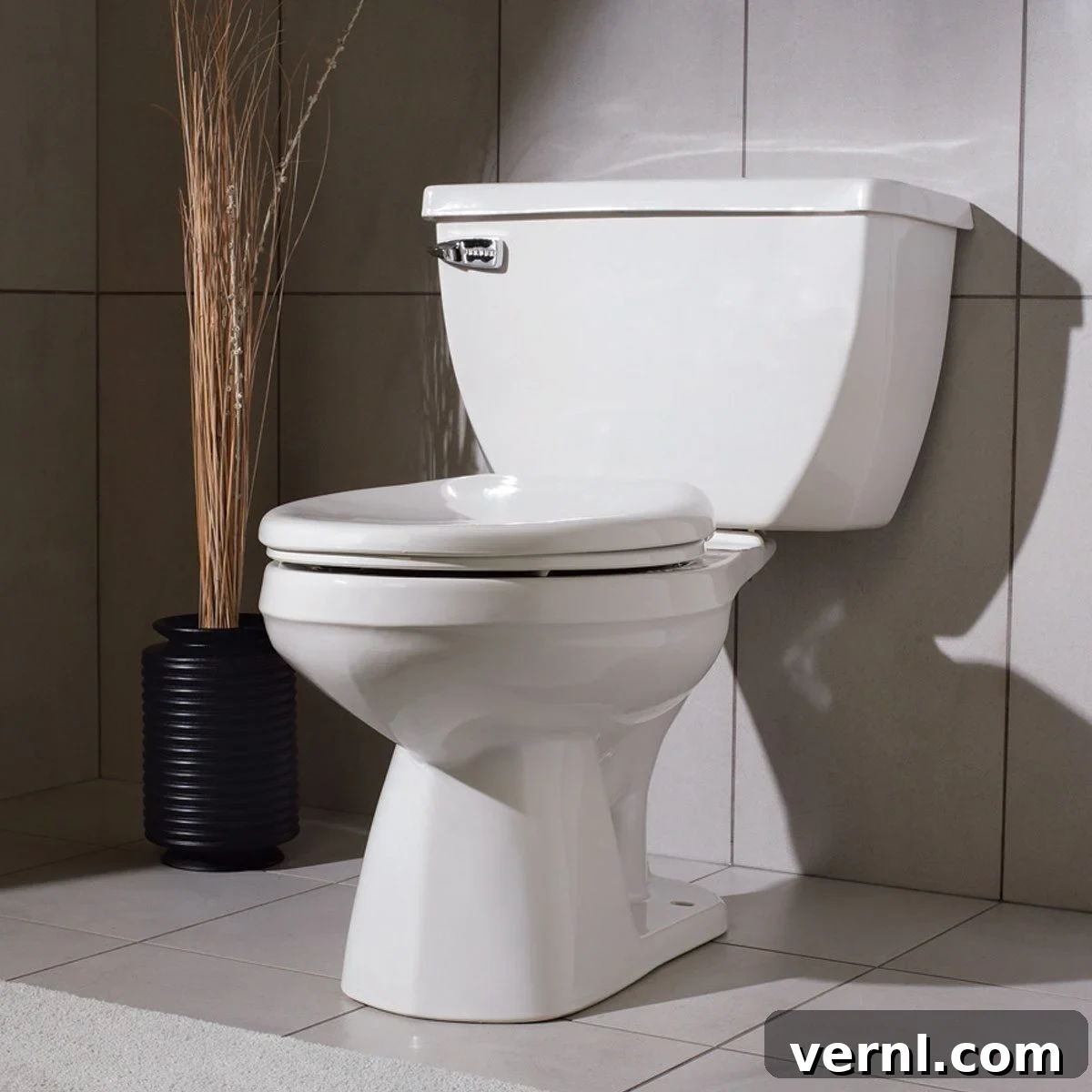
Ultimate Guide to Choosing the Best Toilet for Your Home
A house truly isn’t a home without a functional toilet – a requirement enforced by the International Code Council in every dwelling unit. This essential fixture plays a central role in your daily life, making the decision to purchase a new one a significant investment. Beyond mere aesthetics and initial cost, factors like water efficiency and flush performance are paramount for long-term satisfaction and savings.
A superior toilet is designed to conserve water while generating sufficient pressure to ensure a clean bowl with a single flush. Inferior or cheaper models often fall short in this regard, leading to frustrations and increased water consumption. This comprehensive guide will navigate you through the critical considerations, helping you select a high-performance toilet that perfectly aligns with your bathroom’s design, your budget, and your personal comfort needs.
From robust durability to ergonomic comfort, and from smart features to overall affordability, we’ll explore why certain models and their accompanying toilet seats stand out as the best on the market, ensuring you make an informed choice for years to come.
Understanding Low-Flow and High-Efficiency Toilets
What are Low-Flow Toilets?
The landscape of toilet technology underwent a significant shift in 1994 when low-flow toilets, utilizing 1.6 gallons per flush (gpf) or less, became the federal standard. The initial generation of these water-saving fixtures faced widespread criticism, primarily because manufacturers often reduced water volume without fundamentally redesigning the flushing mechanism. This frequently resulted in the need for double-flushing, negating the intended water savings and causing user dissatisfaction.
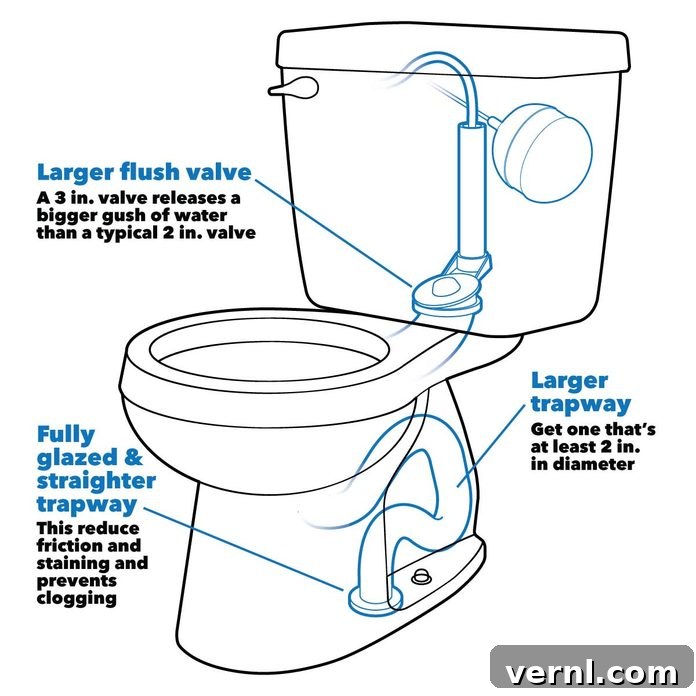
However, nearly three decades later, modern low-flow toilets have evolved dramatically. Significant design improvements have been implemented to enhance their efficacy. These advancements include larger trap-ways, which are crucial for preventing clogs and ensuring smoother waste removal. Additionally, larger flush valves allow a more powerful and rapid surge of water into the bowl, effectively clearing waste in a single, efficient flush. These innovations mean today’s low-flow toilets truly deliver on their promise of water conservation without compromising performance.
When selecting a new toilet, understanding these design enhancements and their impact on performance will make your decision much easier.
How Much Does a New Toilet Cost?
The price spectrum for new toilets is surprisingly broad, reflecting variations in quality, features, and brand reputation. While it’s possible to find a “contractor special” toilet for less than $75, these budget-friendly options typically feature lower quality components, from the internal working parts to the glazing of the porcelain. Don’t expect a powerful or efficient flush from such models. Given that a toilet is a fixture you will use daily for many years, investing in a good quality unit is highly recommended for long-term satisfaction and fewer headaches.
Peter deBaptiste, who operates a plumbing service in Florida, emphasizes, “The cost for a new toilet will vary significantly depending on the brand and specific features. A reliable, basic toilet generally falls within the $150 to $250 range. However, advanced models boasting sophisticated flushing systems, integrated bidets, or smart home capabilities can easily push costs into the thousands.” He also points out that labor costs for installation are the less predictable component, as they depend on the specific requirements and potential complications at the job site. Typically, you can anticipate labor expenses to be comparable to the cost of the toilet itself, especially if any modifications to existing plumbing are needed.
Where to Shop for Toilets: Supply Houses vs. Home Centers
While large home improvement centers offer a convenient selection, they often don’t stock the full range of top-ranked toilets. For the widest variety of makes, models, and specialized features, it’s highly advisable to visit dedicated bathroom showrooms and plumbing supply houses. These specialized retailers often have knowledgeable staff who can guide you through technical specifications and show you models not available elsewhere. Online retailers also present a vast selection, often with competitive pricing, but lack the ability to physically inspect the product.
Considering Future Repair and Maintenance Costs
When making your purchase, think beyond the initial price tag. Toilets with custom seats, proprietary flushing mechanisms, or unique designs might offer an appealing “cool factor,” but they can lead to significant frustration, time, and expense if parts ever need replacing. For instance, a replacement custom toilet seat can cost upwards of $100, and finding an exact match years down the line can be a challenging endeavor. Opting for models that use widely available, standard parts can save you considerable hassle and money in the long run.
Solving the Sweating Tank Problem
If you’ve previously dealt with a “sweating” or dripping toilet tank—a common issue caused by condensation from cold water in a warm, humid bathroom—consider a pressure-assist model. In these toilets, the water is contained within a separate inner tank, preventing the outer porcelain tank from becoming cold and thus eliminating condensation. Alternatively, if you prefer a traditional gravity-fed toilet, you can order one with factory-installed tank insulation, which typically adds $50 to $100 to the cost, depending on the model, but effectively mitigates condensation problems.
How Long Should a Toilet Last?
The longevity of a toilet can vary significantly between its core structure and its internal components. Peter deBaptiste clarifies, “The porcelain structure of the toilet itself is incredibly durable and can easily last 20 to 30 years, or even longer, with proper care. However, the internal working parts—such as flappers, fill valves, and flush valves—are typically made of plastic or rubber and are subject to more wear and tear. These components tend to give out much faster, often within a few years.” He adds, “Fortunately, these common failure points are usually the easiest and most affordable parts to replace, making maintenance relatively straightforward for most homeowners.”
Prioritizing Flush Performance: A Key Buying Factor
At the heart of any good toilet is its flushing performance. This single characteristic impacts everything from water efficiency to hygiene and overall user satisfaction. To ensure you select a top-performing model, keep the following features and tips in mind during your shopping process.
Tip 1: Compare Flush Ratings and Independent Test Results Online
Given that a new toilet is a fixture you’ll likely live with for a decade or more, dedicating a mere 10-15 minutes to research before purchasing can save you years of frustration. Begin by comparing independent test results that evaluate “flushing performance” across various manufacturers and specific toilet models. A simple search for “toilet testing reviews” or “best flushing toilets” will yield valuable resources. Reputable consumer review sites and independent testing organizations, such as Wirecutter, frequently conduct rigorous evaluations. For example, Wirecutter’s top-ranked toilets often include models from leading brands like Toto, American Standard, and Kohler, known for their consistent performance.
Recommendation: Kohler Cimarron Comfort Height
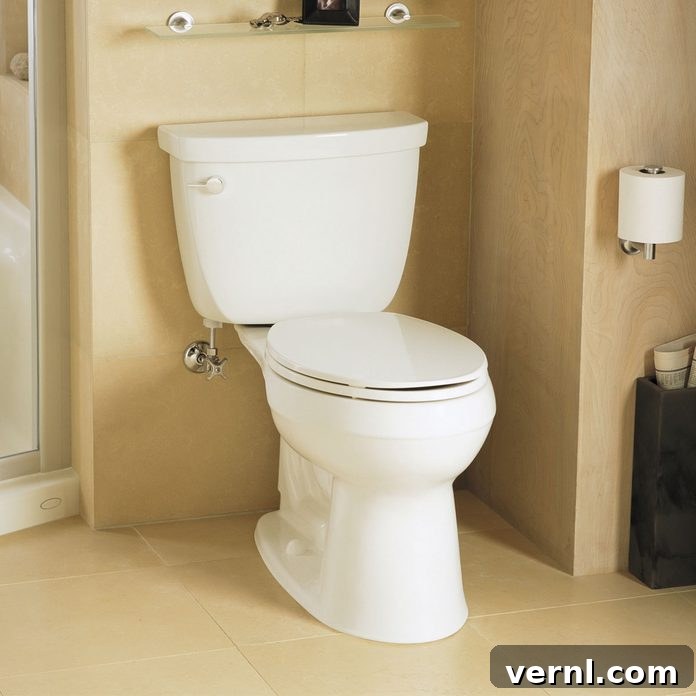
A highly regarded model is the Kohler Cimarron Comfort Height elongated toilet, specifically model K-3589, which uses 1.6 gpf. This model is widely available at home centers and through online retailers. When considering height, it’s crucial to understand the difference between chair height and standard height toilets to ensure your purchase provides optimal comfort for all users in your household.
Tip 2: Check for Rebates on High-Efficiency Models (HETs)
The toilet is a significant water consumer in your home, often accounting for up to a third of your household’s total water use. High-efficiency toilets (HETs) are designed to use 1.28 gallons per flush (gpf) or less and proudly bear the EPA’s WaterSense label, a certification for products that meet strict water efficiency criteria. Installing an HET can lead to substantial water savings, potentially conserving up to 4,000 gallons of water per person annually. To further incentivize water conservation, many local water utilities offer rebates to customers who install WaterSense-labeled toilets. It’s always a good idea to check with your local utility provider to see what incentives are available in your area.
However, while HETs offer impressive water savings, it’s important to cross-reference their efficiency claims with independent test results. Some earlier or lower-quality high-efficiency models have been reported by plumbers to experience more staining and clogging issues than their less efficient counterparts. Prioritizing both water savings and reliable performance is key.
Recommendation: American Standard Cadet Toilet
The American Standard Compact Cadet, model 2403, is a popular choice for an HET, utilizing 1.28 gpf. This model is readily available from both home centers and various online retailers.
Tip 3: Consider a Pressure-Assist Toilet for Superior Cleaning with Less Water
For homeowners whose top priority is achieving an exceptionally clean bowl with minimal water usage, pressure-assist toilets often outperform gravity-fed models, according to plumbing professionals. These toilets feature a distinct inner tank that holds water under air pressure. When flushed, this pressurized water is released with great velocity, creating a powerful, swift surge that thoroughly removes waste and cleans the bowl more effectively than traditional gravity systems.
While their cleaning power is a significant advantage, pressure-assist toilets do come with a few considerations. They are typically pricier than gravity models, often costing $100 or more extra. Furthermore, their flushing mechanism tends to be considerably noisier due to the pressurized discharge. Finding replacement parts and performing repairs on pressure-assist toilets can also be more complex and potentially more expensive than with standard gravity types, due to their specialized components.
For a deeper dive into the mechanics, explore more information on how gravity and pressure-assist toilets operate.
Recommendation: Gerber Ultra Flush
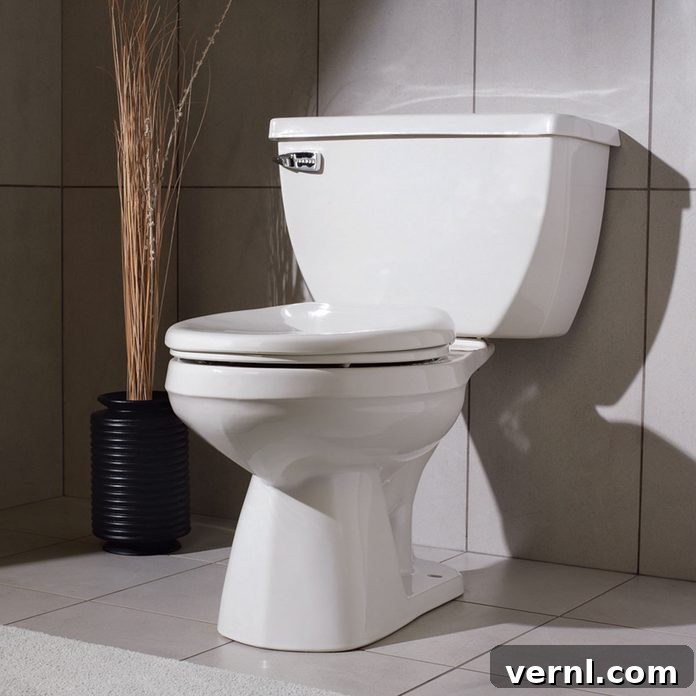
The Gerber Ultra Flush pressure-assist toilet, model 21-302, offers robust flushing at 1.6 gpf. It can be found at specialized plumbing showrooms and through online retailers.
Tip 4: Embrace a Wall-Hung Toilet for Unparalleled Cleaning Ease
One-piece toilets inherently offer easier cleaning compared to their two-piece counterparts, thanks to fewer seams and crevices where dirt and grime can accumulate. However, they are generally more expensive and can be more challenging to install due to their integrated design and heavier weight. If maximizing ease of cleaning is a paramount concern and your budget allows, a wall-mounted toilet represents the ultimate solution.
Wall-hung toilets elevate the bowl off the floor, eliminating the hard-to-reach base area where dust, hair, and spills often collect. This design makes floor cleaning incredibly simple and efficient, as there are no obstructions. While the initial installation involves mounting a carrier system within the wall and can be more complex and costly than traditional floor-mounted units, the long-term benefits of enhanced hygiene and simplified maintenance are often worth the investment for many homeowners.
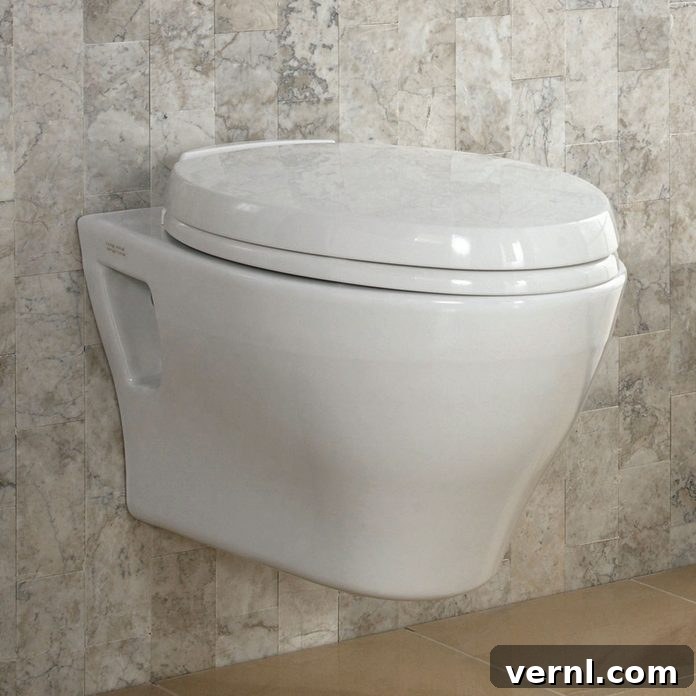
Recommendation: Toto Aquia
The Toto Aquia wall-hung high-efficiency dual-flush toilet, offering both 1.6 gpf and 0.8 gpf options, is a premium choice. It’s available at plumbing showrooms and through online retailers, representing a blend of modern design and water-saving technology.
Tip 5: Consider a Taller Toilet for Enhanced Comfort
Toilets that adhere to the Americans With Disabilities Act (ADA) standards feature higher bowl heights, typically ranging from 17 inches to 19 inches from the floor to the top of the seat, as opposed to the standard 15-inch height. This increased height, often referred to as “comfort height” or “right height,” can significantly improve comfort and ease of use, particularly for taller individuals, seniors, and anyone with back or knee issues, as it reduces the distance one needs to bend to sit and stand.
However, it’s worth noting that a taller bowl might pose challenges for young children or shorter individuals. Additionally, these models usually come at a slightly higher price point, typically adding $50 to $100 to the total cost. If you’re unsure about the ideal height for your household, don’t hesitate to “test drive” the toilet in the store. While it might feel a bit awkward, sitting on the display model is the best way to determine if the comfort height is right for you and your family.
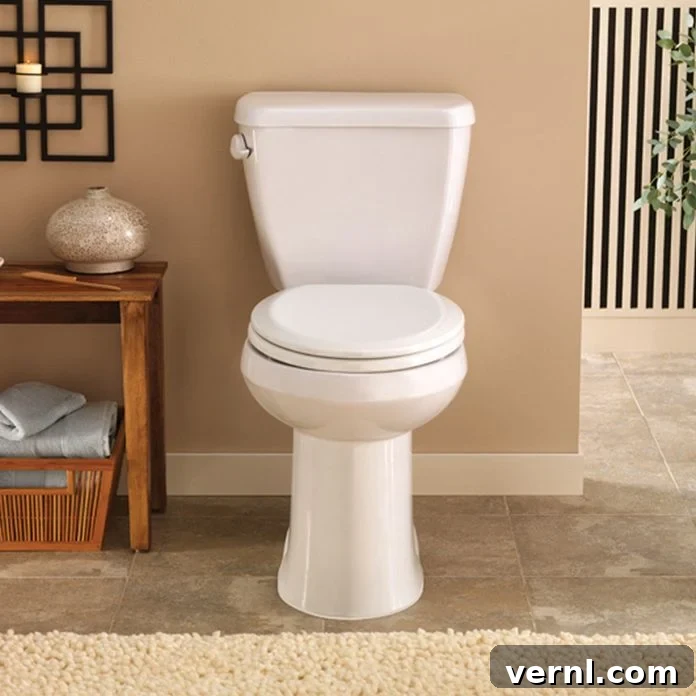
Recommendation: Gerber Avalanche
The Gerber Avalanche high-efficiency toilet, model 21-824, is an excellent option with its 1.28 gpf and 17-inch ErgoHeight design. This model is widely available at plumbing showrooms and online retailers.
Tip 6: Precisely Measure the Rough-in Distance
One of the most critical measurements when replacing a toilet is the “rough-in.” This refers to the distance from the finished wall behind the toilet to the center of the flange bolts that secure the toilet to the floor. Twelve inches is the most common standard rough-in measurement, but 10-inch and 14-inch models are also available to accommodate various bathroom layouts. Unless you are undertaking a significant bathroom remodel that involves repositioning the plumbing, it is highly recommended to choose a new toilet with the identical rough-in as your existing unit. This ensures a straightforward installation process and avoids costly and complicated modifications to your plumbing. Remember to account for the thickness of any baseboard molding when taking your measurement to ensure accuracy.
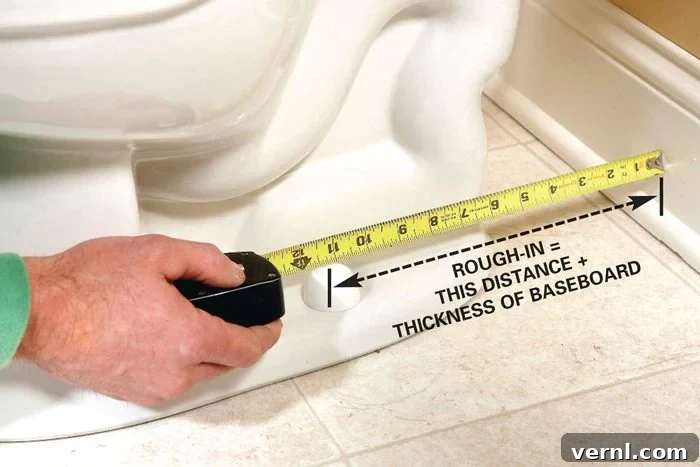
What is the Rough-in?
The rough-in is defined as the exact distance from the center of the toilet flange (the anchor point for the hold-down bolts) to the finished wall. Purchasing a toilet that matches this rough-in distance is crucial to avoid the difficult and often professional-level job of relocating the existing flange, which can add significant time and expense to your installation.
Tip 7: Exercise Caution with Larger Elongated Bowls
Elongated toilet bowls, which are typically about 2 inches longer than standard round bowls, are often preferred for their increased comfort and more ergonomic design. Many users find the extra seating surface more pleasant. However, before you decide to upgrade from a standard round bowl, it is imperative to take precise measurements of your bathroom space. Numerous homeowners have reported issues where an elongated bowl, once installed, obstructed the opening of a nearby bathroom door or vanity drawers. Always ensure there is ample clearance for all bathroom fixtures and doors to operate freely with the longer bowl in place.
Tip 8: Explore the Benefits of a Dual-Flush Toilet
Dual-flush toilets are an innovative water-saving solution, offering two distinct flushing options to match the waste being cleared. They typically feature two buttons or a segmented lever: one for a reduced-volume flush (around 0.8 gpf) ideal for liquids, and another for a full-volume flush (usually 1.6 gpf) designed for solids. This smart design can lead to significant water savings, with dual-flush models using approximately 25 percent less water annually compared to a standard 1.6 gpf toilet.
These versatile toilets are available in both gravity-fed and pressure-assist configurations, offering flexibility based on your preference for flush power and noise level. However, dual-flush toilets generally come at a higher price point, often adding an extra $150 to $300 to the cost, depending on the brand and model. They also tend to have fewer color and style options compared to single-flush models. Additionally, some users might find the flush buttons or handles on certain dual-flush designs to be less intuitive or slightly awkward to operate initially.
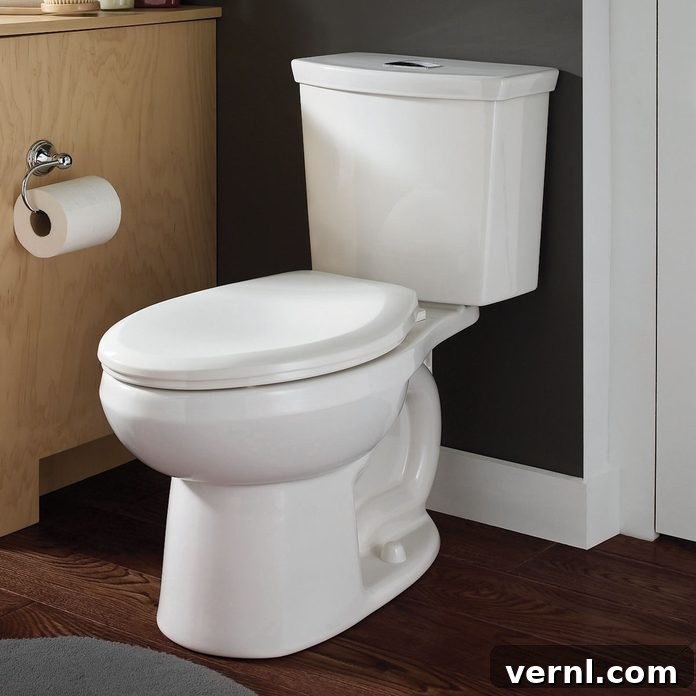
Recommendation: American Standard H2Option
The American Standard H2Option Siphonic Dual Flush Elongated toilet, model 2887-216, is a highly recommended option. It provides flexibility with 1.6 gpf or 1.0 gpf flush settings and is widely available at home centers and through online retailers.
Insights from Our Field Editors
Our network of experienced field editors from across the country generously shares their practical insights and real-world experiences with various new toilets, offering invaluable perspectives for your buying decision.
“Honestly, we detest our toilet. It boldly claims the ability to flush 24 golf balls. Seriously. I suspect it could only manage to flush 24 golf balls one at a time, probably over a two-week period, with a string pulling them down.”
— Murph Krajewski
Beware of Pressure-Assist Toilet Noise
“Our home builder installed what I can only describe as the LOUDEST toilets in the world. When someone flushes, I literally have to pause the television show so I don’t miss any dialogue. I’ve since installed a quiet gravity toilet in our basement, and now, whenever our newborn is napping, I make everyone in the house use that one!”
— Jason Hirsbrunner
“My pressure-assist toilet certainly flushes with extreme power and efficiency, but it comes at the cost of being very loud. It often sounds like it’s attempting to flush the entire bathroom down the drain along with the waste!”
— Tom Rohlf
Caution Against Non-Standard or Custom Parts
“We opted for an ‘uber-cool’ designer toilet, and I genuinely regret that decision. The toilet seat is a custom design, which means when it eventually needs replacing, we’ll be spending upwards of $115 just for the seat – if we can even find it years from now. Moreover, the internal mechanisms are completely non-standard. When components inevitably wear out, we’ll be forced to rig it with a hodgepodge of generic odds and ends just to keep it functioning.”
— Kristin Green
The Pitfalls of Colored Toilets and Resale Value
“Most prospective homebuyers are willing to make compromises on aspects like a low vs. high toilet, or a round vs. elongated toilet bowl. However, the color of a toilet is almost universally a deal-breaker and rarely transferable from one owner’s taste to another’s! My strong advice is to avoid designer color toilets like the plague if you ever plan to sell your home.”
— Joseph Papay, Craftsman & Design Services.
While exploring toilet options, you might also be interested in learning about the vault toilet, a unique waterless system designed for large-scale, often remote, applications.
The Truth About Cushioned Toilet Seats
“My experience with cushioned toilet seats has been consistently disappointing. The first one I bought didn’t even fit properly. The next seemed okay for a while, until it cracked unexpectedly and painfully pinched my leg when I sat down. And the last one I tried made a rather humorous, yet unwelcome, squishing sound every time I used it. I’ve learned my lesson—no more cushioned seats!”
— Bruce Dexter
Elevate Your Bathroom with a Slow-Close, Removable Seat
“We absolutely love our slow-drop toilet seats, especially those with the quick-disconnect feature for easy cleaning. With two young children in the house, it’s a lifesaver, preventing loud slamming seats in the middle of the night. Plus, the ability to quickly remove the seat makes thorough cleaning an absolute breeze, significantly improving bathroom hygiene.”
— Jack Bauer
Frequently Asked Questions (FAQ) About Toilets
How much water should a toilet use?
The era of inefficient, five-gallon flushes is long gone. Since 1994, federal regulations have set the standard at a maximum of 1.6 gallons per flush (gpf). Thanks to continuous advancements in design and engineering, many modern high-efficiency toilets (HETs) now consume even less, often using just 1.28 gpf or even dual-flush options as low as 0.8 gpf for liquid waste, effectively cutting water consumption by half compared to older models.
Can I install a toilet myself?
Having installed countless toilets throughout my career, I can affirm that replacing an existing toilet is generally a straightforward task that most sufficiently motivated and handy individuals can accomplish. The most challenging aspect is often the physical lifting and positioning of the toilet, as they are heavy and lack convenient handholds. However, certain underlying issues, such as rotted subflooring, an improperly installed flange, or existing leaks, can significantly complicate the process and may necessitate professional plumbing assistance. If your project involves installing new plumbing lines from scratch, including waste lines, water supply lines, and a new flange, that job is unequivocally best left to experienced plumbing professionals to ensure proper function and code compliance.
What are the different types of toilet flushing systems?
Primarily, there are two main types: gravity-fed and pressure-assist. Gravity-fed toilets use the force of water falling from the tank to create flushing power, known for being quieter and generally less expensive. Pressure-assist toilets store water under pressure in a separate tank, releasing it with high velocity for a more powerful, efficient flush, but they tend to be noisier and more costly. Dual-flush models, available in both gravity and pressure-assist, offer two flush volumes for water conservation.
How often should I replace my toilet?
While the porcelain bowl and tank can last 20-30 years or more, the internal components (flapper, fill valve, handle) typically need replacement every 5-10 years due to wear and tear. You should consider replacing the entire toilet if it’s an older, inefficient model (pre-1994) that uses excessive water, if the porcelain is cracked or heavily stained beyond cleaning, or if you’re frequently experiencing clogs and costly repairs despite replacing internal parts. Upgrading can save water, reduce repair costs, and improve aesthetics.
How do I maintain my toilet to prevent issues?
Regular maintenance can extend your toilet’s life and efficiency. Avoid using harsh chemical cleaners that can damage internal components. Regularly clean the bowl and exterior, and check for leaks by adding a few drops of food coloring to the tank – if color appears in the bowl without flushing, you have a leak. Periodically inspect the flapper and fill valve for wear, replacing them as needed. Avoid flushing anything other than human waste and toilet paper to prevent clogs.
About the Expert
- Peter deBaptiste is the President of Joe Cole Plumbing, a reputable plumbing service based in Davie, FL. His expertise provides valuable insights into toilet selection and maintenance.
Sources
- International Code Council: Section 502.1 Dwelling units; (2015) – A reference for the requirement of toilets in dwelling units.
- Wirecutter: The Best Toilet; (2024) – A reputable source for independent product reviews and recommendations on top-performing toilets.