In an increasingly digital world, the way we interact with our everyday objects is undergoing a profound transformation. What was once a landscape dominated by physical buttons, switches, and dials is rapidly evolving into a realm of sleek, minimalist touchscreens. This pervasive shift, driven by advancements in display technology and user interface (UI) design, can be observed across a vast array of devices. Consider the dashboard of a classic 1980s Ford Maverick, replete with an array of tactile controls, dials, and switches. Now, compare it to the minimalist, intuitive, and often expansive touchscreen display found in a 2020s Subaru Outback. The difference is stark, highlighting a global trend towards a more streamlined and visually integrated user experience.
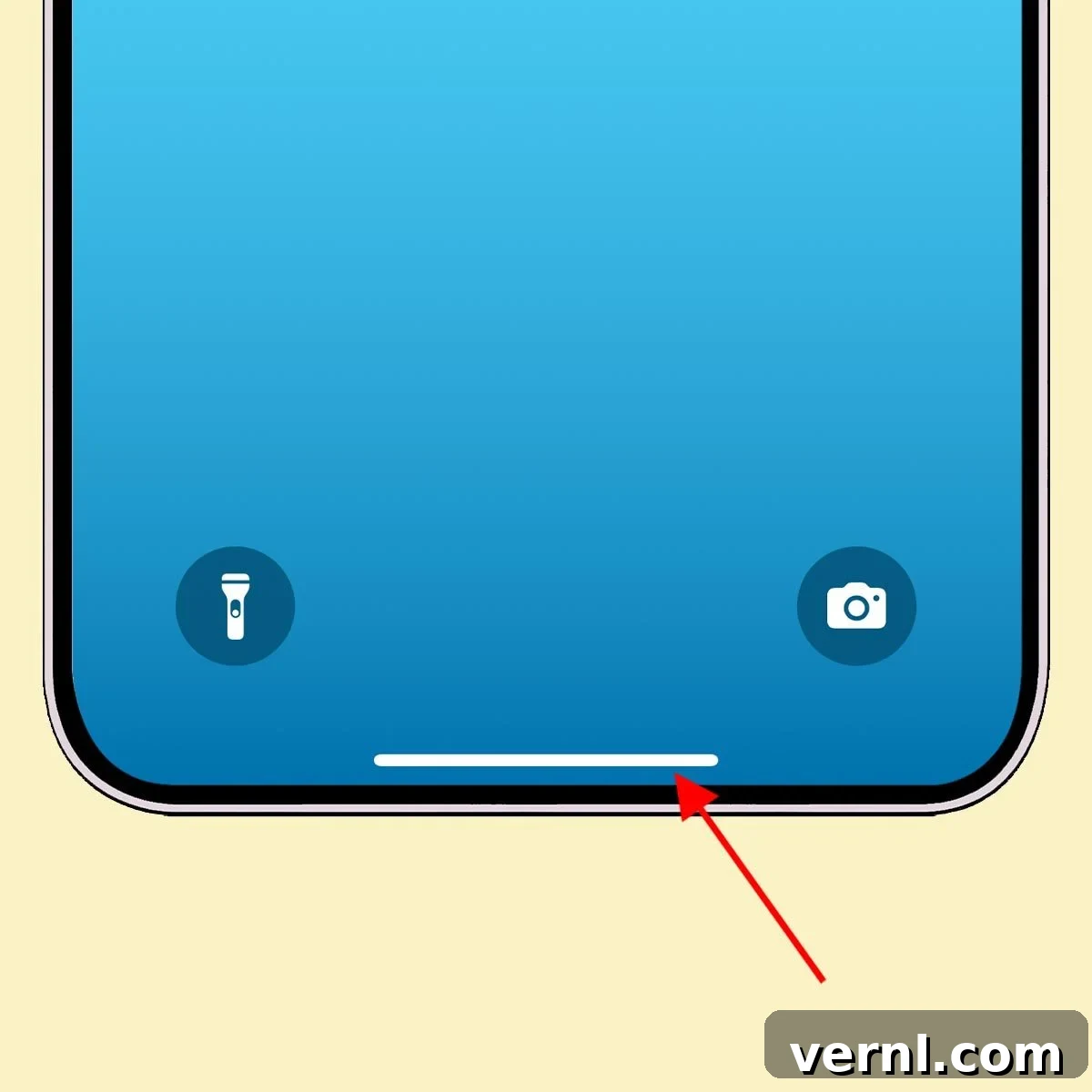
This design philosophy extends far beyond automotive interfaces, making its most significant impact on personal electronic devices, particularly smartphones. Early mobile phones featured diminutive screens accompanied by a multitude of physical buttons, providing a clear tactile experience for dialing and navigation. Fast forward to today, and the vast majority of smartphones boast edge-to-edge, full-touch displays, often with only one or two discreet buttons remaining on their sides for power or volume control. A particularly notable evolution in this design paradigm is the phasing out of the traditional physical home button, a ubiquitous feature for generations of smartphones. In its place, modern devices now commonly display a subtle, often barely noticeable line or bar situated at the very bottom of the screen. This seemingly minor visual element plays a crucial role in the contemporary smartphone user experience, acting as a gateway to intuitive gesture-based navigation.
What Is the Line at the Bottom of Your Phone Screen? Understanding the Home Indicator
The thin line you see at the bottom of your smartphone screen, often referred to as the “home indicator,” “gesture bar,” or “navigation bar,” is a fundamental component of modern mobile operating systems. It serves as a virtual replacement for the traditional physical home button, which has largely been eliminated to maximize screen real estate and facilitate more immersive, full-screen experiences. On both Apple’s latest iPhone models running iOS and many Android devices, this line acts as a visual cue and a starting point for gesture-based navigation.
The primary function of the home indicator is to guide users through core navigational actions using simple swipe gestures. For instance, a quick upward swipe from this line typically allows you to exit an app and return to your home screen. A slightly longer upward swipe, followed by a brief pause, will usually bring up the app switcher, allowing you to seamlessly navigate between recently opened applications. On some devices, swiping horizontally across the line can even let you quickly switch between your most recently used apps without needing to open the full app switcher. This system is designed to be intuitive, mimicking natural human motions, and contributing to a fluid user experience.
The introduction of the home indicator and gesture navigation was met with mixed reactions. Many users appreciate the modern aesthetic, the increased screen space, and the fluidity of swiping through their device. It feels contemporary and allows for a more cinematic viewing experience. However, a segment of users still express a preference for the tactile certainty and immediate feedback of a physical home button. For these individuals, the muscle memory developed over years of using physical buttons can make the transition to gesture navigation feel less immediate or precise, requiring a period of adaptation. Despite these differing opinions, the home indicator has firmly established itself as a standard element in contemporary smartphone design, signifying a clear direction in the evolution of mobile user interfaces.
Can You Remove the White Line on Your iPhone? Exploring iOS Limitations
For iPhone users wondering if they can remove the persistent white line at the bottom of their screen, the short answer is: it’s nearly impossible. The home indicator on iOS devices is deeply integrated into the operating system’s core design and functionality. Apple engineered this feature to be a permanent fixture, essential for its gesture-based navigation system that allows users to return home, access the app switcher, and navigate between apps without a physical button. Its constant presence is intentional, serving as an ever-present guide for these crucial interactions.
While the desire to remove this line for a completely unobstructed display is understandable for some, Apple has not provided an official setting or option to hide it. Attempts to circumvent its presence through unofficial means or by tinkering with accessibility settings can lead to unexpected and potentially disruptive outcomes. For example, some users have explored features like Guided Access, which is an accessibility tool designed to limit a device to a single app and control which features are available. While Guided Access can temporarily obscure parts of the screen, trying to manipulate it specifically to hide the home indicator is not its intended purpose and can cause system instability.
In one personal attempt to test this workaround, enabling Guided Access and trying to configure it to hide the line resulted in the phone becoming entirely unresponsive. The screen froze, gestures ceased to function, and even the power button failed to initiate a normal shutdown. The device remained in this frozen state for nearly an hour, rendering it unusable. The only recourse was a forced hard reset, a process that should generally be reserved for emergencies due to its abrupt nature.
To perform a hard reset on most modern iPhones (iPhone 8 and newer), the sequence typically involves:
- Quickly press and release the Volume Up button.
- Quickly press and release the Volume Down button.
- Press and hold the Side button (also known as the Power or Lock button) until the Apple logo appears. This can take anywhere from 10 to 20 seconds, so patience is key.
Once the Apple logo finally appeared and the phone restarted, full functionality was restored, and the Guided Access setting could be toggled off. Crucially, throughout this entire ordeal, the home indicator line remained steadfastly present at the bottom of the screen, proving its deeply embedded nature within the iOS framework. This experience underscores that for iPhones, the home indicator is a fundamental and non-removable part of the user interface.
Can You Remove the White Line on Your Android Phone? Exploring Android’s Flexibility
Similar to the iPhone, removing the home indicator or gesture bar on an Android device can be a challenging endeavor, though Android’s open-source nature often offers a bit more flexibility in customization compared to iOS. Many Android manufacturers now implement gesture navigation as the default, replacing the traditional three-button navigation (back, home, recent apps) with a similar home indicator line that functions much like its iPhone counterpart.
The possibility of removing or hiding this line on Android largely depends on the specific phone manufacturer (e.g., Samsung, Google Pixel, OnePlus, Xiaomi) and the version of Android it’s running. Some Android devices may offer a built-in option in their system settings to switch between “gesture navigation” (which includes the line) and “3-button navigation” (which replaces the line with virtual buttons). If your phone offers this choice, switching to 3-button navigation will effectively remove the line. To check for this, navigate to your phone’s ‘Settings,’ then usually ‘Display’ or ‘System,’ and look for ‘Navigation Bar’ or ‘System Navigation.’ Here, you might find options to select your preferred navigation method.
However, if your device doesn’t offer a direct toggle for 3-button navigation, removing the gesture bar becomes more complex and potentially risky. The internet is rife with proposed solutions, ranging from third-party launchers to developer options and even root-level modifications. While some third-party launchers might offer a more customizable interface, they often don’t have the deep system access required to truly hide the native navigation bar; they might simply offer alternative gesture zones or visual tweaks. More advanced methods include utilizing Android Debug Bridge (ADB) commands, which involve connecting your phone to a computer and executing specific command lines. While ADB can indeed modify system UI elements, it requires technical expertise, and incorrect commands can lead to unintended consequences, including system instability or even “bricking” your device, rendering it inoperable. Similarly, rooting your Android phone—a process that grants superuser access—can unlock extensive customization options, but it also carries significant risks such as voiding your warranty, compromising device security, and potential software malfunctions. Given these risks, these methods are generally not recommended for the average user.
Therefore, while Android typically offers more avenues for customization than iOS, finding a surefire, risk-free method to completely disable or remove the gesture bar without official system settings remains elusive for many users. The design trend clearly indicates that the home indicator is here to stay as a central element of modern smartphone navigation.
The Future of Smartphone Navigation: Continuing Evolution
The shift from tactile buttons to the subtle gesture bar is just one chapter in the ongoing evolution of smartphone interaction. As display technology continues to advance, we can anticipate even more seamless and intuitive ways to control our devices. Future innovations might include more sophisticated haptic feedback, making virtual gestures feel more tangible, or the integration of under-display camera technology, allowing for truly uninterrupted, full-screen experiences without notches or punch-holes. We may also see an increased reliance on voice commands and advanced AI, allowing users to navigate and control their phones with even fewer physical inputs.
The design philosophy behind the home indicator — maximizing screen real estate and embracing fluid, natural gestures — is likely to persist and evolve. It represents a commitment to a minimalist aesthetic and a belief in the user’s ability to adapt to new, more efficient ways of interacting with technology. While some users may always yearn for the simplicity of a physical button, the trajectory of mobile innovation points towards increasingly sophisticated and visually immersive user interfaces, with the gesture bar acting as a foundational element of this digital transformation.
RELATED:
- See a Green Dot on Your Android Phone? Here’s What It Means
- If You Get a USPS Scam Text, You Need To Do This Immediately
- This Is How Often You Should Restart Your Phone