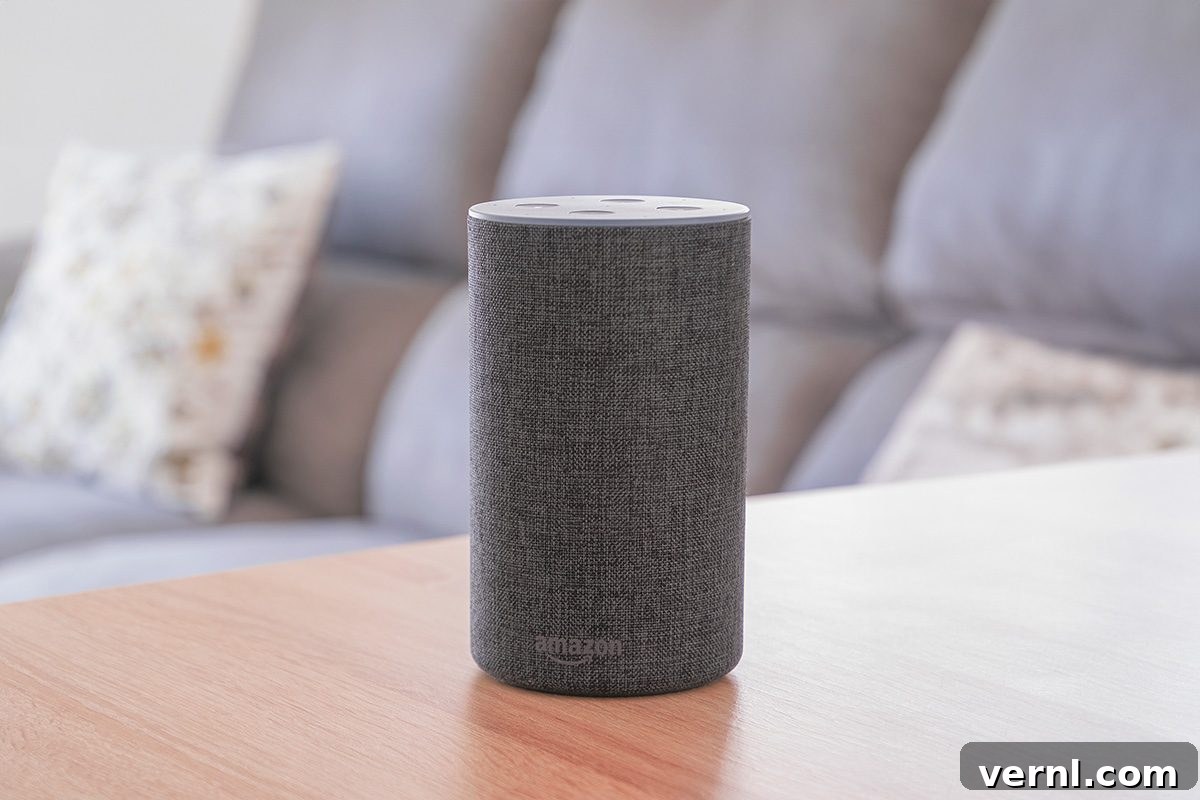
Can Alexa Call 911? A Comprehensive Guide to Emergency Services on Your Amazon Echo
In an increasingly connected world, smart home technology has revolutionized the way we live, offering unparalleled convenience and control over our environments. Devices like the Amazon Echo, powered by the intelligent voice assistant Alexa, have become central to many households. From playing music and setting reminders to managing smart lights and thermostats, these devices seamlessly integrate into our daily routines. As technology advances, so too do our expectations for its capabilities, particularly concerning critical functions like safety and emergency response. This brings us to a crucial question that many users ponder: Can Alexa call 911 directly in a moment of crisis? Understanding the nuances of Alexa’s emergency capabilities is vital for ensuring the safety of yourself and your loved ones.
The Definitive Answer: Can Alexa Directly Contact Emergency Services?
Despite their sophisticated voice recognition and expansive features, Amazon Echo devices, on their own, are not designed to directly dial 911 or other emergency numbers. This is a critical distinction that all smart device owners must understand. While Alexa can certainly perform a multitude of tasks via voice command, initiating a direct call to emergency services like police, fire, or ambulance is not among its native, out-of-the-box functionalities. This limitation is primarily due to a combination of technical, regulatory, and liability considerations that distinguish smart speakers from traditional phone services.
However, this doesn’t mean Amazon has entirely overlooked the need for emergency assistance. To bridge this gap, Amazon offers a specific, subscription-based service known as Emergency Assist, which includes a feature called Urgent Response. This paid program serves as a workaround, providing a mediated pathway to professional help for a monthly fee of $5.99 or an annual cost of $59.99.
Understanding Amazon’s Emergency Assist: Urgent Response Explained
Amazon’s Urgent Response service is designed to provide a layer of emergency support for Echo users, acting as an intermediary between you and emergency dispatchers. It’s important to reiterate that this is not a direct 911 service but rather a paid add-on to your Alexa experience. Once you’ve subscribed to the Emergency Assist program, members of your household can access this feature through a compatible Echo device or even the Alexa App on a mobile phone.
How to Activate Urgent Response
To initiate a request for help through Urgent Response, you simply need to say the command, “Alexa, call for help,” to your device. This voice prompt connects you to a trained Urgent Response agent. These agents are equipped to assess your situation and, based on the information you provide, can then request dispatch from the appropriate emergency services—be it the police, fire department, or an ambulance—on your behalf. This mediated approach ensures that a human professional evaluates the situation before dispatching help, potentially reducing non-emergency calls to 911.
Providing Critical Information During a Call
When you connect with an Urgent Response agent, you will need to clearly articulate the nature of your emergency and your location. For prompt assistance, it is crucial to have an emergency address listed in your profile. If you require help at a location different from your registered emergency address, you must specify the correct address to the agent during the call. This ensures that help is sent to the precise location where it’s needed most.
Furthermore, the Urgent Response service is also accessible via the Alexa app on your mobile phone. If you have location sharing services enabled on your mobile device, the Alexa app can share your last known location with the agent, which can be invaluable in situations where you might not be able to articulate your exact whereabouts, for instance, if you are away from home or in an unfamiliar area.
Crucial Limitations and Considerations of Urgent Response
While Urgent Response offers a valuable safety net, it’s paramount to be aware of its limitations:
- Not a Direct 911 Service: Amazon explicitly states that Urgent Response is not a 911 service. By default, Alexa does not support direct calling to 911. This means there’s an additional step—the agent assessment—before emergency services are dispatched, which could introduce a slight delay compared to a direct 911 call.
- Dependency on Connectivity: The service relies heavily on stable power and internet connectivity. As the Urgent Response FAQ page highlights, “Urgent Response calling will not work during power outages or if you’re experiencing internet connectivity issues.” This is a significant concern, as emergencies often coincide with power failures or disruptions to internet service.
- Mobile App as a Backup: In scenarios where your Echo device loses power or internet, you can still access Urgent Response through the Alexa app on your mobile phone, provided you have cellular connectivity with data. This offers a vital redundancy for subscribed users.
- Subscription Requirement: Unlike direct 911 access, Urgent Response is a paid service. Without an active subscription, this feature is unavailable, leaving users without this specific emergency pathway through their Echo devices.
Exploring Potential Workarounds: Are They Reliable?
Given the importance of emergency contact, many users naturally seek alternatives or workarounds to enable 911 calls through their Alexa devices. However, it’s crucial to approach these with caution, as currently, there are no confirmed and consistently reliable workarounds to make your Alexa directly call 911.
Linking Mobile Phone Services for General Calls
Some major mobile carriers, including AT&T, Verizon, and T-Mobile, offer the ability for their customers to link their mobile phone numbers to Alexa. This feature allows users to make and receive hands-free calls over Wi-Fi on an Alexa-enabled device, such as the Echo Dot or the Echo Show 15. While convenient for general communication, like calling a friend or family member, this functionality typically does not extend to emergency numbers like 911. Emergency call routing systems are highly regulated and designed to be direct, without intermediaries, ensuring rapid response and accurate caller location information, which smart speakers linking to mobile numbers might not consistently provide.
The Unreliable Strategy: Saving 911 as a Contact
A common suggestion found in online forums is to save “911” as a contact in your phone’s address book and then attempt to call it via Alexa. While theoretically appealing, this method is highly unreliable and potentially dangerous. According to responses to customer queries on Amazon’s platform, this is not a surefire workaround. Emergency call systems are designed to recognize the 911 dialing pattern directly and route it through specific, high-priority channels. Attempting to call it as a saved contact through a smart device might either fail to connect, misinterpret the command, or route the call through a non-emergency channel, leading to critical delays or outright failure in an urgent situation. Given the life-or-death nature of 911 calls, relying on such an unconfirmed and unreliable method is strongly discouraged.
Enhancing Home Safety: Beyond Alexa’s Direct Capabilities
While Alexa itself has limitations regarding direct 911 calls, smart home technology, when integrated thoughtfully, can significantly enhance overall home safety and emergency preparedness. Many dedicated smart home security systems offer robust emergency features that go beyond what a standalone Echo device can do.
Integrating with Dedicated Smart Home Security Systems
Leading smart home security brands, such as Ring Alarm, SimpliSafe, and ADT, often offer professional monitoring services that are specifically designed for emergency response. These systems typically include sensors for intrusions, smoke, and carbon monoxide, and when an alarm is triggered, a monitoring center is automatically notified. Trained operators at these centers can then verify the emergency and directly dispatch police, fire, or medical services to your home. Many of these systems also integrate with Alexa for arming/disarming or status checks, providing a comprehensive safety ecosystem where Alexa acts as a control interface rather than the primary emergency contact device. If direct, rapid emergency dispatch is a top priority for your smart home, investing in a professionally monitored security system is a far more reliable solution than solely relying on Alexa’s native features.
Best Practices for Emergency Preparedness in a Smart Home
In conclusion, while smart devices offer incredible convenience, it’s imperative to have a robust emergency plan that acknowledges their limitations. Here are best practices to ensure your household is prepared:
- Always Have a Traditional Backup: Never rely solely on smart devices for emergencies. Keep a charged mobile phone readily accessible, and consider a traditional landline, especially for areas prone to power outages or poor cellular service.
- Educate Your Household: Ensure everyone in your home, especially children and elderly individuals, knows how to call 911 using a traditional phone. Practice these procedures regularly.
- Understand Device Limitations: Be fully aware of what your specific Alexa device can and cannot do in an emergency. If you have the Urgent Response subscription, ensure everyone knows the correct voice command (“Alexa, call for help”).
- Maintain Internet and Power Reliability: Where possible, invest in reliable internet service and consider backup power solutions (like a UPS for your router and Echo device) to maintain connectivity during outages.
- Consider a Dedicated Security System: If professional emergency dispatch is a priority, explore dedicated smart home security systems with professional monitoring. These are built from the ground up to handle emergencies reliably.
- Keep Emergency Contacts Handy: Ensure your phone has ICE (In Case of Emergency) contacts readily available and that family members know who to call for non-911 emergencies.
Conclusion: Smart Technology and Real-World Emergencies
Amazon Alexa devices offer an incredible array of smart functionalities that enhance daily life, from managing your smart home to providing information and entertainment. However, when it comes to the critical function of emergency calling, it’s clear that Alexa, by itself, is not a substitute for direct access to 911. While Amazon’s Urgent Response service provides a valuable, agent-assisted pathway to emergency help for subscribers, it operates with certain dependencies and is distinct from calling 911 directly.
For urgent, life-threatening situations, the most reliable and immediate method remains calling 911 through traditional means—a mobile phone or landline. Smart home technology should be seen as a complementary tool that can enhance convenience and provide additional layers of security when integrated thoughtfully with dedicated systems. Understanding these distinctions and preparing accordingly will empower you to leverage your smart devices effectively while ensuring you’re fully equipped to handle any emergency that may arise, prioritizing the safety and well-being of everyone in your home.
Sources and Further Information
- Urgent Response FAQs, Amazon.com
- Can we place calls to 911 through the amazon echo show?, Amazon.com
- Amazon devices, Family Handyman