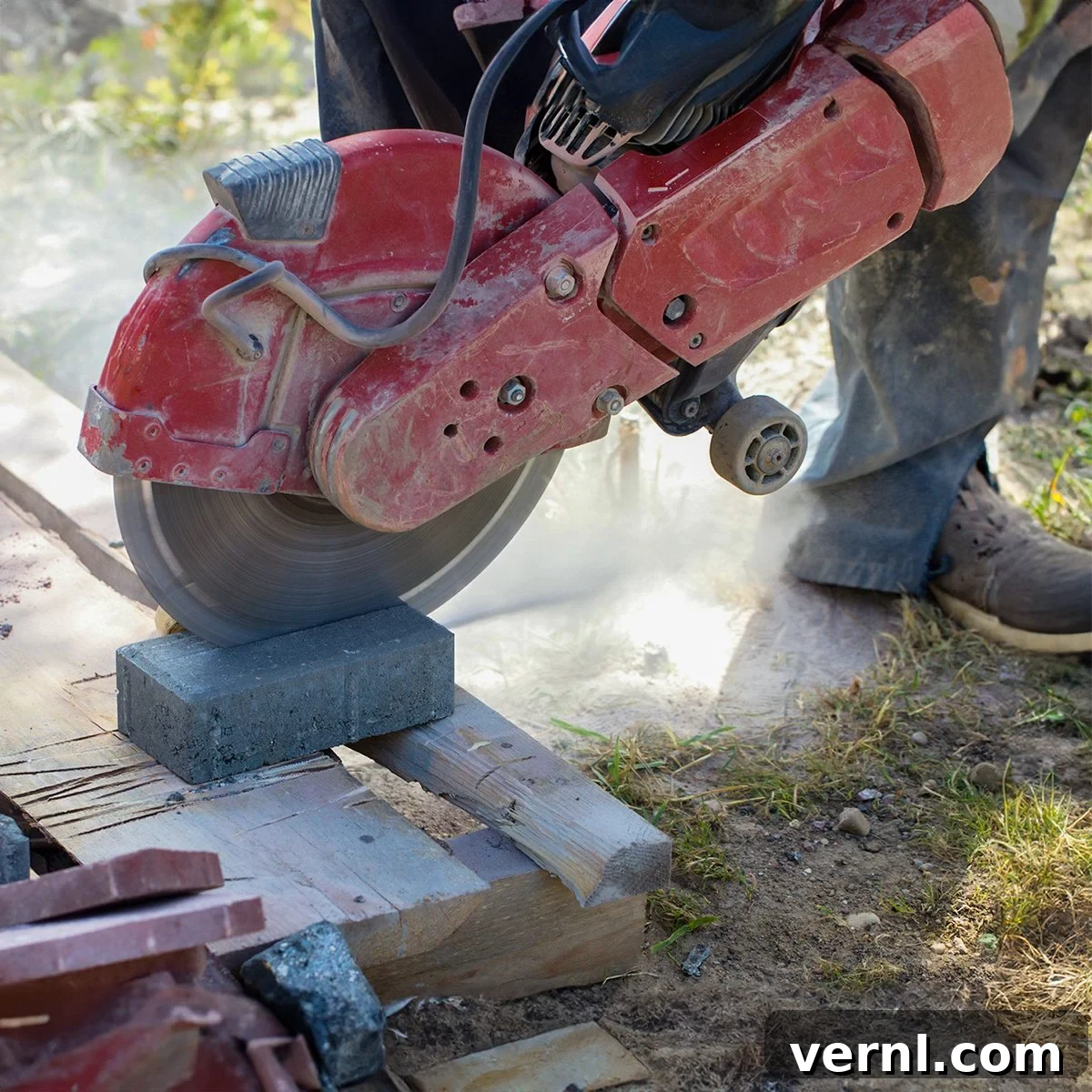
Embarking on a concrete project, whether it involves crafting a pristine paver patio, trimming existing slabs, or preparing a foundation, often necessitates cutting concrete with precision. While undeniably a physically demanding task, it becomes entirely manageable and safe when approached with the right tools, meticulous planning, and adherence to proven techniques. This comprehensive guide will equip you with the knowledge needed to successfully cut concrete, transforming a potentially daunting job into a straightforward process for both seasoned DIYers and those new to concrete work.
Before you make your first cut, understanding the material and the proper methodology is crucial. From selecting the ideal saw and blade for your specific project to implementing critical safety measures and mastering cutting techniques, every step contributes to a successful outcome. We’ll delve into the nuances of concrete cutting, ensuring you’re well-prepared for any challenge that comes your way.
Choosing the Right Tools for Concrete Cutting
The foundation of any successful concrete cutting project lies in selecting the appropriate equipment. The market offers a variety of saws, each designed for different scales and types of concrete work. Understanding their strengths and limitations is key to efficiency and safety.
Essential Saws for Concrete Projects
- Handheld Circular Saw with Diamond Blade: This is arguably the most common and versatile tool for many concrete cutting tasks. When fitted with a high-quality diamond-bit blade, it’s suitable for cutting pavers, small slabs, and making shallow cuts. Its portability makes it ideal for projects where maneuverability is important.
- Masonry Table Saw: For repetitive, straight, or mitered cuts on smaller items like bricks, pavers, or tiles, a masonry table saw offers unparalleled precision and ease of use. It’s particularly beneficial for beginners as it provides a stable platform, significantly reducing the effort required to maintain a straight line. Many models are wet saws, aiding in dust suppression and blade cooling.
- Angle Grinder: Perfect for intricate work, small cuts, or shaping applications on thin veneer, pavers, or creating decorative edges. Its compact size allows access to tight spaces where larger saws cannot reach. While powerful for its size, an angle grinder is best reserved for smaller, detailed projects rather than extensive slab cutting.
- Chainsaw (with Diamond Chain): For larger and deeper cuts, especially through thick concrete or masonry blocks, a chainsaw equipped with a diamond chain is a powerful option. These are typically used for demolition or for cutting openings in walls. They offer a unique advantage in cutting depth compared to circular saws, but require significant skill and safety precautions.
- Demolition or Cut-Off Saw: Often referred to as a “concrete saw” or “chop saw,” these heavy-duty machines are specifically designed for cutting concrete slabs, asphalt, and large pavers. Available in gas-powered or electric versions, they provide substantial power and cutting depth, making them indispensable for larger construction and renovation projects. Many come with water attachments for wet cutting.
Wet vs. Dry Cutting Saws: What’s the Difference?
Some saws are classified as wet saws, meaning they require a constant water source during operation. This feature offers several distinct advantages:
- Dust Control: Water effectively suppresses the hazardous silica dust generated during cutting, especially crucial indoors or in areas with limited ventilation. This significantly improves air quality and operator safety.
- Blade Cooling: The continuous flow of water keeps the diamond blade cool, preventing overheating, binding, and warping. This extends the life of the blade and maintains its cutting efficiency.
- Smoother Cuts: Wet cutting often results in a cleaner, smoother cut line with less chipping.
The main drawback of wet saws is their reduced maneuverability due to the water hose and tank, and the messy slurry produced. For dry cutting, which offers greater portability, it’s imperative to allow the blade to cool down frequently to prevent damage and ensure safe operation. Whichever saw you choose, a high-quality diamond-bit blade is non-negotiable for effective concrete cutting.
Selecting the Right Diamond Saw Blades for Concrete
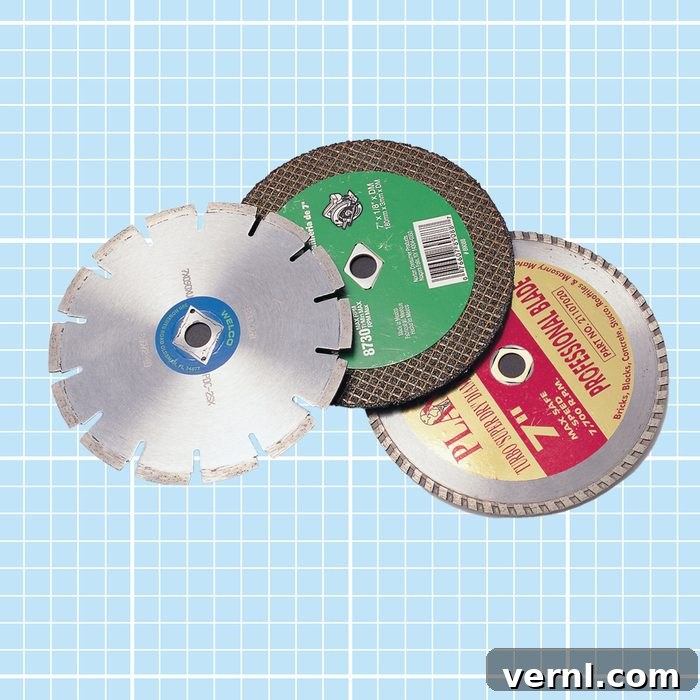
Diamond-tipped blades are the only viable option for cutting concrete due to the material’s extreme hardness. However, not all diamond blades are created equal. Matching the blade’s characteristics to the material you’re cutting is crucial for optimal performance and blade longevity.
Understanding Blade Types and Their Applications
Diamond blades typically come in three main types, each suited for specific cutting needs:
- Segmented Blades: These blades feature individual diamond segments separated by gullets (spaces). The gullets help remove cutting debris and allow for better cooling in dry cutting applications. They are aggressive and ideal for fast cutting of abrasive materials like concrete, asphalt, and masonry blocks.
- Continuous Rim Blades: Characterized by a solid, uninterrupted diamond rim, these blades are designed for very clean, chip-free cuts in hard, dense materials like ceramic tile, marble, and hard natural stone. They are typically used for wet cutting to prevent overheating.
- Turbo Blades: A hybrid design, turbo blades feature a continuous rim with serrations or a corrugated edge. This design combines the speed of a segmented blade with the smoother finish of a continuous rim blade. They are versatile and perform well in both wet and dry applications on a variety of concrete and masonry materials.
Matching Blade Hardness to Concrete Type
The bond (the metal matrix that holds the diamonds) of a diamond blade is designed to wear away, exposing fresh diamonds for continuous cutting. The rate at which this bond wears down is critical.
“If it’s relatively soft, coarse concrete such as that found in wall block, you want a blade that won’t wear down quickly,” says Jeremy Martin of Willow Gates Landscaping. “If you’re cutting hard, dense concrete with a finer aggregate such as concrete pavers or some natural stone, you need a blade that will wear down faster to expose fresh diamonds to continue cutting.”
Essentially, a harder bond is used for cutting abrasive, softer materials (e.g., green concrete, asphalt) because the material will erode the bond easily, exposing new diamonds. A softer bond is used for cutting hard, dense materials (e.g., cured concrete, granite) because the material won’t erode the bond as quickly, so a softer bond is needed to release diamonds at an appropriate rate.
Step-by-Step Guide: How to Cut Concrete Safely and Effectively
Cutting concrete requires a systematic approach to ensure safety, accuracy, and efficiency. Follow these steps for a successful project:
1. Thorough Site Preparation
- Clear the Area: Remove all debris, loose materials, and especially any metals that could potentially get caught in the blade, causing kickback or damage.
- Assess for Obstructions: Before making any deep cuts, use a stud finder or metal detector to check for embedded objects like rebar, electrical conduits, or plumbing pipes within the concrete. Cutting into these can be extremely dangerous.
- Ensure Stable Footing: Make sure you have a clear, stable, and non-slip surface to work on. Concrete cutting is a physically demanding task, and maintaining balance is crucial.
2. Precise Marking and Depth Adjustment
- Adjust Cutting Depth: Set the saw blade to the desired depth of your cut. For thicker slabs, plan on making multiple passes, increasing the depth with each pass.
- Mark Your Lines Clearly: Use chalk, a marker, construction crayon, or paint to draw your cut lines. “Make sure to mark these spots completely and clearly to prevent missing them when concrete dust goes everywhere,” says Brandon Walker, superintendent at ASAP Restoration. For long, straight cuts, use a straight edge or a snapping chalk line. For curves, use flexible materials like pex tubing, a garden hose, or fiberglass tent poles to create your guide.
3. Donning Essential Safety Gear
Never compromise on safety when cutting concrete. The risks associated with airborne dust, noise, and sharp blades are significant.
- Eye Protection: Always wear safety glasses or goggles to shield your eyes from flying debris and dust.
- Hearing Protection: Concrete saws are extremely loud. Earplugs or earmuffs are essential to prevent hearing damage.
- Respiratory Protection: Wear an N95 or P100 respirator mask to prevent inhaling crystalline silica dust, which can cause severe lung diseases.
- Protective Clothing: Wear long sleeves, long pants, and sturdy work boots. Gloves can protect your hands from abrasions and vibrations. A protective suit can also help you avoid getting covered in dust and debris.
4. Cutting Techniques and Dust Management
- Consistent Water Supply for Wet Cuts: If using a wet saw, ensure a continuous and steady water flow. This prevents the saw blade from overheating, binding, or warping, and significantly controls dust.
- Cooling for Dry Cuts: For dry cutting, let the blade cool down every 30 to 45 seconds. Lift the blade out of the cut and let it spin freely in the air for a few seconds. Forcing a hot blade will accelerate wear and increase the risk of binding.
- Starting the Cut: Before placing the blade on the concrete, let the saw get up to full speed. Then, slowly and gently lower the spinning blade onto the marked line. Avoid dropping it abruptly, which can cause binding or kickback.
- Maintaining the Cut: As you cut, maintain a steady pace and keep your blade perfectly aligned with your marked line. Let the saw’s weight and power do the work; avoid forcing the blade, as this can lead to blade deflection, premature wear, and an uneven cut.
- Multiple Passes for Deep Cuts: For thicker concrete, make several shallow passes rather than attempting one deep cut. This is safer, extends blade life, and provides better control.
- Finishing the Cut: Once you’ve reached the end of your cut line, release the trigger and allow the blade to spin down completely inside the cut before slowly removing it from the material. This prevents sudden kickback or damage to the blade and the concrete edge.
5. Post-Cut Cleanup
- Efficient Dust Cleanup: Immediately clean up the dust or wet slurry. “Vacuums are best for cleaning up concrete dust because they prevent spreading and aeration caused by brooms while sweeping,” says Walker. For wet slurry, prevent it from drying, as hardened slurry can be difficult to remove and may damage surfaces.
Also, whenever possible, bring the saw to the work area rather than carrying the product to the saw, says Martin. “Paving and wall materials are heavy, and it’s physically demanding to move them to the saw and back to where they will be installed.” This simple tip can save you significant physical strain and time.
Cutting Different Types of Concrete Configurations
Specific projects may require tailored cutting approaches:
- Cutting Curves: For intricate curves, Martin recommends forming your line using pex, a garden hose, or flexible fiberglass tent poles as a guide. You can make a series of relief cuts perpendicular to the main curve to help remove waste material more easily.
- Cutting Thick Wall Blocks or Slabs: “When cutting wall block, a handheld saw may not cut the whole way through a block,” says Martin. “In this situation, mark the block, then cut as far as the saw blade will reach. Then flip the block, and cut the remainder.” This technique applies to any concrete material thicker than your blade’s maximum depth.
The Dos and Don’ts of Safe Concrete Cutting
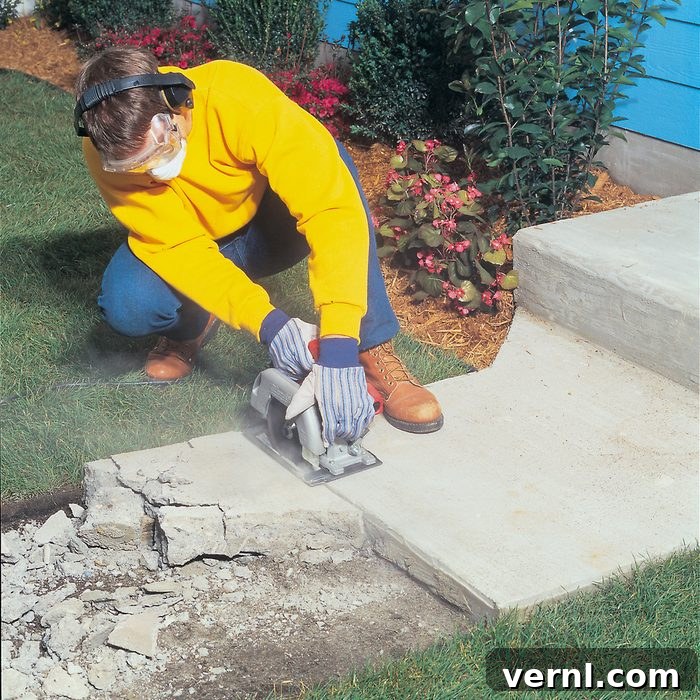
Adhering to best practices and avoiding common mistakes are paramount for both your safety and the quality of your work.
Always Do These:
- Wear Comprehensive Safety Gear: This includes hearing, eye, and respiratory protection (at minimum, an N95 mask). Don’t forget sturdy gloves and appropriate clothing.
- Inspect Your Blade Regularly: Before each use, check the condition of your diamond blade for cracks, chips, or excessive wear. A damaged blade is a dangerous blade.
- Choose the Correct Blade Type: As discussed, match the blade’s bond and type to the specific concrete material you are cutting for efficiency and safety.
- Clean Up Wet Slurry Promptly: If wet cutting, clean up the slurry before it dries. Dried slurry is difficult to remove and can stain or damage surrounding surfaces.
- Actively Control Dust: “Unless it’s a very short cut, dust control is essential,” says Martin. “Cutting generates a lot of dust, some of which is harmful respirable crystalline silica.” Most saws have a built-in water attachment to wet the dust, and some, like those from IQ Power, have integrated vacuums. Another effective option is a central dust collector, such as those offered by Dust Killer Tools. “Using a vacuum for dust control will result in a much cleaner job site, without a huge cloud of dust drifting over the work area, neighboring homes and cars,” adds Martin.
Never Do These:
- Use a Wet Blade Without Water: Operating a wet-designated blade dry will cause it to overheat, warp, dull rapidly, and potentially shatter.
- Cut Concrete in Confined Spaces Without Proper Ventilation: The dust and fumes (especially from gas saws) are hazardous. Ensure adequate airflow or use robust dust extraction systems.
- Use Dull or Damaged Blades: Dull blades not only lower the quality of the cut but also force you to apply more pressure, increasing the risk of kickback and injury.
- Force the Blade: If the blade isn’t cutting properly, don’t push harder. Instead, check your blade, adjust your technique, or make multiple shallower passes. Forcing a blade can lead to binding, kickback, and saw damage.
- Cut Through Embedded Objects: Never attempt to cut through rebar, electrical wires, or plumbing pipes embedded in the concrete. This can cause severe electrical shock, explosion, or projectile hazards. Always scan the area with a metal detector before deep cutting.
- Pull the Saw Out Before Spin-Down: Removing the saw from the cut while the blade is still spinning can cause the blade to bind, resulting in dangerous kickback.
- Attempt Water Dust Control with a Non-Designated Wet Saw: This creates a severe risk of electrical shock and damage to your equipment.
- Neglect Planning: “Poor planning is also a common issue when dealing with slab cutting,” says Walker. “Measure everything until you are positive that it’s right, then triple-check again. You can only make the cut once, and with concrete it isn’t easy to fix mistakes.”
When to Consider Hiring a Professional for Concrete Cutting
While DIY concrete cutting is feasible for many projects, there are instances where calling in a professional is the wisest and safest course of action.
- Uncertainty or Safety Concerns: If you are unsure of your ability to safely operate the equipment or if a particular cut feels inherently dangerous, it’s always best to err on the side of caution and contact a pro.
- Major or Complex Cuts: Projects involving very thick concrete slabs, structural elements, extensive demolition, or intricate precision cuts are often beyond the scope of typical DIY capabilities. Professionals have specialized equipment and experience for these challenges.
- Proximity to Utilities: If your cutting area is near known or suspected plumbing pipes, electrical lines, gas lines, or other buried utilities, a professional will have the expertise and scanning tools to identify and avoid them. “Saving money by doing things the DIY way is great, but not if it comes at the cost of an insurance claim for water damage when you cut through a pipe, or a blackout when you slice the electrical line,” warns Walker.
- Large-Scale Projects: For very large projects that require extensive cutting, the time and effort saved by hiring professionals can outweigh the costs, ensuring the job is done quickly and efficiently.
- Permit Requirements: Some structural alterations or large demolition projects may require permits and professional engineering oversight, which a qualified contractor can manage.
Frequently Asked Questions About Concrete Cutting
How long do diamond blades last for cutting concrete?
The lifespan of a diamond blade can vary significantly, ranging from approximately 10 hours to over 100 hours of continuous cutting. Factors influencing this include the manufacturer’s quality, the operator’s technique, the abrasive nature and hardness of the surface material, and the torque of the saw. “If doing a significant amount of cutting, spend at least $100 to $175 on a good blade,” advises Martin. “They are well worth the investment!” Cheaper blades tend to wear out much faster and offer less consistent performance.
Is cutting concrete difficult?
Yes, cutting concrete is generally considered difficult. “Not only is it physically tasking work, which involves heavy equipment and materials, but it is also dirty and dangerous too,” says Walker. It requires physical stamina, precision, and a strong understanding of safety protocols. The dust, noise, and potential for kickback make it a task that demands respect and proper preparation.
Can you rent tools for cutting concrete?
Absolutely. You can rent concrete saw-cutting tools, including various types of saws and specialty blades, from most major home improvement big-box stores, as well as dedicated tool rental companies. “The rental cost may vary from $50 to $1,000 depending on your project size and the number of tools you may require,” says licensed contractor Jay Sanders. Renting is an excellent option for one-off projects, saving you the significant upfront cost of purchasing specialized equipment.
How long does it take to cut concrete?
The time required to cut concrete depends on several variables: the length and depth of the cut, the type and hardness of the concrete, the quality and power of the saw, and your experience level. “Smaller projects can be accomplished within a few minutes, whereas larger ones might require several hours,” says Sanders. For example, “If you cut through a 4-inch thick concrete slab, using a professional-grade saw, it may demand approximately 45 minutes to one hour” for a significant length of cut, including setup and cleanup time.
Should you wear a mask when cutting concrete?
Yes, absolutely and without exception. You should wear, at minimum, an N95 respirator mask, but a P100 mask offers even greater protection against fine particles. Additionally, always use other dust control methods such as water (wet cutting) or a vacuum extraction system. “Silica dust is a real danger, and it should be feared just as much as people do with mold or asbestos because it can cause serious health problems when not respected,” emphasizes Walker. Inhaling crystalline silica dust can lead to silicosis, a severe and irreversible lung disease.
About Our Expert Contributors
- Brandon Walker serves as Superintendent at ASAP Restoration in Tempe, Arizona. With over two decades of experience in the industry, Brandon has a wealth of knowledge, having managed his own company and various ASAP teams, alongside tackling a multitude of other projects.
- Jeremy Martin is the proud owner of Willow Gates Landscaping in Mohnton, Pennsylvania, which he established in 2005. Jeremy is passionate about his craft, sharing his expertise by teaching installer courses for retaining walls, concrete pavers, permeable pavers, and advanced hardscape projects, in addition to speaking at industry events.
- Jay Sanders is a highly respected licensed contractor based in Baltimore. He owns both Maryland Contractor and Castle Dream Construction, bringing over a decade of extensive experience in the construction sector to his clients.