
We’ve all been there: the towering piles of mail, the wardrobe bursting at the seams, the garage overflowing with forgotten treasures. From essential tools to cherished toys, clutter isn’t just an inconvenience; it often becomes an unwelcome, yet pervasive, backdrop to our daily lives. Even the most meticulous among us inevitably accumulate a significant amount of stuff over time. The real question isn’t if we have clutter, but when we finally decide to do something about it.
“I think you know in your gut that it’s time to start letting go,” advises Mary Cornetta, CEO of Organized Overall and founder of Sort and Sweet. She pinpoints the turning point: “[It’s time] when the clutter really starts to stress you out, you’re misplacing things more frequently, and the floors and countertops are starting to disappear.” These are clear indicators that the time for action has arrived, signalling a need for intervention that goes beyond simple tidying.
However, recognizing that you need to declutter and actually embarking on the journey of decluttering are two distinct phases. The initial step often feels daunting, primarily because the task appears overwhelmingly monumental. Yet, it’s far from hopeless. If you’re ready to reclaim your space and your peace of mind, Cornetta’s expertly crafted techniques offer a clear, actionable path to organization, designed to minimize stress and maximize results.
Overcoming the Decluttering Hurdle: Why It Feels So Hard
Before diving into specific strategies, it’s crucial to acknowledge the psychological barriers that make decluttering feel so challenging. Our possessions often carry sentimental value, represent aspirations, or even provide a sense of security. The thought of parting with them can trigger feelings of guilt, loss, or indecision. This emotional attachment, coupled with the sheer volume of items, creates a formidable obstacle. Furthermore, the sheer scale of the task—envisioning an entire home needing attention—can lead to analysis paralysis, where we simply don’t know where or how to begin. This is why a strategic, step-by-step approach is not just helpful, but essential for sustainable success.
Start With the Easy Stuff: Building Momentum with Quick Wins
The journey to an organized home doesn’t require an immediate overhaul. Cornetta advocates for starting with the lowest-hanging fruit—items that require minimal emotional investment or decision-making. “Anything with an expiration date” is her prime example. This advice is brilliant because it taps into a universal truth: expired items are objectively useless and, in some cases, harmful. There’s no sentimental attachment to an expired pain reliever or a jar of jam past its prime.
The act of getting rid of these “no-brainer” items—think stale spices, old makeup, dried-up pens, or out-of-date medicines—works wonders for your confidence and builds crucial momentum. Begin by opening your medicine cabinet. Scrutinize every bottle, tube, and box. If it’s expired or unused for a significant period, it goes. Next, move to your pantry. Ditch anything expired, empty, or forgotten deep in the recesses. This isn’t just about clearing space; it’s about making tangible progress without the emotional baggage.
Cornetta emphasizes the power of these initial wins: “As you gain confidence in your decluttering skills, you can move on to a space like your closet.” The hardest part of decluttering is often overcoming the inertia and the sentimental hold our belongings have on us. By starting with items that present no real dilemma, you’re essentially warming up for the bigger challenges. This methodical approach transforms a daunting task into a series of achievable steps, making the entire process feel less overwhelming and more manageable. Remember, if it’s out of date, its utility is gone – no complex decision-making is needed, just action.
Pick a Small Space: The Power of Micro-Decluttering
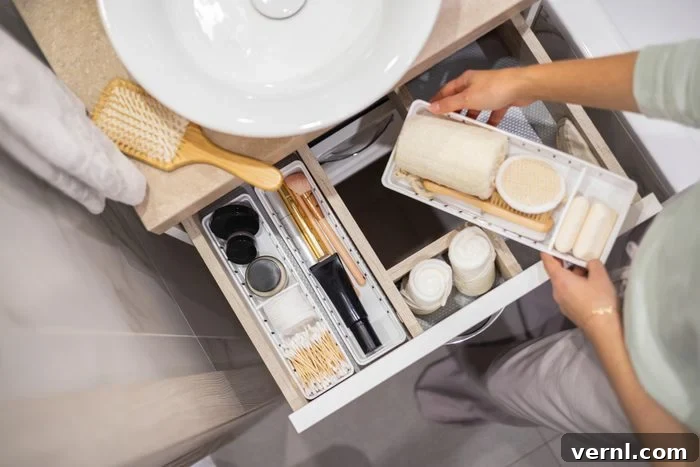
Another highly effective method for initiating the decluttering process is to begin on a miniature scale. Most households harbor at least one, if not several, junk drawers in the kitchen, or similar catch-all spots throughout the home. Cornetta highlights the efficacy of decluttering a confined area like a single drawer, your handbag, or a backpack. This strategy is particularly potent if your time is limited, offering a sense of accomplishment without requiring a huge time commitment.
“Doing a little decluttering is better than doing none at all!” she wisely states. This principle underscores the importance of consistent, small efforts over infrequent, massive undertakings. Imagine taking just 15 minutes to meticulously go through your sock drawer, pairing socks and discarding those with holes or no match. Or dedicate a quick session to emptying your purse, removing old receipts, loose change, and anything that doesn’t genuinely belong. The immediate visual and functional improvement in such a small space provides an instant boost to your morale and reinforces the positive impact of your actions.
This approach isn’t just about clearing a small area; it’s about building a habit and cultivating the mental muscle needed for larger projects. Each small success reinforces your capability, making the idea of tackling a closet or a whole room seem less intimidating. It teaches you that progress, however incremental, is still progress. These micro-decluttering sessions are like building blocks, each one adding to your confidence and setting the stage for more ambitious organizational efforts.
Bring in a Friend: The Advantage of an External Perspective
Life’s journey is often smoother with a supportive network, and decluttering is no exception. Friends are invaluable allies through significant life changes, daily struggles, and everything in between. If the sheer magnitude of decluttering your home feels overwhelming, enlisting the help of a trusted buddy can be a game-changer. This collaborative approach can transform a solitary, daunting task into a shared, more enjoyable experience.
Cornetta notes that this strategy is particularly effective for individuals who thrive in team environments. A friend offers more than just an extra pair of hands; they provide an objective perspective. While you might be emotionally tethered to a worn-out t-shirt or a never-used gadget, a friend can gently but firmly ask, “Do you really need this?” or “When was the last time you actually wore those old jeans?” This external viewpoint can be instrumental in making difficult decisions and letting go of items you might otherwise cling to.
Beyond friends, professional organizers, like Cornetta herself, are also a viable option for those who need structured guidance and expert advice. They bring strategies and a no-nonsense approach that can cut through years of accumulated clutter efficiently. Furthermore, don’t overlook the crucial role of family members. “If the clutter is your partner’s or kid’s, it’s really important to include them,” Cornetta stresses. Involving them in the decision-making process for their own belongings is not only respectful but also crucial for long-term success. It ensures that the decisions are theirs, fostering ownership, and importantly, it distributes the immense load of decluttering, preventing a single person from bearing the entire burden.
Make a Schedule: Consistency is Key to Lasting Organization
The desire to declutter is often strong, but translating that desire into consistent action can be challenging. Cornetta’s solution is straightforward and highly effective: integrate decluttering dates directly into your calendar. Scheduling dedicated decluttering sessions is a proactive measure that prevents you from backsliding into old habits and allows clutter to re-accumulate unchecked. Clutter often seems to appear magically, but knowing that a dedicated decluttering session is just around the corner can significantly ease any anxiety about burgeoning messes.
This proactive approach transforms decluttering from an emergency response into a routine habit. “Look at the year ahead and schedule two closet decluttering days, four for skincare, makeup, and medicine, and monthly or bimonthly sessions for the pantry,” Cornetta advises. The specific frequency and focus of these sessions should be tailored to your individual needs and the rhythm of your household. The key is to choose a schedule that is realistic and sustainable for you, and then commit to it diligently.
By treating decluttering like any other important appointment, you elevate its priority. This scheduled consistency ensures that no single area becomes overwhelmingly cluttered, making each session less strenuous and more effective. It’s an investment in your mental peace and the ongoing functionality of your home. A consistent schedule also fosters accountability, helping you stay on track and maintain the momentum you build with each successful decluttering task.
Make Your Bed Every Day: A Small Habit with a Big Impact
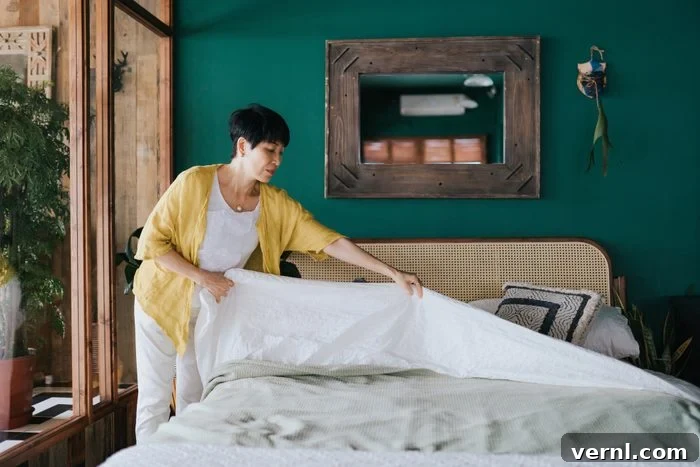
Do you make your bed each morning? This seemingly trivial act, according to Cornetta, is a powerful foundational habit that can profoundly influence your mindset for both decluttering and maintaining an organized lifestyle. “This simple 60-second act will set the tone for the rest of your room (and day),” she explains. It’s an immediate, visible accomplishment that provides a sense of order and control right at the start of your day.
The National Sleep Foundation reports that a significant majority of people make their beds at least occasionally. If you’re already among this bed-making majority, consciously making the effort to do it every single day can amplify its positive effects, giving you a consistent psychological boost. This small victory creates a ripple effect, encouraging you to maintain other aspects of your bedroom’s tidiness and potentially inspiring you to tackle other organizational tasks around the house.
For those who don’t regularly make their beds, now is an excellent time to adopt this habit. It’s a low-effort, high-reward action. The act of making your bed cultivates discipline, establishes a routine, and provides a clear demarcation between the night’s rest and the day’s activities. It represents a commitment to order and sets a precedent for how you approach other areas of your life, proving that even the smallest steps can contribute to a more organized and serene environment.
Declutter Regularly: The Blueprint for a Permanently Organized Home
If you find yourself struggling with persistent clutter and are seeking a powerful incentive to streamline your living space, here’s a fundamental truth: integrating decluttering into your regular routine is the most effective way to significantly reduce your long-term workload around the house. A home that is consistently free of excess clutter translates directly into less time spent cleaning, less time wasted searching for misplaced items, and ultimately, more time for activities you genuinely enjoy.
“Having less stuff means having less to clean up or tidy,” Cornetta states, succinctly capturing the essence of minimalist organization. When every item has a designated home and unnecessary possessions are regularly culled, the daily maintenance of your living space becomes dramatically simpler and quicker. Imagine the ease of vacuuming a clear floor or dusting surfaces that aren’t laden with forgotten objects. The mental energy saved from not constantly navigating through piles or remembering where you last saw that important document is invaluable.
This regular decluttering isn’t about massive, once-a-year purges; it’s about consistent, smaller efforts. It could be a 10-minute daily tidy-up, a weekly review of incoming mail, or a monthly deep-dive into a specific drawer. By making it a habitual part of your lifestyle, you prevent clutter from accumulating to overwhelming levels. “Decluttering regularly is really the most powerful way to stay organized,” Cornetta concludes. It transforms your approach from reactive (cleaning up a mess) to proactive (preventing the mess in the first place), leading to a perpetually organized, serene, and functional home.
Beyond the Basics: Cultivating an Organized Mindset
Achieving a clutter-free home extends beyond simply following a set of steps; it involves cultivating an organized mindset. This means becoming more intentional about what you bring into your home and developing habits that support order. Before making a purchase, ask yourself if you truly need it, if it serves a purpose, and if you have a designated space for it. This mindful consumption can drastically reduce future clutter. Furthermore, regularly practicing the “one in, one out” rule – where you donate or discard an old item whenever a new one enters your home – is a simple yet powerful strategy to maintain balance.
Common Decluttering Pitfalls to Avoid
While the path to a clutter-free home is rewarding, there are common traps that can derail your efforts. One significant mistake is buying more storage solutions before decluttering. This often leads to simply organizing clutter, rather than eliminating it. Another pitfall is trying to do too much too soon, which can quickly lead to burnout and discouragement. Remember the “small spaces” advice: incremental progress is more sustainable. Finally, avoid the guilt trap; letting go of items doesn’t diminish their memories or value. Instead, it creates space for new experiences and a lighter future.
The Profound Benefits of a Decluttered Life
The rewards of a decluttered home extend far beyond just clean surfaces. A simplified environment fosters mental clarity, reduces stress, and boosts productivity. When your physical space is orderly, your mind often feels more orderly too. You’ll experience increased focus, improved decision-making, and a greater sense of peace. Less time spent searching for items means more time for personal passions, family, and relaxation. Ultimately, decluttering is an investment in your well-being, paving the way for a more harmonious and fulfilling life.
Conclusion: Your Journey to a Serene Space Begins Now
The journey to a truly organized, stress-free home may seem arduous, but with expert guidance from professionals like Mary Cornetta, it becomes an achievable and deeply rewarding endeavor. By embracing small, manageable steps—starting with the easy items, tackling tiny spaces, enlisting support, and making decluttering a consistent part of your routine—you can systematically transform your environment. Remember, every item you consciously decide to keep or release brings you closer to a home that supports rather than hinders your well-being. Start today, and discover the profound peace and freedom that a decluttered life can offer.