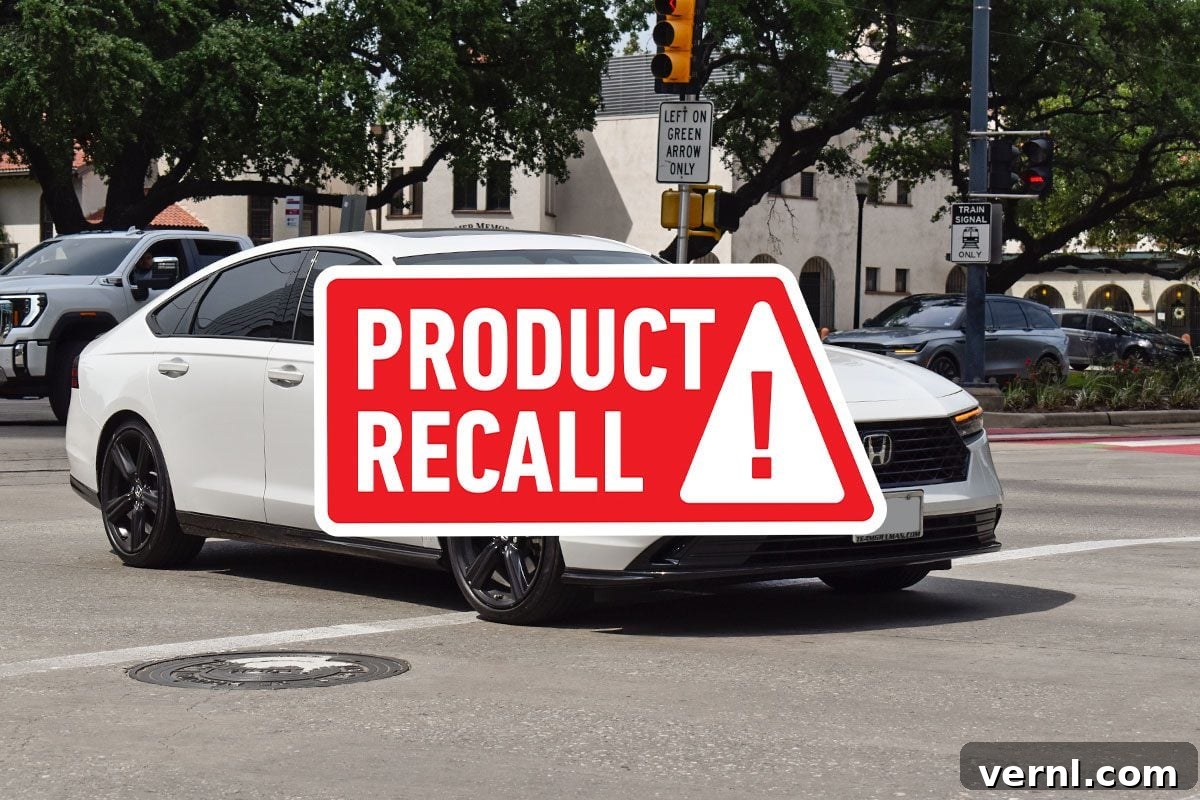
While some vehicle recalls affect a limited number of drivers, certain safety alerts can impact hundreds of thousands, if not millions, of individuals. Recently, the National Highway Traffic Safety Administration (NHTSA) issued a significant announcement regarding a widespread electrical issue in numerous Honda vehicles. This critical recall highlights a serious safety concern: a potential loss of drive power while operating affected models. If you are a Honda owner, it is paramount to prioritize safety by verifying if your vehicle is included in this recall and refraining from driving it as much as possible until the necessary repairs have been completed. This comprehensive guide will delve into the specifics of this recall, helping you understand the risks, identify affected models, and take the appropriate steps to ensure your safety and the safety of others on the road.
Understanding the Honda Recall: A Critical Safety Alert
Vehicle recalls are an essential component of automotive safety, serving as a vital mechanism to address potential defects that could jeopardize drivers and passengers. The current Honda recall, prompted by findings from the NHTSA, underscores a particularly severe defect: an electrical issue that can lead to an unexpected loss of drive power. This is not merely an inconvenience; it represents a significant safety hazard that can dramatically increase the risk of an accident or injury.
The NHTSA brief explicitly states the root of the problem: a “software error” within the vehicle’s integrated control module (ICM) central processing unit (CPU). This error can cause the CPU to reset unexpectedly while the vehicle is in motion. The immediate consequence of such a reset is a sudden and complete “loss of drive power.” Imagine navigating heavy traffic on a highway, or turning a corner, only for your vehicle to suddenly lose propulsion. The implications are terrifying: loss of control, inability to accelerate, and potentially being stranded in a dangerous situation without warning. The NHTSA’s clear warning—that a “loss of drive power increases the risk of a crash or injury”—is a direct call to action for all affected Honda owners. Understanding the gravity of this situation is the first step toward ensuring your safety.
The Technical Details: What’s Happening Under the Hood?
To fully grasp the seriousness of this Honda recall, it’s helpful to understand the technical specifics of the issue. At the heart of the problem is the Integrated Control Module (ICM), which acts as the central brain for many of your vehicle’s critical systems. The ICM’s Central Processing Unit (CPU) is responsible for executing the software that governs crucial functions, including engine management, transmission control, and various other operational parameters that ensure smooth and reliable driving. When the NHTSA brief refers to a “software error” causing the ICM CPU to “reset while driving,” it points to a fundamental flaw in the vehicle’s electronic architecture.
This unexpected reset means that, even for a brief moment, the vehicle’s primary control system effectively shuts down and reboots. During this reset period, the vehicle is no longer receiving the necessary instructions from the ICM to maintain propulsion, leading directly to a “loss of drive power.” This is not a subtle loss of power; it’s a sudden and complete cessation of the engine’s ability to drive the wheels. Such an event can disable acceleration, potentially affect power steering and braking (though basic mechanical braking would still be available), and leave the driver in a precarious situation. The unpredictable nature of this reset makes it even more dangerous, as it could occur at any speed, in any driving condition, without prior warning. The consequences range from minor traffic disruptions to serious multi-vehicle collisions, depending on the circumstances of the failure. This isn’t merely a bug; it’s a critical operational vulnerability that directly compromises the vehicle’s core function of safe locomotion.
Is Your Honda on the Recall List? Identifying Affected Vehicles
The scope of this recall is significant, impacting over 250,000 Honda vehicles. Identifying whether your specific vehicle is among those affected is the most crucial step you can take right now. The recall primarily targets certain model years of the popular Honda Accord Hybrid. Specifically, the following models have been identified:
- 2023 Honda Accord Hybrid
- 2024 Honda Accord Hybrid
- 2025 Honda Accord Hybrid
If you own any of these models, it is imperative to take immediate action. While Honda plans to mail out official owner notification letters detailing the problem and the necessary steps, these letters are scheduled to be sent in early January 2026. Waiting for this mail could delay your awareness and action, potentially exposing you to unnecessary risk. Therefore, proactive verification is highly recommended.
The most reliable and immediate way to determine if your vehicle is part of this recall is by checking your Vehicle Identification Number (VIN) on the NHTSA website. Your VIN is a unique 17-character code found on your vehicle’s dashboard (visible through the windshield on the driver’s side) or on a sticker located on the driver’s side door jamb. Visiting the official NHTSA recall search tool and entering your VIN will instantly tell you if your specific Honda Accord Hybrid is subject to this safety recall. This method bypasses any potential postal delays and provides you with the most up-to-date information directly from the regulatory body.
Furthermore, even if you don’t receive a letter immediately or your VIN search doesn’t show the recall (which can sometimes happen if the database isn’t fully updated yet), it’s still prudent to be vigilant, especially if you own one of the listed models. Recalls like these are not arbitrary; they address issues that pose a direct and tangible risk to you, your passengers, and other drivers sharing the road. Taking swift action to confirm your vehicle’s status is a responsible measure for your safety and peace of mind.
Immediate Action and Safety Precautions for Owners
Given the severe nature of the “loss of drive power” issue, immediate and decisive action is critical for owners of affected Honda Accord Hybrid vehicles. The most important precaution, until your vehicle has been repaired, is to avoid driving it as much as possible. This recommendation cannot be overstated. A sudden loss of power at highway speeds, during an intersection turn, or in congested traffic can lead to catastrophic consequences, including rear-end collisions, loss of control, and multi-car pile-ups. Even short trips carry inherent risks, as the software error can manifest unpredictably.
Consider alternative transportation options if your vehicle is on the recall list. This might include carpooling, public transit, ride-sharing services, or borrowing another vehicle if possible. The temporary inconvenience of finding alternative transport far outweighs the potential dangers of operating a vehicle with a known, critical safety defect. If you absolutely must drive your recalled Honda for essential reasons, exercise extreme caution. Drive defensively, maintain ample following distances, avoid high-speed roads, and be acutely aware of your surroundings and your vehicle’s behavior. However, this should be considered a last resort and for minimal distances only.
Ignoring a safety recall is never advisable. Manufacturers and regulatory bodies issue recalls to protect consumers from known defects that have been identified as posing a risk of injury or death. Delaying the repair or continuing to drive a vehicle with such a defect not only puts your life at risk but could also invalidate certain aspects of your insurance coverage if an accident were to occur as a direct result of the unrepaired recall issue. Your personal safety and the safety of your loved ones should always be the paramount concern. Do not take the risk; take action.
Getting Your Honda Repaired: The Solution
Once you’ve confirmed that your Honda Accord Hybrid is part of this recall, the next crucial step is to arrange for the necessary repair. The good news is that Honda has committed to providing this fix free of charge to all affected owners. According to the NHTSA brief, Honda “dealers will reprogram the ICM CPU software.” This means the repair involves a software update rather than a mechanical replacement, which is typically a quicker and less intrusive process.
To initiate the repair, you should contact your authorized Honda dealership as soon as possible to schedule an appointment. Explain that your vehicle is subject to the recall for the ICM CPU software error leading to a loss of drive power. Providing them with your VIN will help them verify your vehicle’s eligibility and prepare for your service visit. During the appointment, trained Honda technicians will connect your vehicle to their diagnostic equipment and upload the updated software to your Integrated Control Module. This updated software is designed to correct the error that causes the CPU to reset unexpectedly, thereby eliminating the risk of a sudden loss of drive power.
It’s vital to ensure that this repair is performed by an authorized Honda service center. They have the specialized tools, training, and certified software updates directly from Honda to correctly address the issue. Do not attempt to have the issue fixed by an independent mechanic unless they are specifically authorized by Honda for recall repairs, as incorrect software could lead to other operational problems. Remember, this repair is a critical safety measure, and it will be performed at no cost to you.
Should you have any further questions or encounter difficulties in scheduling your repair, you can reach out directly to Honda’s customer service. Their dedicated line for recall inquiries is 1-888-234-2138. When contacting them, it can be helpful to reference Honda’s internal number for this recall, which is TN2, and the NHTSA’s recall number, 25V785000. These numbers will help customer service representatives quickly identify the specific recall and provide you with accurate information and assistance. Don’t delay; make that appointment as soon as you can to ensure your vehicle is safe to drive.
Beyond the Recall: Honda’s Commitment to Safety and Future Implications
While a recall can be concerning for vehicle owners, it also highlights the robust system of consumer protection and manufacturer responsibility in the automotive industry. When a significant safety defect, like the software error in the Honda Accord Hybrid’s ICM, is identified, regulatory bodies like the NHTSA work in conjunction with manufacturers to ensure these issues are addressed promptly and effectively. This process is crucial for maintaining public trust and ensuring that vehicles on our roads meet stringent safety standards.
For Honda, this recall presents an opportunity to reinforce its commitment to safety and quality. While no manufacturer is immune to defects, how a company responds to such challenges significantly impacts its brand reputation and consumer confidence. By offering a free, targeted software fix, Honda is taking the necessary steps to rectify the problem for its customers. This commitment extends beyond just the immediate repair; it also involves internal investigations to understand why the defect occurred in the first place and implementing measures to prevent similar issues in future vehicle designs and manufacturing processes. Such incidents often lead to enhanced quality control protocols and more rigorous software testing before vehicles are released to the market.
For consumers, recalls serve as a powerful reminder of the importance of staying informed about vehicle safety notices. It underscores the collective effort of manufacturers, regulatory agencies, and responsible vehicle owners in maintaining a safer driving environment for everyone. Each recall, despite the inconvenience it may cause, ultimately contributes to advancements in automotive safety technology and practices, making future generations of vehicles even more reliable and secure. Therefore, participating in a recall is not just about fixing a defect; it’s about being an active part of a system designed to improve overall road safety for all.
Source
Loss of Drive Power from Software Error, National Highway Traffic Safety Administration, 2025.