
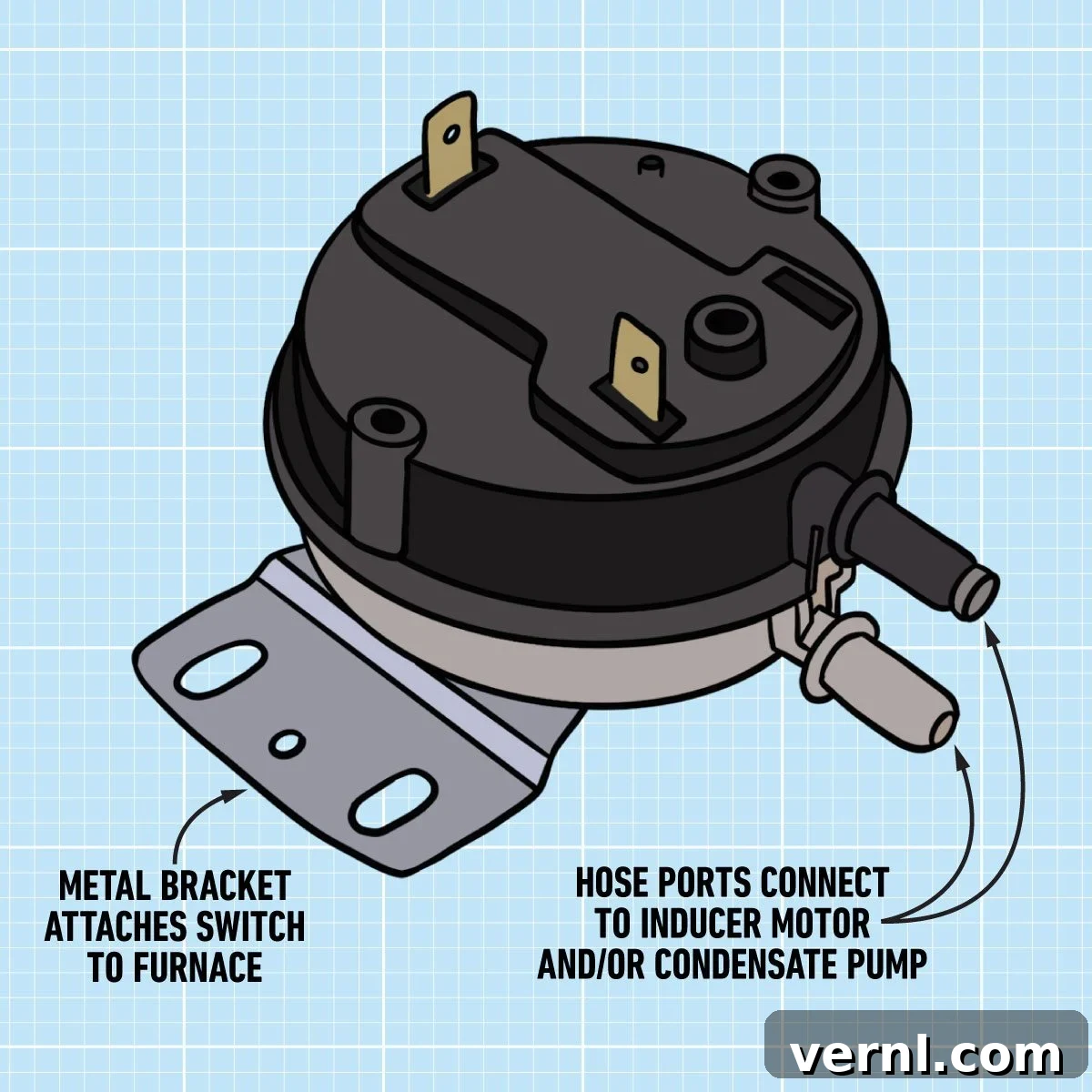
You might never have given a second thought to a furnace pressure switch, but this small yet crucial component plays a monumental role in safeguarding your home and family. It’s a vigilant guardian, constantly monitoring your heating, ventilation, and air conditioning (HVAC) system to prevent the silent, deadly threat of carbon monoxide buildup. Understanding its function is key to appreciating the complex safety mechanisms built into your furnace.
“Furnaces have all sorts of safety devices on them,” explains Joshua Smith, operations manager at Berkshire Heating and Air Conditioning. “One of those is a pressure switch, and it’s absolutely vital for safe operation.”
To demystify this essential device, we consulted with leading HVAC experts Joshua Smith and Alexander Siv from Amherst Plumbing and Heating. They shed light on what a pressure switch is, its critical role in keeping you safe, and what to anticipate if this unsung hero of home heating decides to fail.
About the Experts
- Alexander Siv owns Amherst Heating and Plumbing in Amherst, Massachusetts. He holds a master plumber’s license in Massachusetts and brings more than 10 years of extensive plumbing and heating experience to his clients.
- Joshua Smith is the operations manager at Berkshire Heating and Air Conditioning in West Springfield, Massachusetts. With over 20 years of experience in the HVAC industry, he possesses a Massachusetts oil burner and refrigeration license, reflecting his deep expertise.
What Exactly Is a Furnace Pressure Switch?
At its core, a furnace pressure switch is an indispensable safety mechanism meticulously engineered into gas-powered forced air furnaces. Its primary function is to act as a preliminary gatekeeper, ensuring that the furnace’s exhaust system is operating correctly and safely drafting hazardous gases to the outside before the main burner is permitted to ignite. This sequential operation is a cornerstone of furnace safety design.
“Everything happens in a sequence, and everything has a safety behind it,” Smith emphasizes. “The pressure switch is often the very first safety mechanism in that critical sequence, making it incredibly important for preventing dangerous situations.”
If the system detects any anomaly that could impede the proper venting of carbon monoxide (CO), the pressure switch immediately intervenes. It shuts down the furnace and actively prevents the burner from igniting, thereby averting the accumulation of toxic gases within your living space. This proactive measure is what makes the pressure switch a frontline defender against CO poisoning.
Physically, pressure switches are typically small, round components found in close proximity to the inducer motor within the furnace. They feature a small, flexible tube that connects directly to the motor’s housing or the flue pipe. This tube is essential for sensing the differential air pressure. While you might catch a glimpse of it by carefully removing the furnace’s front panel, Alexander Siv notes that “they can look quite different across various furnace brands and models, so identification might require a trained eye.” Their design, though varying, always serves the same life-saving purpose.
Understanding the Furnace Ignition Sequence and the Pressure Switch’s Role
To fully grasp the pressure switch’s importance, it’s helpful to understand the typical sequence of events when your thermostat calls for heat:
- Thermostat Call for Heat: Your thermostat signals the furnace to begin the heating cycle.
- Inducer Motor Activation: The inducer motor starts, creating a negative pressure (a draft) to pull combustion byproducts out of the heat exchanger and vent them safely outside through the flue pipe.
- Pressure Switch Verification: This is where the pressure switch comes into play. It senses whether the inducer motor has successfully established the necessary draft pressure within the combustion chamber and flue. If the correct pressure is achieved, the switch closes, signaling “all clear” to the furnace control board. If the pressure is incorrect (too low, indicating a blockage or fan issue), the switch remains open, stopping the sequence immediately.
- Igniter Activation: Once the pressure switch confirms proper venting, the igniter (either a hot surface igniter or a pilot light) activates to prepare for combustion.
- Gas Valve Opens: The gas valve opens, allowing natural gas or propane to flow to the burners.
- Combustion: The igniter ignites the gas, and the burners produce flame, heating the heat exchanger.
- Blower Motor Activation: After the heat exchanger reaches a sufficient temperature, the main blower motor turns on, circulating warm air throughout your home.
As you can see, the pressure switch is a critical gatekeeper at step 3. Without its successful closure, the entire process halts, preventing the furnace from burning fuel and potentially releasing carbon monoxide into your home.
What Does a Furnace Pressure Switch Do to Protect You?
“Pressure switches are fundamentally designed to prevent carbon monoxide poisoning, which can result from a faulty furnace venting system,” Alexander Siv states unequivocally. This statement underscores the severe consequences of a malfunctioning furnace and the indispensable role of this safety device.
Gas-powered, forced-air furnaces generate heat by combusting natural gas or propane. This combustion process, while effective for heating, produces several by-products, including carbon monoxide (CO). Carbon monoxide is a colorless, odorless, and tasteless gas, making it incredibly insidious and highly poisonous. Exposure to CO can lead to severe health issues, brain damage, and even death, which is why preventing its accumulation inside homes is paramount.
To safely manage these dangerous exhaust gases, furnaces are equipped with an inducer fan. This fan’s crucial job is to draw these combustion byproducts from the heat exchanger and expel them to the outside environment through a dedicated flue pipe. For this expulsion to occur effectively and safely, the flue pipe must maintain a specific level of air pressure, and the inducer fan must operate without fault.
The pressure switch continuously monitors this critical balance. If it detects any issue that compromises the integrity or functionality of the exhaust system, it immediately triggers a shutdown of the furnace. “If there’s a blockage in the flue pipe, a leak, or if the inducer fan isn’t generating sufficient negative pressure, the pressure switch senses that deviation and shuts the furnace down for safety,” Joshua Smith explains. Common causes of blockages can include debris like bird nests, leaves, or even ice accumulation in colder climates, all of which can severely restrict the flow of exhaust gases.
Furthermore, if the inducer fan itself isn’t functioning correctly – perhaps due to a motor failure or obstruction – the pressure switch will detect the lack of proper draft. “It shuts it down before combustion even begins,” Siv adds, highlighting the preventative nature of this safety component. This ensures that no fuel is burned if the dangerous byproducts cannot be safely removed, offering a crucial layer of protection for your household.
Can You Adjust a Furnace Pressure Switch?
No, a furnace pressure switch cannot and should not be adjusted. These devices are precisely calibrated by the manufacturer to detect the specific, optimal pressure thresholds required for your furnace’s safe operation. Any alteration could compromise its vital safety function.
“They’re sent from the factory pre-programmed with the furnace’s exact pressure setting,” Siv explains. This means that the switch is designed to operate within a very narrow, predetermined range. Tampering with it, even if seemingly minor, could lead to dangerous situations where the furnace operates with an improper draft, potentially allowing carbon monoxide to back up into your home. If a pressure switch isn’t working correctly, it’s not a matter of adjustment; it’s a clear indication that it needs professional diagnosis and likely replacement.
Signs of a Failing or Bad Furnace Pressure Switch
Recognizing the signs of a faulty furnace pressure switch is crucial for timely intervention and maintaining home safety. While some symptoms are obvious, others might be more subtle, necessitating a professional assessment. Here are the most common indicators:
No Heat Output
The most immediate and common sign of a failing pressure switch is a complete lack of heat from your furnace. Most homeowners will notice this issue almost immediately, especially during colder months. Your furnace might still power on, and the blower fan may even circulate air, but that air will be unheated. This occurs because the pressure switch, often stuck in an “open” position, prevents the furnace from proceeding through its ignition sequence. It fails to signal the igniter to light the gas, effectively halting the heating process. If your furnace is blowing cold air, a bad pressure switch is a strong candidate for the cause.
Furnace Short Cycling
Another significant indicator is when your furnace begins to “short cycle.” This means the furnace turns on, runs for a very brief period (sometimes just a few minutes), and then quickly shuts off, only to repeat this cycle repeatedly. This erratic behavior can be incredibly inefficient and points to an underlying issue. In the case of a pressure switch, it might be intermittently closing and opening, struggling to maintain the correct pressure signal, or detecting fluctuating draft issues. While other factors can cause short cycling (like a clogged filter or thermostat issues), a failing pressure switch should certainly be considered, especially if accompanied by other symptoms.
Unusual Noises from the Inducer Motor Area
While not a direct sign of the switch itself, problems with the inducer motor, which the switch monitors, can indirectly point to a potential pressure switch issue. If you hear grinding, squealing, or rattling noises coming from the inducer fan, it might indicate a failing motor or an obstruction. If the inducer motor isn’t generating the correct draft due to these issues, the pressure switch will detect it and prevent ignition, or cause short cycling.
Error Codes on the Furnace Control Board
Many modern furnaces come equipped with diagnostic control boards that display error codes when a fault is detected. If your furnace has a small LED light or a digital display, consult your owner’s manual for a list of error codes. Some specific codes directly correspond to pressure switch failures or issues with the draft inducer system, providing a clear diagnostic clue.
Activated Carbon Monoxide Detector
This is the most critical and potentially life-threatening sign. While rare, a faulty pressure switch can be the root cause of an activated carbon monoxide detector. If the switch fails in a “closed” position, it can mistakenly signal to the furnace that everything is normal, even if there’s a problem with the exhaust system. In this dangerous scenario, carbon monoxide could back up into your home without the furnace shutting down, triggering your CO detectors. If your carbon monoxide detector activates, especially if it’s accompanied by furnace issues, evacuate your home immediately and contact your local fire department or gas company without delay. This is an emergency that requires immediate professional attention.
Any of these signs warrant prompt attention from a qualified HVAC professional to diagnose the exact cause and ensure your furnace operates safely and efficiently.
How HVAC Professionals Test a Furnace Pressure Switch
Testing a furnace pressure switch is a nuanced process that goes beyond a simple visual inspection. HVAC professionals employ specialized tools and expertise to accurately diagnose whether the switch itself is faulty or if another component is causing the pressure issues. This is emphatically not a DIY task due to the precision required and the inherent safety risks involved.
First and foremost, technicians typically begin by checking the furnace draft pressure. They use a highly sensitive instrument called a manometer (or a vacuum pump) to measure the precise negative pressure within the furnace’s combustion chamber and flue pipe. This measurement is crucial because it tells them if the inducer motor is pulling the correct amount of exhaust gases out. If the draft pressure is outside the manufacturer’s specified range, it could indicate several problems: a failing inducer motor, a blocked or leaky vent pipe, or indeed, a malfunctioning pressure switch that is not correctly sensing the pressure.
Beyond measuring air pressure, HVAC professionals also meticulously check the electrical components of the pressure switch. They use a volt meter or multimeter to verify that the switch is receiving the correct voltage and that its contacts are opening and closing properly. They’ll test for continuity to ensure the circuit is complete when the switch is engaged and open when disengaged, as per its design. A switch that is physically stuck open or closed, or one with corroded electrical contacts, will fail these tests.
Both our HVAC experts, Joshua Smith and Alexander Siv, strongly advise against attempting to test a furnace pressure switch yourself. “The potential for misdiagnosis is high, and more importantly, you could inadvertently create a dangerous situation,” warns Siv. Smith adds, “Without the proper tools and understanding of furnace sequences, you’re just guessing, and when it comes to carbon monoxide safety, guessing is not an option.” HVAC technicians are trained to identify the subtle signs of component failure and to safely troubleshoot complex furnace systems.
How Long Do Furnace Pressure Switches Typically Last?
Under ideal conditions and with regular maintenance, furnace pressure switches are designed to be durable components, often expected to last for the entire lifespan of the furnace itself, which can range from 10 to 20 years. They are built to withstand the operational stresses of your heating system for a significant period.
However, like any mechanical or electrical component, there are always exceptions to this longevity. “Like anything else, [pressure switches] can and do go bad,” Smith acknowledges. Factors such as consistent exposure to moisture, corrosion, wear and tear on the diaphragms and contacts, or even minor electrical fluctuations can contribute to premature failure.
One of the best ways to catch a failing pressure switch early, before it causes a complete furnace shutdown, is through a yearly furnace maintenance visit from a qualified HVAC professional. During these routine tune-ups, technicians perform a comprehensive inspection that includes evaluating critical safety components like the pressure switch.
“We’re checking your volts and amperage, examining the inducer motor, and testing the pressure switches to identify components that are beginning to weaken,” Smith elaborates. “Our goal is to diagnose and address these issues proactively – to fix or replace them before you have to make an emergency ‘no heat’ call in the middle of winter.” This preventative approach can save homeowners from costly repairs, discomfort, and potential safety hazards by ensuring all safety mechanisms are in optimal working order.
What Happens When a Furnace Pressure Switch Fails?
When a furnace pressure switch fails, the most common and immediate consequence is a complete cessation of heat. “Everything stops, and you have no heat,” confirms Joshua Smith. Because the pressure switch is a critical safety interlock, its failure directly interrupts the furnace’s ignition sequence.
The furnace might attempt to start, you might hear the inducer motor kick on, and the blower fan might even begin to circulate air. However, if the pressure switch doesn’t close (signaling a proper draft) or if it fails to open when it should, the control board will prevent the gas valve from opening and the igniter from firing. “The furnace might try a few times, going through its purge cycle, but the pressure switch will keep cutting it off,” Smith adds, as the furnace’s internal safety protocols detect the ongoing issue and prevent combustion.
In such a scenario, Alexander Siv strongly advises homeowners to contact an HVAC professional for troubleshooting. “It could indeed be the pressure switch, but a qualified technician would need to perform specific diagnostic tests to accurately determine if that’s the precise cause,” Siv explains. A “no heat” situation can stem from various furnace issues, and only a professional can safely and correctly pinpoint the root problem, ensuring that the solution is effective and restores both heat and safety.
Can You Fix a Furnace Pressure Switch?
In the vast majority of cases, a faulty furnace pressure switch cannot be repaired; it must be replaced. “It’s generally a matter of replacing the entire part,” Smith states. “They are sealed units with sensitive internal components that aren’t designed for repair.” Attempting to open or fix a pressure switch can further damage it, compromise its calibration, and, most importantly, render its safety function unreliable, putting your home at risk of carbon monoxide exposure.
There is one very specific and relatively simpler scenario where the “fix” isn’t the switch itself, but its connection. Sometimes, the small rubber or silicone tubing that connects the pressure switch to the inducer motor or combustion chamber can become cracked, kinked, disconnected, or clogged with debris. If the tubing is the issue, cleaning, reattaching, or replacing just the tube can resolve the problem, allowing the switch to sense pressure correctly again. However, even this seemingly simple fix requires proper diagnosis to ensure the tubing is indeed the sole cause and that the switch itself is still functional. An HVAC professional should still be called to identify this problem, as they can accurately distinguish between a damaged tube and a failed switch, ensuring the correct and safest course of action is taken.
How Much Does It Cost to Replace a Furnace Pressure Switch?
The cost to replace a furnace pressure switch is generally considered a relatively minor repair compared to other major furnace component failures. Homeowners can typically expect to pay between $250 to $350 for parts and labor. This range can vary slightly depending on your location, the specific furnace model, and the HVAC company’s rates.
Alexander Siv points out that it’s usually a quick and straightforward fix for a professional technician. “The actual part itself is quite inexpensive, usually in the range of $30 to $50,” he notes. “The labor involved is also minimal, often requiring less than an hour of a technician’s time on site.” The remaining cost covers the technician’s expertise, travel to your home, diagnostic time, and overhead. While it might seem like a simple part for the overall cost, you are paying for the professional’s ability to accurately diagnose the problem, ensure the correct part is installed, and verify the furnace is operating safely after the replacement, which is invaluable for your peace of mind and safety.
Do You Need To Call a Professional to Replace a Furnace Pressure Switch?
Unequivocally, yes. You absolutely need to call a qualified HVAC professional to diagnose, test, and replace a furnace pressure switch. This is not a task suitable for a DIY enthusiast, regardless of their general handiness.
Alexander Siv firmly states, “You’ll need specialized tools and in-depth know-how to accurately diagnose that it is indeed the pressure switch that has failed, and not another component causing similar symptoms.” As discussed, a “no heat” situation can be caused by various issues, from a faulty igniter to a clogged filter or a failing inducer motor. A professional uses diagnostic equipment like manometers and multimeters to pinpoint the exact problem safely and efficiently.
Beyond diagnosis, improper installation or selection of a replacement switch can have dire safety consequences. An incorrectly installed or incompatible pressure switch might fail to detect dangerous conditions, potentially allowing carbon monoxide to build up in your home. This is why Siv concludes, “This is one for a pro.” Entrusting this critical safety component to a certified HVAC technician ensures that your furnace operates safely, efficiently, and in compliance with all local codes and regulations, protecting your family from the silent threat of carbon monoxide poisoning.
Furnace FAQs: Common Questions and Parts Explained
Whether you’re trying to understand how your furnace works, troubleshooting common issues, or simply learning more about your home’s heating system, here are the answers to some of the most common furnace questions and explanations of key components:
- What Is a Furnace?
- How Does a Gas Furnace Work?
- What Are Furnace Energy Efficiency Ratings?
- Understanding the Different Parts of a Furnace
- What That Furnace Switch Is For
- What Is a Furnace Heat Exchanger?
- What Is a Furnace Inducer Motor?
- How Much Will It Cost to Replace a Furnace Blower Motor?
- Boilers vs. Furnaces: What’s the Difference?
- How to Choose Between a Heat Pump vs. a Furnace