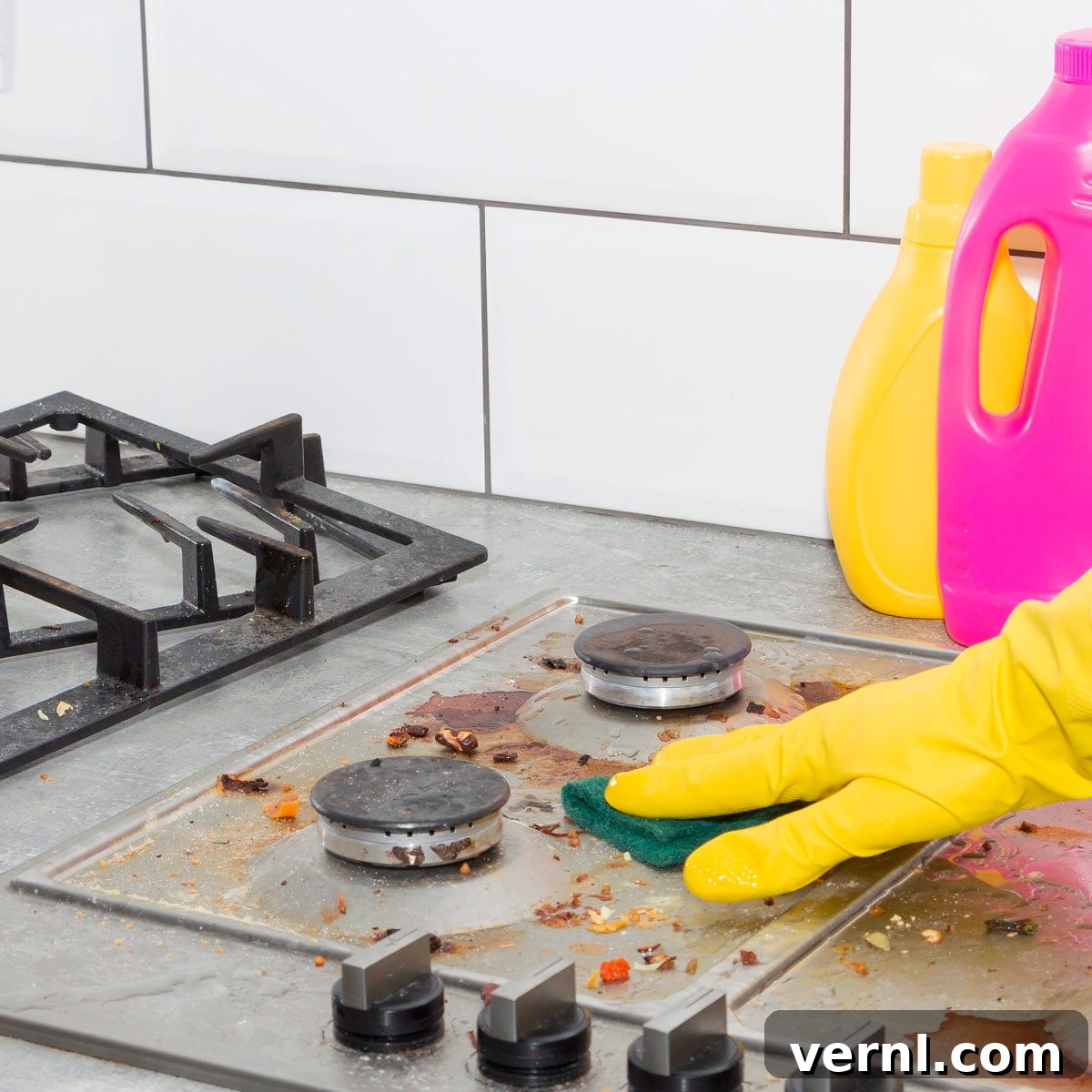
A clean kitchen is often considered the heart of a home, and at its center lies the stove top. Yet, keeping a gas stove top sparkling clean can feel like a relentless battle. Spills, splatters, and scorched food are inevitable, leaving behind a stubborn mixture of grease and grime that seems to bond permanently to your grates and burner areas. Before you know it, what started as a small spill can evolve into a significant, unsightly mess.
This comprehensive guide will equip you with effective, natural cleaning methods to tackle everything from daily grease to baked-on food, ensuring your gas stove top remains spotless and safe. We’ll delve into two powerful, eco-friendly approaches using everyday household staples: vinegar for routine maintenance and baking soda for a deep, transformative clean. By following these simple yet highly effective strategies, you can transform your cleaning routine from a dreaded chore into a satisfying, manageable task.
Follow these 11 tips for a clean kitchen.
Why a Clean Gas Stove Top is More Than Just About Aesthetics
While a gleaming stove top undoubtedly enhances the appearance of your kitchen, the benefits of regular cleaning extend far beyond visual appeal. A dirty gas stove top isn’t just an eyesore; it can pose significant health and safety risks. According to cleaning experts like The Maids, a nationwide home-cleaning service, accumulated grease and food particles on a gas stove top can become a serious fire hazard. Grease is highly flammable, and excessive build-up near open flames can easily ignite, leading to dangerous kitchen fires. Additionally, blocked burner ports due to grime can result in inefficient burning, wasted gas, and even the production of carbon monoxide.
Beyond the immediate safety concerns, a dirty stove top is also a breeding ground for bacteria. Food particles left on the surface can harbor germs, potentially leading to food contamination, especially in a busy kitchen environment. Regular cleaning not only eliminates these health risks but also helps maintain the efficiency and longevity of your appliance. Burners perform better when unobstructed, and the overall lifespan of your stove can be extended with consistent care. Investing a little time in daily and periodic deep cleaning protects your family, preserves your appliance, and keeps your kitchen a hygienic and inviting space.
The Maids emphasize the importance of consistent effort, noting on their website: “Whatever natural cleaning method you choose, daily maintenance is the sure-fire way to never spend more time than you need to cleaning your gas stove top.” This advice highlights that prevention and consistent minor effort are key to avoiding extensive, time-consuming deep cleaning sessions.
Try these gas stove burner repair tips before making a service call.
Your Essential Arsenal for Gas Stove Top Cleaning
Before diving into the cleaning process, gather your supplies. The beauty of these methods lies in their simplicity and reliance on readily available, natural ingredients. You likely already have most of these items in your pantry, making them not only effective but also budget-friendly and environmentally conscious. Opting for natural cleaners significantly reduces your exposure to harsh chemicals and makes your kitchen a safer place for food preparation.
What You’ll Need to Clean Your Stove Top:
- Baking Soda: A mild abrasive that excels at lifting tough grease and scorched food, neutralizing odors.
- Dishwashing Detergent: Essential for breaking down stubborn grease and grime, especially on grates.
- Vinegar (White Distilled): An acidic cleaner that cuts through grease, dissolves mineral deposits, and acts as a natural disinfectant.
- Scrub Brush: A sturdy brush with durable bristles is crucial for tackling baked-on residue without scratching surfaces.
- Microfiber Cloths: Excellent for streak-free wiping, absorbing spills, and polishing surfaces. Have several on hand.
- Spray Bottle: Ideal for evenly applying vinegar or a diluted cleaning solution.
- Warm Water: Used for rinsing and creating cleaning solutions.
- Rubber Gloves (Optional but Recommended): To protect your hands from cleaning agents and grime.
Having these tools ready before you begin will streamline the cleaning process and ensure you have everything you need to achieve a sparkling clean gas stove top efficiently.
Method 1: The Vinegar Cleaning Method for Daily Maintenance
The vinegar method is your go-to solution for everyday spills, light grease build-up, and maintaining a consistently clean gas stove top. Its acidic properties make it excellent for dissolving fresh grease and grime, preventing it from accumulating into more stubborn messes. This approach is quick, requires minimal effort, and is perfect for post-meal wipe-downs.
Steps for the Vinegar Stove Top Cleaning Method:
- Ensure the Stove is Cool: Always make sure your gas stove top and grates have completely cooled down before you begin cleaning. Attempting to clean a hot surface is not only ineffective but also dangerous.
- Remove Grates (Optional for Light Cleaning): For a quick daily wipe-down, you might leave the grates in place. However, for a slightly more thorough clean, carefully lift off the stove grates and set them aside. This allows better access to the main stove surface.
- Prepare Your Solution: Fill a spray bottle with undiluted white distilled vinegar. For an added boost, especially if dealing with slightly more stubborn, yet still fresh, grease, you can add a few drops of dishwashing detergent to the vinegar in the spray bottle. Gently shake to mix.
- Spray Thoroughly: Liberally spray the entire surface of your gas stove top, including the burner caps (if removable and not electrical), and the grates with the vinegar solution. Focus on areas with visible grease splatters or food residue.
- Allow to Dwell: Let the vinegar solution sit and penetrate the grime for approximately 10 to 15 minutes. This dwell time is crucial as it allows the acid in the vinegar to break down the grease and loosen any dried food particles, making them easier to wipe away.
- Wipe Away Grime: Using a clean, soft microfiber cloth, firmly wipe down the grates and the stove top surface. You should notice the grease and grime dissolving and lifting away easily. For any slightly more stubborn spots, a gentle scrub with the cloth should suffice. Rinse your cloth frequently in warm water to avoid spreading grime.
- Buff Dry: After cleaning, wipe the entire surface with a fresh, dry microfiber cloth. This will prevent water spots and leave your stove top sparkling and streak-free.
- Reassemble: Once everything is dry, carefully place the grates and burner caps back onto the stove top.
This process works best for regular maintenance, preventing grease and grime from becoming deeply embedded. Making it a habit after dinner can save you significant time and effort in the long run.
Never clean these seven things with vinegar.
Method 2: The Baking Soda Cleaning Method for Deep Cleaning and Stubborn Stains
When faced with caked-on food, heavy grease, and tough, baked-on stains, the baking soda method is your ultimate weapon. Baking soda is a miracle worker in the kitchen, offering a gentle abrasive quality that can scrub away grime without scratching, while also absorbing odors. This method is ideal for a weekly or bi-weekly deep clean, or whenever your stove top requires a more intensive treatment.
Steps for the Baking Soda Stove Top Cleaning Method:
- Prepare and Disassemble: Ensure your stove top is completely cool. Carefully remove all stove grates and burner caps. Place them in your kitchen sink or a large basin.
- Initial Soak for Grates: Fill the sink or basin with lukewarm water and add a generous amount of dishwashing detergent. Submerge the grates and burner caps in this soapy water. Let them soak for at least 15-30 minutes, or even longer for extremely stubborn grease. This initial soak will begin to loosen greasy residue, making the baking soda more effective.
- Create the Baking Soda Paste: While the grates are soaking, prepare your baking soda paste. In a bowl, mix baking soda with a small amount of water. Add water gradually, stirring until you achieve a thick, spreadable paste – think toothpaste consistency. You want it thick enough to cling to surfaces without being too runny.
- Apply Paste to Grates and Burner Caps: After their initial soak, remove the grates and burner caps from the soapy water (no need to rinse yet). Coat them thoroughly with the baking soda paste. Ensure all greasy and caked-on areas are well-covered.
- Apply Paste to Stove Top Surface: Now, apply the baking soda paste directly to the main stove top surface. Focus on areas with spills, stains, and grease build-up. For very tough spots, you can apply a thicker layer.
- Let It Work Its Magic: Allow the baking soda paste to sit on the grates, burner caps, and stove top for at least 20 minutes. For exceptionally stubborn, baked-on messes, extend this dwell time to several hours or even overnight. The baking soda needs time to penetrate and break down the grime.
- Scrub Away Residue: After the dwell time, use a scrub brush (or an old toothbrush for intricate areas like burner ports) to vigorously scrub the grates, burner caps, and stove top. The baking soda will act as a gentle abrasive, helping to lift and remove the loosened grime. You’ll see the baked-on food and grease start to come off.
- Rinse Thoroughly: Rinse the grates and burner caps under warm running water until all baking soda residue and grime are gone. For the stove top, use a clean, damp cloth to wipe away all the paste and loosened dirt. Rinse your cloth frequently. You may need several passes to ensure all residue is removed.
- Dry and Reassemble: It is crucial to thoroughly dry all components before reassembly. Use a clean, dry cloth for the stove top and grates. Ensure burner caps and grates are completely dry to prevent rust and ensure proper functioning of your burners. Once dry, carefully place them back onto your stove.
For an extra boost when dealing with incredibly tough stains, after applying the baking soda paste to the stove top, you can lightly spray vinegar over it. This will create a fizzing reaction, which helps to further lift and loosen grime. Just be mindful of the bubbling and follow up with scrubbing after the reaction subsides.
Try these 14 clever uses for baking soda.
Important Safety Considerations When Cleaning Your Stove Top
While natural cleaners like baking soda and vinegar are generally safe, proper precautions are always necessary when cleaning kitchen appliances, especially gas stove tops. The Maids offer a crucial safety note to consider, particularly if you choose to use chemical cleaners:
“If the electric starters (which sit on top of the stove under and to the side of the burner) get wet with any chemical it will fire constantly until the chemical is completely dissolved. Lighting the burner and letting it burn in most cases will not remove the overspray. Many times it takes either letting it fire constantly for 24 to 48 hours or replacing the starter. Use caution and avoid getting the electric starter wet.”
General Safety Guidelines:
- Always Ensure Stove is Cool: Never clean a hot stove top. Allow ample time for all components to cool down completely to prevent burns and accidental ignition.
- Disconnect Power/Gas (If Deep Cleaning): For very intensive cleaning or if you need to remove more components, consider unplugging the stove from its electrical outlet or turning off the gas supply for an added layer of safety.
- Protect Electrical Components: As highlighted by The Maids, great care must be taken to prevent water or cleaning solutions from entering the electric ignition ports or touching the electric starters. These are sensitive components. If they get wet, they may malfunction, leading to continuous sparking or preventing ignition altogether. Use a damp, not soaking wet, cloth around these areas.
- Ensure Good Ventilation: Even natural cleaners can create fumes. Open windows or turn on your range hood to ensure adequate ventilation while cleaning.
- Wear Gloves: Protect your hands from grime and cleaning agents, even natural ones, by wearing rubber gloves.
- Avoid Abrasive Scouring Pads on Sensitive Surfaces: While a scrub brush is good for grates, avoid harsh metallic scouring pads on stainless steel or enamel surfaces, as they can cause scratches.
- Rinse Thoroughly: Ensure all cleaning solution residue is completely rinsed off the stove top and grates. Leftover residue can attract more dirt, create discoloration, or even cause a burning smell when the stove is next used.
- Dry Completely: Always dry all components thoroughly before reassembling and using the stove. This prevents rust on metal parts and ensures electrical components are safe to operate.
These 20 common household cleaning products should never be mixed.
This is the best way to clean a glass stove top.
Beyond Cleaning: Preventing Future Messes
The best way to keep your gas stove top clean is to prevent extensive build-up in the first place. Incorporating a few simple habits into your cooking routine can drastically reduce the need for laborious deep cleaning sessions:
- Immediate Wipe-Downs: The golden rule of kitchen cleanliness. As soon as a spill or splatter occurs, and the stove has cooled sufficiently, wipe it up immediately. Fresh spills are much easier to remove than dried, caked-on ones.
- Use Splatter Guards: When frying or cooking sauces that tend to splatter, use a mesh splatter screen over your pans. This simple tool can contain most of the grease and food particles, keeping them off your stove top.
- Cover Pots and Pans: Covering your pots and pans with lids while cooking helps contain splashes and steam, which often carry grease particles that settle on the stove top.
- Regular Light Cleaning: Implement the vinegar method as part of your daily or every-other-day kitchen cleanup routine. A quick spray and wipe can prevent minor grease accumulation from becoming a major problem.
- Protect Your Stove Surface: Some people use stove top liners (especially for electric coil stoves, but some fit gas stovetops around the burners) or aluminum foil to catch drips and spills. Be cautious with these and ensure they do not obstruct burner vents or come into direct contact with flames, as this can be a safety hazard. Always prioritize safety over convenience.
- Pre-Treat Stubborn Spots: If you notice a particularly stubborn spill after cooking, apply a little baking soda paste (even a thin layer) to it before it dries completely. Let it sit while you eat, then it will be much easier to wipe away afterward.
By adopting these preventative measures and consistently applying the natural cleaning methods outlined in this guide, you can maintain a remarkably clean and safe gas stove top with minimal effort. A well-maintained stove not only looks better but also functions more efficiently, contributing to a healthier and happier cooking environment for years to come. Embrace these simple habits, and say goodbye to stubborn stove top grime for good!