
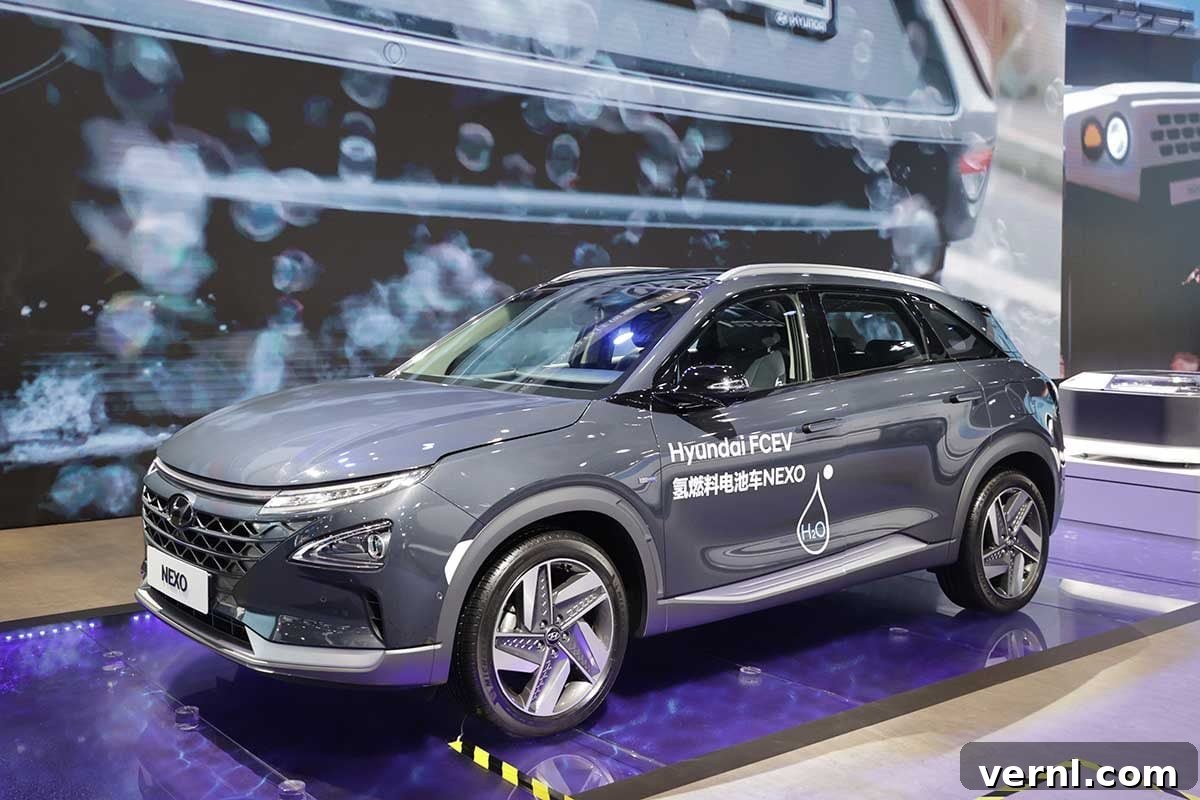
Hyundai Motor America has announced a significant safety recall affecting approximately 1,545 units of its cutting-edge Hyundai Nexo hydrogen fuel cell SUVs. This recall encompasses models manufactured from 2019 through 2024 and is being initiated due to a potential fire hazard. The core of the issue lies in a potential defect within the vehicle’s Thermally-activated Pressure Relief Device (TPRD), a critical safety component designed to manage hydrogen gas pressure. A malfunction in this device could lead to an unexpected and uncontrolled release of hydrogen gas, posing a serious safety risk.
The Hyundai Nexo represents a pioneering step in sustainable automotive technology, offering zero tailpipe emissions and a driving experience powered by clean hydrogen. As with any innovative technology, continuous monitoring and rigorous safety checks are paramount. This recall highlights Hyundai’s proactive approach to vehicle safety, ensuring that even the most advanced systems meet the highest standards of reliability and customer protection. Understanding the implications of this defect and the steps Hyundai is taking is essential for affected vehicle owners and for those following the evolution of alternative fuel vehicles.
Affected Hyundai Nexo Vehicles and the Defective TPRD
The safety recall specifically targets Hyundai Nexo vehicles produced between August 10, 2018, and August 25, 2023. These vehicles are equipped with a glass bulb-type Thermally-activated Pressure Relief Device (TPRD). The TPRD plays an indispensable role in the safety architecture of hydrogen fuel cell vehicles. Its primary function is to act as a crucial safety valve, designed to automatically vent hydrogen gas from the vehicle’s high-pressure fuel tank if the internal pressure exceeds safe limits, typically in scenarios involving extreme heat or over-pressurization. This prevents potential tank rupture and is a cornerstone of the hydrogen storage system’s integrity.
Unfortunately, internal investigations have revealed manufacturing defects in the glass components of these specific TPRDs. These defects can manifest as minuscule microcracks within the glass bulb, which may not be visible during routine inspections. Over time, or under normal operational stress, these latent microcracks can compromise the structural integrity of the TPRD, leading to premature fracturing. Should this occur, hydrogen gas could be inadvertently discharged from the fuel tank during routine vehicle use, rather than only in emergency situations as intended.
The potential for unintended hydrogen release presents a significant safety concern. According to the detailed safety recall report filed with the National Highway Traffic Safety Administration (NHTSA), the risk is particularly elevated when affected vehicles are parked in enclosed spaces. In such environments, leaked hydrogen gas, being highly flammable and lighter than air, could accumulate. This accumulation dramatically increases the potential for the gas to encounter an ignition source, leading to a fire. While Hyundai estimates that only a small percentage, approximately 1% of the recalled vehicles, are likely to exhibit this specific defect, the company is taking comprehensive and proactive measures by recalling all potentially affected Nexo SUVs to ensure the absolute safety of its customers.
The Critical Role of the Thermally-activated Pressure Relief Device (TPRD)
To fully grasp the gravity of this recall, it’s important to understand the technology. Hydrogen fuel cell vehicles like the Nexo store hydrogen gas under very high pressure in robust, specialized tanks. Despite the tanks’ incredible strength, an additional layer of safety is required to manage extreme internal pressures. The TPRD serves as this vital fail-safe, engineered to release hydrogen safely and rapidly if the pressure within the tank becomes excessive. This typically occurs if the tank is exposed to high external temperatures (e.g., from a nearby fire) or if internal pressure rises beyond a safe operating threshold. A compromised TPRD, therefore, undermines a fundamental component of the vehicle’s passive safety system, which is designed to protect occupants and surroundings.
Identifying Warning Signs of a Malfunctioning TPRD or Hydrogen Leak
Owners of the recalled Hyundai Nexo vehicles are urged to be highly vigilant for specific indicators that could signal a malfunctioning TPRD or an active hydrogen leak. Prompt recognition of these signs is critical for safety. Key warning signs to look out for include:
- Unusual Rushing Wind Noise: A distinct and loud rushing wind noise emanating from the rear of the vehicle, which would indicate hydrogen gas escaping under pressure from the tank area.
- Visible Fog-like Cloud: The appearance of a white, fog-like cloud near the rear of the vehicle. Although pure hydrogen gas is invisible, its rapid expansion and cooling upon release can cause water vapor in the surrounding air to condense, creating a visible fog.
- Rapid Fuel Gauge Decrease: An unexpected and swift drop in the vehicle’s fuel gauge readings, signaling a loss of hydrogen from the fuel tank without normal consumption.
- Malfunction Indicator Lamp (MIL) Illumination: The illumination of the malfunction indicator lamp (often depicted as a check engine light) in the instrument cluster, alerting the driver to a detected fault within the vehicle’s systems.
Should any of these warning signs be observed, Hyundai advises owners to immediately and safely stop the vehicle, park it in an open-air location, well away from any structures or ignition sources, and promptly contact Hyundai customer service or their nearest authorized Hyundai dealership for immediate guidance and assistance. Do not continue driving the vehicle if you suspect a hydrogen leak.
Hyundai’s Comprehensive Resolution: A Robust New Design
Hyundai has acted decisively to address this critical safety concern by developing and implementing a robust, permanent remedy. The solution involves replacing the potentially defective glass bulb-type TPRD with an updated and significantly more durable metal-type component. This strategic shift to a metal TPRD directly addresses the manufacturing defect identified in the glass versions, promising enhanced resilience, reliability, and long-term safety for the pressure relief mechanism.
The implementation of this improved metal-type TPRD into the production line began on May 21, 2024, ensuring that all newly manufactured Hyundai Nexo SUVs are equipped with this safer design from the outset. For all affected vehicles already on the road, Hyundai has committed to performing the necessary repairs completely free of charge. This means that regardless of the vehicle’s warranty status, owners will incur no cost for the replacement of the defective TPRD at any authorized Hyundai dealership. This commitment underscores Hyundai’s dedication to ensuring maximum safety and peace of mind for all Nexo owners.
Essential Precautionary Measures for Affected Owners
As a critical precautionary step, Hyundai strongly advises all owners of the affected vehicles to park their Hyundai Nexo SUVs outdoors and at a safe distance from any structures. This includes homes, garages, carports, or any other buildings. This recommendation is vital for minimizing the risk of hydrogen gas accumulation in enclosed spaces should a leak occur prior to the recall repair. Adhering to this safety guideline is paramount for protecting vehicle occupants, property, and the surrounding environment from potential ignition and fire hazards.
Hyundai is diligently working to ensure that all relevant parties are fully informed about this recall. The company plans to notify both its dealership network and all affected vehicle owners by December 10, 2024. Dealerships will receive detailed electronic communications outlining the recall procedures, repair protocols, and parts availability. Vehicle owners will be notified via certified mail, receiving comprehensive instructions, detailed information about the defect, the remedy, and guidance on how to schedule their free repair.
Tracing the Recall’s Origin and Hyundai’s Quality Assurance
The initiation of this recall stems from Hyundai’s robust internal quality monitoring system. Proactive investigations and reports generated through this system flagged potential issues with the TPRD components. The specific parts under scrutiny were supplied by Youngdo Industry, a reputable company based in Busan, South Korea. This collaborative effort between Hyundai’s rigorous internal quality assurance protocols and its supplier network was instrumental in the timely identification and subsequent addressing of this potential safety defect.
Furthermore, demonstrating its unwavering commitment to customer satisfaction and fairness, Hyundai has established a comprehensive reimbursement program. This program is designed to compensate any owners who, prior to this official recall announcement, may have already incurred out-of-pocket expenses for repairs directly related to the now-identified TPRD issue. Owners who believe they qualify for reimbursement are advised to retain all relevant receipts and documentation and contact Hyundai Motor America for detailed instructions on how to submit their claims for review.
Contacting Hyundai for Information and Support
Hyundai Motor America is fully prepared to provide comprehensive support and information to all affected Nexo owners. Owners seeking additional details, clarification, or direct assistance regarding this safety recall are strongly encouraged to contact Hyundai directly. The dedicated customer service line for recall-related inquiries is 800-633-5151. Alternatively, owners can await their official recall notification letter, which will contain all pertinent information specific to their vehicle.
For official tracking and public access to information, this recall has been registered with the National Highway Traffic Safety Administration (NHTSA) under recall number 24V-761. Hyundai’s internal recall identification number for this specific campaign is 269. Owners can reference these numbers when communicating with Hyundai customer service, their dealership, or when checking for recall updates on official automotive safety websites.
The Broader Context: Advancing Hydrogen Fuel Cell Vehicle Safety and Innovation
While any vehicle recall can be a cause for concern, this action also serves as a critical testament to the rigorous safety standards and continuous improvement processes that are fundamental to the automotive industry, especially concerning emerging technologies like hydrogen fuel cell vehicles (HFCVs). HFCVs represent a significant leap towards cleaner, more sustainable transportation, but their unique fuel storage and handling requirements necessitate specialized components, meticulous design, and stringent quality control measures.
Every recall, even for a relatively small number of vehicles, provides invaluable data, lessons learned, and insights that contribute significantly to enhancing the overall safety, reliability, and public acceptance of future vehicle designs. Hyundai, through its transparent and proactive approach to addressing this TPRD defect, is not only safeguarding its current customers but also contributing positively to the broader advancement and public trust in hydrogen as a safe and viable automotive fuel source. The transition to alternative fuel technologies undeniably presents ongoing engineering challenges, but responsible manufacturers like Hyundai are committed to overcoming them to ensure that eco-friendly vehicles are unequivocally safe, reliable, and accessible for all drivers and the environment.
By addressing issues such as the TPRD defect with transparency, efficiency, and a focus on customer well-being, Hyundai reinforces its position as a leader in innovative and responsible automotive manufacturing. This commitment extends beyond mere compliance, aiming to build enduring trust and foster the widespread adoption of sustainable transportation solutions for a greener future.