
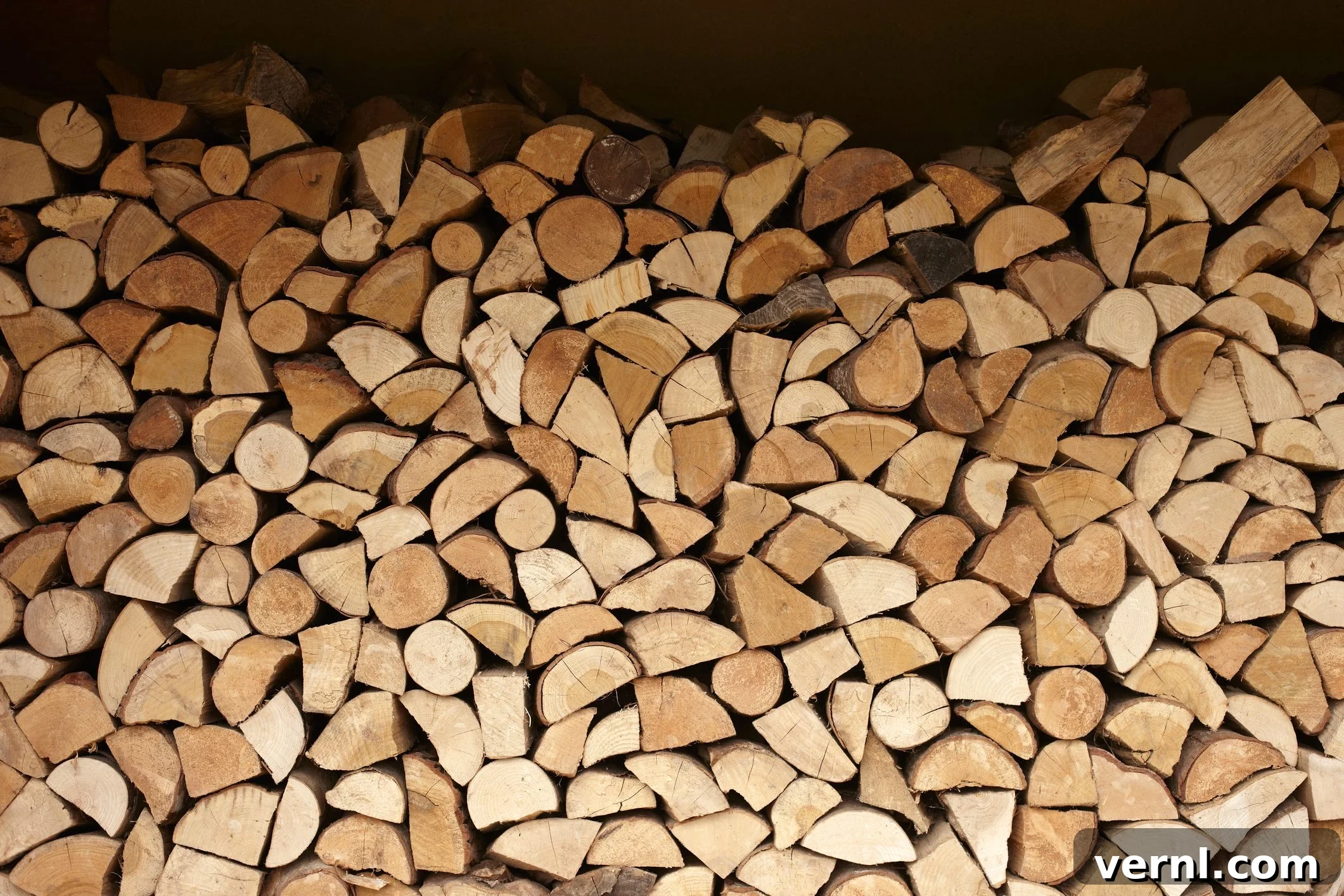
For millions of American households, the comforting crackle and radiant warmth of a wood fire are more than just an aesthetic choice – they are a vital source of heat. According to the latest census data, nearly two percent of U.S. households, representing over 2.5 million homes, rely on wood via fireplaces, efficient wood stoves, or advanced wood boilers for their primary or supplemental heating fuel. This significant reliance underscores the importance of proper planning and preparation, especially when facing the unpredictable chill of winter.
Whether your home is primarily heated by wood, or if you simply cherish the occasional glow of an indoor or outdoor fireplace for ambiance and extra warmth, having an adequate supply of firewood is absolutely crucial. Misjudging your needs can lead to uncomfortable cold spells, last-minute rushes for firewood deliveries, and potential frustration. Calculating precisely how much firewood you need to buy and meticulously store for the entire heating season is the key to ensuring uninterrupted warmth and coziness from the first frost to the spring thaw.
The question then becomes: how do you accurately assess your winter firewood requirements? It’s not just about guessing; it involves considering several critical factors that influence your consumption. Understanding these elements will empower you to make informed decisions, secure your fuel supply efficiently, and enjoy the true benefits of wood heating. Read on to uncover the essential insights into determining exactly how much firewood you’ll need this season, ensuring a comfortable and well-prepared home.
Understanding Your Heating Demands: Starting with the Average Outdoor Temperature
The most fundamental factor in calculating your annual firewood needs is the severity and duration of the heating season in your specific geographic location. Across the U.S., the period requiring heating generally extends from early October through the end of April, but this can vary significantly. Residents in northern states or higher altitudes will undoubtedly face longer and colder winters compared to those in the Sun Belt or coastal regions.
International health organizations, including the World Health Organization, alongside the U.S. Department of Energy, consistently recommend maintaining winter thermostat settings within a comfortable and energy-efficient range, typically between 64 and 68 degrees Fahrenheit (18 to 20 degrees Celsius). When external temperatures drop to a point where your home cannot maintain this desired indoor comfort without additional heat, that’s your signal. It’s time to light the fire and let the wood heat begin its work.
Logically, regions experiencing more frigid winters, characterized by lower average temperatures and prolonged cold spells, will necessitate a substantially greater volume of firewood. Conversely, areas with milder winters, where temperatures rarely plummet below freezing for extended periods, will require less. Consider your local climate’s historical data, average seasonal temperatures, and even microclimates around your home (e.g., homes in valleys or on exposed hillsides) when making your initial assessment. A longer, harsher winter means more burning days and, consequently, more fuel to keep your living spaces consistently warm. This initial assessment of your local climate provides the foundational layer upon which all other calculations will be built.
Defining Your Heating Strategy: Usage Patterns and Other Heat Sources
Beyond the external temperature, your personal heating strategy and lifestyle choices play a pivotal role in determining your firewood consumption. Are you aiming to heat your entire home exclusively with wood throughout the winter, striving for energy independence and significant savings on conventional fuels? Or do you simply envision the occasional, cheerful blaze in the living room hearth, perhaps for special occasions or just to take the chill off a crisp evening? The difference in firewood requirements between these two scenarios is vast, representing a broad spectrum of usage patterns. Many homeowners find themselves somewhere in between, using wood heat as a flexible and effective supplement to their primary heating system.
Perhaps your wood-burning fireplace or stove allows you to turn down your central furnace for extended periods, effectively practicing zone heating by warming only the rooms you’re actively using. This can significantly reduce your overall energy bills. Alternatively, you might use efficient space heaters in conjunction with a wood fire to target specific areas of your home. Understanding this hybrid approach is crucial for an accurate firewood estimate.
Russ Dimmit, Director of Education for the prestigious Chimney Safety Institute of America, offers clear guidance on this. “If you’re using your wood-burning appliance as your primary heat source, you might expect to use between three and six cords of wood in a season, depending on where you’re located and the efficiency of your appliance,” he advises. This range accounts for variables like home insulation, stove efficiency, and regional climate severity.
However, if your heating appliance primarily serves an aesthetic or supplemental purpose – providing ambiance here and there, warming a single room, or perhaps fueling a backyard fire pit – your needs will be significantly less. Dimmit clarifies, “If you’re only using your heating appliance for ambiance here and there, you’ll likely go through a cord or less in a season.” This distinction between primary and recreational use is vital for an accurate assessment of your firewood supply. Consider how often you anticipate lighting a fire, the duration of each burn, and whether it’s for practical heating or simply for enjoyment.
Quantifying Warmth: Calculating Room or Home Size
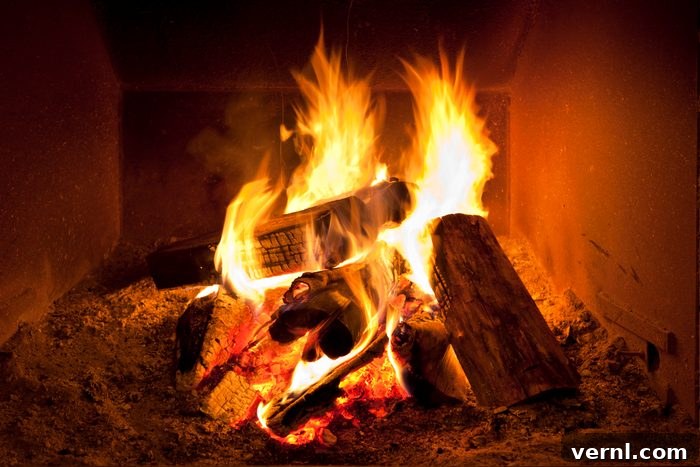
The physical dimensions of your living space are another key determinant in calculating your home heating needs. Larger homes and open-concept living spaces naturally require more energy to heat compared to smaller, more compartmentalized dwellings. Eric Carlson, Executive Director of the West Virginia Forestry Association, provides a practical formula to help homeowners estimate their wood supply. “In northern climates like Maine, two to three cords per 1,000 sq. ft. is a good rule of thumb for primary heating,” he states.
Let’s apply this rule: a 1,500-square-foot house situated in chilly New England would reasonably require between four and five cords of wood to maintain comfortable temperatures throughout the winter season. This estimate factors in the typically harsh winters and longer heating periods characteristic of that region. As you move farther south, the demand for heating diminishes proportionally. Carlson notes that a home of the same size in a milder climate like West Virginia would typically require 25 to 50 percent less firewood, reflecting the shorter and less severe cold spells.
Beyond square footage, consider the specifics of your home’s construction and layout. Smaller, well-insulated rooms, for instance, tend to warm up much more quickly and retain heat more effectively than larger, more expansive areas or open-concept living spaces. High ceilings can also increase the volume of air that needs to be heated, impacting your fuel consumption. Furthermore, the overall energy efficiency of your home plays a crucial role. Regardless of room size or climate, maintaining a tightly sealed thermal envelope is paramount for maximizing the efficiency of your wood heating. Always ensure that your windows are properly sealed for the winter, and check for any drafts around doors, outlets, or other penetrations. Preventing warm air from escaping and cold air from infiltrating your home will drastically reduce the amount of firewood needed to achieve and maintain your desired indoor temperature. Investing in good insulation and sealing can make your firewood go much further.
Optimizing Your Burn: Factoring in Firewood Type
Not all firewood is created equal, and the type of wood you choose dramatically influences its burning efficiency and heat output. For optimal heating performance and a cleaner burn, using the best firewood for heating is paramount. Understanding the differences between wood species, especially hardwoods versus softwoods, is a critical step in managing your winter fuel supply effectively.
Codey Stout of Tree Triage emphasizes that hardwoods burn slower and hotter than softwoods, making them by far the superior choice for interior home heating. Hardwoods, like oak, maple, and hickory, are denser, meaning a single log contains more combustible material and thus releases more BTUs (British Thermal Units) of heat over a longer period. This results in fewer trips to the woodpile and more sustained warmth.
Softwoods, such as pine, cedar, and fir, grow faster and tend to season, or dry out, more quickly. This often makes them less expensive and more readily available. However, for serious home heating, there’s simply no comparison in terms of efficiency. Softwoods burn rapidly, produce less heat per log, and generate more creosote buildup in chimneys, posing a potential fire hazard. While they might be cheaper upfront, you’ll burn through them much faster, potentially negating any cost savings and requiring more frequent chimney cleaning.
Regardless of whether you choose hardwood or softwood, ensuring your firewood is properly seasoned is crucial. “Seasoned” wood refers to wood that has been dried sufficiently, either naturally over time (air-dried) or through an accelerated process (kiln-dried), to reduce its moisture content. Kiln-dried wood, typically dried to a moisture content below 20%, offers several advantages: it lights easier, burns hotter, and lasts longer than traditionally seasoned wood. However, this premium product usually costs about 10 to 30 percent more. Advocates argue that the increased energy efficiency, reduced creosote production, and ease of use often recoup the additional upfront cost over a heating season. Unseasoned or “green” wood, conversely, burns poorly, produces excessive smoke, and yields very little heat.
For your primary home heating needs, prioritize hardwoods like beech, hickory, oak, and maple. These species are known for their high BTU content, long burn times, and consistent heat production. They provide the most efficient and reliable warmth for your indoor spaces. If your goal is simply atmosphere, while softwood might be tempting due to its lower cost, it’s still advisable to stick with hardwood for indoor fires. Softwood emits more resin and sap, which can quickly gunk up a wood stove or chimney flue with creosote, and it produces significantly more smoke than hardwood. This can lead to decreased efficiency and increased maintenance.
For your backyard burning needs, such as a fire pit or outdoor fireplace, a mix of soft- and hardwood can work well. Softwood makes excellent kindling, catching fire quickly, and many conifers offer a pleasant, aromatic smell. Just be mindful of sitting distance, as softwoods tend to pop and emit more sparks, requiring a safer buffer zone around the fire. Understanding and selecting the right firewood type is a strategic decision that impacts not just your warmth, but also the longevity of your heating appliance and the safety of your home.
Finalizing Your Firewood Amount: A Practical Guide
Bringing all these factors together – your local climate, your heating philosophy, your home’s size, and your preferred firewood type – will lead you to a much more accurate estimate of your winter firewood needs. Once you’ve made your calculations, it’s always a good idea to discuss your expectations with your firewood supplier. They often have local knowledge and can help verify your firewood measurements and calculations, ensuring you get exactly what you need in terms of volume and quality. Here’s a general guide to help you finalize your ordering decision:
If you primarily use firewood to heat your home:
- In a Northern or chilly Midwest climate: For homes in regions with long, severe winters, estimate approximately two to three cords of quality hardwood per 1,000 square feet of living space. So, a 2,000 sq. ft. home might require 4-6 cords for a full season. This accounts for sustained, daily use to maintain comfortable indoor temperatures during prolonged cold spells.
- In a milder climate such as the Mid-Atlantic or Southeast: For homes in areas with shorter, less intense winters, estimate one to two cords of hardwood per 1,000 square feet. A 2,000 sq. ft. home might need 2-4 cords, reflecting the fewer days of extreme cold and potentially higher average winter temperatures.
If you use firewood for recreational fires or supplemental heating:
- For occasional indoor fires: If you enjoy the ambiance of a fireplace once a week or so, perhaps on weekends or during special gatherings, a half-cord of mixed hardwood or a cord of dense hardwood should be more than enough to last you through the entire winter season. This provides a generous supply for those cozy, intermittent fires without over-stocking.
- For outdoor fires about once a week: Wood burns considerably faster in open-air conditions due to constant air exposure and lack of an enclosed combustion chamber. For regular outdoor gatherings around a fire pit or outdoor fireplace, you may want to order a full cord of mixed wood. This ensures you have plenty of fuel for enjoyable evenings under the stars, even if some of it is softwood for easy starting and aroma.
When in doubt, and especially if you have ample space to store your wood, it is generally better to err on the side of caution and order slightly more firewood than you initially think you’ll need. Properly stored firewood can remain viable and effective for several years without significant degradation. To maximize its longevity and maintain its burning quality, store firewood off the ground on a pallet or rack, neatly stacked in a dry, well-ventilated place, ideally covered with a tarp or a purpose-built woodshed. This protects it from rain and snow while allowing air to circulate. Any excess logs you have at the end of the season will be perfectly ready for tossing onto the fire next winter, ensuring your preparedness for years to come.
On the other hand, if you consider yourself a casual fire-builder, someone who simply enjoys the occasional blaze and doesn’t rely on wood for primary heating, running out of wood should not be a major inconvenience. In such cases, it’s usually quite easy to go buy a little more from local retailers or smaller suppliers as needed, avoiding the commitment of a large bulk purchase.
By carefully assessing these variables and utilizing the provided guidelines, you can confidently determine your ideal firewood supply. This proactive approach will not only save you time and potential stress during the colder months but also ensure a consistently warm, inviting home throughout the winter season. Enjoy the reliable comfort and timeless appeal of a wood-heated home, knowing you’re well-stocked and prepared.