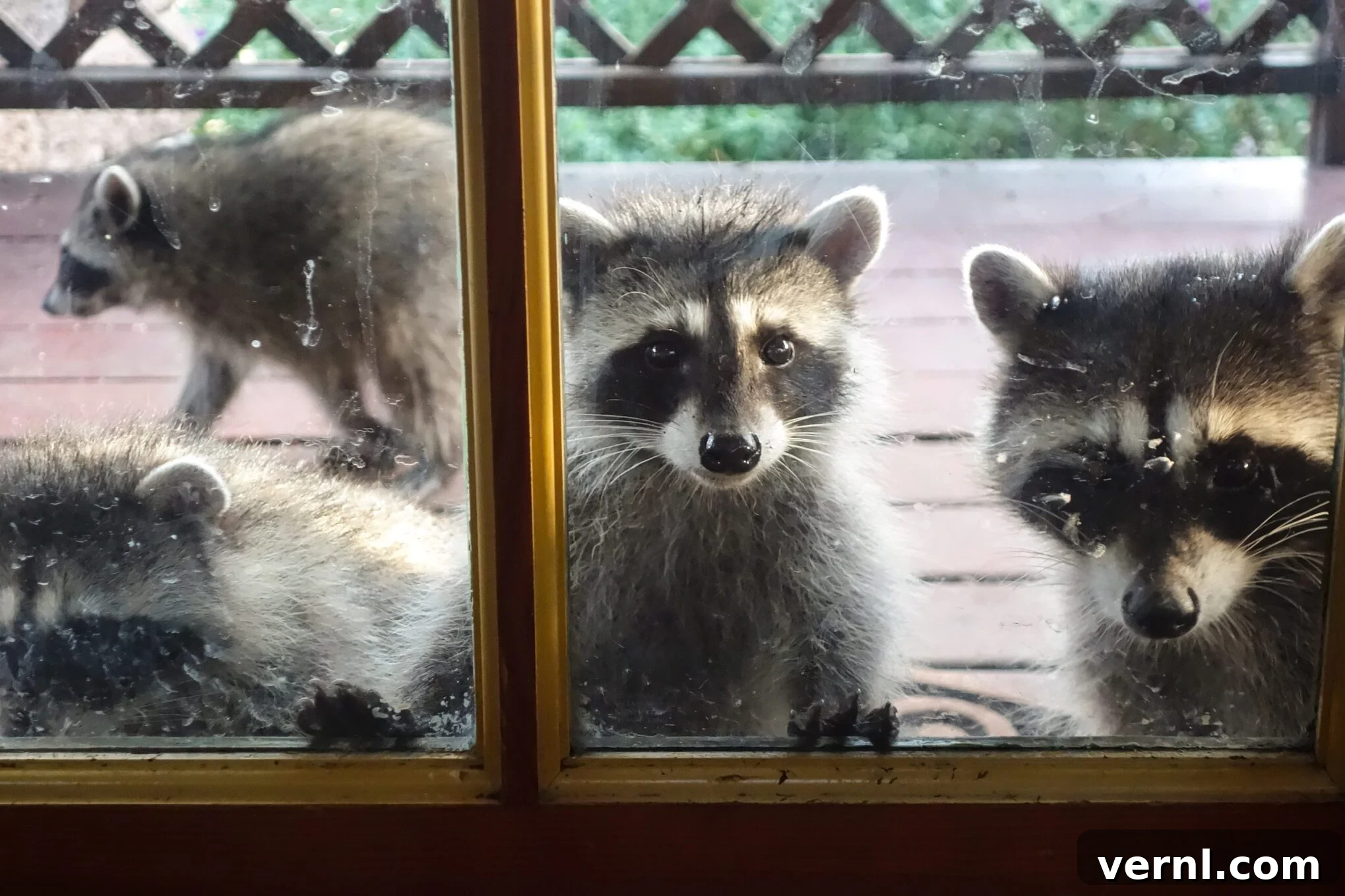
Raccoon Rampage: The Shocking Story of a Poulsbo Woman’s Unexpected Wildlife Invasion
Imagine returning home, not to the comfort of your own dwelling, but to an unnerving spectacle reminiscent of a horror film. This was the startling reality for a woman in Poulsbo, Washington, who last week found her property overrun by an astonishing number of raccoons. Far from a charming woodland encounter, this was a full-scale “raccoon invasion,” with dozens, perhaps even hundreds, of these masked bandits surrounding her house, demanding sustenance and effectively barring her entry. It was a scene so bizarre that it prompted an immediate call to local law enforcement, initiating a wildlife standoff unlike any other.
Upon arrival, Kitsap County Sheriff’s deputies were met with a sight that defied belief. “They were shocked,” recounted Kevin McCarty, a spokesperson for the Kitsap County Sheriff, in an interview with King 5 News in Seattle. “They had never seen that many raccoons in one place. Nobody ever remembers being surrounded by a swarm of raccoons. This was a first.” The sheer scale of the gathering – estimated to be well over 100 raccoons – created an intimidating barrier, turning the homeowner’s serene residence into an unexpected fortress under siege by a furry, demanding army.
As of recent reports, a definitive solution to this unprecedented wildlife conundrum remains elusive. The homeowner reached out to a private animal trapping organization, only to be quoted a staggering $500 per raccoon – a cost that quickly escalated into tens of thousands of dollars, making it an unfeasible option. Subsequently, sheriff’s deputies recommended contacting the Washington Department of Fish and Wildlife, the primary authority for such large-scale wildlife issues. The process of finding a humane and effective resolution is still underway, highlighting the complexities of managing human-wildlife conflicts, especially when decades of interaction have led to such an extreme outcome.
On Patrol: Raccoon Invasion pic.twitter.com/5pAUE761Nk
— Kitsap Sheriff (@KitsapCoSheriff) October 7, 2024
Unraveling the Mystery: How Did This Raccoon Invasion Happen?
While the immediate challenge lies in dispersing the persistent raccoon population, the underlying cause of this extraordinary event is remarkably clear. The woman at the center of this “hostile takeover” by the local raccoon community had been feeding these wild animals for an astonishing 35 years. She candidly informed authorities that she had recently observed a significant and alarming increase in the number of raccoons congregating around her Poulsbo home, often waiting patiently – or impatiently – for their next meal throughout all hours of the day and night. This long-standing practice inadvertently created an artificial feeding station, leading to an unnatural surge in the local raccoon population.
The impact of this consistent food source wasn’t confined to the homeowner’s property alone. Neighbors in the area also reported a noticeable rise in raccoon activity during this period. One resident shared a concerning incident with a local news outlet, describing how her dog required veterinary attention after an unpleasant scuffle with one of these increasingly bold and hungry visitors from the nearby wilderness. Such encounters underscore the heightened risks that arise when wild animals lose their natural fear of humans and become dependent on readily available food sources.
It goes without saying that this situation, while extreme, is not entirely unpredictable. From a wildlife management perspective, the adage “don’t feed wild animals” exists for very good reasons. While raccoons possess an undeniable charm with their dexterous paws and curious masks, their wild instincts remain. Once animals discover a consistent and easily accessible food source, they will return repeatedly, often bringing their offspring and attracting others from the surrounding area. What begins as an innocent act of kindness can quickly escalate into an overwhelming problem, turning a backyard into a de facto cafeteria for local wildlife. Over three decades of such provisioning effectively supersized the problem, transforming what might have been a handful of nocturnal visitors into a formidable, almost riotous assembly outside a residential home.
The Dangers of Feeding Wild Animals: A Critical Perspective
The Poulsbo raccoon incident serves as a stark reminder of the intricate balance between human civilization and the natural world, and the potential pitfalls of disrupting that balance. Feeding wild animals, even with the best intentions, has profound and often detrimental consequences for both the animals and human communities. It fosters an unhealthy dependency, where animals lose their natural foraging instincts and skills, becoming reliant on human handouts. This dependency can lead to malnutrition if the provided food is not nutritionally appropriate, or if the human source suddenly ceases feeding.
Furthermore, congregating large numbers of animals in one area for food increases the likelihood of disease transmission. Raccoons, for instance, are known carriers of various pathogens, including rabies, raccoon roundworm, and leptospirosis, all of which can be transmitted to humans and pets. Rabies, a viral disease that attacks the central nervous system, is almost always fatal once symptoms appear. Raccoon roundworm can cause severe neurological damage in humans. By attracting and concentrating these animals, individuals inadvertently create hotspots for disease spread, posing a significant public health risk.
Beyond health concerns, habituated raccoons can become aggressive. When their accustomed food source is delayed or interrupted, they may exhibit boldness or even aggression towards humans and pets, as evidenced by the neighbor’s dog incident. They also become less fearful of residential areas, leading to property damage as they seek shelter and food. This can include raiding trash cans, damaging gardens, and even attempting to enter homes through chimneys, attics, or crawl spaces, causing structural damage and contamination. The charming “masked bandit” quickly transforms into a persistent and destructive pest, underscoring the vital importance of maintaining a respectful distance and allowing wild animals to remain wild.
Effective Strategies: How to Keep Raccoons and Other Wildlife Pests Away From Your Home
While undoubtedly cute and fascinating to observe from afar, raccoons can quickly become a significant nuisance and a potential hazard when they decide to take up residence – or frequent visits – around your home. Their foraging habits can devastate gardens, overturn trash bins, and attract other pests. More concerningly, their ability to squeeze into tight spaces allows them access to garages, attics, and chimneys, where they can build nests, cause structural damage, and contaminate areas with their droppings. As carriers of diseases like rabies, roundworm, and leptospirosis, close contact with raccoons poses a serious health risk to both humans and pets. Therefore, the most effective approach is prevention – discouraging them from making your property a regular stop.
The best way to deter raccoons and other wildlife is to eliminate anything that might attract them to your property in the first place. Here are comprehensive strategies you can implement to prevent them from becoming an unwelcome problem:
1. Never Feed Wild Animals
- A Golden Rule: This cannot be stressed enough, especially after the Poulsbo incident. Directly feeding raccoons or leaving out food for them is an open invitation for them to return, multiply, and become dependent. It alters their natural behavior, leading to loss of fear, increased aggression, and potential overpopulation.
- Indirect Feeding: Be mindful of indirect food sources. This includes fallen fruit from trees, pet food bowls left outdoors, and bird feeders. Keep pet food indoors, especially overnight. Clean up any fallen fruit promptly. Consider using “raccoon-proof” bird feeders or bringing them in at dusk.
2. Secure Your Trash and Compost
- Tight Lids are Key: Raccoons are incredibly clever and strong. Standard trash can lids are no match for their cunning paws. Invest in sturdy garbage cans with secure, locking lids or latches.
- Timing is Everything: Avoid placing trash cans at the curb until the morning of trash collection day. The less time they sit out, the less opportunity raccoons have to investigate.
- Garage Storage: Whenever possible, store trash cans inside a garage, shed, or other secure enclosure.
- Compost Bin Protection: Cover compost bins completely and ensure they are well-sealed. Position them as far away from your house as possible. Avoid adding meat or dairy products to compost, as these are highly attractive to raccoons and other scavengers.
3. Protect Your Garden and Yard
- Fencing and Cages: For vegetable gardens, consider installing sturdy fences that are at least 3-4 feet high and ideally extend a few inches underground to prevent digging. Crop cages or netting can also protect specific plants.
- Clear Away Debris: Raccoons are opportunistic and will use brush piles, woodpiles, and overgrown vegetation as shelter or den sites. Keep your yard tidy and remove potential hiding spots.
- Secure Water Sources: While not as common, a leaky outdoor faucet or pet water bowl can be an attractant during dry spells.
4. Seal Entry Points to Your Home
- Chimney Caps and Vent Covers: Raccoons frequently seek shelter in attics and chimneys. Install sturdy metal chimney caps and secure covers over all attic and dryer vents to prevent entry.
- Inspect Your Home’s Exterior: Regularly check your roof, eaves, siding, and foundation for any holes, cracks, or loose panels that could provide an entry point. Raccoons can fit through surprisingly small openings. Repair any damage promptly.
- Secure Outbuildings: Ensure sheds, doghouses, and other outbuildings are also properly secured and do not offer easy access or shelter.
5. Utilize Deterrents
- Repellent Sprays: Some homeowners find success with natural deterrents. A popular homemade option is a mixture of cayenne pepper diluted in a gallon of water, sprayed around the perimeter of your garden or other areas you wish to protect. Commercial animal repellents are also available, often containing ingredients like capsaicin or predator urine (though the latter’s effectiveness can vary). Always follow product instructions carefully.
- Motion-Activated Lights: Raccoons are nocturnal and are often startled by sudden light. Motion-activated lights are not only a home security essential for deterring human intruders but also highly effective at scaring away wildlife, including raccoons, when they approach your property at night.
- Loud Noises: If you spot raccoons loitering or attempting to access your property, making loud noises – like banging pots and pans, clapping loudly, or using an air horn – can often scare them away. Consistency is key to reinforcing that your property is not a safe or desirable place for them.
- Sonic Deterrents: Electronic devices that emit high-frequency sounds, often in response to motion, are marketed as wildlife deterrents. Their effectiveness can be debated, and animals may become accustomed to them over time.
6. When to Call a Professional
If raccoons have already gained entry into your house, attic, or chimney, or if you’re facing a persistent and large-scale invasion like the one in Poulsbo, it is crucial to call a professional wildlife control specialist. These experts have the knowledge, equipment, and permits to safely and humanely trap and remove raccoons, and to help identify and seal all potential entry points. Attempting to trap or remove raccoons yourself without proper training can be dangerous and is often illegal without the necessary permits.
Conclusion: Living Responsibly Alongside Urban Wildlife
The extraordinary event in Poulsbo serves as a vivid cautionary tale, underscoring the critical importance of responsible wildlife management and discouraging direct human feeding of wild animals. While the immediate impulse might be to help, feeding wildlife disrupts natural behaviors, leads to dependency, increases population densities, and significantly elevates the risks of disease transmission and aggressive encounters. The transformation of a single, well-intentioned act into a full-blown “raccoon invasion” highlights the cumulative impact of such practices over time.
By understanding the dangers and implementing preventative measures, homeowners can protect both their property and the health of local wildlife. Securing food sources, fortifying entry points, and employing humane deterrents are essential steps in fostering a safe coexistence. The goal is not to eliminate raccoons, but to ensure they remain wild, healthy, and maintain a respectful distance from human habitations. For situations that escalate beyond individual control, enlisting the expertise of wildlife professionals is the safest and most effective path forward. The story of the Poulsbo raccoons is a powerful reminder that our interactions with the natural world, however small, can have far-reaching and unexpected consequences.