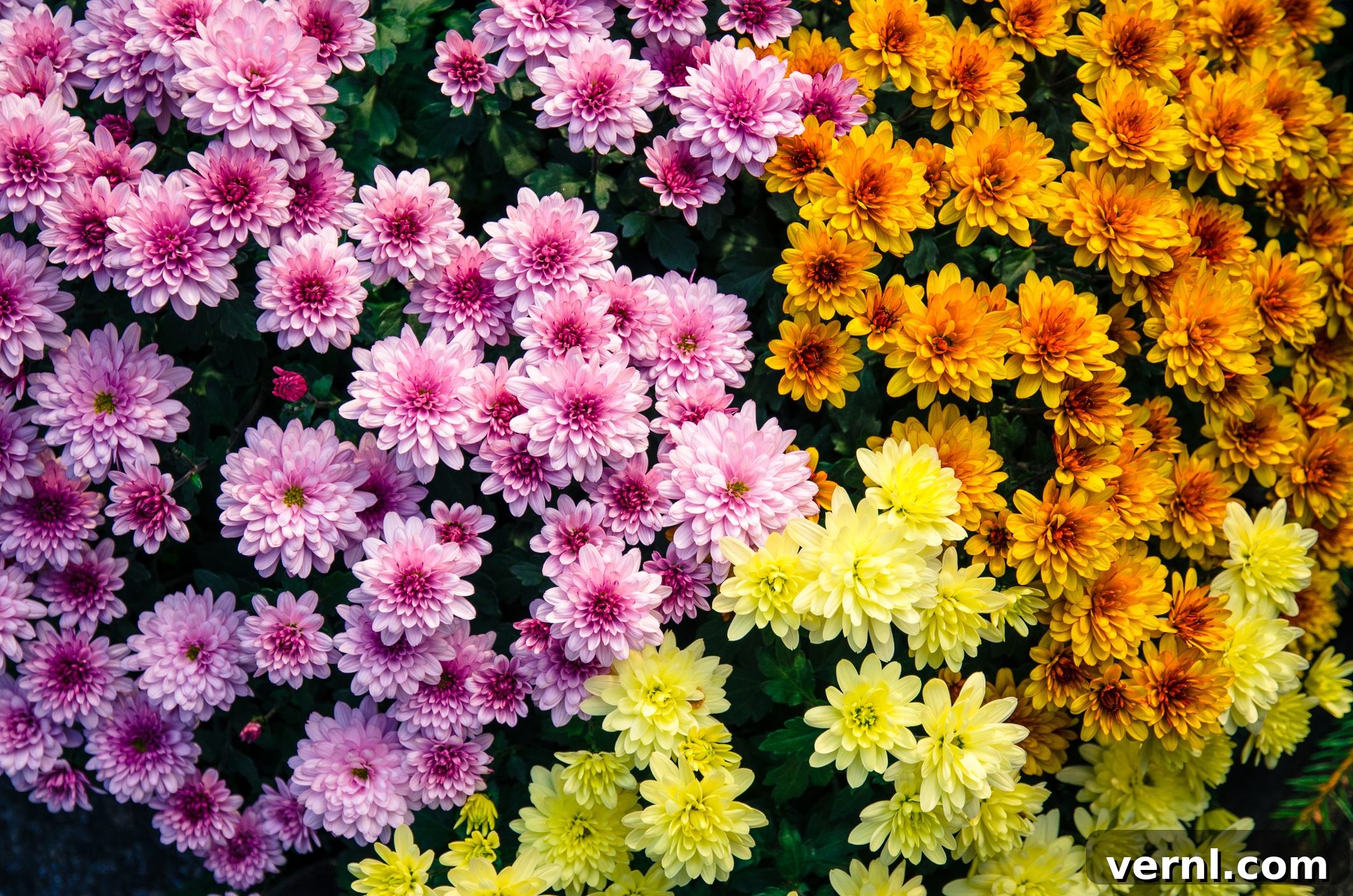
Unlocking the Beauty of Fall Chrysanthemums: A Comprehensive Guide
There’s an undeniable charm to chrysanthemums that makes them an irresistible addition to any autumn garden. As the vibrant hues of summer flowers begin to fade, these resilient beauties emerge, offering a spectacular burst of color just when the landscape needs it most. For many gardeners, myself included, the sight of a garden center brimming with plump, colorful mums signals the official start of fall decorating. I often find myself selecting several plants, choosing those barely showing their color, knowing they will reliably grace my front porch and garden beds with their cheerful blooms well past Halloween, extending the season of warmth and cheer.
What Are Chrysanthemums? Exploring the World of Mums
Chrysanthemums, often affectionately called “mums,” are a genus of flowering plants in the family Asteraceae, native to Asia and northeastern Europe. Revered for centuries, particularly in Asian cultures where they symbolize longevity and rebirth, these remarkable plants are celebrated globally for their diverse forms and vibrant autumnal blooms. They are distinct for their impressive flowering season, arriving late in the growing season when most other plants are winding down.
When discussing chrysanthemums, it’s essential to distinguish between two primary categories: “garden mums” and “florist mums.” Most of the late-blooming varieties you encounter in garden centers are classified as garden mums. These hardy perennials are specifically bred to withstand outdoor conditions, making them ideal for planting directly in the garden. They are generally hardy in USDA Plant Hardiness Zones 5 – 9, meaning they can typically survive the winter and return year after year in these regions. Florist mums, on the other hand, are typically sold as potted plants that are already in full bloom year-round. While beautiful, they are generally less cold-hardy and are often treated as annuals or indoor plants, less suited for overwintering in most garden settings.
Understanding your USDA Hardiness Zone is crucial for successful perennial gardening. This system, developed by the U.S. Department of Agriculture, defines zones based on the average annual extreme minimum winter temperature. Knowing your zone helps you select plants like garden mums that are likely to thrive in your local climate, ensuring their best chance of overwintering and returning with splendor each spring.
Diverse Types of Mums: A Feast for the Eyes
The world of chrysanthemums is far more diverse than many realize. The National Chrysanthemum Society officially recognizes 13 distinct classifications of chrysanthemums, categorized primarily by their intricate bloom forms. While many of these fascinating types—such as the exotic spider, quill, or irregular incurve varieties—are typically cultivated by florists or specialty growers for exhibition, the hardy garden mums available to the average home gardener still offer an incredible array of choices.
Hardy garden mums are the most common type found in local garden centers during the fall. These varieties are bred for their robust nature and ability to flourish in a typical garden environment. Even within the “hardy” category, you’ll find an astonishing selection of styles, sizes, and colors, allowing gardeners to choose mums that perfectly complement their existing fall landscape.
Popular Garden Mum Varieties for Every Landscape
Among the multitude of options, certain varieties stand out for their exceptional hardiness and aesthetic appeal. One particular favorite for many gardeners is the Igloo Series. These mums are renowned for being significantly hardier than many other garden mums, making them an excellent choice for colder climates, often performing well even in USDA Zones 3 – 4, in addition to thriving in Zones 5 to 9. The Igloo Series produces a profusion of flowers, often forming a dense, dome-like mound of color. While sometimes referred to by their former genus name, Dendranthema, rest assured these are indeed chrysanthemums, specifically bred for superior garden performance.
Another beloved and widely popular garden mum is ‘Sheffield Pink’ (also known as ‘Sheffield’). This stunning variety features delicate apricot-pink petals that unfurl to reveal charming gold centers. ‘Sheffield Pink’ is not only beautiful but also robust, capable of growing up to two feet tall and spreading into substantial, eye-catching clumps. As an added ecological benefit, these cheerful blooms are a magnet for late-season butterflies, providing a vital nectar source and bringing dynamic life to your autumn garden.
Beyond these, you might also encounter varieties like ‘Clara Curtis’, known for its cheerful pink, daisy-like flowers, or ‘Bronze Elegance’ with its rich, coppery tones. Exploring the range of colors, from crisp whites and vibrant yellows to deep reds, purples, and even bi-colors, ensures there’s a chrysanthemum to match any garden palette and personal preference.
When to Plant Chrysanthemums for Optimal Growth
Timing is a critical factor in the successful establishment and overwintering of chrysanthemums, especially if you intend for them to return as perennials year after year. While it might seem counterintuitive given their fall bloom time, spring is generally considered the best time to plant mums as perennials in your garden. Planting in spring allows the plants ample time to develop a strong, extensive root system throughout the warmer months before the harsh cold of winter sets in. This robust root system is vital for their survival during dormancy.
However, the reality for most gardeners is that mums are typically sold in late summer or early fall, often already budding or in bloom. Fortunately, you can still successfully plant these fall acquisitions into the ground. The key is to do so at least six weeks before the first hard frost is expected in your region. This window provides sufficient time for the roots to settle into their new environment. Firmly established roots significantly increase the chances that your chrysanthemums will successfully overwinter and emerge with renewed vigor the following spring.
If you’re unsure about the timing or simply prefer not to commit your mums to the ground for the winter, you can also treat them as annuals. Many gardeners choose to pot them up in attractive containers, placing them on porches, patios, or entryways to enjoy their spectacular display until the flowers naturally fade with the onset of deep cold. This offers flexibility and allows you to experiment with different varieties and placements each year.
When selecting mums from the nursery, always choose healthy, vigorous plants. Look for plants with strong stems, lush green foliage, and plenty of unopened buds rather than those already in full bloom. This ensures you’ll get the longest possible show in your garden.
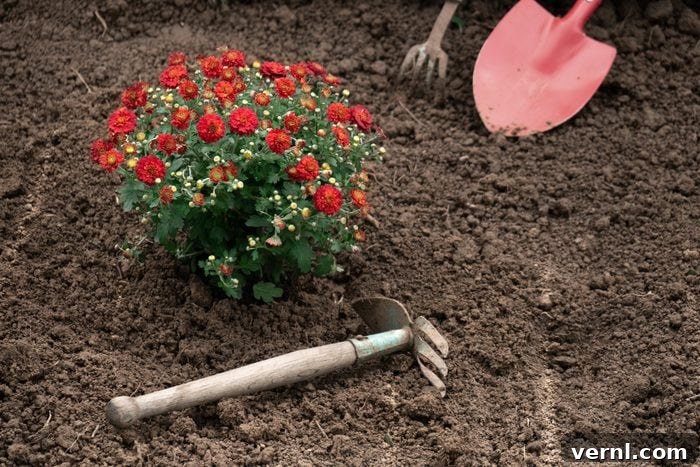
How To Plant Mums: Step-by-Step Instructions
Proper planting techniques are essential for the health and longevity of your chrysanthemums, whether you plan to enjoy them for a single season or as returning perennials.
Planting Mums in Containers:
- Preparation: Begin by carefully removing the mum plant from its nursery pot. Handle it gently, as mum stems can be surprisingly brittle and break off easily.
- Root Ball Inspection: Examine the root ball. If the roots appear tightly bound, circling the pot, or forming a dense mat, gently loosen them with your fingers. This encourages the roots to spread out into the new potting soil rather than continuing to grow in a constrained pattern.
- Repotting: Select a container that is at least 2 inches wider than the original nursery pot to allow for growth. Ensure your chosen container has excellent drainage holes. Fill the bottom with fresh, high-quality organic potting soil. Center the mum in the new pot, ensuring the top of the root ball is level with the surrounding soil. Fill around the root ball with more potting soil, gently firming it down.
- Initial Watering: Water the newly potted mum thoroughly until water drains from the bottom of the container.
- Ongoing Care: Keep container mums well-watered, checking the soil moisture daily, especially during warm or windy weather, as containers dry out more quickly than garden beds. Continue this regimen until the flowers have finished blooming. At that point, you can compost them or discard them if you’re treating them as annuals.
Planting Mums in the Ground for Overwintering:
- Site Selection: Choose a sunny location that receives at least six hours of direct sunlight per day. Good drainage is paramount; mums hate soggy feet. If your soil is heavy clay, amend it generously with compost or other organic matter to improve drainage and fertility.
- Hole Preparation: Dig a hole that is approximately twice as wide as the mum’s root ball and just as deep. This provides loose soil for the roots to easily expand into.
- Root Ball Preparation: Carefully remove the mum from its pot. As with container planting, gently loosen any compacted roots to encourage outward growth.
- Placement: Center the mum in the prepared hole, ensuring the top of the root ball is level with the surrounding garden soil. Backfill the hole with the soil you dug out, gently firming it around the plant to eliminate air pockets.
- Watering and Establishment: Water the mum thoroughly immediately after planting. Continue to water deeply and regularly for the next six weeks, which is roughly the time it takes for the plant to become established. Consistent moisture during this period is crucial for root development, especially for fall-planted mums preparing for winter.
When Do Mums Bloom? The Magic of Autumnal Displays
Chrysanthemums are classic “short-day” plants, meaning their flowering process is triggered by the decreasing daylight hours and increasing nighttime darkness that occur in late summer and early fall. This fascinating biological mechanism, known as photoperiodism, dictates that mums require shorter days and longer nights to form their flower buds. As a result, you can expect these vibrant blooms to make their grand appearance sometime in the fall, typically from late August through September and well into October, depending on the specific variety and local climate conditions.
Different mum varieties are bred to bloom at slightly different times within this autumnal window. You can find early-season bloomers that start in late August, mid-season varieties that peak in September, and late-season mums that keep the color going well into October or even November in milder climates. By selecting a mix of these varieties, you can create a continuous display of chrysanthemum color that stretches across the entire fall season, maximizing their visual impact in your garden.
How To Care for Chrysanthemums: Nurturing Your Fall Beauties
While often considered low-maintenance, providing proper care for your garden mums will ensure they thrive, produce abundant blooms, and have the best chance of overwintering successfully. Mums planted in the ground, particularly those intended to return, require a bit more attention.
Watering Chrysanthemums
Upon initial planting, whether in spring or fall, it’s crucial to provide consistent moisture to help the mums establish their root systems. Aim for the equivalent of one inch of water per week, either from rainfall or through deep, thorough watering several times a week. This means watering slowly and deeply enough for the water to penetrate the soil to the depth of the root ball. Once established, mature garden mums are relatively drought-tolerant and generally should not require additional watering unless your region experiences extended dry spells or extreme heat. Always check the soil moisture before watering; the top inch or two of soil should feel dry to the touch before you water again. Overwatering can be just as detrimental as underwatering, leading to root rot.
Fertilizing Your Mums
For mums planted in the spring and intended as perennials, a balanced feeding schedule is beneficial. If you are unsure about the fertility of your garden soil, it’s a good practice to incorporate a balanced, all-purpose granular fertilizer (e.g., 5-10-5 or 10-10-10) into the soil when planting in early spring, or once you observe new green growth emerging from overwintered plants. This provides essential nutrients for robust foliage development. Follow up with another boost of fertilizer in mid-summer. This second application supports the plant’s energy reserves as it begins to prepare for its extensive fall blooming period. Mums planted in the fall, especially those already in bud or bloom, generally do not require additional fertilizer at the time of planting, whether they are in the ground or in containers, as their focus should be on root establishment rather than new growth.
Pruning for Fuller Blooms
Pruning, specifically “pinching,” is a key technique for encouraging bushier plants and maximizing the number of blooms on your garden mums. When new foliage is about four to six inches tall in the spring, pinch back the tips of the branches. This means removing the top inch or so of the stem, just above the first set of leaves. This action removes the apical bud, which produces hormones that inhibit lateral growth, thereby encouraging the plant to branch out and produce multiple stems, each capable of forming flowers. You can perform this pinching once in late spring for a compact plant, or for an even fuller, more floriferous specimen, repeat the pinching process after the stems have grown another four to six inches. It is crucial to stop all pruning activities around July 1st (or about 100 days before you want blooms), as later pinching will inadvertently remove the flower buds that are beginning to form, significantly reducing or even eliminating your fall bloom display.
Alternatively, if you prefer a more natural, looser form and are content with fewer, larger flowers, you can simply leave your mums unpruned. They will still add welcome color to your late summer and fall garden, albeit with a less compact habit.
Overwintering Mums: Ensuring Their Return
Successfully overwintering chrysanthemums requires a few strategic steps, particularly for those planted in the fall. The later in the fall you plant your mums, the less time their roots have to establish themselves before the ground freezes, which inherently reduces their chances of surviving the winter. Therefore, plant them as early as possible in the fall, or ideally, in the spring.
Once the ground consistently cools and just before the first hard freeze, apply a generous layer of mulch over your mum plants. A four-to-six-inch layer of organic mulch, such as pine needles, straw, or shredded leaves, is ideal. This mulch does not primarily insulate the plants from the cold itself, but rather helps to maintain a consistent soil temperature, preventing repeated cycles of freezing and thawing. These freeze-thaw cycles can cause the shallow mum roots to “heave” out of the soil, exposing them to drying winds and lethal cold. In the early spring, when you observe the first signs of new green growth emerging from the base of the plant, carefully remove the heavy winter mulch to allow the soil to warm up and prevent rot. At this time, you should also cut back the old, dead foliage from the previous season. If you notice any roots that have indeed heaved out of the ground, gently push them back into the soil and firm the earth around them.
Pest and Disease Management for Healthy Mums
Healthy chrysanthemums are generally resilient, but they can occasionally encounter common garden pests and diseases. Vigilant observation is key to early detection and treatment.
- Pests: Common pests include aphids, which cluster on new growth and undersides of leaves, and spider mites, tiny arachnids that cause stippling and webbing, especially in hot, dry conditions. Both can be controlled with insecticidal soap or strong sprays of water. Leaf miners can create winding tunnels within leaves, but rarely cause severe damage.
- Diseases: Powdery mildew, characterized by a white, powdery coating on leaves, is common in humid conditions with poor air circulation. Ensure good spacing between plants and water at the base to avoid wetting foliage. Fungal leaf spots can also occur. Good sanitation practices, like cleaning up fallen leaves and diseased plant material, help prevent spread.
Maintaining strong, healthy plants through proper watering, fertilizing, and air circulation is the best defense against most problems.
Embrace the Autumn Splendor of Chrysanthemums
Chrysanthemums truly are the quintessential flower of fall, offering unparalleled beauty and resilience as the seasons change. By understanding their needs, from proper planting and timely pruning to thoughtful overwintering, you can ensure that your garden bursts with their magnificent colors year after year. Whether you’re a seasoned gardener or just starting, embracing the world of mums promises a rewarding experience and a vibrant, long-lasting display that will brighten your autumn landscape and your spirits.