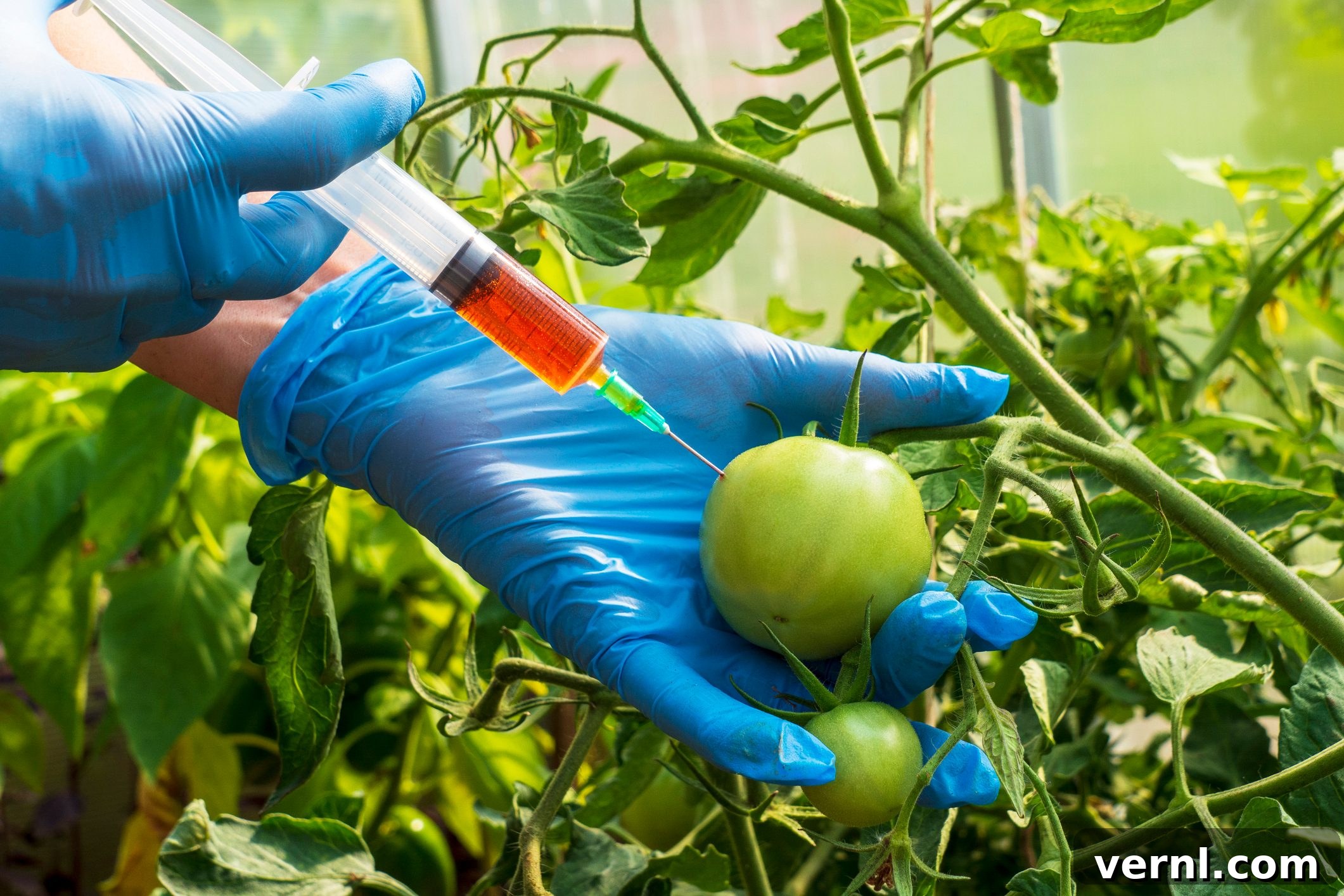
Understanding Genetically Modified Organisms (GMOs): A Comprehensive Guide for Informed Choices in Food and Gardening
The mere mention of Genetically Modified Organisms (GMOs) often ignites spirited discussions, quickly polarizing any casual conversation. For many, genetically modified foods evoke strong opinions, and this robust engagement is undeniably a positive development. It underscores a growing public awareness and a desire to understand the origins and implications of what we consume.
Indeed, understanding GMOs is crucial, regardless of one’s stance. Whether you view them as an agricultural innovation or a cause for concern, their presence in our food supply is undeniable. An estimated 80% of processed foods lining grocery store shelves, from breakfast cereals to pasta, contain ingredients derived from genetically modified crops. For decades, GMOs have largely remained outside the purview of the average home gardener, with specialized seeds primarily accessible only to large-scale commercial farmers. However, this landscape is rapidly shifting. A landmark decision last year saw the U.S. Department of Agriculture (USDA) approve a genetically modified purple tomato, and significantly, its seeds will soon be available directly to home gardeners. This move signals a profound change, marking what many experts believe is just the beginning of a trend that will accelerate dramatically over the next five to ten years.
Fred Gould, co-director of the Genetic Engineering and Society Center at North Carolina State University, suggests that this is merely the tip of the iceberg. “There are companies actively working to produce crops using genetic engineering that could appeal directly to gardeners,” he explains. Imagine the convenience of pit-less cherries or the satisfaction of growing pathogen-resistant tomatoes in your backyard. As Gould aptly puts it, “As a gardener, you will increasingly have to make informed decisions about the seeds and plants you choose.” This evolving reality necessitates a deeper dive into what GMOs truly are, their potential benefits, and the concerns they raise.
What Are Genetically Modified Organisms (GMOs)?
GMOs, also known as genetically engineered organisms, represent a significant departure from traditional breeding practices. They are any plant, animal, or microorganism whose genetic material (DNA) has been deliberately altered using scientific techniques. This process differs fundamentally from conventional cross-breeding, which relies on natural evolutionary processes and cross-pollination to create hybrid plants with desirable traits. Instead, genetic engineering involves the precise transfer of genetic material from one organism into another, or targeted modifications within an organism’s own DNA, a process often referred to as gene editing. This allows scientists to introduce specific traits that might not naturally occur through traditional breeding methods or would take many generations to develop.
The history of GMOs in commercial agriculture dates back to 1996 when the first genetically modified seeds became available on the market. Since then, their adoption has been widespread, particularly in industrial and commercial farming operations. Today, more than 90% of key U.S. crops such as corn, soybeans, and cotton are genetically modified varieties. Beyond these staples, other crops with available GMO varieties include canola, papaya, sugar beets, alfalfa, potato, apple, squash, rice, and even a distinctive pink pineapple. A substantial portion of these crops serves as feed for livestock; the Food and Drug Administration (FDA) reports that over 95% of animals raised for meat and dairy in the U.S. consume GMO crops. The remainder primarily finds its way into our homes through a vast array of processed foods, often containing ingredients derived from corn, soy, canola, and sugar beets, including ubiquitous components like corn syrup.
What Are the Pros of GMOs?
The potential advantages of genetically modified crops are diverse and often depend on the specific modification and crop type. However, GMO varieties have been engineered to impart a range of beneficial traits, addressing some of the most pressing challenges in agriculture and food production:
- Higher Yield: By enhancing resistance to pests, diseases, and harsh environmental conditions, GMOs can significantly reduce crop losses, leading to greater overall yields from the same amount of land. This can be crucial for feeding a growing global population.
- Enhanced Nutrition: Some GMOs are designed to boost the nutritional content of staple foods. A prominent example is Golden Rice, engineered to produce beta-carotene, a precursor to Vitamin A, which can combat widespread Vitamin A deficiency in developing countries. Similarly, the newly approved purple tomato is modified to contain high levels of anthocyanins, powerful antioxidants commonly found in blueberries.
- Longer Shelf Life: Genetic modifications can delay ripening or spoilage, extending the shelf life of produce. This reduces food waste, benefiting both producers and consumers, and allows for more efficient distribution over longer distances.
- Better Taste: While less common, some GMOs are developed with improved flavor profiles, aiming to enhance the consumer eating experience.
- Resilience to Environmental Concerns: As climate change brings more unpredictable weather patterns, drought-tolerant GMO crops offer a crucial advantage, allowing farming to continue in regions with limited water resources or during periods of prolonged dry spells. Other modifications can improve tolerance to salinity or extreme temperatures.
- Resistance to Herbicides: Many GMO crops, such as Roundup Ready soybeans, are engineered to tolerate specific herbicides. This allows farmers to spray their fields to control weeds without harming the crop itself, potentially simplifying weed management and reducing the need for tilling, which can improve soil health.
- Resistance to Pests and Viruses: Certain GMO crops, like Bt corn and cotton, are modified to produce natural insecticides, making them resistant to specific insect pests. Others, such as papaya and squash, have been engineered to resist common plant viruses, protecting crops from devastating diseases.
The scientific consensus on the safety of consuming GMO foods is robust. Fred Gould, who chaired a major National Academy of Sciences report on genetically engineered crops, unequivocally states that the conclusion was clear: eating GMO foods is safe. “Even if you disregard all industry-sponsored research,” he emphasizes, “the overwhelming evidence from numerous independent tests indicates that current corn, soybean, and cotton GMOs have no measurable adverse health effects.” In the U.S., the FDA, USDA, and Environmental Protection Agency (EPA) jointly regulate the safety of GMOs for human and animal consumption. However, while these agencies primarily focus on health and food safety, they largely do not take into account many of the broader environmental and societal consequences associated with these crops.
What Are the Cons of GMOs?
Despite the scientific consensus on their safety for consumption, GMOs remain a contentious topic, largely due to their relatively recent introduction into our food supply (less than 30 years ago) and concerns regarding their broader ecological and socio-economic impacts. Many people question the long-term, potentially negative effects on human health and natural ecosystems. While GMO crops are extensively cultivated in the U.S. and parts of Asia, at least two dozen countries—including 16 within the European Union—have banned their cultivation, citing the precautionary principle and various environmental and economic concerns. Julia Ranney, from the Center for Food Safety (CFS), articulates this perspective: “Unfortunately, from our perspective at CFS, the potential GMO pros often present as claims rather than scientifically proven truths. The cons, however, are numerous and well-documented. GMOs can pose serious risks to farmers, human health, domesticated animals, wildlife, and the environment at large.”
Biodiversity Damage and Environmental Impact
One of the most significant environmental concerns revolves around biodiversity. More than 80% of GMO crops are herbicide-tolerant, meaning they are engineered to withstand potent weedkillers. While this allows farmers to efficiently manage weeds, it has unintended consequences. The Non-GMO Project, an organization that certifies GMO-free foods, states that this reliance on herbicide-tolerant crops has “resulted in a staggering 15-fold increase in the application of weedkillers.” This extensive use of broad-spectrum herbicides, such as glyphosate, devastates ecosystems by indiscriminately killing not only weeds but also beneficial insects and crucial plants like milkweed. The dramatic decline in milkweed, the sole food source for monarch butterfly larvae, has directly contributed to the steep decline of monarch butterfly populations across North America. Furthermore, the continuous application of the same herbicides fosters the evolution of “superweeds” – weeds that develop resistance, necessitating even stronger chemicals or more intensive management, thus creating a chemical treadmill.
Impact on Farmers
The widespread adoption of GMOs also presents significant challenges for farmers, particularly those committed to non-GMO or organic practices. When GMO crops or associated chemicals drift from neighboring fields and contaminate their land, non-GMO farmers suffer substantial financial losses. Herbicide drift can kill their conventional or organic crops, and cross-pollination with GMO varieties can render their produce ineligible for lucrative non-GMO and organic markets. Beyond contamination, patent issues are a major concern. GMO seed companies often hold patents on their genetically modified plant varieties, and historically, some have accused farmers whose fields were inadvertently contaminated of “stealing their property,” leading to costly legal battles. Moreover, as Ranney points out, “These companies can effectively entrench farmers in specific production systems, requiring them to purchase proprietary seeds every year, along with the corresponding fertilizers and pesticides designed for those crops. It becomes a very expensive venture that can displace traditional livelihoods and lead to crippling debt for farmers when the promised increased yields fail to materialize.” This system eliminates the age-old practice of seed saving, a cornerstone of agricultural independence.
Food Security and Corporate Control
The structure of the global seed industry itself raises critical food security concerns. With just three multinational corporations controlling approximately 60% of the world’s seed supply, there has been a drastic reduction in the biodiversity of crops planted by farmers. This diminished genetic diversity creates a less resilient global food supply, making it more vulnerable to the impacts of a changing climate, unstable weather patterns, and the emergence of new crop diseases. Relying on a limited number of genetically uniform varieties increases the risk of widespread crop failure if a particular pest or disease develops resistance. The Non-GMO Project statement also highlights significant cultural risks: “There are also cultural risks for species that are central to the traditions of certain cultural groups. For example, corn is a very important traditional resource in Mexico, so GMO contamination is a serious concern, threatening ancient landraces and cultural practices.”
GMOs and Your Garden: Navigating the Future of Home Cultivation
For most home gardeners, the presence of genetically modified vegetables in their backyards or in the seeds and seedlings purchased each spring has, until recently, been highly unlikely. As Fred Gould notes, “The only realistic way you might encounter GMOs in your garden currently is if you live in very close proximity to a commercial farm growing genetically engineered corn, and pollen from that corn happens to drift onto your own corn plants.” While a few genetically modified flowers have been deregulated by the USDA—namely Petunia- A1-DFR, Rose-IFD-52401-4, IFD-52901-9, and Suntory Flowers Limited Chrysanthemum—these have not fundamentally altered the home gardening landscape.
However, the approval of the genetically modified purple tomato and its impending availability to home gardeners marks a significant turning point. This tomato, engineered to produce high levels of health-beneficial anthocyanins, exemplifies the kind of “gardener-friendly” GMOs that are on the horizon. It represents a new era where home growers will increasingly face decisions about purchasing genetically engineered seeds for traits like enhanced nutrition, improved disease resistance, or unique physical characteristics (like pit-less fruits). This shift will necessitate a more discerning approach to seed sourcing.
For this year, and for the foreseeable future, home gardeners have more pressing and immediate questions to consider when selecting plants and seeds for their gardens:
- Whether or not they are organic, meaning they were grown without synthetic pesticides, herbicides, or fertilizers, and are not genetically modified.
- If they contain neonicotinoid pesticides, which are known to be harmful to pollinators like bees and butterflies.
- How to incorporate more native plants and flowers into your garden, which supports local ecosystems, provides habitat for wildlife, and often requires less water and maintenance.
As Heather Andrews, founder of The Thoughtful Gardener, aptly observes, “A lot of gardeners who grow their own food are inherently conscientious about their seed sources. The fundamental reason they choose to cultivate their own food is precisely so they can have greater control over the entire growing process, from seed to harvest.” This desire for control and transparency will become even more critical as GMO options become more accessible to the home gardening community. Making informed choices about GMOs, understanding their benefits, risks, and broader implications, will empower gardeners to align their practices with their personal values and contribute to a more sustainable and thoughtful approach to food cultivation.