
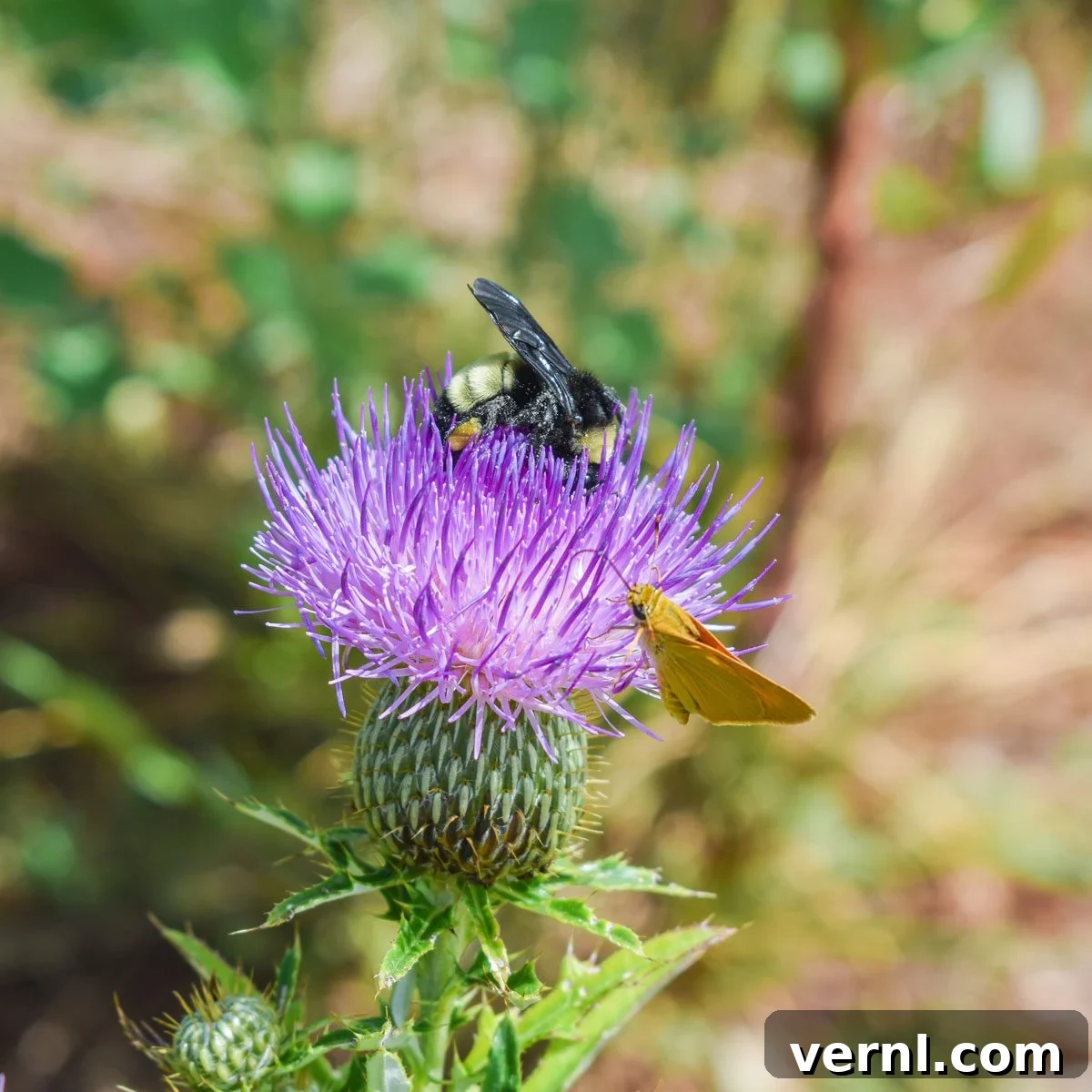
Comprehensive Guide to Thistle Control: Identify, Remove, and Prevent Invasive Species While Protecting Beneficial Native Thistles
The sudden appearance of thistles across your lawn can quickly transform your verdant paradise into a prickly problem. Yet, finding these spiny plants doesn’t always signal an immediate, aggressive war. A nuanced approach is vital, as not all thistles are created equal, and some even contribute positively to your local ecosystem.
“There are ‘bad’ thistles, which are typically exotic species that aggressively take over ecosystems, and ‘good’ thistles, which are native species that coexist harmoniously and do not become invasive,” explains Ray Moranz, Ph.D., an esteemed ecologist at the Xerces Society for Invertebrate Conservation.
Moranz strongly advises, “We heartily recommend people eradicate bad thistles. However, we genuinely advocate for the retention and even planting of good, native thistles, as they are incredibly important for supporting pollinators.”
In an era of increasing concern over pollinator decline and habitat loss, even specialists in weed management agree on the importance of preserving beneficial native thistles. “Many thistle species possess high ecological value for local ecosystems,” states Roger May, Ph.D., director of technical operations at TruGreen. “Furthermore, thistle seeds serve as a crucial food source for various bird species, notably goldfinches.”
This comprehensive guide will equip you with the knowledge to accurately identify the types of thistles in your landscape and provide effective, environmentally responsible strategies for permanent removal of invasive species, all while nurturing the invaluable native ones.
Meet Our Experts
Our insights are drawn from leading professionals in ecology, horticulture, and agronomy:
- Ray Moranz, Ph.D., a grazing lands pollinator ecologist and partner biologist for the Xerces Society for Invertebrate Conservation.
- Meaghan Anderson, a field agronomist at Iowa State University Extension and Outreach.
- Carrie Spoonemore, a passionate gardening writer/advocate and co-creator of the From Seed to Spoon app.
- Roger May, Ph.D., a distinguished horticulturalist and director of technical operations at TruGreen.
- Keri Wilson, a horticulturalist and plant expert for the Garden Media Group.
What Exactly Are Thistles? Understanding Their Nature and Ecological Role
Thistles are a diverse group of prickly, flowering herbaceous plants, recognized by their distinctive spiny leaves and typically purple or pink (though sometimes white or yellow) composite flower heads. They belong to the Asteraceae family, a vast botanical group that also includes familiar plants like sunflowers, asters, and daisies. While their thorny appearance often casts them as unwelcome weeds, their ecological roles vary dramatically, making identification crucial for appropriate management.
Globally, thistles encompass hundreds of species, but only a select few become problematic invaders in turfgrass and agricultural settings. Invasive species like Canada thistle (Cirsium arvense) and bull thistle (Cirsium vulgare) are notorious for their aggressive tendencies, capable of rapidly dominating landscapes, outcompeting desirable vegetation, and posing significant challenges for landowners. These non-native thistles can form dense monocultures, reduce biodiversity, and negatively impact agriculture. In contrast, numerous native thistle species play crucial roles in their ecosystems, providing vital resources such as nectar and pollen for pollinators and seeds for birds, without exhibiting aggressive, takeover behavior.
Accurate identification is the cornerstone of effective thistle management. Distinguishing between an invasive threat and a beneficial native plant is paramount to protecting local biodiversity and applying appropriate control methods. Your local extension office is an excellent resource for identifying regional species, and comprehensive guides such as this booklet from the Xerces Society offer invaluable assistance in determining what kind of thistle resides in your yard.
Identifying Thistle Types: Friend or Foe?
Understanding the specific thistle species you’re dealing with is the first critical step toward effective management. Here, we delve into common invasive types that often require removal and highlight the characteristics of valuable native thistles that should be preserved.
Invasive Thistles Requiring Removal
Invasive thistles are typically exotic species introduced from other regions that lack natural predators or diseases to keep their populations in check. They outcompete native plants for resources, reduce biodiversity, and can be agricultural pests, often leading to significant ecological and economic damage.
Canada Thistle (Cirsium arvense) – The Persistent Perennial
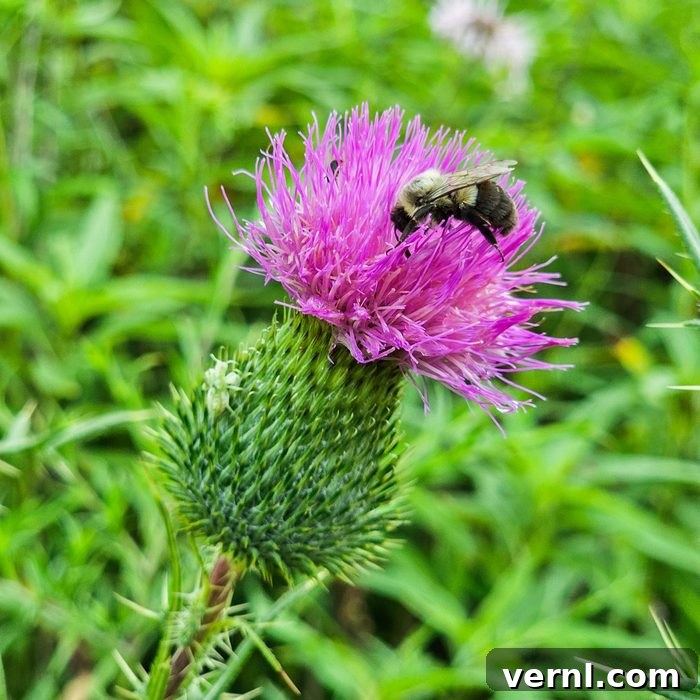
Canada thistles are perhaps the most notorious invasive species across North America, thriving in nearly every state, particularly in disturbed areas, lawns, meadows, and agricultural fields. Unlike most other thistles, Canada thistle is a perennial, meaning it lives for multiple years and boasts an incredibly aggressive, spreading root system.
- Identification: Typically grows 2-5 feet tall with deeply lobed, spiny leaves that are somewhat sparse on the stem. The leaves are smooth or slightly hairy underneath. Flowers are small (0.5-0.75 inches in diameter), purple or pink, and clustered at the top of the plant, often appearing from June to October.
- Spread Mechanism: Produces abundant seeds, but its primary mode of spread is through an extensive network of underground roots called rhizomes. These rhizomes can extend several feet horizontally and vertically, allowing new plants to emerge far from the parent plant. “New plants pop up from these roots, so where you had one Canada thistle last year, you might find 30 this year, all interconnected,” says Moranz. This makes it exceptionally difficult to eradicate, earning it the reputation as “probably the worst of the bad thistles.”
- Threat: Forms dense monocultures, chokes out crops and desirable native vegetation, and is highly challenging to control once established due to its extensive root system.
Bull Thistle (Cirsium vulgare) – The Aggressive Biennial
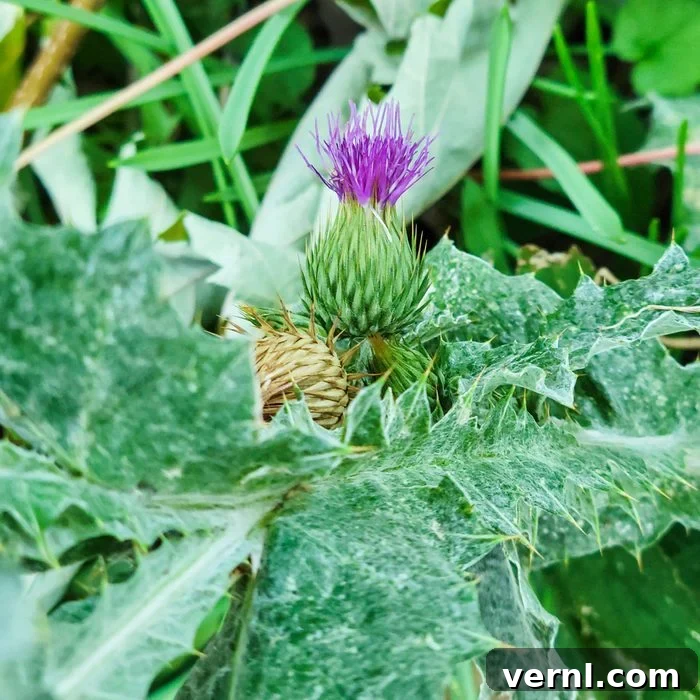
Bull thistle is another widespread invasive species found in nearly every state, commonly appearing in disturbed areas like construction sites, overgrazed pastures, and neglected fields. It is a biennial plant, completing its life cycle over two years: forming a rosette in the first year and flowering, producing seeds, and dying in the second.
- Identification: Grows 3-6 feet tall with a stout, branching stem. Leaves are deeply lobed, very spiny, and extend down the stem, giving it a distinctive winged appearance. The upper surface of the leaves is bristly, while the underside is woolly. Flowers are large (1.5-2 inches in diameter), purple, and solitary at the ends of branches, blooming from July to September.
- Spread Mechanism: Reproduces exclusively by seeds, which can be dispersed by wind, water, or animals. A single plant can produce thousands of seeds, contributing to a persistent seed bank in the soil.
- Threat: “Bull thistle is considered noxious in some places and exhibits aggressive growth, making it challenging to contain,” notes Carrie Spoonemore. Its large, spiny rosettes can smother desirable plants in its first year, and mature plants can quickly colonize open areas, reducing forage quality and impacting recreational activities.
Milk Thistle (Silybum marianum) – The Adaptable Invader
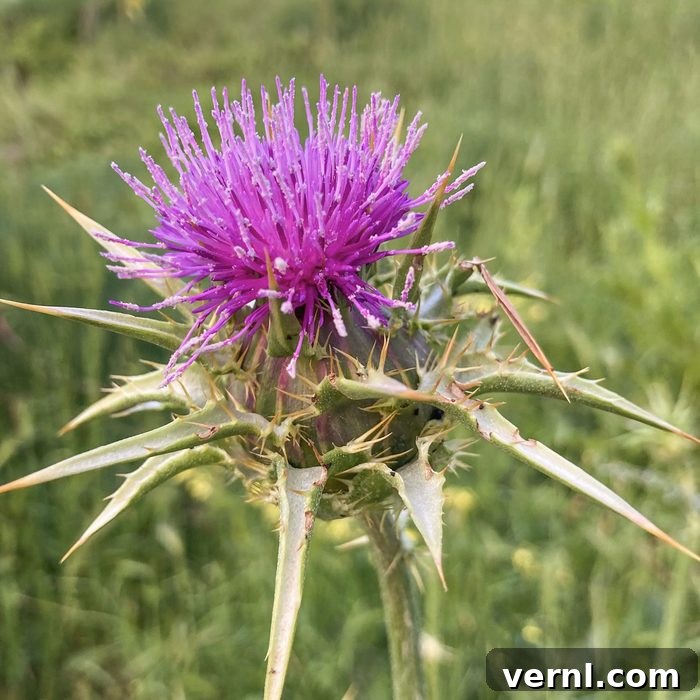
Milk thistle is particularly prevalent in the southern United States and along the West and East Coasts, often colonizing disturbed sites such as pastures, roadsides, and fence lines. It is typically an annual or biennial plant that spreads solely through seeds, but its resilience makes it a formidable foe.
- Identification: Distinctive for its glossy green leaves with prominent white veins, giving them a “milky” or marbled appearance. Grows 2-6 feet tall with large, solitary purple flower heads (up to 2 inches wide), surrounded by spiny bracts. Blooms typically occur from May to July.
- Spread Mechanism: Reproduces vigorously via seeds, which are known for their exceptional viability, remaining dormant and capable of germinating in the soil for several years.
- Threat: “Milk thistle is highly adaptable and can destroy ecosystems, plus its seeds can remain viable for years, leading to persistent infestations,” explains Keri Wilson. Its deep taproots make manual removal particularly difficult, and dense stands can displace native vegetation and reduce agricultural productivity.
Other Common Invasive Thistles to Watch For
Beyond the primary three, other invasive thistle species that often require control include:
- Musk Thistle (Carduus nutans): A biennial characterized by large, solitary, nodding (musk-scented) purple flowers. Reproduces by seed and can rapidly colonize pastures.
- Scotch Thistle (Onopordum acanthium): A massive biennial, sometimes growing over 8 feet tall, with distinctive cottony-white stems and leaves. Its large size allows it to outcompete almost any surrounding vegetation. Reproduces by seed.
- Sow Thistle (Sonchus spp.): While not true thistles, these look very similar and are often mistaken for them. They have yellow dandelion-like flowers and milky sap, spreading aggressively by both seeds and rhizomes.
- Italian Thistle (Carduus pycnocephalus): An annual or biennial, typically found in warmer climates, known for its slender stems and dense clusters of small, pink-purple flower heads.
- Plumeless Thistle (Carduus acanthoides): A biennial similar to musk thistle but with smaller flower heads that are often numerous and upright rather than nodding.
Native Thistles (Good Thistles) – Ecological Allies
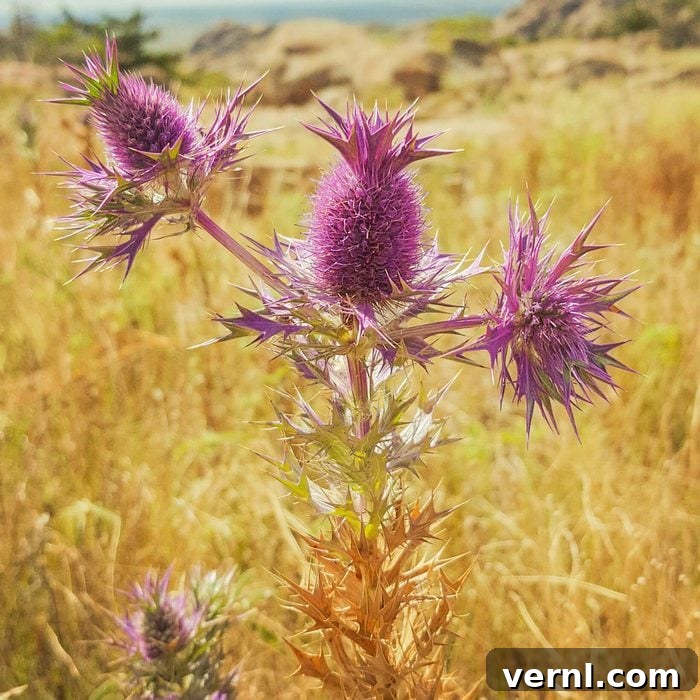
In contrast to their invasive cousins, native thistles are invaluable components of healthy ecosystems. All 65 species of native thistles found across North America are superb companions for pollinators and birds, providing essential nectar, pollen, and seeds. Furthermore, establishing native thistles can sometimes help deter the establishment of invasive ones by occupying ecological niches and competing for resources.
- Benefits: Native thistles are critical host plants for a variety of insects, including several butterfly and moth species (e.g., the American Lady butterfly). Their abundant flowers are a major draw for bees, butterflies, and hummingbirds, providing crucial forage, especially during late summer and fall. Their seeds are a preferred, high-energy food source for many bird species, particularly goldfinches, which are often observed feeding on them.
- Common Species: Examples include Field Thistle (Cirsium discolor), Tall Thistle (Cirsium altissimum), and Bristly Thistle (Cirsium horridulum). These are typically biennials with deep taproots but lack the aggressive rhizomatous spread of invasive perennials.
- Growth Habit: As Ray Moranz explains, in their second year, these biennials “bloom like crazy, feeding a lot of bees and butterflies, produce seeds, and then die.” They spread by seeds carried by the wind but “do not take over” an area aggressively like invasive species. Their taproots are deep but not rhizomatous, making them easier to manage if they appear in an undesirable spot.
The Mechanisms of Thistle Spread: Understanding the Challenge
Effective thistle control hinges on a thorough understanding of how these plants propagate. Thistles employ various reproductive strategies, making them highly adaptable and challenging to manage once established.
- Seeds: Most thistles, particularly annuals and biennials, rely heavily on prolific seed production for dispersal. A single mature thistle plant can produce thousands, sometimes tens of thousands, of seeds. These seeds are often equipped with a pappus (a parachute-like, feathery appendage) that allows them to be carried long distances by wind, often several miles. Seeds can also be spread by water runoff, animals (caught in fur or consumed and excreted), contaminated soil, or agricultural machinery. What makes them particularly formidable is their longevity; many thistle seeds can remain viable in the soil for several years, forming a persistent “seed bank” that can lead to new infestations long after mature plants are removed. This dormant seed bank ensures a continuous supply of new plants.
- Rhizomes: This is the primary method of spread for perennial thistles like Canada thistle. Rhizomes are aggressive, horizontal underground stems that can extend several feet in all directions and penetrate deeply into the soil. New shoots can emerge from buds located along these rhizomes, creating dense patches of genetically identical plants that are interconnected underground. “Some thistles, like Canada thistle, are perennials that spread through underground lateral roots as well as seed,” clarifies Meaghan Anderson. Even small fragments of these rhizomes, broken by cultivation or digging, can regenerate into entirely new, vigorous plants, making mechanical removal incredibly difficult if not done meticulously and persistently.
- Root Fragments: Beyond the distinct rhizomes, even simple root fragments from some perennial thistles (if separated from the main plant) can sprout new plants if left in the soil with sufficient moisture and nutrients. This characteristic means that aggressive tilling or cultivating infested areas without careful follow-up can inadvertently worsen the problem by chopping up roots and spreading them throughout the soil, creating multiple new growth points.
Effective Strategies for Thistle Eradication: Getting Rid of Bad Thistles for Good
Once you’ve accurately identified the problematic thistle species, it’s time to implement a targeted eradication plan. The approach will vary significantly depending on the thistle type (annual, biennial, perennial) and the size of the infestation.
1. Initial Assessment and Identification
Before any action, confirm whether you are dealing with an invasive or native thistle. For invasive species, determine its growth habit and primary mode of spread (seeds, rhizomes, or both). This knowledge is fundamental for choosing the most effective and efficient control strategy.
2. Manual Removal: For Smaller Infestations and Specific Thistle Types
Manual removal is most effective for annual and biennial thistles, or for small, isolated patches of perennial thistles. Always wear thick gloves, long sleeves, and protective eyewear to avoid painful prickles and skin irritation.
- For Seed-Spreading Thistles (Annuals/Biennials): The absolute key here is to prevent seed production. “Simply cut the stem off to prevent seed production before the flowers go to seed,” advises Meaghan Anderson. For biennial thistles (like bull or musk thistle), this means cutting the plant close to the ground during its second year, preferably when it’s just beginning to flower but before seeds fully mature and disperse. For annuals, remove them as soon as they appear and before they flower. Ensure all flower heads are bagged and disposed of to prevent seed spread.
- For Root-Spreading Thistles (Perennials) & Deeply Taprooted Biennials: These require a more aggressive and incredibly thorough approach.
- Dig Deep and Diligently: Use a sharp weeding tool, like a hori-hori knife, spade, or a sturdy garden fork, to dig up as much of the root system as possible. For Canada thistle, this means carefully tracing and removing every possible piece of its extensive rhizome network. For biennial thistles like bull or milk thistle, aim to extract the entire taproot, ensuring the crown is completely removed. Any root fragments left behind can re-sprout.
- Remove All Green Parts: “Take care to remove all the green parts of the plant,” advises Roger May, “as these continue to photosynthesize and feed the underground rhizomes. Removing them will force the plant to use up stored food reserves and eventually weaken it.”
- Persistence is Paramount: For perennial thistles, expect multiple attempts over several seasons. Regular monitoring and removal of new shoots, as soon as they emerge, are essential to deplete the root system’s energy stores over time. This can be a multi-year commitment.
- Mulch & Suppression: After digging, cover the area with a thick layer (at least 4-6 inches) of organic mulch (wood chips, straw), cardboard, or a heavy opaque tarp. This smothers any remaining root fragments by blocking sunlight and depleting their stored energy reserves, effectively preventing resurfacing.
3. Chemical Control: For Larger or Persistent Infestations
When manual efforts prove insufficient, especially for widespread perennial thistle infestations, herbicides may be necessary. Always read and meticulously follow product label instructions, paying close attention to safety precautions, application rates, and environmental considerations.
- Timing is Crucial: Herbicides are generally most effective when applied to actively growing thistles. For perennial thistles, late summer or early fall applications, when plants are actively translocating nutrients down to their roots in preparation for winter, can be particularly effective as the herbicide is moved throughout the entire root system. Spring applications can also be effective when plants are young and vigorously growing.
- Targeted Application (Spot Treatment): “Cut off plants near the soil line and apply weed killer directly to the top of the cut-off stems,” suggests our experts. This method targets the plant directly and minimizes harm to surrounding desirable vegetation. Foliar spray for individual plants is also an option. Spraying entire areas is generally discouraged to protect beneficial plants, soil microorganisms, and overall soil health.
- Herbicide Choice:
- Concentrated Horticultural Vinegar: For a more organic approach, concentrated horticultural vinegar (acetic acid, typically 20-30%) can effectively burn back top growth. “Vinegar (acetic acid) works by burning the plant tissue it comes into direct contact with,” explains Roger May. This makes it effective at desiccating the leaves and stems of annual or biennial thistles if applied carefully. However, vinegar generally does not translocate systemically to the root system. “This technique can work for annual or biennial types of thistle, which reproduce only by seed, but it won’t do much to control perennial types with robust root systems, as it doesn’t translocate to the roots,” May adds. Use extreme caution, as it is non-selective and can damage any plant it touches and alter soil pH.
- Synthetic Herbicides: For persistent perennial thistles, systemic herbicides that move throughout the plant are often required. Products containing active ingredients like glyphosate (a non-selective option) or clopyralid/aminopyralid (selective, broadleaf specific) may be effective. Selective herbicides are preferred in lawns as they target broadleaf weeds without harming turfgrass. Always choose a product specifically labeled for thistle control and ensure it’s suitable for your application area (e.g., lawns, gardens, wild areas).
- Repeat Applications: A single herbicide application is rarely enough for tenacious thistles. “Repeat the application after a few weeks, or as directed by the product label, to ensure complete eradication and to tackle new sprouts that emerge from the seed bank or regenerating roots,” advises Meaghan Anderson.
4. Professional Assistance
“While homeowners can certainly take significant steps to get rid of thistles themselves, in many cases, especially for large, widespread, or stubborn perennial thistle infestations, hiring a professional is the best resource for effective and sustainable control,” says Roger May. Professional landscapers or weed control specialists have access to stronger, more specialized herbicides and equipment, as well as the expertise to accurately identify species, assess the scope of the problem, and create a tailored, long-term management plan that prioritizes safety and effectiveness.
How To Prevent Thistle From Taking Root In Your Yard: Long-Term Management
The most effective way to manage thistles is to prevent them from becoming established in the first place. A proactive approach focuses on creating an environment that is inhospitable to invasive thistles but welcoming to desirable plants, fostering a resilient landscape.
“The real key to keeping thistles out of an area is to eliminate opportunities for them to get established,” emphasizes Meaghan Anderson. “This often means ensuring there’s a healthy, dense stand of grass, a thick layer of mulch, or some other effective ground cover that competes with or smothers thistle seeds and sprouts.”
Key Preventative Strategies:
- Maintain a Healthy, Dense Lawn: A dense, vigorous lawn is your best defense against many weeds, including thistles.
- Proper Mowing Height: “Thistles thrive in areas with taller grasses, so maintaining a short lawn can deter their growth, but avoid scalping,” says Carrie Spoonemore. Aim for a mowing height of 2.5-3 inches. Taller grass blades shade the soil, reducing the light available for thistle seeds to germinate and for new seedlings to grow.
- Adequate Watering & Fertilization: A well-watered and properly fertilized lawn can outcompete weeds for essential resources like light, water, and nutrients, leaving little room for thistles to establish. Overseeding thin areas can further increase turf density.
- Regular Monitoring and Weeding of Ornamental Beds: Consistently monitor and weed flower beds, vegetable gardens, and perennial borders. Catching thistle seedlings when they are small and easy to remove is crucial. Early detection and removal prevent them from developing deep roots or producing seeds.
- Landscape with Thick, Shady Plants: Many invasive thistles, especially annual and biennial types, prefer direct sunshine and disturbed soil. Planting dense, native shrubs, perennials, or groundcovers can create shade and suppress thistle growth by reducing light availability and increasing competition for soil resources. “Many invasive thistles grow in disturbed areas, so ensuring you have a healthy ecosystem filled with native plants can discourage undesirable species from taking root,” notes Keri Wilson.
- Install Landscape Fabric or Weed Barriers: In new garden beds, pathways, or areas historically prone to thistle infestations, installing landscape fabric beneath a layer of mulch can provide an effective physical barrier against emerging weeds, including thistles. Ensure proper installation with sufficient overlap to prevent gaps that weeds can exploit.
- Improve Soil Drainage and Health: Thistles often thrive in compacted, poorly drained soils, which can stress desirable plants.
- Aeration: Regularly aerate your lawn to reduce soil compaction and improve air and water penetration, fostering healthier grass roots.
- Incorporate Organic Matter: Amending soil with compost or other organic materials significantly improves its structure, drainage, and overall fertility. Healthy, well-draining soil is less hospitable to opportunistic weeds like thistles and more suitable for vigorous growth of desirable plants. Improving soil drainage can be a powerful deterrent.
- Clean Equipment: If you use shared gardening equipment or work in infested areas, thoroughly clean your tools and machinery (mowers, tillers, shovels) to prevent accidentally spreading thistle seeds or root fragments to other parts of your yard or to neighboring properties.
- Effective Mulch Application: A consistent 2-4 inch layer of organic mulch (wood chips, straw, shredded leaves, pine needles) in garden beds can suppress weed growth by blocking sunlight from reaching the soil, retain soil moisture, and moderate soil temperature. This creates an unfavorable environment for thistle seeds to germinate and smothers young seedlings.
Frequently Asked Questions About Thistle Control
Why is thistle so hard to eliminate permanently?
Thistles are notoriously difficult to eliminate due to several intertwined factors that contribute to their resilience and aggressive spread:
- Aggressive Root Systems: Many problematic thistles, especially perennials like Canada thistle, possess extensive underground rhizome networks. These roots can spread widely (several feet in a single season), penetrate deeply, store significant energy reserves, and regenerate new plants from even small fragments. This makes manual removal extremely challenging, as leaving any piece of root can lead to regrowth.
- Prolific Seed Production: A single mature thistle plant can produce thousands, sometimes tens of thousands, of seeds. These seeds are often efficiently dispersed by wind (due to their feathery pappus), water, animals (e.g., birds consuming them, or seeds clinging to fur), and even human activities.
- Long Seed Viability: Thistle seeds are built for survival. Many species have seeds that can remain viable and dormant in the soil for many years, sometimes decades, forming a persistent “seed bank.” This means new plants can continue to emerge long after mature plants have been removed, leading to recurring infestations.
- High Adaptability: Thistles are incredibly resilient and can thrive in a wide range of challenging conditions, including disturbed soils, compacted areas, nutrient-poor environments, and varying moisture levels. This adaptability allows them to quickly colonize open or degraded land.
- Spiny Defense: Their characteristic prickles and sharp spines deter grazing animals and make manual removal a challenging and uncomfortable task, often requiring specialized protection, which can discourage consistent effort.
Does household vinegar kill thistle effectively?
Yes, vinegar can kill thistle, but its effectiveness is limited, especially for perennial species. “Vinegar (acetic acid) works by burning the plant tissue it comes into direct contact with,” explains Roger May. This makes it effective at desiccating the leaves and stems (top growth) of annual or biennial thistles if applied carefully and in concentrated form. It’s important to note that horticultural vinegar, which typically contains 20-30% acetic acid, is significantly stronger and more effective than common household vinegar (usually 5%).
However, vinegar generally does not translocate systemically to the root system. “This technique can work for annual or biennial types of thistle, which reproduce only by seed, but it won’t do much to control perennial types with robust underground root systems,” May adds. For perennial thistles like Canada thistle, while vinegar might burn back the visible plant, the roots remain intact and will likely re-sprout. Consistent, repeated applications would be necessary to deplete root energy, but even then, it’s often not a permanent solution for deeply rooted perennials. Furthermore, vinegar is non-selective, meaning it will damage any plant it touches, and can also temporarily alter soil pH, which might affect nearby desirable plants.
What are the environmental impacts of invasive thistles?
Invasive thistles pose several significant environmental threats, leading to widespread ecological and economic damage:
- Biodiversity Loss: Invasive thistles aggressively outcompete native plants for vital resources such as light, water, and nutrients. This leads to a reduction in native plant diversity, creating monocultures that drastically simplify complex ecosystems.
- Habitat Degradation: Dense thistle stands can alter the physical structure and composition of habitats, making them unsuitable for native animal species, including insects, birds, and small mammals that rely on specific native flora for food, shelter, and breeding sites.
- Agricultural Impact: Invasive thistles can significantly reduce crop yields and the quality and quantity of forage in pastures, causing substantial economic losses for farmers and ranchers. Their spines can also injure livestock, reducing their health and market value.
- Soil Health Alteration: Some thistles can alter soil characteristics, such as pH or nutrient cycling, further disrupting the native plant community and making it harder for beneficial species to establish.
- Reduced Pollinator Support: While some native thistles are excellent for pollinators, vast, invasive thistle monocultures can displace a wider variety of native flowering plants that would otherwise support a more diverse range of pollinators throughout the entire growing season. This reduces overall pollinator resilience and abundance.
- Fire Hazard: In some regions, dense, dry thistle stands can act as fuel, increasing the risk and intensity of wildfires.