
Concrete surfaces form the backbone of many homes and commercial properties, silently enduring daily wear and tear. From the welcoming expanse of a patio to the utilitarian durability of a driveway or garage floor, these seemingly invincible slabs are often taken for granted. However, beneath their robust exterior lies a material that, without proper care, can succumb to the elements and show signs of age, deterioration, and unsightly damage. Considering the significant investment concrete represents—with a new patio installation alone potentially costing thousands of dollars—proactive maintenance is not just beneficial, it’s essential for preserving both its structural integrity and aesthetic appeal.
Think of your concrete like a well-trained athlete. Without consistent effort and proper nourishment, even the strongest individual can lose their edge. Similarly, an unmaintained concrete slab can slowly but surely degrade, leading to cracks, spalling, and costly repairs down the line. The good news? Protecting this vital investment doesn’t require complex, expensive interventions. With a few easy-to-implement and relatively inexpensive strategies, you can significantly extend the lifespan of your concrete, ensuring it remains as strong and attractive as the day it was poured.
Here are five crucial ways to safeguard your concrete surfaces, keeping them in peak condition for years to come.
1. The Power of Protection: Seal Your Concrete Surfaces
One of the most fundamental steps in concrete maintenance is applying a high-quality protective sealant. While concrete projects an image of solid invulnerability, it is, in fact, a remarkably porous material. This porosity means it readily absorbs water, oils, and other liquids, which can lead to a host of problems, especially in regions with fluctuating temperatures. Moisture intrusion is the arch-nemesis of concrete longevity, making sealing an indispensable barrier against premature degradation.
For newly poured concrete, patience is key. Experts universally recommend waiting a full 28 days for the concrete to completely cure before applying any sealant. Rushing this process can trap moisture within the slab, compromising the sealer’s effectiveness and potentially leading to future issues. When it comes to choosing a sealer, the market primarily offers two types: acrylic-resin sealers and penetrating sealers, each with distinct characteristics and benefits.
Understanding Sealer Types and Application
- Acrylic-Resin Sealers: These sealers form a protective film on the surface of the concrete, offering good resistance to stains and abrasion. They often enhance the concrete’s color, giving it a slightly “wet” look. While effective, their surface-level protection means they typically require reapplication more frequently, generally every two years, depending on traffic and environmental exposure.
- Penetrating Sealers: Unlike acrylics, penetrating sealers seep into the concrete’s pores, chemically reacting to form a repellent barrier beneath the surface. This deeper protection offers superior long-term defense against moisture and freeze-thaw damage, with many types lasting five to ten years or even longer. They typically do not alter the appearance of the concrete, maintaining its natural look.
The frequency of reapplication for any sealer hinges on several factors, including local weather patterns, the intensity of foot and vehicle traffic, and the type of sealant used. Regardless of your choice, sealing concrete is a remarkably accessible DIY project. All you need is a reputable sealing product and a standard paint roller with a ¾-inch nap. The cost of sealant is generally affordable, ranging from 15 to 25 cents per square foot, making it a small investment for significant long-term protection against costly repairs.
2. Cleanliness is Key: Combat Stains and Grime
Beyond aesthetic concerns, stains from oil, grease, rust, and other chemicals can actively contribute to concrete deterioration. Because concrete is porous, these corrosive substances can seep deep into the material if not addressed promptly, causing internal damage that weakens the slab over time. Prompt and effective cleaning is therefore not just about curb appeal; it’s a vital component of concrete maintenance.
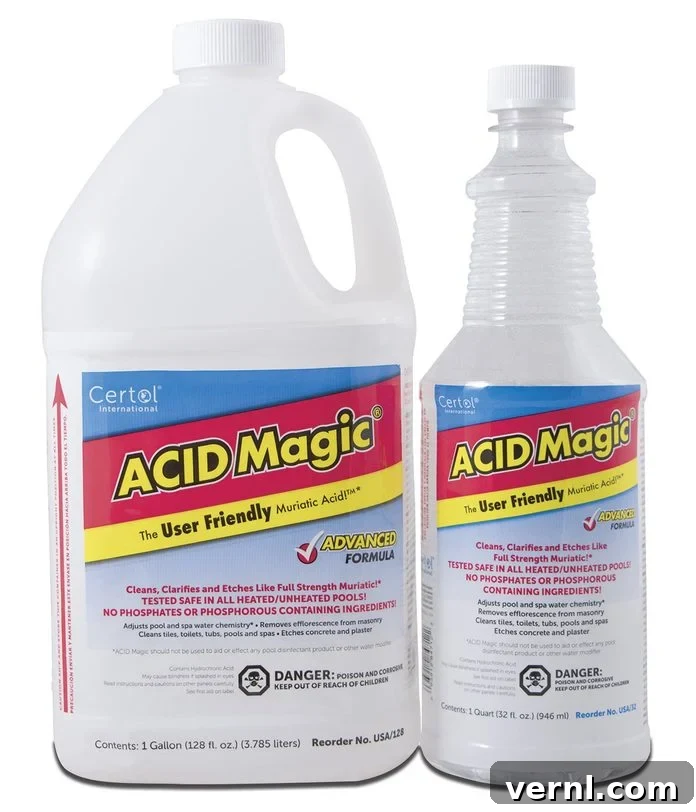
This is where specialized cleaning agents prove invaluable. For an array of stubborn stains—including rust, efflorescence (the powdery white residue), mineral buildup, and mildew—ACID Magic® from Certol International emerges as a highly effective and eco-friendly solution. This product offers a powerful yet safer alternative to traditional muriatic acid, long recognized for its intense cleaning capabilities.
Why Choose ACID Magic for Concrete Cleaning?
- Safer Formulation: ACID Magic is engineered to be a one-for-one replacement for standard muriatic acid but with significantly enhanced safety features.
- Reduced Fumes: It generates up to 90 percent fewer fumes, making it considerably safer and more comfortable to use, even in indoor environments, provided proper ventilation is maintained.
- Skin Contact: Thanks to its buffering agents, ACID Magic is far less corrosive to intact skin compared to traditional muriatic acid, though wearing gloves and eye protection is always recommended as a best practice.
- Versatile Cleaning: Its efficacy against a wide spectrum of stains—from hard water deposits to mineral efflorescence—makes it an indispensable tool for comprehensive concrete care.
For detailed instructions on how to leverage ACID Magic for general concrete cleaning, you can refer to comprehensive guides provided by the manufacturer. Timely intervention with appropriate cleaners like ACID Magic can prevent superficial blemishes from becoming deeply embedded, structural problems.
Click here for more information on cleaning with ACID Magic.
3. The Freeze-Thaw Cycle: Why Deicing Chemicals are Harmful
In colder climates, the temptation to quickly clear snow and ice with deicing chemicals is strong. However, experts strongly advise against using deicers on concrete, particularly on slabs less than a year old. The common misconception is that the chemicals themselves directly harm the concrete. In reality, the primary culprit is the dramatic increase in freeze-thaw cycles that deicing agents induce.
Understanding the Damage Mechanism
Deicing agents work by lowering the freezing point of water. As they dissolve snow and ice, they create a salty brine solution. This solution, instead of simply melting away, constantly thaws and refreezes as ambient temperatures fluctuate. This means the concrete is subjected to significantly more freeze-thaw cycles than it would naturally experience. Each time water freezes, its volume expands by approximately 9 percent. When this happens within the porous structure of concrete, it creates immense internal pressure, leading to micro-cracks that progressively worsen over time, resulting in spalling, scaling, and eventual structural failure.
Moreover, this briny solution, being liquid, readily migrates into the concrete’s pores. As it refreezes within these pores, the expanding ice exerts internal pressure, further aggravating damage. Certain deicers are particularly detrimental:
- Ammonium Nitrates and Ammonium Sulphates: These chemicals are highly corrosive and chemically attack the concrete, breaking down its matrix. They should be avoided at all costs.
- Rock Salt (Sodium Chloride) or Calcium Chloride: While less chemically aggressive towards concrete than ammonium compounds, these still contribute to accelerated freeze-thaw damage and can be harmful to surrounding vegetation, lawns, and plants.
The safest and most effective alternatives for managing snow and ice on concrete are diligent manual removal (shoveling and scraping) and the application of inert materials like sand. Sand provides traction without altering the freezing point of water, thus preventing the harmful freeze-thaw cycles.
4. Preparing for Perfection: Etching Concrete for Coatings
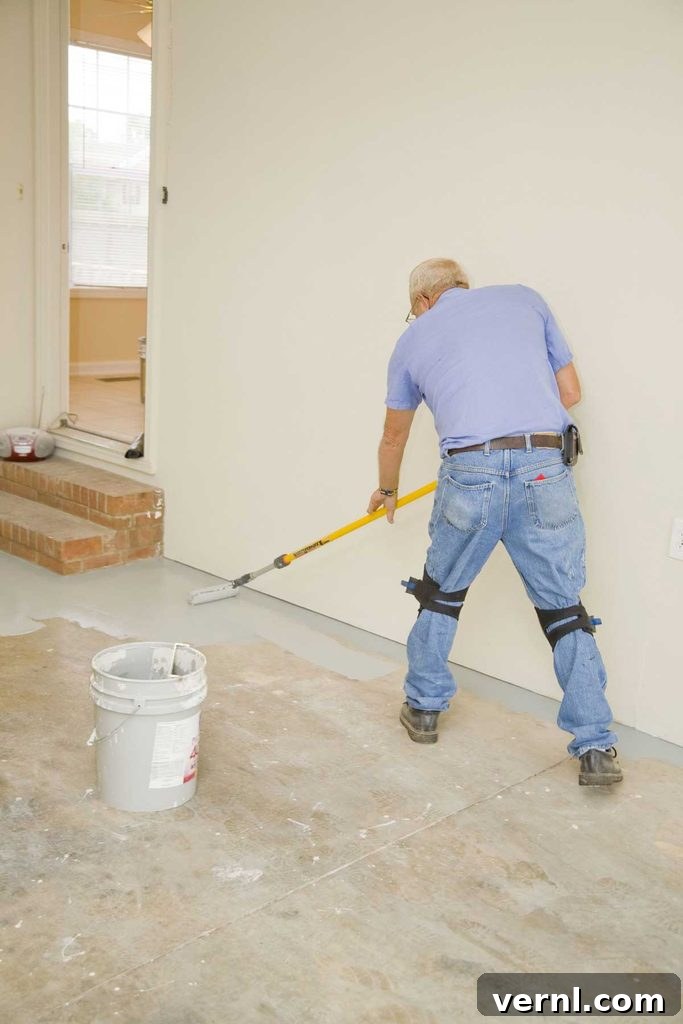
Transforming a dull concrete floor with paint or an epoxy coating not only enhances its aesthetic appeal but also provides an additional layer of protection against stains, abrasion, and corrosive elements. However, the success and longevity of any concrete coating hinge entirely on proper surface preparation, with etching being a non-negotiable step.
Why Etching is Essential
Concrete etching is the process of lightly roughening the concrete’s surface, creating a microscopic profile that allows paints and coatings to adhere securely. Without proper etching, paint simply sits on the surface, making it prone to peeling, flaking, and premature failure. Skipping this vital preparatory stage almost guarantees that you’ll be repainting your floor sooner than desired. While professional shot-blasting offers the most aggressive preparation, for many DIY enthusiasts, chemical etching presents a more accessible and cost-effective solution.
Once again, ACID Magic proves to be an excellent tool for this task. Its safer, eco-friendly formulation makes it an ideal choice for preparing concrete surfaces for painting or coating.
ACID Magic Etching Guidelines
To achieve optimal results and ensure safety when etching concrete with ACID Magic, adhere to these simple yet critical rules:
- Dilution Ratio: Always start with a diluted mixture. A common starting point is a 1:4 ratio of ACID Magic to water (e.g., one gallon of ACID Magic to four gallons of water). If this initial dilution doesn’t achieve the desired etching, you can gradually increase the concentration up to a 1:2 ratio.
- Mixing Order: Always add ACID Magic to water, never the other way around. This helps control the chemical reaction and minimize splashing.
- Concrete Age: Only use ACID Magic on concrete that is more than 90 days old. Newer concrete may still be curing and can react unpredictably.
- Wet the Concrete: Never apply ACID Magic to dry concrete. Always pre-wet the concrete surface thoroughly before application. This prevents the acid from soaking in too quickly and ensures an even etch.
Following these guidelines will help ensure a successful etching process, creating a robust bond between your concrete and its new coating. For more detailed instructions on etching concrete with ACID Magic, refer to manufacturer resources.
Click here for more details about etching concrete with ACID Magic.
BONUS: Checking for Moisture Before Painting
Just as external water can damage concrete, moisture migrating upwards from beneath the slab can wreak havoc on coatings. Issues like poor perimeter drainage, high water tables, leaky pipes, or general climate conditions can all contribute to this phenomenon. Paint adheres poorly to damp concrete, leading to blistering, peeling, and a short-lived finish.
Before applying any coating, it’s crucial to assess for hidden moisture problems. Beyond obvious visual cues like standing water or dark patches, you can perform a simple, inexpensive moisture test:
- Cut a 16-inch by 16-inch piece of clear plastic sheeting.
- Securely affix it to a clean area of the concrete floor using duct tape on all four sides, creating an airtight seal.
- Wait 24 hours.
- Peel off the plastic sheet and examine its underside and the concrete surface beneath.
If you observe condensation on the underside of the plastic or a damp, darkened area on the concrete, you have a moisture problem that needs professional attention before any painting can proceed. If the plastic and concrete remain dry, you’re cleared to move forward with etching and coating.
5. The Integrity of Joints: A Crucial Venture
Expansion joints—those intentional, felt-lined gaps between concrete slabs—are not mere aesthetic divisions. They serve a critical structural purpose: allowing concrete slabs to expand and contract freely with temperature fluctuations. Without these joints, or if they become compromised, the immense stress generated by expansion and contraction can lead to pitching, heaving, rising, sinking, and ultimately, severe cracking of the slabs. Maintaining these joints in a watertight condition is paramount to the overall health and longevity of your concrete.
Repairing and Sealing Expansion Joints
Neglected expansion joints allow water to seep beneath the slabs, undermining the sub-base and exacerbating the problems of movement and cracking. Fortunately, repairing these joints is a straightforward DIY task that can prevent far more extensive and costly damage.
- Remove Old Felt: Begin by thoroughly removing any worn-out or deteriorated felt filler from the expansion joint. A sturdy utility knife is often sufficient, but for stubborn or deeply embedded material, an angle grinder fitted with a thin cutting wheel might be necessary. Always prioritize safety: wear heavy-duty gloves and safety glasses during this step. If you don’t own an angle grinder and don’t anticipate frequent use, many home improvement centers offer tool rental services.
- Clean the Joint: Once the old felt is removed, use a shop vacuum to meticulously clean out all debris, dust, and loose particles from within the joint. A clean, dry surface is essential for proper adhesion of the new sealant.
- Insert Backer Rod: To minimize the amount of sealant required and to provide proper support, fill the deeper sections of the gap with closed-cell foam backer rod (also known as filler rope). This material prevents the sealant from sinking too deep and ensures it forms a robust, flexible bond at the correct depth.
BONUS: Backer Rod Sizing Tip
When purchasing backer rod, select a size that is approximately 1/8 of an inch larger in diameter than the expansion joint gap. This slight oversized fit ensures a snug placement and optimal compression.
- Position the Backer Rod: Firmly push the backer rod into the gap, ensuring it tucks securely under the bottom edges of the concrete slabs. The goal is to create a consistent, level surface for the self-leveling sealant, typically aiming for the sealant to be about 1/2 inch thick.
- Apply Self-Leveling Sealant: Follow the manufacturer’s directions precisely to apply the self-leveling crack sealant. These sealants are designed to flow smoothly and create a flush, watertight surface. Use a caulking gun for even application, moving steadily along the joint. Allow adequate curing time as specified by the product, protecting the area from foot or vehicle traffic during this period.
Proactive maintenance of your concrete surfaces is not merely about aesthetics; it’s a strategic investment in the longevity and structural integrity of your property. By implementing these five relatively simple and cost-effective tips—regular sealing, prompt cleaning, avoiding harmful deicers, meticulous etching before coatings, and diligent joint repair—you can significantly extend the life of your concrete patios, driveways, and floors. These practices protect your investment, maintain curb appeal, and prevent the need for more extensive, expensive repairs down the line. Embrace these steps to ensure your concrete remains a durable, beautiful asset for decades to come.
ACID Magic is widely available at hardware retailers such as Ace Hardware and True Value, as well as numerous pool supply companies. For specific distributor information and to find a retailer near you, please refer to the official ACID Magic website.
Click here to learn more about where ACID Magic is sold.
Sponsored by Acid Magic