
Essential Wisdom for Aspiring Carpenters: 5 Critical Lessons for Rookies on the Jobsite
Starting a new job in any skilled trade, especially as a carpenter, can be an exhilarating yet daunting experience. The world of construction is vast, intricate, and often unforgiving. For those who haven’t had the benefit of formal trade school or technical college training, much of the foundational knowledge and practical skills must be acquired directly on the job. This hands-on learning, while incredibly valuable, can also be overwhelming for a rookie trying to find their footing.
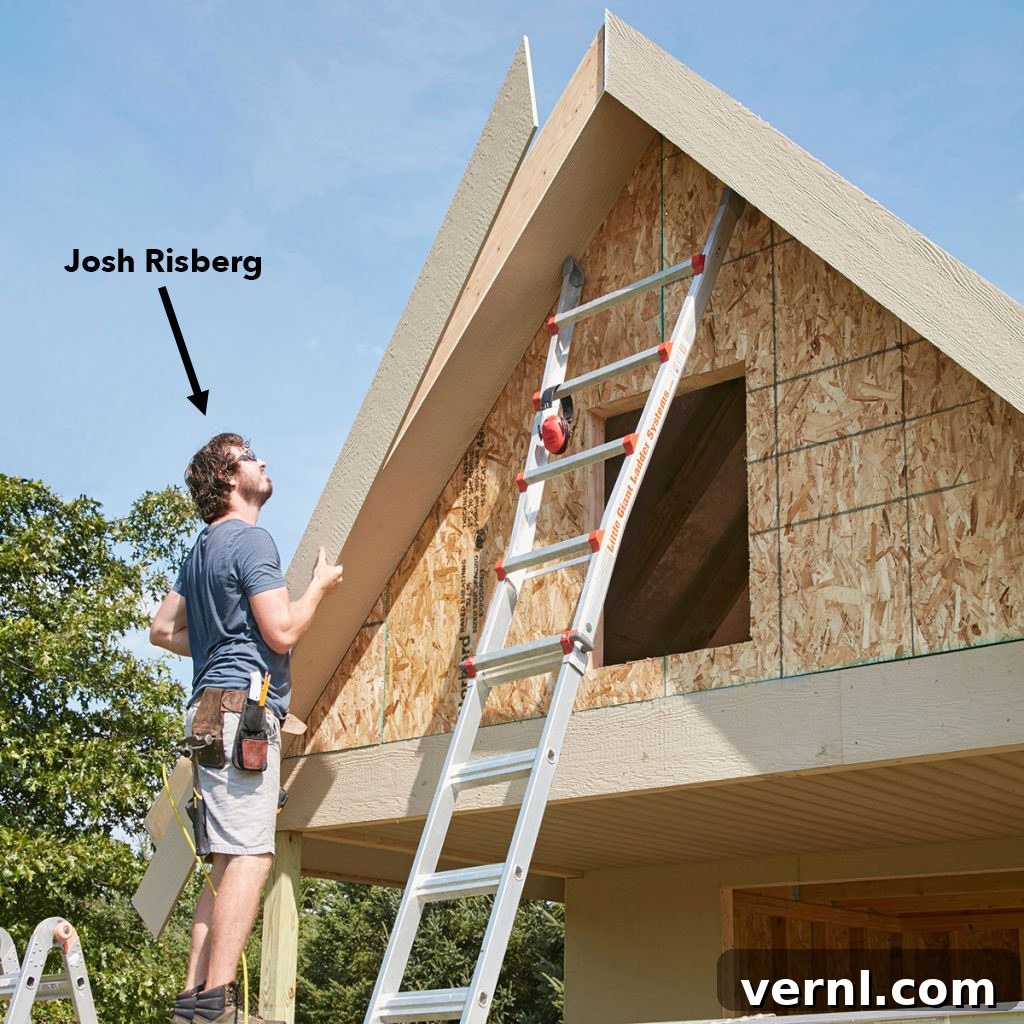
To provide a compass for those embarking on a carpentry career, we reached out to Josh Risberg, a former lead carpenter and current set-builder for Family Handyman. Drawing from his extensive experience, Risberg shared five crucial insights he wished he had known when he first started as a rookie carpenter. These pieces of wisdom are not just technical tips but fundamental principles that can help any aspiring tradesperson navigate the complexities of a construction site with greater confidence and competence.
Build Your Foundation: Get a Tool Belt and Load It Up Wisely
One of the most immediate and impactful steps you can take as a new carpenter is to invest in a quality tool belt and stock it with essential, frequently used small tools. Imagine the efficiency gained by having everything you need within arm’s reach, rather than constantly searching for misplaced items or, worse, borrowing from a busy colleague. Your tool belt isn’t just a convenience; it’s a symbol of preparedness and professionalism.
Fill your belt with indispensable items such as a scribing tool, a torpedo level, a speed square, and a small pry bar. These seemingly minor tools are the workhorses of daily carpentry tasks, and having them readily accessible will save you invaluable time and effort throughout the workday. Beyond these, consider adding a reliable tape measure, a sharp utility knife, a carpenter’s pencil, and a set of chisels. Each tool plays a vital role in ensuring accuracy, efficiency, and quality in your work.
“Learn how to use them, too,” Risberg emphasizes. “Get familiar with them before you start, especially with the scribing tool. You’ll be using that one a lot.” This isn’t just about possession; it’s about proficiency. Understand the purpose of each tool, how to maintain it, and how to use it safely and effectively. Proficiency with your basic tools is a cornerstone of good craftsmanship. Moreover, coming prepared sends a strong message to your crew. It demonstrates initiative, respect for their time, and a genuine commitment to the job. A rookie who consistently has their own essential tools and knows how to use them will undoubtedly earn the respect and trust of their peers much faster than one who constantly needs to borrow.
Master the Language of the Trade: Learn the Lingo
Entering the world of carpentry is akin to learning a new language. Construction sites are bustling environments where precise communication is paramount. As a rookie, you’ll inevitably encounter a barrage of specialized terms and acronyms that can feel overwhelming if you don’t grasp their meanings. Understanding the difference between terms like plumb, level, and square is not just helpful; it’s absolutely critical for comprehending instructions and executing tasks correctly.
“Someone will say something like ‘plumb up the wall’ and you’ll be like, ‘What?’ ” Risberg recounts, highlighting the common confusion rookies face. Misinterpreting these terms can lead to costly mistakes, wasted materials, and significant delays. To help you get started, here are the fundamental definitions of these core carpentry terms:
- Plumb: This refers to something being perfectly vertical, straight up and down, perpendicular to a level plane. Think of a plumb bob hanging freely, pointing directly towards the earth’s center. Ensuring a wall is plumb means it stands perfectly straight without leaning.
- Level: This describes something being perfectly horizontal, straight side to side, parallel to the earth’s horizon. A level floor or beam is flat and even across its surface.
- Square: This term indicates that two surfaces or lines meet at a precise 90-degree angle. When a corner is square, it forms a perfect right angle, essential for proper fit and alignment in construction.
Beyond these foundational three, expand your vocabulary to include terms like “stud,” “joist,” “rafter,” “header,” “sill,” “sheathing,” “fascia,” “soffit,” “rough-in,” and “finish carpentry.” Each term describes a specific component, process, or phase of construction, and knowing them allows you to follow directions accurately, ask informed questions, and contribute effectively to discussions. Learning the lingo is about more than just sounding smart; it’s about ensuring safety, quality, and seamless coordination on the jobsite.
Embrace Collaboration: Be a Team Player from Day One
Carpentry is rarely a solitary endeavor. Houses and other structures are complex puzzles, with countless interconnecting pieces and systems, all installed by different tradespeople. Thinking with a narrow, self-focused mindset, such as, “I’m a trim guy, I do the trim,” is a common pitfall for new carpenters, as Risberg points out. This limited perspective can lead to significant problems down the line.
True craftsmanship involves understanding the bigger picture. Every cut, every nail, and every installation you perform affects the next person’s job. Proactive communication and collaboration with other trades—electricians, plumbers, HVAC technicians, drywallers, and even other carpenters working on different aspects—are absolutely essential. For instance, if you’re framing a wall, consider where the electrician will need to run wires or where a plumber might install pipes. A small adjustment on your part during framing can prevent major headaches and costly rework for another trade later on.
Each person working on a construction project is responsible for their “piece of the puzzle.” If those pieces don’t ultimately fit together seamlessly, someone will have to answer for the discrepancies. Make sure that someone is not you. By laying out everything carefully, thinking ahead about how your work integrates with others’, and communicating openly about potential conflicts or concerns, you become an invaluable team member. This not only fosters a more efficient and harmonious work environment but also builds your reputation as a thoughtful, reliable, and skilled carpenter who contributes to the overall success of the project.
Expect the Unexpected: Understand That Houses Are Just Weird Sometimes
One of the most important lessons a rookie carpenter can learn is to approach every structure, especially older homes, with a healthy dose of skepticism. The assumption that things are perfectly plumb, level, or square can lead to costly and frustrating mistakes. Wood warps and settles over time, foundations shift, and even new construction can have its imperfections. Houses are, simply put, often weird.
As Risberg aptly illustrates, “The ceiling might be one height on one end of the room and a whole inch higher on the other.” Imagine trying to install crown molding or build custom cabinetry in a room with such discrepancies if you blindly assumed the ceiling was level. Basing your measurements and cuts on how things *should* be, rather than how they *actually* are, is a recipe for disaster. This could mean a significant amount of wasted materials, hours of rework, and immense frustration.
Therefore, cultivate a habit of meticulous verification. Always measure twice, and then measure again. Use your level, speed square, and plumb bob to check surfaces, corners, and angles, even if they appear correct at first glance. Develop an eye for inconsistencies and a problem-solving mindset to adapt to existing conditions. Instead of fighting the imperfections, learn to work with them, making adjustments that create the illusion of perfection or seamlessly integrate with the structure’s unique character. This adaptability and attention to detail are hallmarks of an experienced carpenter who understands the unpredictable nature of buildings and materials.
Know Your Building Blocks: Study the Materials
A proficient carpenter doesn’t just know how to cut and join wood; they deeply understand the properties of the specific materials they are working with. Each material has unique strengths, weaknesses, and ideal applications. Ignoring these inherent characteristics can lead to structural failures, premature deterioration, or simply a subpar finished product.
“There are some things you’ll only know if you go out of your way to learn them,” Risberg observes. He offers a classic example: “Like, don’t put standard MDF [medium density fiberboard] in a bathroom because the moisture could make it expand.” This crucial piece of information, if overlooked, would result in warped, swollen, and ruined cabinetry or trim in a high-humidity environment. Instead, a carpenter knowledgeable about materials would opt for moisture-resistant MDF, plywood, or solid wood, appropriately sealed and finished.
Expand your knowledge beyond just different types of wood (softwoods like pine, hardwoods like oak, engineered woods like plywood and OSB). Understand the nuances of various fasteners (nails, screws, bolts, their different gauges and coatings), adhesives, insulation, drywall, siding, roofing materials, and finishes. Learn about their resistance to moisture, fire, pests, and rot. Pay attention to how they expand and contract with temperature changes, their weight-bearing capacities, and how different chemicals or finishes react with them. This comprehensive understanding ensures you select the best material for each specific situation, maximizing durability, functionality, and aesthetic appeal.
To truly master this aspect, make it a point to study manufacturer specifications, material safety data sheets, and building codes. Take notes on the job, ask questions, and review what you’ve learned at the end of each day. This continuous learning will transform you from someone who merely works with materials into someone who truly understands and respects them.
Beyond the Basics: Cultivating a Successful Carpentry Career
While these five “trade secrets” provide a solid foundation for any budding carpenter, remember that success in the trades is also built upon a bedrock of fundamental professional qualities. Show up on time, be ready to work hard, and maintain an attentive and eager-to-learn attitude. These are standard expectations for anyone aspiring to master a craft. Furthermore, prioritize safety at all times—understand and follow all jobsite safety protocols to protect yourself and your colleagues.
Seek out opportunities for continuous learning, whether through online resources, trade magazines, or by observing and asking questions of experienced journeymen. Finding a mentor who can guide you through challenging tasks and share their accumulated wisdom can accelerate your growth significantly. Cultivate problem-solving skills, as every project presents unique challenges that require creative and practical solutions. Most importantly, develop a passion for craftsmanship and take pride in every piece of work you produce, no matter how small.
Combine these essential qualities with the five critical insights from Josh Risberg, and you’ll be well on your way to transitioning from a nervous rookie to a respected, efficient, and highly skilled carpenter. With dedication, practice, and a commitment to continuous improvement, you will soon be working like a veteran trim carpenter, building not just structures, but a rewarding and fulfilling career.