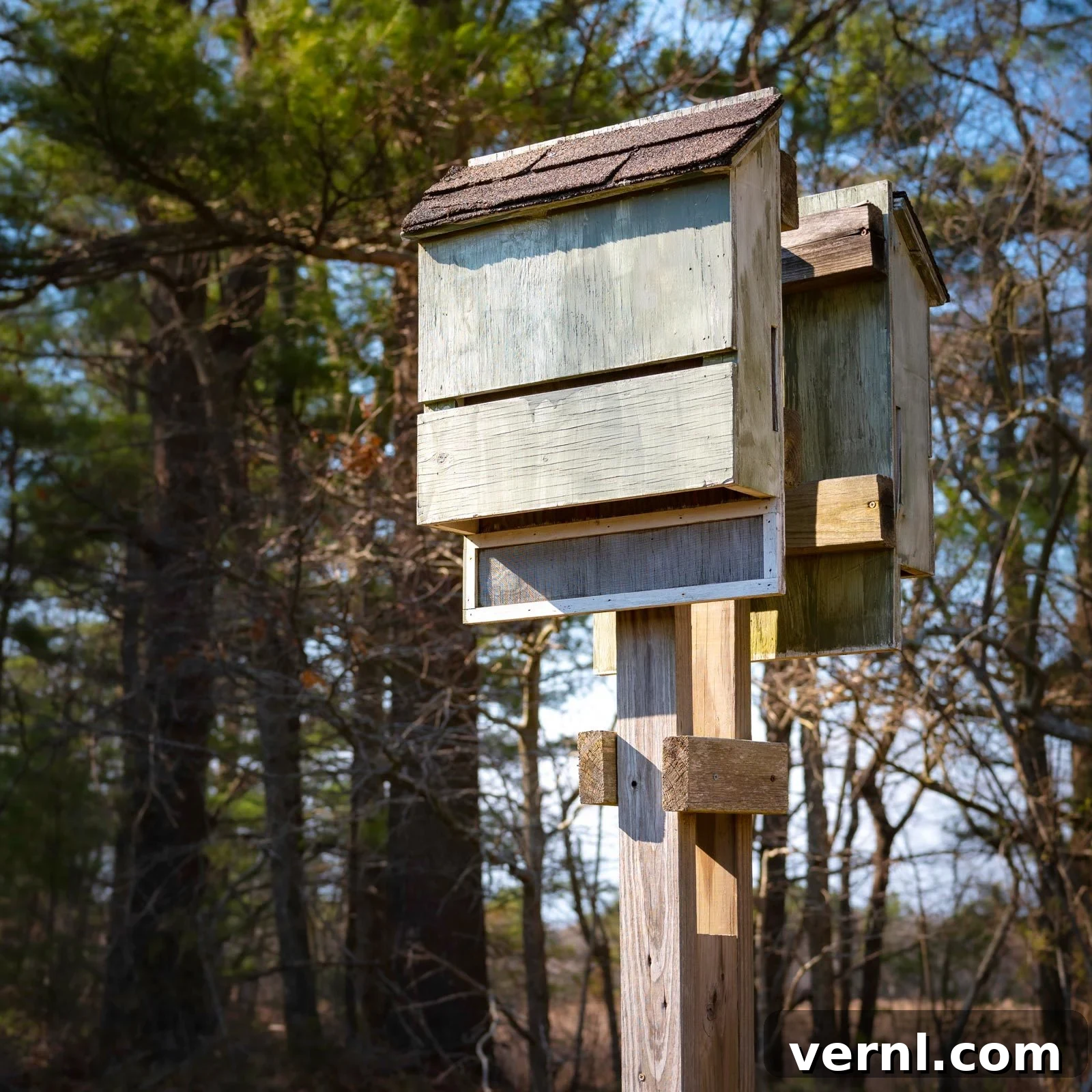
The story of Richter Perky’s ambitious 30-foot-tall bat house in the Florida Keys, built in 1929, is a fascinating one. Perky, a resort owner, envisioned a paradise free from the relentless swarms of mosquitoes, believing a thriving bat colony would be the ultimate natural solution. Despite his meticulous efforts, the bats didn’t establish a permanent residence. This anecdote serves as a gentle reminder that attracting bats can sometimes be a test of patience and persistence. However, Perky’s experience shouldn’t deter aspiring bat enthusiasts; countless individuals successfully welcome these incredible creatures into their backyards, reaping a multitude of ecological benefits.
Often shrouded in myths and misunderstood, bats are far from the scary creatures they’re often portrayed to be. In reality, they are vital components of healthy ecosystems and can be incredibly beneficial neighbors, particularly for homeowners looking to protect their gardens, crops, or simply reduce mosquito populations naturally. Understanding their crucial role and basic needs is the first step toward creating a welcoming environment for these nocturnal allies.
Why Attract Bats to Your Property? The Unsung Heroes of the Night
Beyond the awe-inspiring spectacle of bats emerging at dusk, their presence offers profound advantages for any homeowner or gardener. These winged mammals are powerful protectors of the environment, playing an indispensable role in pest control, pollination, and even fertilization. Their dietary habits make them invaluable assets, especially if you’re battling common garden pests.
One of the most compelling reasons to encourage bats to your yard is their insatiable appetite for insects. They are expert hunters, consuming vast quantities of harmful beetles, moths, and other crop-decimating pests that can wreak havoc on your plants. Furthermore, their guano (excrement) is a nutrient-rich organic fertilizer, prized by gardeners for its ability to enhance soil health and plant growth without chemical additives. However, for many, the overriding motivation to host a bat colony is their incredible efficiency in mosquito control.
“If you have an overabundance of mosquitoes in your garden, you definitely want to encourage bats to set up housekeeping in your yard,” explains Peggy Doyle, CEO of Gardening Know How. “One bat can consume more than 600 mosquitoes in a single hour! Imagine the collective impact of an entire colony working tirelessly through the night.” This natural pest management system significantly reduces reliance on chemical insecticides, promoting a healthier environment for your family, pets, and local wildlife.
By providing suitable habitats like bat houses, you’re not only benefiting your own property but also actively contributing to bat conservation efforts. Many bat species face increasing threats globally, including habitat loss due to urban development and deforestation, scarcity of reliable water sources, improper exclusions from human structures, and the devastating impacts of extreme temperatures and diseases exacerbated by climate change. Supporting bat populations in your backyard is a tangible way to help safeguard these vulnerable creatures.
“People additionally endanger bats by simply failing to educate themselves,” states Danielle Cordani, program coordinator for Merlin Tuttle’s Bat Conservation. “Fear is the number one cause of violence towards bats, which is driven by misunderstanding.” Dispelling common myths and promoting accurate information about bats is crucial for their survival and for fostering a harmonious coexistence.
Does Your Location Influence Success in Attracting Bats?
While bats are incredibly adaptable and found nearly worldwide, certain environmental factors can certainly influence your success in attracting them. Bats, like all living creatures, require reasonable access to three fundamental necessities: food, water, and shelter. Because bats are native to diverse regions across the globe, as long as these core needs are met, there’s a strong possibility they could take up residence in your carefully prepared bat house.
“It really is just a matter of a proper bat house, time, and a little luck,” observes Addison McCool, executive director of Bat World Sanctuary. “In many areas, bats are very accustomed to the sounds of traffic and people, and many colonies even roost in extremely urban environments, such as the vibrant downtown area of Austin, Texas. This demonstrates their remarkable ability to thrive in proximity to human activity, provided their essential needs are met and disturbances are minimized.” Therefore, even if you live in a suburban or semi-urban setting, you shouldn’t be discouraged.
So, is it truly easy to attract bats? The answer, as with many things in nature, is nuanced: “Yes and no,” says Cordani. “We’ve seen bat houses become occupied in a matter of days, and some in a number of years. It’s often a combination of ideal conditions, a bit of serendipity, and most importantly, patience.” To significantly maximize your chances of success, consider the following key strategies:
Invest in a Quality Bat House: A Crucial First Step
A well-constructed bat house is not merely an optional accessory; it is an absolute prerequisite for attracting and sustaining a bat colony. Quality matters immensely when it comes to providing a safe, durable, and comfortable roosting site. If you opt to purchase a bat house, ensure it comes from a credible manufacturer with a proven track record. Organizations like Merlin Tuttle’s Bat Conservation offer expert recommendations based on extensive research into bat preferences and structural integrity. Look for houses made from untreated wood, with rough interior surfaces that bats can easily grip, and appropriate ventilation slots to prevent overheating.
For those with a penchant for DIY projects, a variety of plans are available online. “I built this one,” referring to a specific design, “So far we haven’t had bats take up roost there, but I’m hopeful they will come soon. I’d love to have them around.” Regardless of whether you buy or build, consider installing a variety of house options if you have the time and resources. Different bat species may prefer varying chamber sizes or designs, and offering choices increases your chances of attracting a diverse colony.
Strategic Placement: Choose a High and Safe Mounting Spot
The location and height of your bat house are critical factors influencing its occupancy. Bat houses should ideally be mounted 15 to 20 feet off the ground. This elevation provides bats with a sense of security from ground predators like snakes, raccoons, and domestic cats. Equally important, the height allows them ample space to swoop down and gain flight easily when exiting the roost. A clear flight path, free from dense vegetation or obstructions, is essential. Furthermore, ensure the bat house is at least 20 feet from any potential perches where animals could gain access to the bats.
“Houses mounted on trees rarely work,” warns McCool, “and mounting in this fashion also allows for easy access to the bats by predators.” Trees can also offer too much shade, block flight paths, and present obstacles. The most successful placements are typically on freestanding poles or on the side of a building. For houses mounted on poles, Cordani also recommends installing predator guards to prevent snakes and other climbing animals from reaching the roost. When choosing a building, a south or east-facing wall is often ideal for optimal sun exposure (more on this below).
One practical consideration for placement is avoiding common walkways or areas directly above frequently used doors or windows. “This will allow people to avoid guano in unwanted areas,” advises Cordani. “Speaking of guano, it should be harvested and handled carefully enough to not breathe in any dust — that same care you would take when handling any animal feces. It’s an excellent fertilizer but should be collected responsibly.”
Keep It Warm: The Importance of Thermal Regulation
Bats are particular about temperature, preferring warm environments for roosting, especially during maternity seasons when mothers are raising their young. Placing your bat house in a sunny spot is paramount for its success. Ideally, the house should receive at least six hours of direct sunlight per day, particularly morning sun. Installing it on the side of a building, especially a south or east-facing wall, can also help absorb and retain warmth, creating a more stable internal temperature.
However, depending on your specific climate zone, bats may prefer varying amounts of sun and shade throughout the day. In hotter climates, too much direct sun can lead to overheating. “Many bat lovers find success in double boxes either side by side or back to back, one side dark and one side light,” suggests Doyle. “This innovative method allows the bats to relocate within the structure according to their needs, providing them with a microclimate choice that can adapt to daily temperature fluctuations.” This flexibility can significantly increase the chances of occupancy, as bats can self-regulate their body temperature by moving to a cooler or warmer chamber.
Just Add Water: A Life Source for Bats
A reliable freshwater source is a significant attractant for bats. Ideally, your bat house will be situated within a quarter mile of a permanent freshwater body like a pond, stream, lake, or even a large, consistent bird bath or trough. Proximity to water is especially beneficial for mother bats caring for their young, as it reduces the energy expenditure required to find hydration.
While a lack of nearby water won’t necessarily “make or break” your success, having one certainly improves your odds. Bats drink by flying low and skimming the surface of the water, so shallow, open water sources are best. A typical bird bath might be too small for this maneuver, but a larger, shallow basin or a cleverly designed water feature can work. “Natural water sources not only provide essential drinking areas but are typically rich habitats full of diverse insect prey for bats to eat,” explains Cordani. “Having said that, bats have been known to visit swimming pools to get a drink, so adaptability is certainly a characteristic of these incredible mammals.” If natural water isn’t available, consider creating a small, wildlife-friendly pond or installing a large water trough.
Cultivate a Bat Garden: A Buffet for Insectivores
Complementing your bat house with a thoughtful garden design can create an even more irresistible environment for bats. Bats naturally prefer areas rich in native vegetation, as these ecosystems support a diverse suite of insects—their primary food source. By intentionally planting specific types of flora, you can effectively roll out a welcome mat for their prey.
“Planting night-blooming flowers, especially those with white or pale-colored petals, is an excellent strategy,” recommends Cordani. “These flowers are particularly attractive to moths and other nocturnal insects, significantly increasing the food availability for your bats during their active hours.” Consider plants like evening primrose, moonflower, nicotiana, and white petunias. Aromatic herbs such as mint, lemon balm, and basil can also attract various insects. Furthermore, incorporating native trees and shrubs provides shelter and additional foraging opportunities for bats and their insect prey, creating a thriving miniature ecosystem that supports biodiversity.
Protect Your Guests: Keep Domestic Predators Indoors
Once bats begin to roost in your bat house, it’s paramount to ensure their safety from potential predators. Domestic cats, in particular, are opportunistic hunters and will readily take advantage of a vulnerable roost if they can access it. Any form of disturbance or perceived threat from predators will quickly deter bats from occupying or returning to your bat house. “It’s important to limit any disturbance to your bat house while bats are present,” emphasizes Cordani. This includes ensuring pets are kept indoors, especially during dusk and dawn when bats are most active and vulnerable as they enter and exit the roost. A safe and undisturbed environment is key to establishing a long-term colony.
Patience is a Virtue: The Long Game of Bat Attraction
Even after implementing all the best practices and meticulously preparing your bat house and garden, it’s crucial to cultivate patience. Attracting bats is rarely an instantaneous process. It can take weeks, months, or even several years before a colony decides to call your bat house home. This waiting period is entirely normal and should not be a cause for discouragement.
“Bats are very stubborn about their roosting spots,” explains McCool, “so they will not abandon an existing roosting site in favor of a brand new bat house unless something significant disturbs them from that area, whether it be human interference, natural disaster, or increased predator activity at their current location.” They are creatures of habit and will only move if their current roost becomes unsuitable or unsafe. Therefore, the best approach is to set up your bat house correctly, maintain the surrounding environment, and then simply wait. Your persistence will often be rewarded.
Stick to Nature: Avoid Artificial Attractants
In your eagerness to attract bats, you might encounter various products marketed as “bat attractants” or “sprays.” Unfortunately, these artificial aids are largely ineffective and can even be detrimental. “There are sprays and other attractants on the market, but those do not have any proven track record of actually working,” McCool states. “Some bat hormone attractants will actually have the opposite effect, as some species are territorial and will avoid houses that have used these sprays, perceiving them as already occupied or claimed by another bat.” The most successful methods are always those that mimic natural conditions and provide genuine necessities: a safe, warm roost, a reliable food source, and access to water. Nature knows best.
Establish a Maintenance Routine for Long-Term Success
Installing a bat house is just the beginning; ensuring its long-term success requires a commitment to regular maintenance. Periodically check your bat house to make sure that unwanted guests, such as wasps, haven’t moved in. If you discover a wasp nest, carefully remove them, ideally during cooler temperatures when they are less active, to make the house available for bats. Once bats begin roosting, observe their behavior from a distance to learn how you can best accommodate them. This might involve minor adjustments to the surrounding vegetation or ensuring a continuous water supply.
“It’s important to remember that installing a bat house is a commitment, and it requires patience and maintenance!” Cordani reminds us. By performing routine checks and addressing any issues promptly, you ensure your bat house remains a welcoming, safe, and viable roosting site for years to come, offering a continuous stream of benefits to your garden and the local ecosystem.
About the Experts
Peggy Doyle is the CEO of Gardening Know How, a comprehensive resource dedicated to sharing expert tips and tricks for cultivating healthy and thriving gardens. Whether you’re an urban apartment dweller tending to houseplants or embarking on a vast backyard gardening project, Gardening Know How provides invaluable advice for every green thumb.
Danielle Cordani serves as the program coordinator for Merlin Tuttle’s Bat Conservation. MTBC is a renowned organization dedicated to saving millions of bats each year through innovative conservation strategies and by educating the public about these frequently misunderstood and incredibly vital mammals.
Addison McCool is the executive director of Bat World Sanctuary, a non-profit organization dedicated to the rescue, rehabilitation, and release of bats, as well as providing sanctuary for non-releasable bats. They are also committed to educating the public about the importance of bat conservation.