Mastering Toilet Removal: Your Ultimate DIY Guide
The thought of undertaking a plumbing project can often feel overwhelming, with many homeowners instinctively reaching for the phone to call a professional. However, when it comes to tasks like removing a toilet, you might be surprised to find that it’s a perfectly manageable DIY endeavor. With the right knowledge, a few essential tools, and a clear, step-by-step approach, you can successfully tackle this common home improvement task yourself, saving both time and money. This comprehensive guide is designed to empower you, offering everything you need to know to safely and efficiently remove a toilet.
Whether you’re embarking on a full bathroom renovation, replacing an outdated or malfunctioning fixture, or simply need to access underlying plumbing for repairs, understanding the proper procedure for toilet removal is an invaluable skill. We’ll walk you through each critical stage, from preparing your workspace and shutting off the water supply to detaching the unit and cleaning the flange area, ensuring a smooth and mess-free process from start to finish. Get ready to conquer your bathroom project with confidence!
Why You Might Need to Remove a Toilet
There are several compelling reasons why you might find yourself needing to learn how to remove a toilet. Understanding your motivation can help you plan the subsequent steps, whether it’s immediate replacement or a more extensive renovation:
- Bathroom Remodel or Renovation: This is one of the most common reasons. Upgrading tiles, installing new flooring, or completely redesigning your bathroom often necessitates temporarily or permanently removing the toilet.
- Toilet Replacement: Your existing toilet might be old, inefficient, leaking, cracked, or simply not matching your aesthetic preferences. Upgrading to a modern, water-saving model is a popular choice for many homeowners.
- Accessing Damaged Subfloor or Plumbing: Sometimes, water leaks from around the toilet base can cause damage to the subfloor beneath. Removing the toilet provides the necessary access to repair or replace the damaged wood, preventing further structural issues. Similarly, if there’s a problem with the drainpipe or flange, the toilet must be removed to reach it.
- Replacing a Faulty Wax Ring: The wax ring forms a watertight seal between the toilet and the drainpipe. If this seal fails, you might notice leaks around the toilet’s base. Removing the toilet to replace the wax ring is a routine plumbing repair.
- Deep Cleaning or Resolving Persistent Odors: In rare cases, stubborn odors or grime trapped beneath the toilet might necessitate its removal for a thorough cleaning of the floor and flange area.
Whatever your reason, approaching the task with proper planning and execution will ensure a successful outcome.
Essential Tools and Materials for Toilet Removal
Before you begin the process of removing an old toilet, it’s crucial to gather all the necessary tools and materials. Having everything at hand will prevent interruptions and make the job much more efficient and safer. Here’s a comprehensive list of what you’ll typically need:
- Adjustable Wrench or Basin Wrench: Essential for disconnecting the water supply line from the toilet tank and loosening flange nuts.
- Pliers: Can be useful for stubborn nuts or small adjustments.
- Screwdriver (Flathead and Phillips): To pry off bolt caps and potentially for any other screws.
- Utility Knife or Putty Knife: For cutting through any caulk or sealant around the base of the toilet. A putty knife is also excellent for scraping off old wax.
- Large Sponge and Bucket: To soak up residual water from the tank and bowl after flushing.
- Wet/Dry Vacuum (Shop-Vac): Highly recommended for thoroughly removing all remaining water from the toilet bowl’s trapway, minimizing spills.
- Rags or Old Towels: For managing spills, wiping surfaces, and protecting your floor.
- Work Gloves: To protect your hands from grime, potential sharp edges, and for general hygiene.
- Safety Glasses: To protect your eyes from splashes or debris.
- Drop Cloth or Old Cardboard: To lay on the bathroom floor, protecting it from water, grime, or potential impacts.
- Garbage Bags: For disposing of the old wax ring and other waste materials.
- New Wax Ring (Optional, if reinstalling): If you plan to reinstall the same toilet or a new one, you’ll need a new wax ring for a watertight seal.
- Plastic Bags or Old Rags: To temporarily plug the open drainpipe after the toilet is removed, preventing sewer gases from entering your home.
- Penetrating Oil (e.g., WD-40): Useful if the flange nuts are rusted and difficult to remove.
- Hacksaw or Mini Hacksaw (Last Resort): For cutting through severely rusted bolts if they cannot be loosened.
Safety First: Important Precautions for Toilet Removal
While DIY toilet removal is a rewarding project, it involves working with water, heavy objects, and potentially unsanitary conditions. Prioritizing safety is paramount to prevent injury to yourself or damage to your home:
- Always Shut Off the Water: This is the golden rule. Ensure the water supply to the toilet is completely off before disconnecting anything. Double-check by flushing the toilet after turning the valve.
- Wear Protective Gear: Always don work gloves to protect your hands from grime, sharp edges, and potential bacteria. Safety glasses are also highly recommended to shield your eyes from splashes or flying debris.
- Lift with Your Legs, Not Your Back: Toilets, especially one-piece models, are surprisingly heavy. When lifting, bend at your knees and use your powerful leg muscles, keeping your back straight. If possible, enlist a helper for support, particularly when navigating tight spaces.
- Be Prepared for Residual Water: Even after flushing and sponging, some water will inevitably remain in the toilet’s trapway. Have rags, towels, and a bucket ready to catch any drips or spills when you lift and move the unit.
- Ventilation: If the bathroom is poorly ventilated or if you encounter mold or strong odors, open windows or use a fan to ensure adequate airflow.
- Hygiene: Toilets are not the cleanest fixtures. Wash your hands thoroughly with soap and water after completing the project.
- Protect Your Floor: Lay down a thick drop cloth or old cardboard around the toilet to protect your bathroom floor from potential scratches, impacts, or water damage.
By keeping these safety tips in mind, you can ensure a smooth, secure, and successful toilet replacement or removal process.
Watch the Video Tutorial for a Visual Guide
Sometimes, seeing is believing. For a clear, visual demonstration of each step involved in removing a toilet, we highly recommend watching this comprehensive video tutorial. It provides real-time insights and practical tips that complement the written instructions, helping you to confidently navigate each stage of the process.
Step-by-Step Guide: How to Remove a Toilet
Now that you’re equipped with the right tools and safety knowledge, let’s dive into the practical steps of how to remove a toilet. Follow these instructions carefully for a smooth operation.
Step 1: Prepare Your Workspace
Clear everything out of the immediate vicinity of the toilet – rugs, wastebaskets, bath mats, etc. Lay down your drop cloth or old towels on the floor around the toilet to protect your flooring from spills and potential scuffs. Ensure all your collected tools are within easy reach.
Step 2: Shut Off the Water Supply to the Toilet
Locate the small shut-off valve on the wall or floor behind or beside the toilet, usually connected by a flexible supply line. Turn the valve clockwise until it’s completely closed. This action will stop water from flowing into the toilet tank. After turning the valve, flush the toilet to confirm that no new water enters the tank. If your toilet lacks an individual shut-off valve, you’ll need to turn off the main water supply to your entire house, typically located near your water meter or main entry point.
Step 3: Flush the Toilet and Drain the Tank and Bowl
With the water supply off, flush the toilet to empty the tank as much as possible. Hold the flush handle down to ensure a complete drain. Use your large sponge to soak up any remaining water from the bottom of the tank and squeeze it into your bucket. Next, remove as much water as possible from the toilet bowl. A wet/dry vacuum is ideal for this, as it can suck out almost all the water from the S-trap, significantly reducing spills when you lift the toilet. If you don’t have a shop-vac, use the sponge and bucket to remove water until the bowl is nearly dry.
Step 4: Disconnect the Water Supply Line
Using your adjustable wrench or basin wrench, carefully loosen the nut that connects the flexible water supply line to the fill valve assembly on the underside of the toilet tank. Turn the nut counter-clockwise. Be prepared for a small amount of residual water to drip out, so have a rag or small container ready underneath. Once disconnected, bend the supply line out of the way or detach it completely if you plan to replace it.
Step 5: Remove the Decorative Bolt Caps and Nuts
At the base of the toilet, you’ll find two bolts that secure the toilet to the floor flange. These are usually covered with decorative plastic caps. Use a flathead screwdriver or your fingers to carefully pry these caps off. Beneath the caps, you’ll see nuts securing the toilet to the closet bolts. Use your adjustable wrench to loosen and remove these nuts. If the nuts are rusted and stubborn, apply some penetrating oil and let it sit for a few minutes. If they still won’t budge, you may need to carefully cut them off with a hacksaw or mini hacksaw blade as a last resort, taking care not to damage the flange.
Step 6: Cut the Caulk Seal (If Present)
Many toilets have a bead of caulk or silicone sealant applied around their base where they meet the bathroom floor. If your toilet is caulked, use a utility knife or a sharp putty knife to carefully cut through this seal. Score along the entire perimeter of the toilet base, ensuring the caulk is completely separated from both the toilet and the floor. This step is critical; forcing the toilet up without breaking this seal can damage your flooring or the toilet itself.
Step 7: Lift and Remove the Toilet
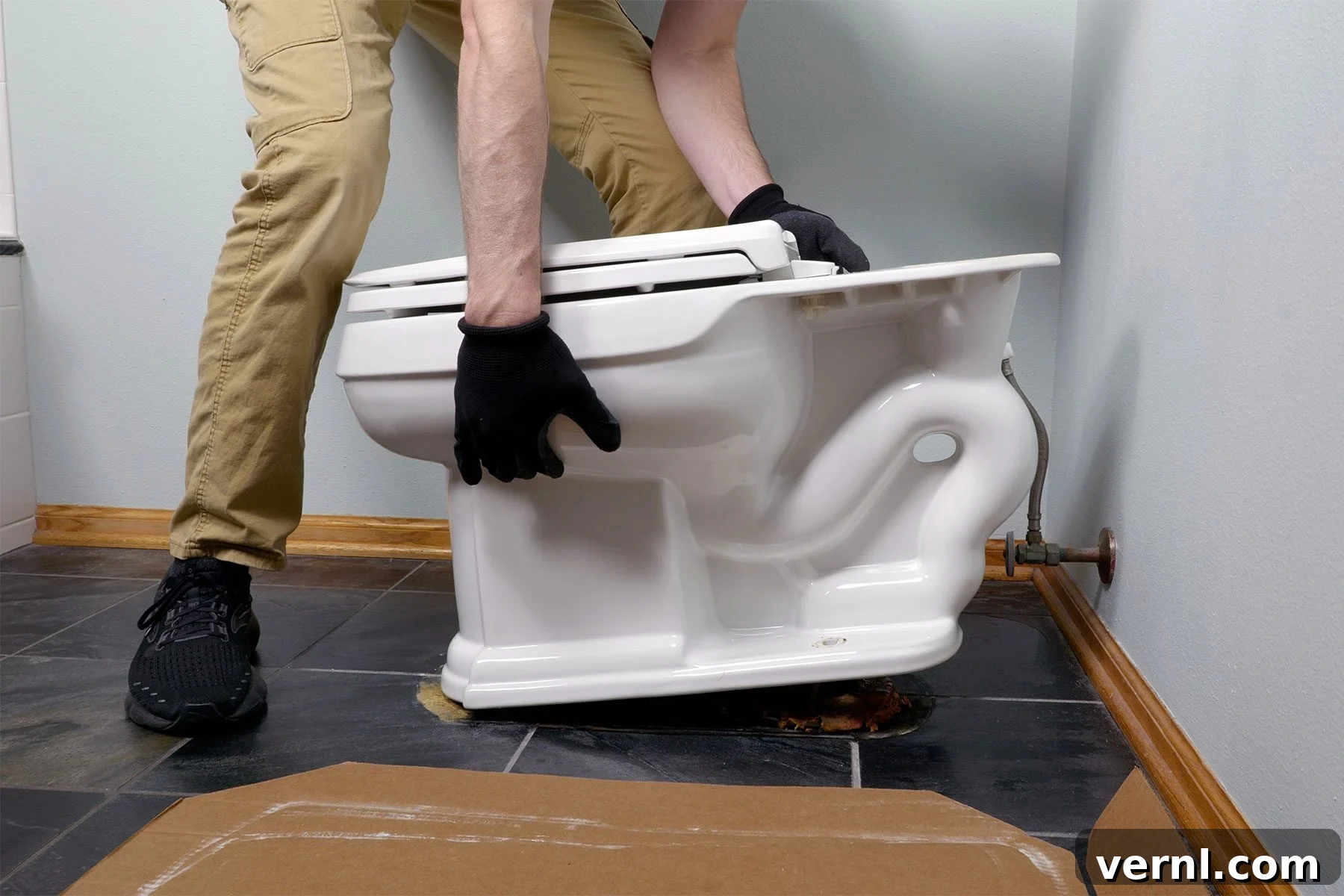
This is often the heaviest part of the job. Grasp the toilet bowl firmly on both sides, making sure you have a secure grip. Wiggle the toilet gently from side to side to help break any remaining seal from the old wax ring. With a straight back and bent knees, lift the toilet straight up and off the floor flange bolts. Be aware that even after draining, some water might still be trapped in the toilet’s internal trapway. Tilt the toilet slightly away from you or over a bucket as you move it to prevent any last-minute spills. If you have a two-piece toilet, you might consider removing the tank first to make the bowl lighter, though many prefer to remove them as a single unit.
Step 8: Clean the Flange Area
Once the toilet is removed, you will see the floor flange and the old wax ring. Use your putty knife or an old chisel to thoroughly scrape off all traces of the old wax ring from both the flange and the toilet’s base (if the wax stuck to it). It is absolutely crucial that this area is completely clean and smooth for the new wax ring to form a proper, watertight seal when the new or reinstalled toilet is in place. Also, clean any grime or debris from the surrounding floor.
Step 9: Inspect the Flange and Subfloor
This is an opportune moment to inspect the toilet flange for any cracks, damage, corrosion, or signs of wear. Ensure it is securely fastened to the subfloor. If the flange is damaged, rusted, or sitting too low, you may need to repair or replace it, or add a flange extender kit, before proceeding with a new toilet installation. Additionally, check the surrounding subfloor for any signs of water damage, rot, or soft spots, which should be addressed immediately to prevent future problems.
Step 10: Temporarily Plug the Drainpipe & Dispose of the Old Toilet
Immediately after cleaning the flange, stuff an old rag or a plastic bag into the open drainpipe. This prevents noxious sewer gases from entering your home and keeps debris from falling into the plumbing system. For disposing of the old toilet, contact your local waste management services or municipality. Regulations vary; some areas accept them as bulk waste, others may require you to take them to a specific recycling facility, or even break them down before disposal. Be cautious as porcelain can be sharp if broken.
Common Challenges and Troubleshooting During Toilet Removal
While the steps for toilet removal are generally straightforward, you might encounter a few common hurdles:
- Rusted or Stuck Flange Bolts: This is perhaps the most frequent issue. As mentioned, penetrating oil can help. Apply it generously and give it time to work. If the nuts are completely seized, carefully cutting them with a mini hacksaw is often the best solution.
- Stubborn Caulk Seal: If the caulk is particularly tenacious, repeatedly scoring it with a utility knife and gently prying with a putty knife or thin pry bar should eventually break the seal. Avoid excessive force that could damage the floor or toilet.
- Residual Water in the Trapway: Even with a shop-vac, some water might cling to the internal curves of the toilet’s trapway. Be prepared for a small amount of spillage when lifting and tilting the toilet. Keep rags handy.
- Heavy Toilet: One-piece toilets are especially heavy. Don’t hesitate to ask for a second person to help with the lift. If it’s a two-piece toilet and it’s too heavy, you can remove the tank first, making the bowl much lighter to handle.
What’s Next After Toilet Removal?
With your old toilet successfully removed, the area is now prepped for the next phase of your bathroom project. Whether you’re installing a brand-new, more efficient toilet, undertaking extensive subfloor repairs, or laying down new tile, remember that a clean and properly prepared flange is the foundation for a successful and watertight installation.
Conclusion: Empowering Your DIY Plumbing Skills
Removing a toilet might have initially appeared to be a daunting plumbing task, but by meticulously following this detailed guide, you’ve hopefully discovered that it is a highly manageable and rewarding DIY project. Taking your time, gathering the appropriate tools, and prioritizing safety are the cornerstones of a successful removal. You’ve not only achieved a significant cost saving by undertaking the work yourself but also gained invaluable experience and confidence in your home maintenance abilities. You are now well-prepared for the subsequent stages of your bathroom improvement endeavor, whether it involves installation or further renovation.
For even more in-depth information, expert tips, and detailed visual aids, we encourage you to visit our recommended resource:
How To Remove a Toilet the Right Way