Comprehensive Guide to Furniture Anchoring: Protecting Your Home and Loved Ones
A major earthquake is undeniably devastating, leaving widespread destruction and a lasting impact. Yet, even a minor tremor, often overlooked in the grand scheme of seismic activity, possesses the power to inflict significant damage within our homes. This reality became profoundly clear to me after the 1989 Loma Prieta earthquake, which struck close to where I lived. The aftermath wasn’t just about structural integrity; it was about the unexpected chaos caused by everyday household items.
When the ground begins to shake, the seemingly mundane aspects of our living spaces can become dangerous. Unlocked cabinets can spontaneously spill their contents, sending dishes and pantry items crashing to the floor. Refrigerator doors, designed for easy access, can swing open, emptying food onto the kitchen floor. However, these inconveniences pale in comparison to the more perilous scenarios. Bookshelves, tall cabinets, and heavy appliances like microwaves can topple over, transforming familiar objects into serious hazards for anyone nearby. These instances underscore a critical, yet often underestimated, aspect of home safety.
This potential for destruction provides a compelling reason to integrate furniture anchoring into your earthquake preparedness priorities. But there’s an even more urgent and universal motivator: child safety. As Allen Baler, CEO and co-founder of 4Patriots, powerfully states, the statistics are alarming. “Nearly 75% of the over 5,000 annual injuries from furniture tip-overs involve children,” says Baler. “As a dad of three young daughters, I can’t stress enough how important it is to anchor your furniture to the wall.”
Daniel Kilburn, founder of Emergency Action Planning LLC and author of Family Urban Disaster Planning, echoes this sentiment. “When it comes to securing your home, it’s not just about being prepared for emergencies,” he emphasizes. “One important aspect that often gets overlooked is anchoring your furniture and wall hangings. It may seem simple, but it’s a crucial step in ensuring your home is as safe as it can be.” These experts highlight that furniture anchoring isn’t merely an earthquake-specific measure; it’s a foundational element of everyday home safety.
What Exactly Are Furniture Anchors and Why Are They Essential?
Furniture anchors are simple, yet incredibly effective, safety devices typically consisting of straps or brackets designed to secure furniture directly to a wall. Their primary function is to prevent tall, unstable, or heavy furniture – such as bookshelves, dressers, entertainment centers, and wardrobes – from toppling over. This prevention is vital, whether the cause is a natural disaster like an earthquake, an accidental bump, or the inquisitive climbing of an adventurous child.
Beyond preventing full tip-overs, these anchors also serve to immobilize heavy appliances. During periods of heavy shaking, items like microwave ovens can “walk” across countertops, potentially falling to the floor and creating further hazards or damage. Anchors ensure these items remain in place, reducing both injury risk and property loss.
Despite their critical role, furniture anchors are surprisingly affordable. “For less than $20 and a quick trip to the hardware store, you can get everything you need to anchor your furniture,” Baler points out. This minimal investment yields significant returns in safety and peace of mind. While installation is generally straightforward, for maximum earthquake protection, it’s crucial to attach them securely to wall studs, rather than just the drywall. This involves a small amount of preparation, primarily locating the studs, but it ensures the anchor can withstand significant forces.
Exploring the Different Types of Furniture Anchors
When you begin shopping for furniture anchors, you’ll encounter several common types, each with specific applications and advantages. Understanding these options will help you choose the best solution for your home’s needs.
Furniture Cables
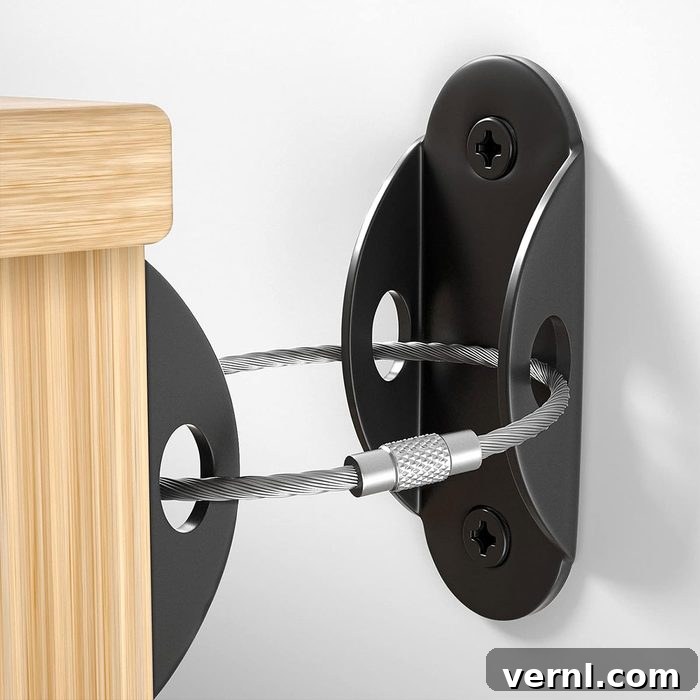
Furniture cables typically consist of two independent brackets equipped with eyeholes. These brackets are then connected by a strong, flexible connector, often made of durable nylon or braided steel. The installation process involves screwing one bracket securely to a wall stud and the other to the back of the furniture item. The connector is then threaded through the eyeholes and fastened, drawing the furniture closer to the wall and preventing it from tipping forward.
A key feature of many cable anchors is a quick-release mechanism, such as a turnbuckle or a tab. This design allows you to easily disengage the anchor when you need to move the furniture for cleaning, rearranging, or other purposes, offering both security and convenience.
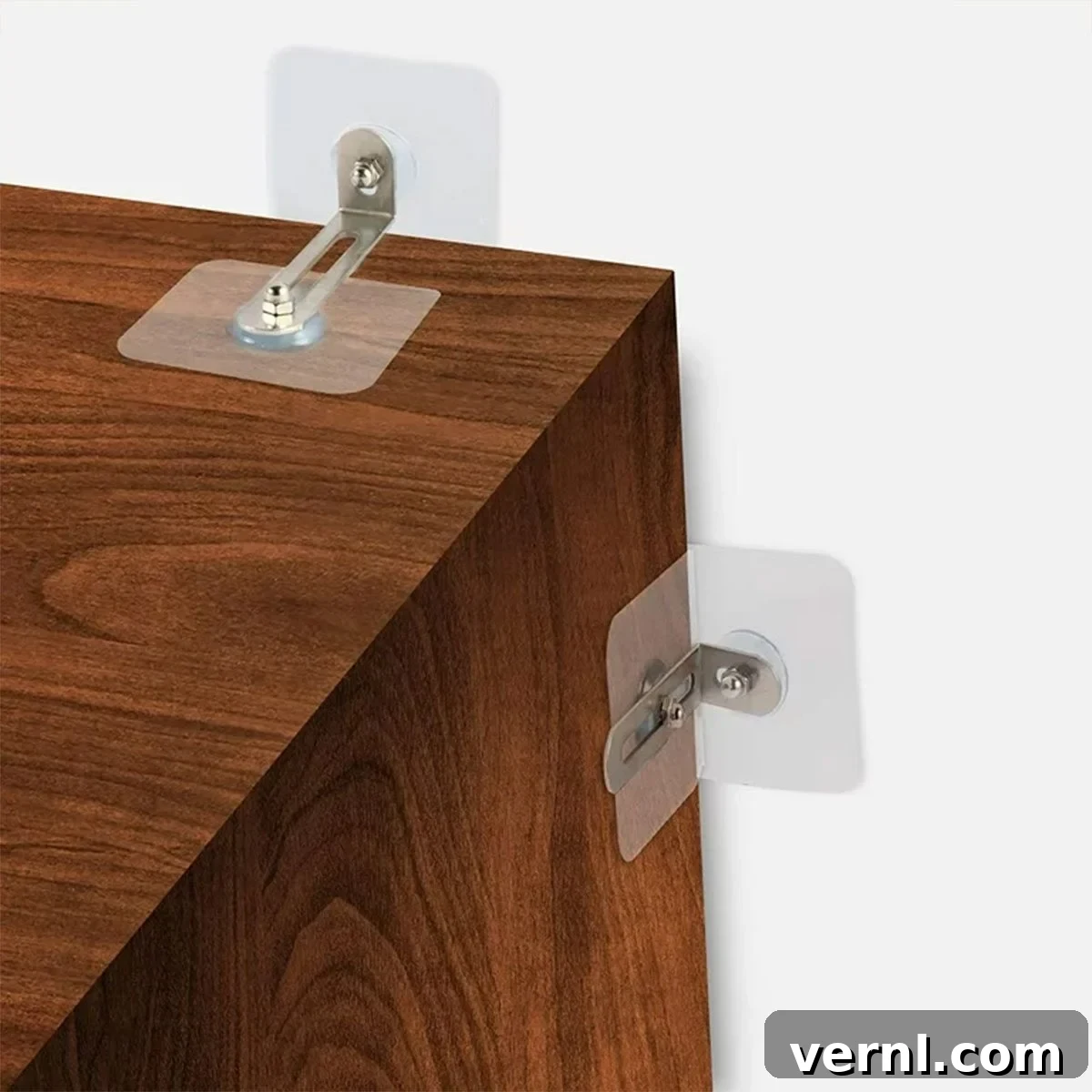
While exploring options, you might come across no-drill anchors, which feature adhesive-backed brackets designed to avoid making holes in your furniture or walls. These are generally intended for baby-proofing lightweight furniture and have significant limitations. For robust earthquake preparedness, which requires resisting substantial forces, adhesive anchors typically cannot hold the necessary weight and strength that screw-on brackets provide. Therefore, for serious seismic protection, stronger, screw-in solutions are highly recommended.
Furniture Straps
Furniture straps are structurally similar to cable anchors but often feature brackets permanently connected to the ends of adjustable straps. Installation is straightforward: one bracket is screwed to the wall and the other to the furniture. Once both are secured, the length of the strap can be adjusted to pull the furniture snugly against the wall, removing any dangerous gaps and securing it firmly. These straps are often made from strong nylon webbing or similar durable materials.
Corner Brackets
For items that sit flush against a wall, such as certain bookshelves or cabinets, steel corner brackets can be an effective alternative to cables or straps. These L-shaped brackets are typically inexpensive and offer a very rigid connection. The main consideration with corner brackets is their visibility; they must be fastened to the sides or top of the furniture, meaning they will remain exposed. While they provide excellent stability, their aesthetic impact is something to consider, especially for prominent furniture pieces.
Beyond Furniture: Securing Wall Hangings
Kilburn wisely reminds homeowners that heavy wall hangings also demand attention when it comes to anchoring. While you won’t find “specific anchors” labeled just for wall hangings in the same way you do for furniture, the principle remains the same: ensure whatever anchor you use can reliably support the item’s weight, especially during the dynamic forces of an earthquake.
For securing truly heavy objects, like a large mirror or substantial piece of art, the most secure method involves driving threaded anchors directly into a wall stud. This provides the strongest possible hold. However, placement doesn’t always allow for mounting directly into a stud. In such cases, when an item must be mounted between studs, toggle bolts become the superior choice. These ingenious anchors expand behind the drywall, creating a broad, secure grip that won’t easily come loose, even when subjected to heavy shaking. For lighter items, plastic expansion anchors or self-drilling anchors might suffice, but for anything substantial, prioritize stud mounting or toggle bolts.
Who Absolutely Needs Furniture Anchors?
The question isn’t so much “who needs them?” as “who doesn’t?” However, certain demographics and living situations make furniture anchoring an absolute necessity, not just a recommendation.
Firstly, **any household with small children** should have furniture anchors installed without delay. The statistics on furniture tip-overs are a stark reminder of the everyday dangers posed by unsecured furniture. As reported on AnchorIt.gov, new government regulations, effective September 1, 2023, mandate stringent safety standards for furniture manufactured after that date that is 27 inches or taller. Specifically, clothing storage furniture like dressers must now pass three stability tests and come with a clear warning about the dangers of tip-overs. Crucially, they must also include an anchoring kit and an admonition to homeowners to use it. This legal requirement underscores the severity of the risk.
Secondly, **anyone living in an earthquake zone** needs furniture anchors. While building codes address structural integrity, they don’t always protect against internal hazards. Securing furniture is a vital personal responsibility in earthquake-prone regions, complementing structural safety measures.
And finally, perhaps the rest of us as well. The prevalence of natural disasters and the inherent instability of many modern furniture designs make anchors a smart choice for everyone. “In a world where both the frequency and cost of natural disasters are escalating,” Baler observes, “furniture anchoring is not just a child safety measure; it’s a household necessity.” Kilburn reinforces this broader perspective: “Preparedness is more than just having a plan; it should become a part of your lifestyle. Make anchoring a regular part of your home safety routine and rest easy knowing you’ve taken another crucial step in fortifying your sanctuary.”
Choosing the Best Furniture Anchors for Your Needs
Selecting the right furniture anchor is critical to its effectiveness. The most important consideration is ensuring that whatever anchors you choose can handle the specific weight and stability requirements of the item you’re securing. Overlooking this detail can render your efforts useless during an actual event.
For really heavy furniture, such as a large bookshelf loaded with books, or a substantial armoire, opt for robust solutions. This means choosing furniture cables with screw-on metal brackets, heavy-duty straps made from strong webbing, or solid metal corner brackets. Always check the product label for the load capacity the anchors can support before purchasing.
As a general guideline, choose a product that can support at least 400 pounds for items that might slide or move during an earthquake but are unlikely to tip over, such as a sofa or a lower cabinet. For truly top-heavy and dangerous items – like tall, fully loaded bookshelves, large dressers, entertainment units, and other items that pose a significant tip-over risk – it is advisable to select anchors that can support 1,000 pounds or more. Prioritize anchors that attach directly to wall studs for maximum security. If stud placement isn’t possible, use robust toggle bolts for secure drywall mounting.
Beyond weight capacity, consider the material (nylon, steel), the ease of installation, and whether a quick-release mechanism is important for your specific furniture items. Investing a little time in research and installation now can prevent immense damage and potential tragedy later.