
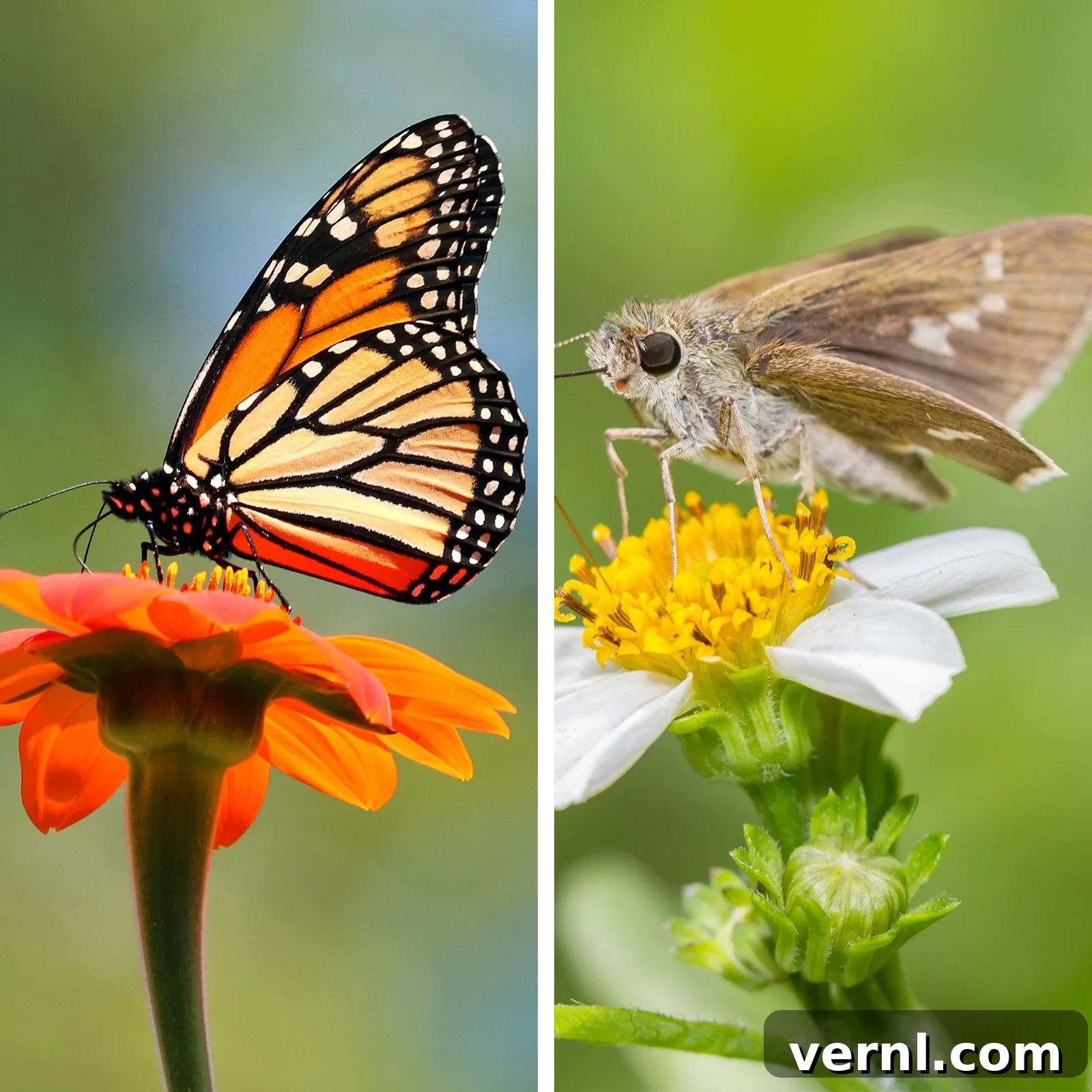
When asked to quickly name a type of butterfly, images of majestic monarchs, elegant swallowtails, vibrant painted ladies, or delicate hairstreaks often flutter into mind. Their daytime dance among flowers is a familiar and cherished sight.
However, when prompted to name a type of moth, many people find themselves stumped. This disparity in popular perception highlights a significant bias: butterflies, with their showy colors and diurnal habits, often capture our attention, inspiring widespread efforts like “planting for butterflies.” The idea of a “moth garden” rarely crosses our minds.
Yet, the true story of biodiversity among these winged insects is quite surprising. There are an astounding 160,000 known species of moths, vastly outnumbering the 17,500 species of butterflies. Both frequent our gardens, play crucial roles in local ecosystems, and are vital pollinators. But when it comes to who deserves the title of “better pollinator,” the answer is far more complex than it first appears. Let’s delve deeper into the fascinating world of Lepidoptera to uncover the unique contributions of both butterflies and moths.
Understanding the Differences: Butterflies vs. Moths
Butterflies and moths are both members of the diverse insect order Lepidoptera, a name derived from Greek meaning ‘scaly wing,’ referring to the tiny, overlapping scales that cover their wings. Despite their visual differences, they share a similar life cycle, undergoing complete metamorphosis. This intricate process involves four distinct stages: starting as an egg, hatching into a larva (commonly known as a caterpillar), transitioning to a pupa, and finally emerging as a winged adult.
A key distinction lies in their activity patterns. As Shiran Hershcovich, lepidopterist manager at Butterfly Pavilion in Westminster, Colorado, explains, “Butterflies are essentially moths that have specialized in being active during the day, so they’re more likely to be flying around your flowers while the sun is out than moths.” This evolutionary divergence into diurnal activity is a relatively recent development in their shared history, providing insights into some of their most striking characteristics.
This shift to daytime activity allowed butterflies to shed the camouflage of earth tones, which are essential for nocturnal survival. Instead, they evolved a spectacular array of colors and patterns. Shubber Ali, CEO of Garden for Wildlife, notes, “That shift to feeding on the nectar of daytime flowering plants allowed these insects to shed their earth tones in favor of the riot of colors they’re known for today, which often act to attract mates or warn predators that they’re poisonous.” These vibrant hues serve not only as a display for potential mates but also as a protective mechanism, signaling toxicity to predators or mimicking other dangerous species.
Beyond their activity times and coloration, several other physical and behavioral differences typically distinguish butterflies from moths:
- Antennae: Moths generally possess feathery or fuzzy antennae, which are highly sensitive to detect pheromones over long distances, crucial for mating in the dark. In contrast, butterfly antennae are consistently thin, ending in a distinctive club-like knob or a slight hook, and are never fuzzy.
- Body Structure: Moths often have stouter, furrier bodies compared to the slender, smoother bodies of butterflies. This dense “fur” provides better insulation, helping moths retain heat during cooler nighttime temperatures, making them more efficient for nocturnal flight.
- Pupal Stage: During their pupal stage, moths have the ability to spin a protective silk cocoon around themselves. Butterflies, on the other hand, form a hardened, naked chrysalis, which is typically smooth and often beautifully colored to blend with its surroundings.
- Wing Resting Position: A common identifier is how they rest their wings. Butterflies typically fold their wings vertically above their backs when at rest, resembling a closed book. Moths, however, usually hold their wings flat against their bodies or in a tent-like fashion over their abdomens.
It’s important to note that nature is full of exceptions. Some moths, like the striking hummingbird moths, defy typical moth characteristics by being active during the day and sporting bright, showy hues, often mistaken for their butterfly cousins due to their swift, hovering flight.
Butterflies: Our Daytime Delight and Pollination Generalists
Butterflies undoubtedly win in the category of bringing immediate joy to humans. Their cheerful presence in our gardens during daylight hours makes them easily observable and universally appreciated. From a pollination perspective, butterflies are often described as generalists. They are efficient nectar seekers, flitting from flower to flower, visiting a wide variety of plants in a relatively short amount of time. This broad approach contributes significantly to the pollination of numerous plant species.
However, the larval stage of both butterflies and moths—the caterpillars—can sometimes be perceived negatively due to their feeding habits. As they grow, caterpillars chew on plants, which can make them appear destructive to garden enthusiasts. But, as Shubber Ali reminds us, “in reality, these plants are their host plants and are meant to be eaten.” These specific plants are essential for the caterpillars’ survival and development. While the damage to a plant might seem harmful initially, many of these plants have evolved to recover quickly from such feeding, and the cycle is a natural and necessary part of a healthy ecosystem.
Moth Pollinators: The Unsung Heroes of Diversity and Specialization
Moths undeniably take the lead in terms of sheer diversity. With roughly ten moth species for every butterfly species, this vast group includes an incredible array of forms, sizes, and ecological niches. This extensive diversity has led to many moths becoming highly specialized pollinators, capable of pollinating plants that few, if any, other animals can. A classic example of this is the unique relationship between the yucca moth and the yucca plant.
“No other animal can pollinate this plant,” explains Shiran Hershcovich. “They’re in a symbiotic relationship, which means that they both depend on each other for survival.” In this remarkable partnership, the yucca moth actively collects pollen and transfers it to the stigma of the yucca flower, ensuring the plant’s reproduction. In return, the yucca plant provides a safe place for the moth’s larvae to develop, feeding on a small portion of the developing seeds. This mutual dependence highlights the critical, often hidden, roles moths play in maintaining plant populations.
Despite their ecological importance, moths often face a perception problem. Their nocturnal habits and generally drab coloration, designed for camouflage in the dark, mean they are less visible and celebrated than butterflies. Furthermore, some moths are unfortunately viewed as pests. Similar to butterfly caterpillars, certain moth caterpillars can cause significant damage to crops, including various fruits, vegetables, and even tobacco. However, this perspective overlooks another crucial ecological benefit. As Ali points out, “On the other hand, these caterpillars are also very effective at controlling weedy plants.” This dual role underscores the complexity of their impact on human interests and natural ecosystems.
The Ultimate Pollination Question: Who Wins?
In the grand debate of which group is the “better” pollinator, the scientific community candidly admits: no one actually knows for sure. Most historical research on pollinators has concentrated on species active during the day, such as butterflies and bees. This focus has resulted in a significant lack of direct scientific evidence and comparative studies between moths and butterflies.
However, recent studies are beginning to shed light on the underestimated capabilities of nocturnal pollinators. A study from the University of Sussex, for instance, concluded that moths might be even more efficient pollinators than bees. This surprising finding is partly attributed to their concentrated activity: “This is partly because moths have a much shorter time to pollinate at night, so they pollinate faster than daytime flying insects,” says Ali. Additionally, the furriness of many moth bodies, which helps them retain heat, also makes them excellent carriers of pollen, collecting and distributing grains as they move from flower to flower.
Ultimately, both Hershcovich and Ali emphasize a crucial misconception: the idea that one pollinator group can or should “rule above the others.” Butterflies and moths are both undeniably essential pollinators, and a truly healthy, resilient ecosystem demands an abundance and diversity of each. Furthermore, the caterpillars from both groups are integral components of the broader food web. Many bird species, for example, rely on hundreds of caterpillars daily to feed their young, highlighting their foundational role in supporting avian populations and beyond.
Beyond Butterflies and Moths: Other Unsung Pollination Heroes
While butterflies and moths are undoubtedly stars of the pollination world, they are far from the only insects contributing to this vital process. Indeed, as Ali states, “The unsung heroes of pollination are flies, beetles and wasps.” Hoverflies, in particular, are incredibly efficient and important pollinators, yet they remain largely unknown to the general public, often mistaken for bees or wasps.
Despite the contributions of these other insects, butterflies and moths retain their status as significant pollinators. Some species specialize in visiting flowers that bees or other insects might overlook, sometimes even in higher numbers, thereby ensuring a wider range of plants are pollinated. This again underscores the overarching principle for a successful garden and a thriving ecosystem: diversity. “Plants and insects have evolved together, and many plants have special anatomical features or scents that align with a specific insect species,” Ali explains. This co-evolution has created a complex web of interdependent relationships, where each pollinator plays a unique and irreplaceable role.
Collectively, pollinators are fundamental to the survival of the world as we know it. “They assist with plant reproduction, and in turn those plants give us food and oxygen,” Hershcovich reiterates. “If we were to lose any of these pieces, our plants would suffer and in turn survival of life as we know it turns precarious.”
How You Can Support Both Butterflies and Moths
To foster a thriving environment for both butterfly and moth populations, consider implementing these actionable steps:
- Educate Yourself: Learn more about the specific insect species, both diurnal and nocturnal, that are native to your local area and their particular needs.
- Plant Native Species: Prioritize planting a variety of native plants. Native flora is specifically adapted to local conditions and provides the precise nectar, pollen, and host plant resources that local butterflies and moths require for their entire life cycles.
- Reduce or Eliminate Pesticides: Pesticides, even those labeled “organic,” can be harmful to pollinators. Opt for integrated pest management strategies that minimize or eliminate chemical interventions.
- Mindful Water Consumption: Practice water conservation in your garden, as water scarcity can impact plant health and, consequently, pollinator populations.
- Minimize Light Pollution: Turn off all unnecessary outdoor lights at night. Artificial light can disorient nocturnal moths, disrupting their navigation, feeding, and reproductive cycles.
For those looking to go the extra mile, Hershcovich suggests, “join a community science program in your area that supports pollinators, like Butterfly Pavilion’s Colorado Butterfly Monitoring Network.” These programs allow individuals to contribute valuable data to scientific research, helping experts better understand and protect these vital insects.
Frequently Asked Questions About Butterflies and Moths
Why do moths fly toward light, but butterflies do not?
The precise reason why moths exhibit this perplexing attraction to artificial lights remains a subject of scientific debate, but several compelling theories aim to explain this nocturnal behavior. One widely accepted idea posits that moths rely on a sophisticated sky navigation system; they naturally orient themselves using distant, steady light sources like the moon or stars as a consistent reference point to maintain a straight flight path.
Artificial lights, being much closer and brighter, can disrupt this natural system, causing moths to become disoriented. Instead of using the light as a distant beacon, they may attempt to maintain a constant angle relative to the nearby artificial source, leading them to spiral inward towards it. Another hypothesis suggests that artificial lights might inadvertently mimic the ultraviolet signature of female moth pheromones or reflect off objects in a way that suggests a clear, unobstructed flight path, drawing the moths in.
Butterflies, conversely, are primarily diurnal creatures. They navigate and find their way using the sun as their primary compass and are generally inactive at night. Since their natural activity and navigation strategies are adapted for daytime conditions, artificial night lights do not exert the same powerful, disorienting pull on them as they do on moths.
Are moths more likely to harm clothes or food?
Indeed, certain species of moths are far more prone than butterflies to cause damage to stored clothes or pantry food items. It is crucial to remember that it is the larval stage – the caterpillars – and not the adult flying moths themselves, that inflict this damage. The adult moths are typically focused on reproduction and nectar feeding.
- Clothes Moths: The larvae of specific moth species, such as the casemaking clothes moth (Tinea pellionella) and the webbing clothes moth (Tineola bisselliella), are notorious for consuming natural fibers. Their diet primarily consists of keratin-rich materials like wool, silk, fur, feathers, and even felt, leading to irreparable holes in garments, carpets, upholstery, and stored textiles.
- Pantry Moths: Other moth larvae, most notably the Indian meal moth (Plodia interpunctella), are common household pests that infest and consume a wide range of stored dry foods. These include grains, cereals, flour, nuts, dried fruits, spices, chocolate, and pet food. Evidence of their presence often includes webbing in food containers, damaged packaging, and larvae or adult moths in the vicinity of food stores.
In contrast, butterflies and their caterpillars typically feed exclusively on growing plants in gardens, fields, and natural habitats. They are not known to consume or cause damage to clothing or stored household food products, focusing their energy on the fresh foliage or nectar essential for their development and survival.
About the Experts
Shiran Hershcovich serves as the Lepidopterist Manager at The Butterfly Pavilion. Her work extensively explores the crucial role pollinators, including both butterflies and moths, play in plant reproduction and in maintaining healthy, balanced ecosystems. Through her research and advocacy, she underscores their fundamental importance, highlighting their contributions to the availability of food and oxygen that sustain life on Earth. Hershcovich is also a passionate advocate for community engagement, actively encouraging the public to participate in citizen science programs to support pollinator conservation efforts.
Shubber Ali is the CEO of Garden for Wildlife. His mission is centered on enhancing environmental health by empowering individuals to cultivate native plants in their local environments. His organization provides guidance and resources, assisting people in creating vibrant habitats that support local wildlife. Ali frequently emphasizes the indispensable value of native plants for both pollinator populations and the overall well-being of local ecosystems, stressing their critical role in ecological balance.