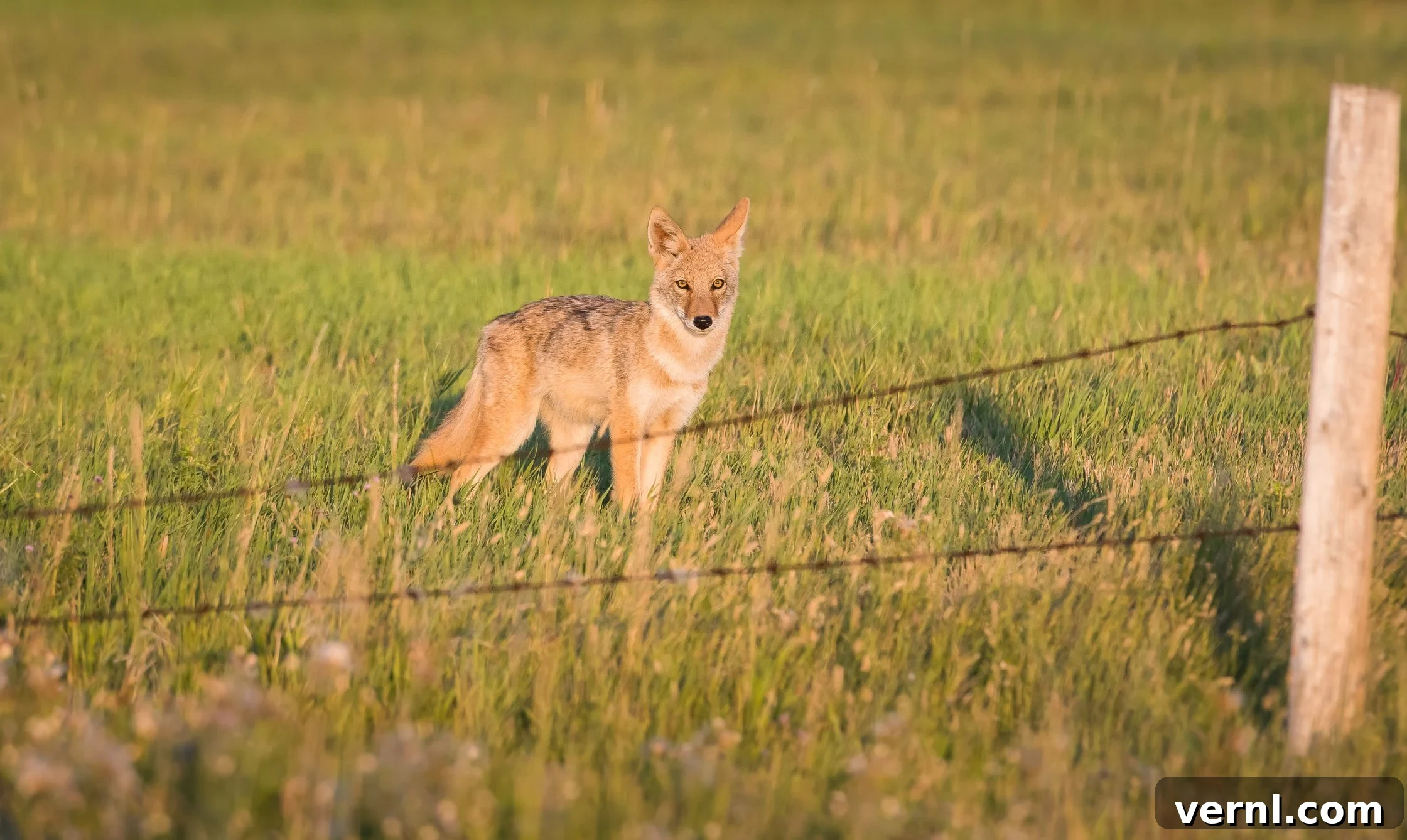
A pack of coyotes baying at the full moon is a scene commonly associated with the rugged mountains, dense woodlands, and expansive deserts of the American Southwest. It’s an image that evokes wild, untamed landscapes, far removed from the concrete jungles and bustling streets of urban environments. Yet, the surprising reality is that these incredibly adaptable creatures have made themselves at home virtually everywhere, extending their dominion far beyond their traditional territories.
Indeed, coyotes are now practically ubiquitous across North America. Their remarkable expansion has seen them spotted in unexpected places: roaming the Bronx and Manhattan boroughs of New York City, casually strolling through a Los Angeles classroom, and even making a memorable entrance into a Quiznos sub shop in Chicago, where one famously jumped onto a beverage cooler. This pervasive presence is a testament to their resilience and ability to thrive in a myriad of ecosystems, including those heavily altered by human activity.
Over the last century, coyotes have dramatically extended their geographical range to encompass nearly the entirety of North America, stretching from the frozen frontiers of Alaska down to the tropical landscapes of Panama, and from the Pacific Coast eastward to the Atlantic. In regions like California, where they are as common as deer, spotting a coyote along the side of a road or even in a suburban park is no longer an unusual occurrence. This widespread distribution underscores a fundamental truth about coyotes: they are master adapters.
The Adaptive Nature and Diet of the Coyote
Coyotes are incredibly resourceful creatures, known for their opportunistic feeding habits. Their diet is a flexible menu, adjusting dynamically according to the availability of food sources in their immediate environment. This adaptability allows them to survive and flourish in diverse habitats, from arid deserts to lush forests and densely populated urban areas.
In the wilderness, their meals might consist of desert cactus fruits, a wide array of insects, or abundant rodents such as mice and voles. They are also adept hunters of small game like rabbits, and can even take down larger prey, including deer, especially the young or infirm. In agricultural settings, coyotes may target livestock, posing a significant challenge for ranchers and farmers. As independent wildlife biologist Christine Paige, author of A Landowner’s Guide to Wildlife Friendly Fences, notes, “The greatest vulnerability for livestock is lambing/calving areas and chicken coops/free-range chicken pastures.” Unfortunately, Paige emphasizes, there is no universal, one-size-fits-all solution for effectively deterring coyotes from these vulnerable zones, requiring a nuanced and adaptive approach.
In urban and suburban landscapes, their diet shifts to include easily accessible human-related food sources. This can range from pet food left outdoors, contents of unsecured garbage bins, fallen fruit from trees, and even compost piles. Rodents like rats and squirrels, which thrive in human-dominated areas, also become a primary food source, demonstrating the coyote’s crucial role in urban ecosystems as a natural form of pest control. This dietary flexibility is a cornerstone of their survival and explains their successful integration into our shared spaces.
Can Coyotes Jump Fences? Understanding Their Agility and Inquisitiveness
The question of whether coyotes can jump fences is frequently asked by homeowners and livestock owners seeking to protect their property. The unequivocal answer is: absolutely. Their agility and physical prowess are often underestimated, allowing them to overcome barriers that might seem formidable to other animals.
As this short video vividly illustrates, a coyote can effortlessly clear a four- to five-foot fence from a standing position. What’s even more impressive is their ability to leverage their surroundings; with the aid of a stable object like a trash bin or a pile of firewood, they can potentially scale barriers as high as 14 feet. This incredible jumping ability is a key factor in their success in navigating both natural and human-made landscapes.
Unlike a deer, which typically sails over a fence with a single graceful leap, often without touching the barrier, a coyote employs a more strategic, two-stage approach to its jump. First, it extends its body upwards, using its powerful hind legs to launch itself, then grabs the top of the barrier with its strong front paws. Once its front paws are securely placed, it brings its hind paws onto the top of the fence or barrier, using this stable perch to push off and jump down onto the other side. This method allows them to navigate taller and less stable obstacles than a pure vertical leap might allow.
Beyond jumping, coyotes are also remarkably adept at navigating through or under fences. Christine Paige notes that they can often make their way through typical four-to six-strand barbed wire fences. While they might jump such a fence if the top strand offers a stable and flat enough surface for them to briefly stand on, their preference, according to Paige’s extensive experience, is often to find the path of least resistance: “In my experience, coyotes would prefer to go under or dig under a fence.” This highlights their problem-solving intelligence; rather than expending energy on a difficult jump, they will often scout for easier access points, making ground-level security as crucial as vertical height in effective coyote deterrence.
Coyotes Aren’t Your Enemies: Embracing Their Role in the Ecosystem
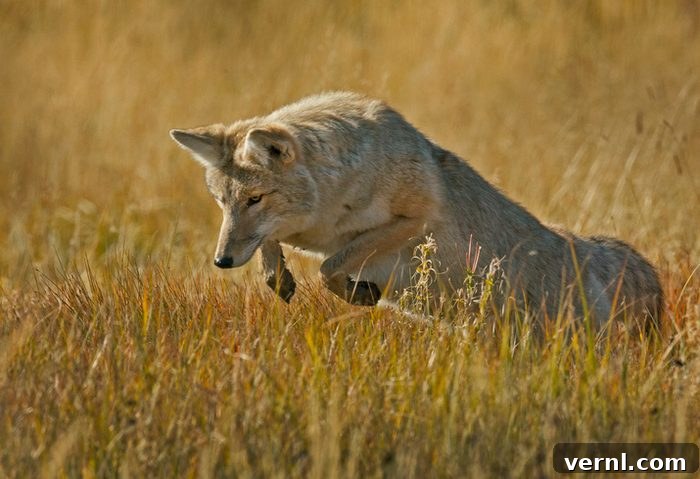
Despite their often-solitary appearance, most coyote sightings typically involve a lone animal, but it’s important to remember that coyotes are social creatures that travel and hunt in packs. Where you observe one, it is highly probable that others are nearby, comprising a family unit or a larger social group. This social structure plays a vital role in their hunting success and territorial defense.
Historically, particularly in the Old West, ranchers sometimes resorted to inhumane and grotesque practices, such as shooting a coyote and hanging its carcass as a grim warning to others. This method, besides being cruel and ineffective in the long term, represents a fundamental misunderstanding of coyote behavior and their ecological value. Such actions are not only inhumane but also a waste of a valuable natural resource, disrupting the delicate balance of local ecosystems.
Christine Paige advocates for a paradigm shift in how we perceive coyotes. She firmly states, “I’m an advocate for seeing coyotes as a benefit in the landscape. They are native wildlife and are the farmer and homeowner’s friend in reducing rodents.” This perspective highlights the critical ecological services coyotes provide, particularly in controlling populations of rodents that can damage crops, spread disease, and infest homes. Their presence can significantly reduce the need for chemical rodenticides, offering a natural and sustainable pest control solution.
Paige further argues for targeted, localized protection measures over broad, exclusionary tactics. “In my view, it is better to protect a small area for chickens or livestock when and where they are most vulnerable (e.g., calving season) than to fence out predators from an entire property or lethally remove predators.” She elaborates that extensive anti-predator exclusion fencing can impede the natural movements of other wildlife, disrupting broader ecological patterns. Furthermore, lethal removal of coyotes often proves to be an ongoing, futile effort, as it can disrupt existing social systems and territories, paradoxically creating new problems by encouraging new coyotes to move into vacant territories, potentially leading to more unpredictable behavior as they establish themselves.
How To Keep Coyotes Away: Tailored Deterrence Strategies
Effective coyote deterrence requires a strategic and often multi-faceted approach, tailored to the specific context of whether you are protecting livestock on a farm or ranch, or simply safeguarding a residential property. Understanding coyote behavior is key to implementing successful preventative measures.
For Farmers and Ranchers: Robust Livestock Protection
For those managing farms and ranches, the priority is to protect vulnerable livestock from predation. Christine Paige highly recommends the use of a woven wire fence, often referred to as a field fence, as a primary deterrent. This type of fencing offers superior security compared to simple barbed wire.
To maximize its effectiveness, specific installation techniques are crucial. Ideally, the woven wire should extend an inch or two beyond the top rail or post, preventing a coyote from gaining firm footing to leverage its two-stage jump. Equally important is burying the bottom edge of the fence an inch or two underground, or creating an apron, which effectively prevents coyotes from digging underneath. While highly effective against coyotes, it’s important to acknowledge that this type of robust fence can also impede the movement of other general wildlife, so its use should be thoughtfully applied to protect limited, critical areas rather than an entire expansive property.
Beyond static fencing, Paige also suggests deploying fladry, an ancient deterrent method gaining modern recognition. Fladry consists of a rope or wire strung with brightly colored strips of fabric or flags that hang down. The novelty and movement of these strips act as a visual deterrent, startling coyotes and making them hesitant to approach. Its effectiveness can be significantly enhanced if the wire carrying the fladry is electrified.
Indeed, Paige champions electricity as a highly effective tool: “Electricity is your friend! Electrifying a fence or chicken coop is the best option for deterring predators large and small.” Electric fences deliver a memorable, non-lethal shock that quickly teaches coyotes to avoid the area. This can involve running an electric strand along the top of an existing fence, or installing a multi-strand electric fence system. For chicken coops, electrifying the perimeter, particularly near the ground, provides an excellent barrier against both digging and climbing predators.
In addition to physical barriers, employing guardian animals is a time-tested and highly effective strategy. Specially bred livestock guardian dogs (LGDs) such as Great Pyrenees, Anatolian Shepherds, and Akbash dogs, are instinctively protective of their herds and will actively deter coyotes. Llamas, particularly geldings, have also proven to be excellent guardians, naturally aggressive towards canids and capable of chasing off predators.
For Homeowners: Preventing Attraction and Enhancing Security
For homeowners without livestock, the best approach to keeping coyotes away is primarily focused on eliminating attractants and enhancing property security. Prevention is always easier than dealing with an established problem.
The cardinal rule is to avoid attracting coyotes in the first place. This means strictly keeping pet food indoors, especially overnight. Outdoor pet bowls left unattended become irresistible invitations for hungry coyotes. All household garbage should be stored in robust, sealed bins with tight-fitting lids that cannot be easily opened or tipped over. If possible, keep bins in a secure shed or garage until collection day.
Bird feeders, while seemingly innocuous, can indirectly attract coyotes. Spilled birdseed attracts rodents, which are a primary food source for coyotes. To mitigate this, consider using feeders with trays to catch fallen seed, or rake up any spilled seed regularly. Similarly, pick up any fallen fruit from trees in your yard, and ensure compost piles are fully enclosed and inaccessible to wildlife.
If you have an existing fence around your property, consider installing specialized deterrents like coyote rollers along the top. These free-spinning PVC pipes are designed to make it impossible for coyotes to get a grip on the fence top, discouraging both jumping and climbing attempts. Other fence enhancements include adding mesh extensions that lean outwards at an angle at the top of the fence, or burying mesh aprons at the base to prevent digging.
Furthermore, active hazing can be effective if a coyote becomes too comfortable near your home. This involves making loud noises, waving your arms, throwing small objects (not at the coyote, but near it to startle), or using a hose to spray water. The goal is to make the experience of being near humans unpleasant, reinforcing their natural wariness.
Living with Coyotes: The Path to Coexistence
The widespread presence of coyotes across North America, from remote wilderness to bustling city centers, signifies that these intelligent and adaptable predators are here to stay. Their successful integration into diverse ecosystems highlights their ecological importance and their resilience in the face of human expansion.
Understanding coyote behavior, recognizing their ecological benefits, and implementing responsible management strategies are crucial for fostering peaceful coexistence. Rather than viewing them as adversaries, we can learn to appreciate their role in maintaining healthy ecosystems, particularly as natural rodent controllers.
For both homeowners and agricultural producers, the most effective long-term solutions involve proactive prevention, robust physical barriers, and adaptive strategies rather than reactive or lethal measures. By securing food sources, fortifying vulnerable areas, and employing deterrents that teach rather than eliminate, we can significantly reduce human-coyote conflicts. Educating ourselves and our communities about these fascinating animals is the first step towards a more harmonious relationship with the wild inhabitants of our shared landscape.
Embracing a balanced perspective that acknowledges both the challenges and the ecological value of coyotes allows us to develop sustainable strategies for living alongside these resourceful and captivating creatures, ensuring both their survival and the safety of our communities and livestock.