
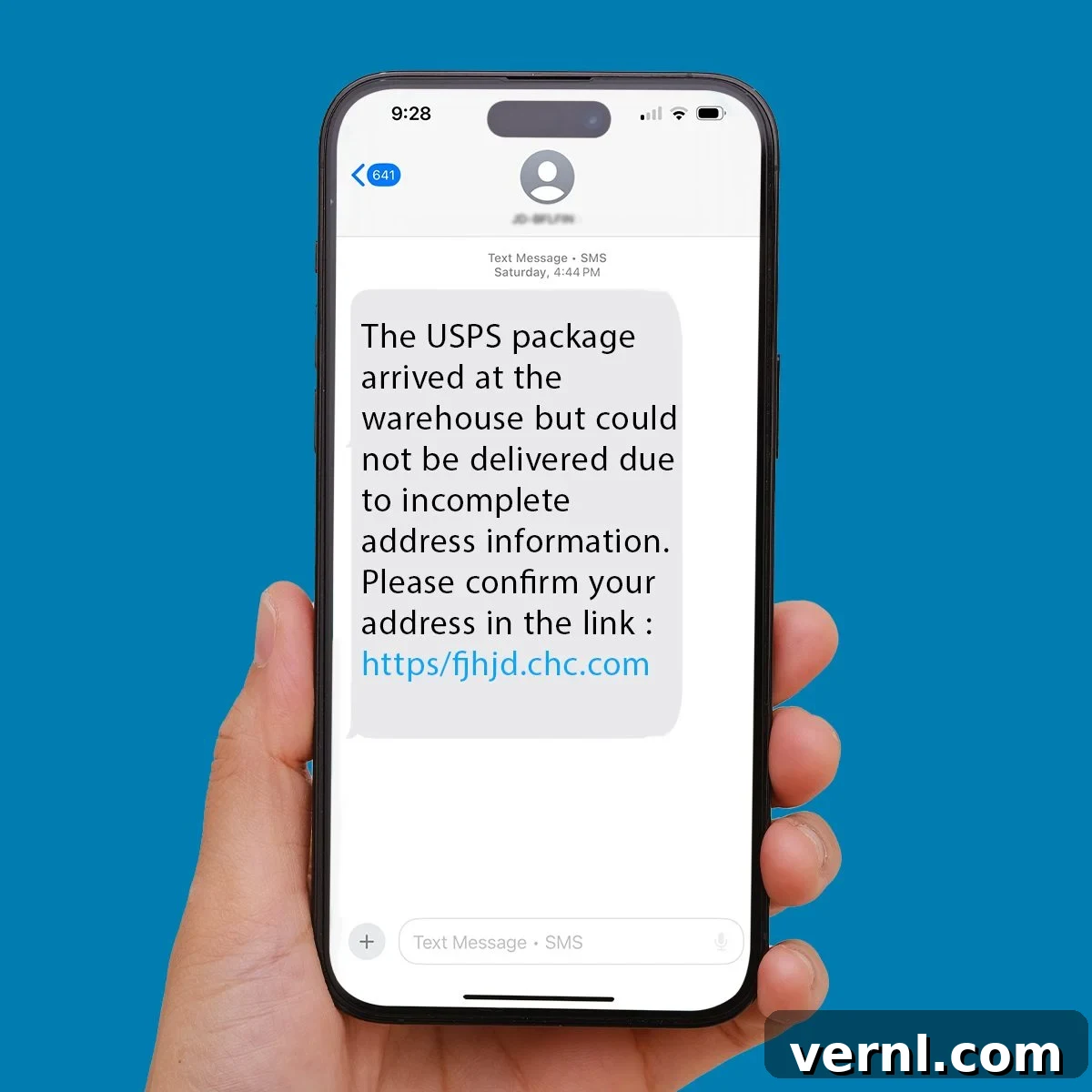
In an age dominated by online shopping, the convenience of doorstep delivery has unfortunately opened a new avenue for cybercriminals: smishing. It’s a pervasive threat, with millions of fraudulent text messages inundating mobile phones daily, often masquerading as legitimate shipping notifications from trusted carriers like USPS or UPS. These insidious messages, which typically claim a package cannot be delivered due to an incomplete address and prompt you to click a suspicious link, are designed to steal your personal information or infect your device.
The frequency of these attacks spikes during peak shopping seasons such as Prime Day and Cyber Monday, highlighting how scammers strategically follow consumer trends. As Vinicius Perallis, CEO of Hacker Rangers, explains, “Since the pandemic, online shopping has skyrocketed, and scammers tend to follow where the crowd goes. The more people shop online, the more these criminals take advantage of that behavior by sending out scam texts, pretending to be companies like USPS.”
Understanding how to recognize these deceptive messages and, more importantly, what to do when you receive one, is crucial for protecting your digital security. This comprehensive guide will equip you with the knowledge to identify smishing attempts and take effective countermeasures.
What Is Smishing? Understanding SMS Phishing
Smishing, a portmanteau of “SMS” and “phishing,” is a sophisticated form of cyber fraud that leverages text messages to trick individuals. Unlike traditional email phishing, smishing preys on the immediate nature of text communication and the common assumption that texts are inherently more personal and trustworthy. The primary goal of smishing is to manipulate recipients into divulging sensitive personal or financial information, clicking on malicious links that deploy malware onto their devices, or redirecting them to counterfeit websites designed to harvest credentials.
The alarming effectiveness of smishing is well-documented. Research by Bitdefender indicates that approximately 15% of people who receive these SMS messages end up clicking on a link. This high success rate can be attributed to several factors: the perceived legitimacy of the sender (e.g., a well-known shipping company), the sense of urgency conveyed in the message, and the growing reliance on mobile devices for nearly all aspects of daily life.
Ben Eichorst, Director of Infrastructure Security at Yubico, notes that despite phishing being a long-standing technique, “it’s still extremely successful because consumers and businesses are still struggling to effectively defend against them.” This underscores the continuous need for heightened awareness and robust defensive strategies against evolving cyber threats.
Immediate Steps: What To Do If You Get USPS or UPS Scam Texts
Receiving a suspicious text can be unsettling, but your immediate response is critical. The cardinal rule for any message you suspect to be a scam is simple: do not click on any links and do not reply.
Why You Shouldn’t Reply
It’s tempting to send a sharp reply to these irritating messages, but Seth Geftic, Vice President of Product Marketing at Huntress, advises against it. “You’re letting the scammers know your phone number is active,” he explains, “meaning you could receive more scam texts in the future.” Replying confirms your number is valid and actively monitored, making you a more attractive target for future attacks.
Blocking and Reporting the Scam
Instead of replying, take proactive steps:
- Block the Number: Immediately block the sender’s number on your mobile device. This prevents future messages from that specific number.
- Report to Authorities: Forward the scam text message to (7726) SPAM. This is a free service provided by cellular carriers to report spam and smishing attempts to the FTC.
- Report to Shipping Companies: For USPS-specific scams, also forward the message to [email protected]. Perallis emphasizes that “This not only helps protect others but also gives USPS important information to fight these scams.” UPS also provides channels for reporting fraud on their official website.
Delete and Monitor
After reporting, delete the text message from your device. This prevents accidental clicks on malicious links later on. As an added layer of precaution, closely monitor your bank accounts and credit card statements for any unusual or unauthorized activity. Scammers might attempt small, test transactions before larger ones.
Verify Directly with Official Sources
If you’re ever unsure about the legitimacy of a delivery notification, always verify directly with the organization using their official contact information. Do not use contact details provided in the suspicious text. Visit the official USPS or UPS website, locate their customer service numbers or tracking portals, and input any tracking numbers manually. If a tracking number is invalid, as Perallis points out, “they’re probably a scam.” Additionally, both USPS and UPS regularly update their websites with information on ongoing scams and recommendations for their customers.
What To Do If You Engaged With a USPS or UPS Scam Text?
Mistakes happen, and if you’ve clicked on a suspicious link or, worse, provided personal information, it’s crucial to act swiftly. Your immediate response can significantly mitigate potential damage.
Password Compromise
If you clicked a link and entered login credentials (e.g., for a supposed USPS account), change your password immediately. Perallis advises that you not only change the password on that specific site but also on “any other sites on which you’re using that password.” This highlights the importance of using unique, strong passwords for every online account and considering a reputable password manager.
Financial Information Theft
If you provided financial details like a credit card number or bank account information:
- Contact Your Bank: Immediately call your bank or credit card company to report the potential fraud. They can cancel compromised cards, monitor your accounts for suspicious charges, and guide you through the process of disputing fraudulent transactions.
- Monitor Statements: Keep a close eye on your financial statements for any suspicious charges. Report even small, unfamiliar transactions.
Personal Information Compromise
If you supplied personal information such as your Social Security number, date of birth, or home address:
- Identity Theft Monitoring: Be vigilant for signs of identity theft. This could include unexpected bills, new accounts opened in your name, or unusual activity on your credit report. Consider placing a fraud alert or credit freeze with the major credit bureaus (Equifax, Experian, TransUnion) to prevent new accounts from being opened in your name.
- Government Agencies: Report the incident to the FTC at IdentityTheft.gov, which can provide a recovery plan.
Malware Infection
If you clicked on a link and now suspect your device might be infected with malware:
- Run a Virus Scan: Immediately run a comprehensive virus and malware scan using a reputable antivirus program on your device. Ensure your antivirus software is up to date before running the scan.
- Disconnect from Network: If you suspect an active infection, disconnect your device from the internet to prevent further data compromise or spread of malware.
Identifying Red Flags: What Do USPS Scam Texts and Others Look Like?
Scam texts are constantly evolving, becoming more sophisticated over time. However, several common characteristics can help you identify them. Vigilance and attention to detail are your best defenses.
Common Characteristics of Scam Texts:
- Grammatical Mistakes, Strange Punctuation, and Misspellings: While some scams are professionally crafted, many contain noticeable errors. These can range from awkward phrasing to incorrect capitalization. Geftic explains a theory behind this: “scammers do this deliberately, as people who reply to these messages might be more vulnerable to scams than your average person.” The idea is to filter out skeptical users, focusing on those more likely to fall for the trick.
- A Sense of Urgency: Scammers often employ alarming or threatening language to create a false sense of urgency, pressuring you to act without thinking. Phrases like “Immediate action required,” “Your package will be returned,” or “Account suspended” are common tactics to bypass critical thinking.
- Request for Personal or Financial Information: Legitimate courier companies will rarely, if ever, request sensitive personal details like passwords, credit card numbers, or your full date of birth via an unsolicited text message. Chris Dukich, CEO of Display Now, confirms, “A legitimate courier company does not and will not, out of the blue, send a text message requesting for more details or money.”
- Suspicious Links: The most dangerous element of a smishing text is often the embedded link. These links frequently contain misspellings, strange numbers, unusual abbreviations, or domains that don’t match the official company’s website (e.g., “usps.delivery-track.xyz” instead of “usps.com”). Always hover over links (if on a computer) or long-press them (on a mobile device) to preview the URL before clicking.
Specific Red Flags for Shipping Scams:
- Unexpected Packages: A major red flag is receiving a delivery notification for a package you weren’t expecting. Yashin Manraj, CEO of Pvotal Technologies, states, “USPS doesn’t send texts unless you’ve requested tracking updates.” If you haven’t opted into text notifications, treat any unsolicited delivery text with extreme caution.
- Unusual Sender Numbers: Legitimate shipping companies often use short codes or specific sender IDs for their automated messages. For instance, Manraj notes, “UPS will use 4601, 5289, 48515 or 69877, while USPS uses 28777.” Generic, long phone numbers or strange alphanumeric sender IDs are typically indicative of a scam. Manraj recommends, “considering all text from unknowns as scams or spam and slowly building up a contact list of trusted providers.”
- Requests for “Redelivery Fees”: Shipping companies do not typically demand payment for redelivery or customs fees via text message with a clickable link. Any such request should be immediately viewed as suspicious.
Why You Might Be Targeted: Understanding the Scammers’ Approach
If you’re receiving a barrage of smishing texts, it’s natural to wonder why you’re being targeted. The reality is often less personal than you might think.
Common Reasons for Receiving Smishing Texts:
- Data Breaches: Your phone number may have been compromised in a data breach from an online service or company you’ve used. This information is often compiled and sold on the dark web, making its way into scammers’ hands.
- Unprotected Websites: Entering your personal information, including your phone number, on less secure or unprotected websites can expose it to malicious actors.
- Automated Random Number Generation: Scammers frequently use sophisticated software to generate vast quantities of random phone numbers. They then send out mass texts, hoping to hit active numbers. As Dukich explains, “Scammers usually send enormous amounts of messages and hope for the best.” This means you might just be a random recipient rather than a specific target.
- Publicly Available Information: Your phone number might be publicly accessible through directories, social media profiles, or other online sources.
It’s important to remember that receiving smishing texts does not mean scammers are targeting you specifically. Their strategy is often a game of sheer numbers, casting a wide net to ensnare anyone who might be susceptible.
Proactive Measures: How To Protect Yourself from Scam Texts
Beyond knowing what to do in the immediate aftermath of receiving a suspicious text, building a strong defensive posture is paramount. Protecting yourself from smishing requires a combination of vigilance, smart digital habits, and leveraging available security tools.
Fundamental Protection Principles:
- Never Share Personal Information: As a golden rule, never share sensitive personal or financial information, such as banking passwords, credit card numbers, or Social Security numbers, in response to an unsolicited text message. Legitimate organizations will almost never request this kind of information via text.
- Don’t Click Suspicious Links: Reiterate this point continually. If in doubt, don’t click.
Advanced Protective Measures:
- Utilize Spam Blockers: Leverage spam blocking features provided by your mobile network carrier. Many smartphones also have built-in capabilities to filter and block spam messages. Third-party apps specializing in spam detection can also add an extra layer of defense.
- Be Discerning with Your Mobile Number: Avoid freely giving out your mobile number online unless absolutely necessary and to trusted entities. Manraj suggests using a virtual number for online stores and services. These can often be obtained through various modern app stores and help shield your primary number from potential exposure.
- Regularly Update Device Software: Keep your phone’s operating system and all applications up to date. Software updates often include critical security patches that protect against known vulnerabilities that malware might exploit.
- Enable Multi-Factor Authentication (MFA): Implement MFA on all your online accounts whenever possible. MFA adds an extra layer of security by requiring a second form of verification (e.g., a code from an authenticator app, a fingerprint) in addition to your password. This makes it significantly harder for scammers to access your accounts, even if they manage to steal your login credentials.
- Consider Phishing-Resistant MFA with Hardware Security Keys: For the highest level of protection, Yubico specifically recommends seeking out modern phishing-resistant MFA options, such as their YubiKeys or other hardware security keys. These physical devices make it virtually impossible for phishers to intercept your authentication, as they require physical presence to verify your identity.
Finally, always trust your instincts. Geftic wisely advises, “If your gut instinct tells you the message is suspicious because it has bad grammar, an alarmist tone or you weren’t expecting to receive the message, there’s a good chance it’s fake.” Your intuition can be one of your most powerful cybersecurity tools.
By staying informed, adopting secure online habits, and employing robust security tools, you can significantly reduce your vulnerability to smishing attacks and navigate the digital landscape with greater confidence.
About the Experts
- Vinicius Perallis is an expert in cybersecurity and CEO of Hacker Rangers, a company that fosters cybersecurity practices within businesses by using gaming techniques.
- Seth Geftic is Vice President of Product Marketing at Huntress security platform, and has almost two decades of cybersecurity experience working across endpoint, MDR, phishing and identity.
- Yashin Manraj is CEO of Pvotal Technologies, which helps build more secure systems at the world’s best engineering firms.
- Chris Dukich is founder and CEO of Display Now, a SaaS platform focused on technology and user engagement.
- Ben Eichorst is the Director of Infrastructure Security at Yubico, an industry leader in multifactor authentication and hardware security keys, which help secure consumers from phishing attacks.