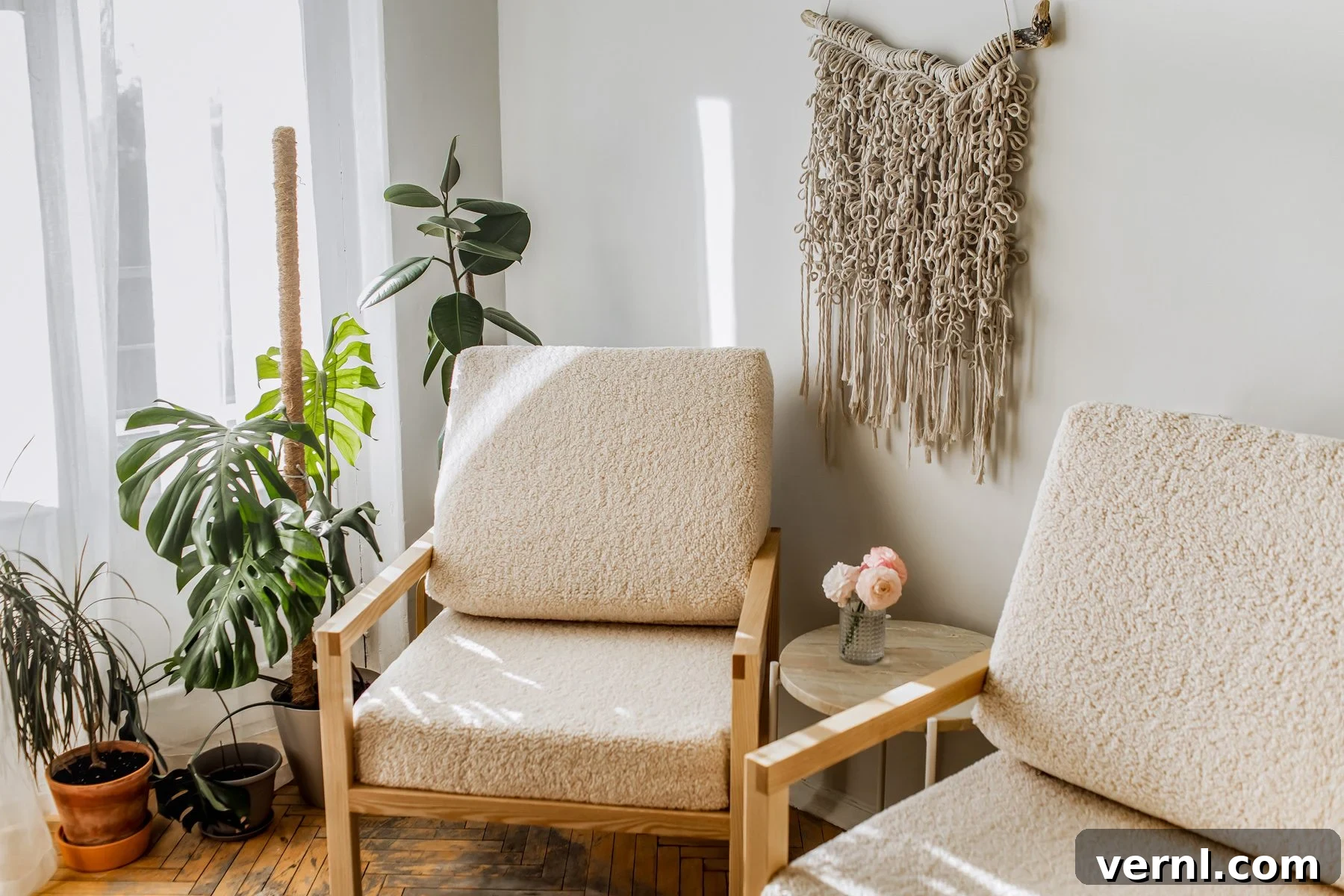
The world of interior design is constantly evolving, with new trends emerging and old classics making a stylish comeback. Amidst this dynamic landscape, one particular material has captured the hearts of homeowners and designers alike: boucle. Synonymous with comfort, sophistication, and a touch of organic warmth, boucle furniture has become a cornerstone of contemporary cozy interiors. Whether you’re scrolling through Pinterest boards or admiring curated spaces on Instagram, it’s highly likely you’ve encountered the distinctive charm of curved boucle accent chairs, sumptuous creamy boucle sofas, or inviting ottomans upholstered in this unique fabric.
Boucle furniture embodies a perfect blend of understated luxury and serious comfort, making it an excellent choice for softening modern decor styles and infusing any room with a welcoming ambiance. Its inherent softness and plush texture promise not just visual appeal but also a tactile experience that invites relaxation. As we delve deeper, discover what makes boucle furniture so special, explore its versatility, understand its practical considerations, and determine if this trending material is the perfect fit for your home.
What Exactly Is Boucle Furniture? Unpacking the Trend
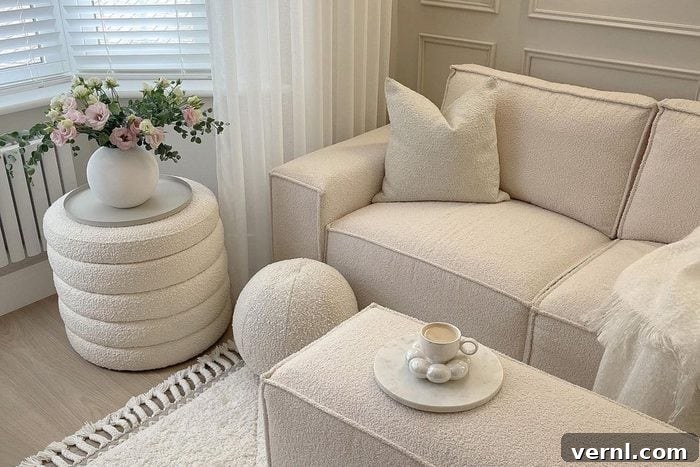
At its core, boucle furniture is defined by its upholstery: boucle fabric. The name “boucle” itself is French, meaning “loop” or “curl,” which perfectly describes the distinctive appearance of this textured material. It is crafted from yarn that features small loops, creating a fabric that is inherently soft, impressively dense, and wonderfully cozy, often characterized by a rich, “nubby” texture that is both visually appealing and inviting to the touch.
The burgeoning popularity of boucle furniture can be attributed to its ability to imbue modern rooms with a sense of warmth, dimension, and an undeniable welcoming vibe. As Natane Boudreau, an accomplished interior designer and founder of Studio Boudreau, aptly explains, “Boucle’s cozy, inviting texture complements a range of design aesthetics, particularly mid-century modern, Scandinavian, and minimalist styles. It works well with neutral color palettes and organic shapes, offering a balance between visual interest and understated elegance.” This versatility allows boucle pieces to seamlessly integrate into various decor schemes, from the sleek lines of a minimalist apartment to the rustic charm of a Scandinavian-inspired home.
Historically, boucle fabric was primarily woven from wool yarn, prized for its natural durability, resilience, and luxurious feel. However, modern textile innovations have significantly expanded the options available today. While traditional wool boucle remains a premium choice, you can now find boucle made from a variety of natural and synthetic fibers, or blends thereof. Synthetic options, often incorporating polyester, acrylic, or rayon, offer similar aesthetic qualities at more accessible price points, sometimes with added performance features like enhanced stain resistance. These advancements mean that the timeless appeal of boucle is now available to a broader audience, without compromising on style or comfort.
What Sets Boucle Apart from Other Upholstery Fabrics?
In the vast world of upholstery, many fabrics aim to add coziness and texture to furniture. What truly distinguishes boucle, however, is its signature “nubbiness.” While fabrics like microfiber, chenille, and velvet offer smoothness and a soft hand, boucle stands out with its intricate, looped construction. These small, irregular knots and loops create a three-dimensional surface that catches the light beautifully, adding an unparalleled depth and visual interest that flat, smoother fabrics simply cannot replicate.
When compared to other tactile fabrics like sherpa or sheepskin, boucle presents a more refined and less overtly fluffy alternative. While it shares their inherent warmth and inviting appeal, boucle typically boasts a tighter, more structured weave. This distinction works significantly to its advantage, particularly in terms of maintenance and longevity. Boucle tends to be notably easier to clean than its shaggier counterparts, which are prone to trapping debris deep within their pile. Moreover, a major benefit that designers and homeowners often highlight is boucle’s resistance to matting, a common and frustrating issue with high-pile materials such as sheepskin or sherpa, which can quickly lose their pristine look with regular use. This inherent structural integrity contributes to boucle furniture’s well-deserved reputation for durability and lasting aesthetic appeal.
Integrating Boucle into Your Home Decor: A Style Guide
The allure of boucle lies not only in its unique texture but also in its remarkable adaptability to a wide array of interior design styles. Incorporating boucle into your home can elevate the aesthetic, add warmth, and introduce a sophisticated tactile element. Here’s how you can thoughtfully integrate this versatile fabric into your living spaces.
Choosing the Right Color Palette
While boucle is available in a spectrum of colors, its most popular incarnations lean towards neutral and organic tones. Cream, off-white, beige, and light grey boucle pieces are particularly favored for their ability to create a serene, calming, and effortlessly elegant atmosphere. These shades enhance the fabric’s texture, allowing it to become a subtle focal point that adds depth without overwhelming the space. They also serve as a perfect backdrop for layering with other textures and colors through cushions, throws, and decorative accents. For those seeking to make a bolder statement, boucle can also be found in richer hues like charcoal, navy, or even soft pastels, offering an unexpected twist on a classic material.
Beyond Sofas: Boucle Furniture Types
While boucle sofas and accent chairs are iconic, the fabric’s versatility extends to numerous other furniture pieces. Consider introducing boucle through:
- Benches and Ottomans: Perfect for entryways, foot-of-the-bed seating, or as versatile extra seating in living rooms.
- Headboards: An upholstered boucle headboard can transform a bedroom into a luxurious sanctuary, adding softness and a touch of hotel-chic.
- Dining Chairs: For a sophisticated and comfortable dining experience, boucle dining chairs can soften the hard edges of a dining table.
- Accent Tables and Poufs: Smaller boucle items can provide strategic pops of texture and comfort without a significant investment.
- Room Dividers and Screens: For a unique application, a boucle-paneled screen can add texture and define zones within an open-plan space.
Complementary Materials and Textures
Boucle’s distinctive texture pairs beautifully with a variety of other materials, allowing for rich, layered interiors.
- Wood: Light woods like oak or ash, or darker tones such as walnut, enhance boucle’s organic feel, creating a harmonious balance between soft and hard surfaces.
- Metals: Brass, brushed gold, or matte black metals introduce a touch of industrial elegance or sophisticated glamour, contrasting with boucle’s softness.
- Stone and Glass: The cool, smooth surfaces of marble, concrete, or glass tabletops provide a striking textural counterpoint to boucle’s warmth.
- Other Textiles: Layering boucle with linen, velvet, knitted wool throws, or silk cushions can create a highly tactile and inviting environment, adding dimension and visual richness.
Boucle in Different Rooms
Living Room: A boucle sofa or a pair of accent chairs can serve as the anchor, creating a focal point of comfort and style. Complement with textured throws and pillows.
Bedroom: A boucle headboard or an armchair can transform the space into a cozy retreat, promoting relaxation and luxury.
Entryway: A boucle bench or an ottoman offers a welcoming first impression, combining practicality with refined aesthetics.
Home Office: Introduce a boucle chair or a small pouf to soften the often-functional space, making it feel more inviting and less sterile.
By considering these elements, you can strategically incorporate boucle furniture to enhance the overall design narrative of your home, creating spaces that are both visually captivating and profoundly comfortable.
How Much Does Boucle Furniture Cost? Understanding the Investment
When considering boucle furniture, it’s important to manage expectations regarding its price point. While it generally isn’t what one would consider “cheap,” it also isn’t exclusively reserved for the ultra-luxury market. Boucle has cultivated a reputation that leans towards high-end and luxurious, often associated with bespoke designs and premium materials. However, its significant rise in popularity means that retailers across various price tiers are now offering boucle pieces, making it more accessible to a wider range of budgets than ever before.
For those looking for a more budget-friendly entry into the boucle trend, it is indeed possible to find some boucle sofas under $1000 from large online retailers such as Amazon or Wayfair. These options often utilize synthetic boucle blends and may feature simpler designs or construction. However, you’ll discover a much broader selection of boucle couches, typically offering better quality and more sophisticated designs, within the $1000 to $3000 price range. This is the sweet spot for many popular, trendy furniture retailers like West Elm, Pottery Barn, Crate & Barrel, and similar stores that focus on contemporary and stylish home furnishings. At this price point, you can expect a good balance of durable synthetic boucle or wool-blend fabrics, solid construction, and more refined aesthetics.
As a general rule, the size and complexity of the furniture piece directly influence its cost. Consequently, a boucle accent chair will almost invariably be more affordable than a full-sized boucle sofa or sectional. This allows individuals to dip their toes into the boucle trend without committing to a major expenditure.
If incorporating the material on a tighter budget is a priority, opting for accessories is the most cost-friendly approach. Boucle ottomans, decorative poufs, throw pillows, and even blankets or lampshades can bring that coveted cozy visual interest and tactile richness into your space without the significant investment required for larger furniture pieces. These smaller accents can effectively introduce the texture and warmth of boucle, allowing you to enjoy the trend economically and flexibly.
Is Boucle Furniture Easy to Clean? Practical Considerations for Homeowners
The question of ease of cleaning is a crucial factor for any furniture purchase, and boucle is no exception. While it’s not as effortlessly wipeable as leather or vinyl couches, it also doesn’t present the same challenges as some fluffier, high-pile fabrics. Boucle occupies a middle ground: it won’t trap crumbs and dirt as aggressively as a shaggy rug, but it does require a bit more attentive care than a smooth, non-textured surface. Fortunately, the fabric is typically quite sturdy, and routine vacuuming with an upholstery attachment can effectively remove surface debris from its textured weave.
For households with children or pets, integrating boucle furniture requires careful consideration. Natane Boudreau advises, “While boucle is fairly durable, its textured surface can be challenging to clean, especially in households with young children or pets.” She wisely suggests positioning boucle pieces in lower-traffic areas of the home or, ideally, choosing furniture with removable, washable covers. This feature can be a game-changer for maintaining the pristine appearance of boucle in active homes.
Pantea Bionki, owner and lead designer at Bionki Interiors, echoes the sentiment regarding the fabric’s durability and offers practical advice for stain-prone zones. “Bouclé’s thicker weave and higher pile make it more durable, so it holds up well over time. Its texture also helps conceal dirt and wear, particularly in darker colors, making it a practical option for everyday use.” This highlights that color choice can play a significant role in the long-term maintenance and aesthetic retention of boucle furniture.
The ease of cleaning can also depend significantly on the specific material composition of the boucle fabric. Traditional wool boucle, for instance, is naturally stain-resistant due to the lanolin in wool fibers, making it a surprisingly practical choice despite its luxurious feel, though it requires specific wool-safe cleaners. On the other hand, many modern synthetic boucle options are specially treated to be spill- or stain-resistant, offering enhanced performance for busy households. Always consult the manufacturer’s care instructions for your specific boucle piece, as cleaning recommendations can vary based on fiber content and any applied treatments. For stubborn stains or deep cleaning, professional upholstery cleaning is often the recommended course of action to preserve the fabric’s integrity and appearance.
Is Boucle Furniture Right for Your Home? Making an Informed Choice
If boucle furniture has genuinely captured your attention, rest assured that there’s likely a perfect place for it within your home. It’s an ideal choice for those who are seeking furniture that exudes both luxury and modern sensibility, yet simultaneously provides a comforting and homely feel. As Pantea Bionki eloquently notes, “Bouclé furniture is an excellent choice for those seeking comfort, texture, and an organic feel in their homes. [It] complements modern and organic design aesthetics, adding an element of softness and warmth to any space.” Its ability to blend sophisticated style with an inviting touch makes it a highly desirable addition.
The market offers a remarkable variety of boucle furniture types and styles, ensuring that you can find a piece to suit almost any interior design vision. While neutral colors remain the most popular and versatile, boucle is available in a wide spectrum of hues. Furthermore, even the texture itself can vary in its “knobbiness” or loop size, allowing for diverse applications that cater to unique home styles and personal preferences. From subtly textured, tightly woven boucle to more pronounced, shaggy variations, the choices are plentiful.
However, it’s crucial to consider lifestyle factors, especially regarding maintenance. Given that boucle isn’t the absolute easiest fabric to clean, homes with young children or pets might want to exercise caution when placing boucle furniture in high-traffic areas. Pay particular attention to how pets, especially cats, might interact with the fabric. The inviting nubby loops of boucle are, unfortunately, quite appealing and prone to snagging on claws, which can lead to damage over time. If you have a cat known for scratching furniture, this is a significant consideration. It might be wise to protect vulnerable areas or opt for more durable, smooth fabrics in spaces heavily used by pets.
In scenarios where a full boucle furniture piece might be too risky or too significant an investment, boucle accessories present an outstanding alternative. You can still infuse your living space with the fabric’s signature warmth, texture, and sophisticated appeal through smaller, more manageable items. Consider making a stylish statement with an affordable boucle cushion, adding elegance with boucle curtains, or introducing an element of cozy luxury with a soft boucle rug. These accents allow you to embrace the boucle trend, adding visual interest and tactile comfort, without the potential concerns associated with larger furniture items in high-wear environments.
About the Experts
- Pantea Bionki is the owner and lead designer at Bionki Interiors. As a certified interior designer and home stager, she specializes in creating bespoke interiors, down to the finishing touches.
- Natane Boudreau is an interior designer and the founder of Studio Boudreau, an interior design and creative consulting company that aims to create spaces that are true to people’s authentic selves.