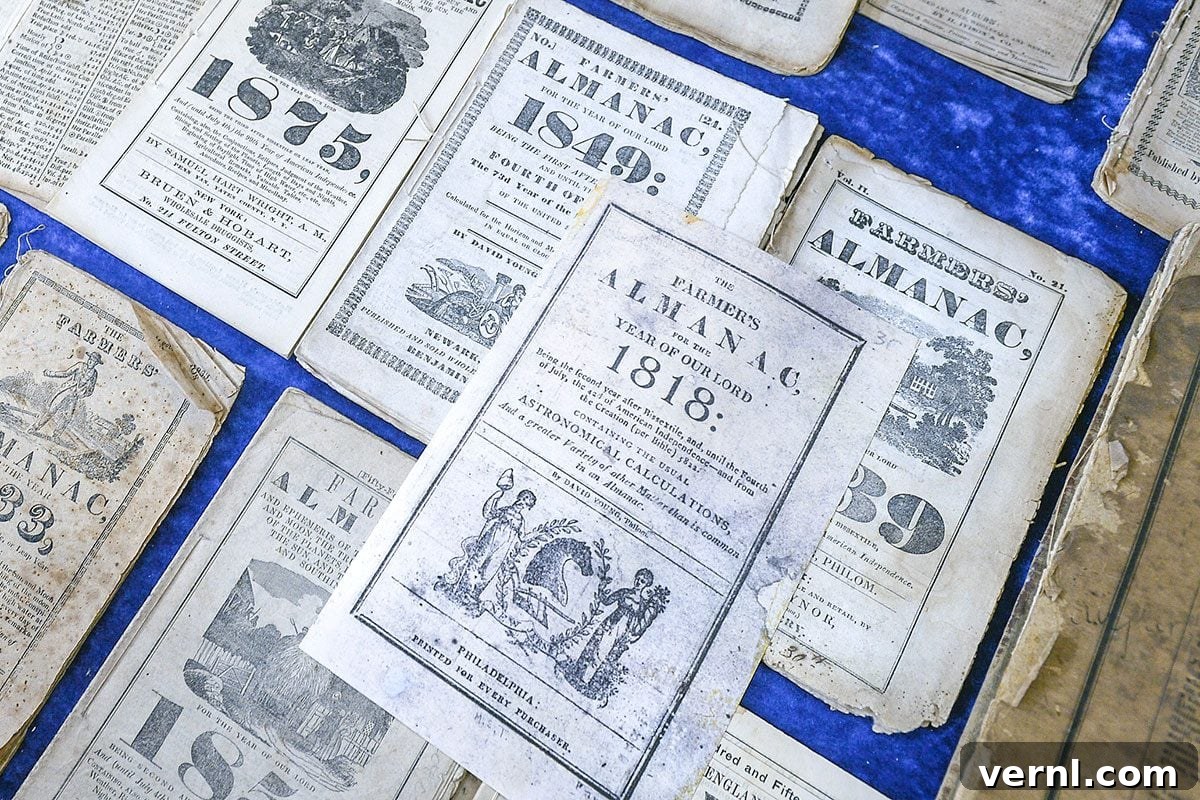
For centuries, long before the convenience of weather apps on our smartphones or detailed reports on television and in newspapers, Americans looked to traditional publications for insights into future weather patterns. These were the Farmer’s Almanacs, a cornerstone of agricultural and daily life. Interestingly, throughout the 21st, 20th, and much of the 19th century, there haven’t been just one, but two prominent almanacs vying for public attention: the venerable Old Farmer’s Almanac and its distinct counterpart, the Farmers’ Almanac.
While distinct entities, both publications share a common heritage and offer a wealth of similar content. Beyond their famous weather outlooks, they provide invaluable gardening advice, meticulously track planetary movements, announce upcoming celestial spectacles like meteor showers, and delve into intriguing folklore and traditions, all presented in an engaging and accessible style.
However, it is their ambitious long-term weather forecasts that truly capture the public imagination. This naturally leads to a crucial question: How reliable are these traditional predictions, especially when compared to the sophisticated, data-driven methods employed by modern science? To shed light on this complex topic, we consulted Dr. Hansi Singh, an accomplished Earth systems scientist who specializes in cutting-edge weather prediction.
What is the Farmer’s Almanac?
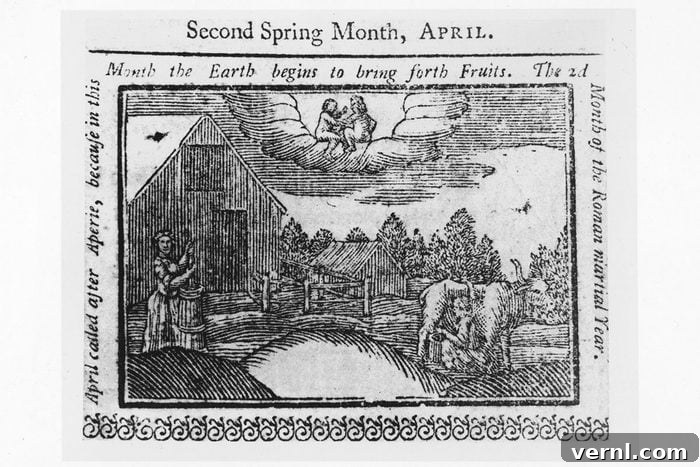
The concept of an almanac is far from new. These informational scrolls, booklets, or pamphlets have a rich history dating back to at least the second millennium BCE. As precursors to modern newspapers, they meticulously documented and published lists of current and future events, providing essential guidance for communities. In the Americas, one of the most celebrated figures associated with almanacs was Benjamin Franklin, whose iconic Poor Richard’s Almanack graced print from 1732 to 1758. This annual publication was a cherished compendium of weather forecasts, challenging puzzles, practical life hints, and various forms of entertainment, enjoying an impressive annual print run of 10,000 copies.
The original Farmer’s Almanac, founded by Robert B. Thomas, was primarily conceived with the agricultural community in mind. Its foundational purpose was to empower farmers, who relied heavily on successful crop yields for their livelihoods, by providing insights that would help them manage their farms and strategize their planting schedules based on anticipated yearly weather conditions. Yet, Thomas’s almanac aimed to be more than just a practical guide. In a competitive landscape filled with similar publications, it distinguished itself by striving to offer advice that was “new, useful and entertaining.” This commitment to engaging and relevant content has been a key factor in cementing its enduring popularity through generations, extending its appeal far beyond just farmers to a broader general audience seeking practical information and enjoyable reading.
When Was The Farmer’s Almanac Started? A Tale of Two Publications
The journey of the Farmer’s Almanac began in 1792 as a regional publication. Robert B. Thomas first launched it in Massachusetts, maintaining tight editorial control and creative vision until his passing in 1846. However, the early 19th century was a dynamic period for publishing, and the success of Thomas’s venture inevitably spurred competition. In 1818, David Young and Jacob Mann of New Jersey introduced a different version of a farmer’s almanac, which quickly garnered its own significant following and proved to be just as popular as the original. This growing popularity and market presence eventually led to a formal distinction.
By 1848, the almanac originally founded by Thomas officially adopted the name The Old Farmer’s Almanac, solidifying its status as the foundational publication. Simultaneously, the version introduced by Young and Mann became known simply as the Farmers’ Almanac. From that point onward, both publications have consistently been available to the public, establishing their own loyal readership and continuing to offer their unique blend of practical advice, astronomical data, and long-range forecasts, becoming deeply woven into the fabric of American culture and tradition.
How Do Farmer’s Almanacs Predict the Weather? Unveiling the “Secret Formula”
One of the most intriguing aspects surrounding the Farmer’s Almanacs is the closely guarded nature of their long-term weather forecasting methods. Much like the proprietary recipes for iconic brands such as Coca-Cola or KFC, the exact formulas used by these almanacs remain a well-kept secret, passed down through generations of editors and meteorologists. Dr. Hansi Singh notes, “the Farmer’s Almanac creates its forecasts largely on historical weather patterns in addition to factors like sunspot activity and even astrology.” This statement provides a concise overview of the general approach, though with some subtle distinctions between the two publications.
When examining the original almanac, The Old Farmer’s Almanac, its official website outlines three primary disciplines guiding its predictions, notably omitting any mention of astrology. These disciplines are:
- Solar Science: This involves the meticulous study of sunspots and other forms of solar activity. The premise here is that variations in solar energy and magnetic fields can influence Earth’s atmosphere and, consequently, its weather patterns.
- Climatology: A core component, climatology entails the comprehensive study of prevailing climate patterns. This involves analyzing decades, if not centuries, of historical weather data to identify recurring trends, cycles, and anomalies that might offer clues about future conditions.
- Meteorology: This discipline focuses on the study of Earth’s atmosphere, encompassing atmospheric pressure, temperature, humidity, and wind patterns. While modern meteorology relies on real-time data and complex models, the almanac’s approach integrates historical meteorological observations with the other disciplines.
In contrast, the Farmers’ Almanac dedicates an entire section to astrology on its website, making it the more likely of the two to integrate astrological considerations—such as planetary positions and lunar phases—into its predictive models. This distinction highlights the different philosophies and traditions that each almanac upholds in its quest to foresee the weather.
How Accurate is the Farmer’s Almanac? A Persistent Debate
The accuracy of the Farmer’s Almanac’s long-term weather predictions has been a subject of ongoing debate for generations, creating a fascinating divergence between traditional claims and scientific scrutiny. The Old Farmer’s Almanac proudly asserts a traditional accuracy rate of 80 percent, a figure that has undoubtedly contributed to its enduring legacy and public trust. However, scientific investigations present a more tempered view.
A notable study conducted by the University of Illinois over a five-year period, with its findings published in 2010, indicated a significantly lower accuracy rate, closer to 52 percent. This percentage is strikingly close to a mere coin toss, suggesting that the predictions might not be substantially more reliable than random chance in a rigorous scientific assessment. Despite this scientific skepticism, the almanacs retain a remarkable popularity.
One possible reason for this persistent appeal lies in the nature of some of their predictive factors. Because parts of the almanac’s predictions are rooted in celestial phenomena—such as sunspot activity—which are largely unaffected by Earth’s constantly changing and chaotic atmosphere, they can, at times, achieve an uncanny accuracy for specific events or trends. These occasional, remarkably precise forecasts, though perhaps coincidental from a scientific standpoint, serve to reinforce public belief and maintain the almanacs’ mystique. For many, including Dr. Hansi Singh, these predictions are largely considered unscientific dueating to the lack of transparent, verifiable methodologies and their limited ability to account for the complex, dynamic forces that truly drive Earth’s weather systems.
Is the Farmer’s Almanac Less Accurate Than Modern Weather Predictions?
According to Dr. Hansi Singh, the answer to this question is a resounding yes. Modern scientific methodologies have unequivocally surpassed the predictive capabilities of traditional almanacs, especially concerning long-range forecasting. Over the past two decades, Earth scientists have made monumental strides in developing sophisticated long-range weather prediction tools. These advancements are built upon intricate Earth system models, which represent a profound evolution from historical pattern matching.
These advanced models don’t just look at isolated atmospheric conditions; they integrate a comprehensive suite of Earth’s key climate drivers: the atmosphere, the ocean, land surfaces, and ice formations. By understanding the complex, interconnected dynamics between these components, scientists can extend forecasting skill far beyond the typical 10-day weather window that conventional short-term models provide. For instance, phenomena like El Niño and La Niña, driven by ocean temperature variations, have profound impacts on global weather patterns that cannot be predicted by merely looking at past local weather trends.
Crucially, unlike the almanac’s approach, modern science-based forecasts also incorporate the profound and evolving impacts of climate change. Historical pattern matching, by its very definition, relies on past data and therefore cannot account for unprecedented shifts in global temperatures, altered precipitation patterns, or increasingly frequent extreme weather events driven by a changing climate. Modern models are continuously updated with real-time data and scientific understanding of climate change, allowing for more accurate and relevant predictions in an ever-evolving climate landscape.
Best Long Range Weather Predictions: The Future of Forecasting
The inherently chaotic and complex nature of Earth’s atmosphere undeniably makes accurate long-term weather prediction a formidable challenge. However, as Dr. Singh emphasizes, the continuous development and refinement of new climate models are significantly enhancing the reliability and scope of long-range forecasting. These cutting-edge models are transforming our ability to look further into the future with greater confidence.
Dr. Singh points to major scientific agencies as the most trusted sources for long-range forecasts. In the United States, the National Oceanic and Atmospheric Administration (NOAA) stands out as a leading authority, while in Europe, the European Centre for Medium-Range Weather Forecasts (ECMWF) is globally recognized for its advanced modeling capabilities. Both institutions operate with a commitment to transparency, making their extensive data and predictive models publicly available, fostering scientific collaboration and public access to vital information.
Furthermore, Dr. Singh highlights innovative advancements in the field, specifically mentioning Eddy, an AI-powered tool available through her company’s platform, Planette. Eddy promises a remarkable level of accuracy, claiming forecasts that are right 95 percent of the time. “At Planette,” she explains, “we provide localized forecasts through Eddy that have been shown to outperform both NOAA and ECMWF on key measures of accuracy, offering a new frontier in personalized and precise long-range predictions.”
Intrigued by these claims, a recent test of Eddy’s capabilities proved impressive, delivering forecasts up to four months in advance. The prospect of such accuracy is certainly compelling, especially when considering personal impacts. For example, Eddy’s prediction for 2025 anticipates a cool, dry, and pleasant autumn in my particular region of California. Should this forecast hold true, it would provide a delightful conclusion to what is also predicted to be an exceptionally pleasant summer. Such accuracy, if consistently delivered, would not only enhance personal planning but also offer invaluable support for industries heavily reliant on weather, from agriculture to energy, marking a significant leap forward in our interaction with Earth’s climate.
Frequently Asked Questions About the Farmer’s Almanac
What Other Information is Found in the Farmer’s Almanac?
Beyond their renowned weather predictions, both the Old Farmer’s Almanac and the Farmers’ Almanac are treasure troves of practical information and engaging content. Online, visitors can explore the Old Farmer’s Almanac site (almanac.com) or the Farmers’ Almanac site (farmersalmanac.com) to discover a wide array of resources. These include detailed gardening advice, practical food preparation tips, handy household hints, and comprehensive information on the movements of the sun, moon, and planets. Both sites also feature calendars that often advise on the “best days” for conducting various activities, from planting crops to fishing or even cutting hair, based on lunar cycles and folklore.
Notably, the Farmers’ Almanac website distinguishes itself by featuring dedicated sections on astrology and folklore, aspects that are not as prominently highlighted on the Old Farmer’s Almanac site. For those who prefer a tangible copy, paperback and hardcover versions of both almanacs are published annually and can be found at bookshops and newsstands, offering much of the same rich content found online in a traditional format.
When is the Farmer’s Almanac Published?
Both the Old Farmer’s Almanac and the Farmers’ Almanac adhere to an annual publishing schedule. Each new edition is typically released in late August or early September, making them available well in advance for readers to consult for the upcoming year’s predictions and seasonal advice.
About the Expert
- Dr. Hansi Singh is a distinguished Earth systems scientist, mathematician, and the Chief Executive Officer of Planette, an innovative company dedicated to delivering advanced long-range weather forecasts through cutting-edge technology.
Sources
- Almanac: How The Old Farmer’s Almanac Predicts the Weather; (Accessed 2024)
- Almanac: Difference Between The Old Farmer’s Almanac and Other Almanacs; (Accessed 2024)
- Popular Mechanics: How Accurate Is the Farmer’s Almanac? Here’s What Research Says; (Accessed 2024)
- Planette: Eddy; (Accessed 2024)
Related Articles
- The Real Reason Aluminum Foil Has a Shiny Side and a Dull Side
- Think Adirondack Chairs Are Uncomfortable? You’re Using Them Wrong
- Why You Shouldn’t Crush Aluminum Cans Before Recycling