
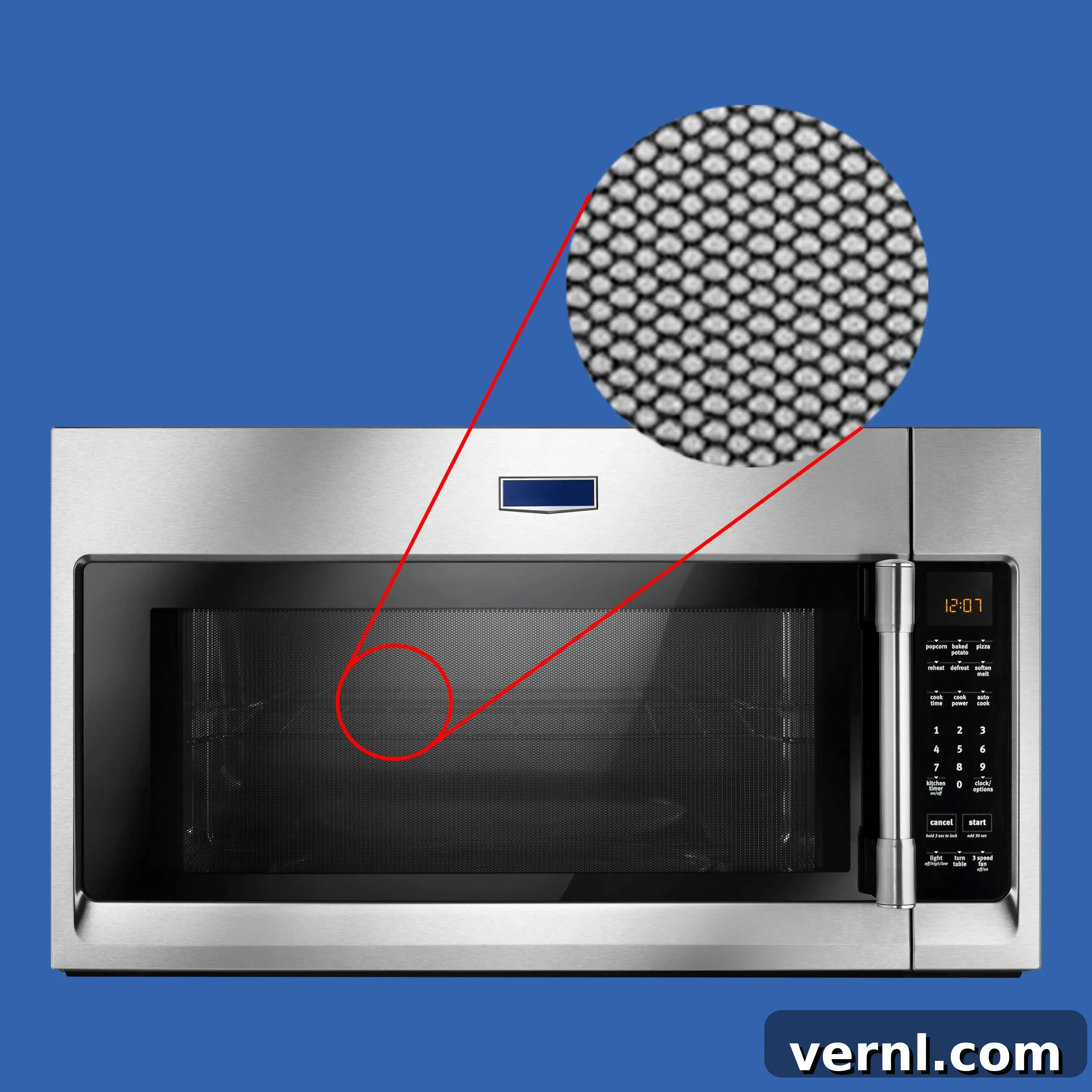
Decoding the Dots: Unveiling the Mystery of Your Microwave Door
We all rely on certain kitchen appliances daily, often without giving a second thought to their intricate designs. Among these essential tools are the toaster oven and, of course, the ubiquitous microwave. But have you ever paused and wondered about those seemingly random black dots adorning your microwave’s door? If so, you’re certainly not alone. These dots aren’t merely decorative; they serve a crucial, functional purpose that contributes to both the appliance’s efficiency and your safety.
To shed light on this intriguing feature, we consulted with a seasoned home expert who provided valuable insights into the role of these black dots and other important details you should be aware of regarding your microwave.
The Multifaceted Role of Black Dots on Your Microwave Door
The black dots meticulously placed on a microwave door serve a dual purpose, encompassing design considerations, functional requirements, and, most importantly, safety protocols. Let’s delve deeper into each of these aspects:
Preventing Microwave Leakage: A Safety Imperative
The primary function of the black dots is to act as a critical safety mechanism, preventing harmful microwaves from escaping the appliance’s cavity. This is achieved through a clever application of physics: microwaves, being a form of electromagnetic radiation, cannot readily penetrate metal barriers. Hence, the microwave’s internal structure is encased in a metal enclosure on all sides to contain the radiation.
“The wavelength of a microwave is significantly larger than the spacing between the dots on the door’s screen, effectively preventing the microwaves from passing through,” explains Thomas Borcherding, owner and lead designer at Homestar Design Remodel. “This containment ensures that the energy is directed towards heating the food inside, rather than posing a potential risk to the user.”
To elaborate further, microwaves typically operate at a wavelength of approximately 12 centimeters. This wavelength is too large to navigate through the fine grid formed by the black dots, causing the microwaves to be reflected back into the cooking chamber. Conversely, visible light, possessing a much smaller wavelength, can easily pass through the grid, allowing you to monitor your food’s progress during the heating process.
Enabling Visibility: Keeping an Eye on Your Culinary Creations
Beyond safety, the black dots also play a crucial role in allowing you to observe your food as it cooks. Because the dots are smaller than the wavelength of microwaves, they effectively contain the radiation while simultaneously permitting visible light to pass through. This seemingly simple feature provides invaluable insight into the cooking process, enabling you to prevent burning, anticipate potential explosions, and take timely action to ensure your food is cooked to perfection.
Imagine trying to cook a bag of popcorn without being able to see inside the microwave. The ability to monitor the popping process through the dotted screen is essential for preventing burnt popcorn and potential messes. Similarly, observing the bubbling of a sauce or the melting of cheese allows you to adjust cooking times and prevent overcooking or splattering.
Do All Microwaves Incorporate the Black Dot Design?
The answer is a resounding yes. The presence of black dots on the microwave door is not merely a design choice; it’s a fundamental safety requirement that applies to all microwave ovens. As previously mentioned, the metal mesh incorporating these dots ensures that radiation remains safely contained within the appliance while simultaneously affording interior visibility.
According to Borcherding, “The black dots on a microwave significantly reduce the risk of thermal burns that could occur if microwaves were to escape and a person were standing nearby. This safety feature is paramount in protecting users from potential harm.”
It’s also worth noting that this safety principle extends beyond microwave ovens. Many conventional ovens also feature similar dotted screens on their doors, albeit for slightly different reasons. In conventional ovens, these dots primarily serve to enhance insulation and protect the door from heat damage caused by extremely high temperatures.
The Longevity of Black Dots: Do They Wear Off Over Time?
While the black dots on a microwave are designed for durability, they are not impervious to damage. According to Borcherding, the dots can, in rare cases, become damaged over time, particularly due to improper use or accidental impact. If you notice any signs of damage to the dots or the surrounding mesh, it’s crucial to replace the microwave door (or the entire unit) promptly to ensure your safety.
However, before jumping to conclusions and purchasing a new microwave, it’s essential to thoroughly inspect the door’s surface. In many instances, what appears to be damage to the black dots is simply a buildup of leftover food residue that has hardened onto the screen. In such cases, a thorough cleaning with a suitable cleaning agent can restore the door’s functionality and appearance.
To clean your microwave door effectively, try using a mixture of warm water and dish soap. Apply the solution to the door’s surface, let it sit for a few minutes to soften the grime, and then scrub gently with a non-abrasive sponge or cloth. Rinse thoroughly with clean water and dry with a soft towel.
Regular cleaning not only improves the appearance of your microwave but also helps to maintain its optimal performance and safety. By removing food residue and preventing it from hardening, you can extend the lifespan of your appliance and ensure that the black dots continue to perform their crucial safety function effectively.
Maintaining Microwave Safety: Essential Tips
Beyond understanding the purpose of the black dots, there are several other essential safety precautions you should take to ensure the safe and efficient operation of your microwave:
- Never operate the microwave if the door is damaged or doesn’t close properly. A damaged door can allow microwaves to escape, posing a potential health hazard.
- Use microwave-safe containers only. Certain materials, such as metal and some plastics, can spark or melt in the microwave, causing damage and potential harm.
- Avoid overheating liquids. Liquids can sometimes become superheated in the microwave, meaning they can reach temperatures above their boiling point without actually boiling. This can cause them to erupt violently when disturbed.
- Do not use the microwave to dry clothes or other non-food items. This can be a fire hazard.
- Clean the microwave regularly. Food splatters and spills can absorb microwaves and cause uneven heating.
By following these simple safety guidelines and understanding the crucial role of the black dots on your microwave door, you can ensure that your microwave remains a safe and efficient tool for preparing delicious meals for years to come.
About the Expert
- Thomas Borcherding, owner and lead designer at Homestar Design Remodel.
Sources
- Maytag: Parts of a Microwave: Microwave Parts Diagram
- Tasting Table: The Reason Your Microwave Door Has A Mesh Grating