
Mastering Tree Trimming: Essential Techniques for Healthier Trees and Safer Homes
Tree trimming is an indispensable aspect of maintaining a healthy and aesthetically pleasing landscape. Beyond merely enhancing curb appeal, proper pruning plays a critical role in ensuring the safety of your property, preventing the spread of tree diseases, and promoting vigorous, balanced growth. While certain complex tasks undeniably require the specialized expertise of professional arborists, many common tree maintenance challenges, such as safely removing an inconvenient branch just out of reach, can be effectively tackled with simple yet ingenious do-it-yourself (DIY) solutions. This comprehensive guide will delve into effective tree trimming techniques, highlighting both clever tricks for challenging situations and fundamental safety practices that every homeowner should embrace.
The Ingenious Rope Saw Trick for Out-of-Reach Branches
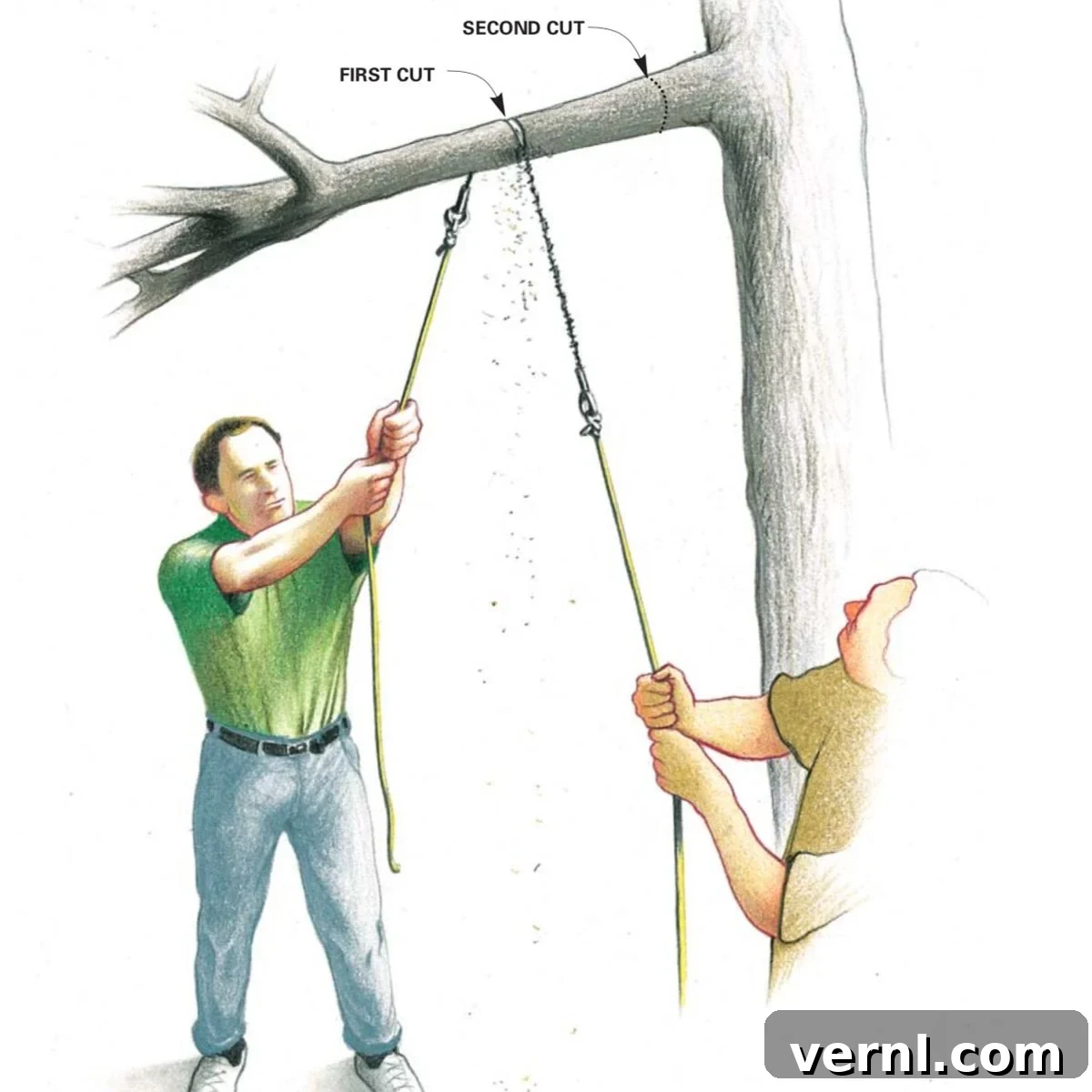
Imagine a scenario where a stubborn branch hangs just a little too high for your standard pole pruner, or is situated in such an awkward position that setting up a ladder would be precarious, if not outright dangerous. This is precisely where a simple, yet remarkably effective, trick involving a camping saw and two lengths of rope comes into play. This method empowers you to safely remove medium-sized limbs without the need for risky climbing or significant investment in expensive hydraulic equipment, making it an ideal solution for branches that are neither excessively heavy nor dangerously close to power lines.
What You’ll Need for This Trick:
- Camping Saw (or Flexible Chain Saw): Look for a flexible camping saw, often marketed as a survival saw or pocket chainsaw. These tools are designed with bi-directional cutting teeth, allowing them to cut on both the push and pull strokes, and can be surprisingly efficient. Ensure your chosen saw is sharp, clean, and in excellent working condition for optimal performance and safety.
- Sturdy Ropes (Two): You will require two separate lengths of strong, durable rope. High-quality paracord or a similar synthetic rope known for its high tensile strength and resistance to fraying is highly recommended. Each rope should be long enough to comfortably reach from the ground, pass over the targeted branch, and extend back down to the ground with ample slack for a firm grip and sawing motion. A length of approximately 20-30 feet per rope is a good starting point, though this may vary depending on the height and spread of the branch.
- Essential Safety Gear: Prioritize your personal safety. Always wear safety glasses or goggles to protect your eyes from flying wood chips, sawdust, and any falling debris. Robust work gloves are also crucial to prevent rope burn, enhance your grip, and protect your hands from splinters. If working directly beneath the branch, a hard hat is an advisable addition to safeguard your head.
- Clear Work Area: Before commencing any cutting, meticulously ensure that the entire area directly beneath and immediately surrounding the target branch is completely clear of people, children, pets, and any valuable objects or structures that could be damaged by a falling limb.
Step-by-Step Guide to Employing the Rope Saw Method:
- Prepare Your Saw: Securely attach one end of each rope to opposite ends of your camping saw. Employ strong, reliable knots such as a double overhand knot or a sturdy hitch to prevent any slippage during the sawing action. Confirm that the saw’s cutting teeth are oriented correctly to engage the branch effectively when you begin pulling the ropes.
- Position the Saw: Carefully throw one of the ropes over the target limb. The objective is to maneuver the saw so it rests on top of the branch, with both ropes hanging freely down on either side, accessible from the ground. This step might require a few attempts; if you’re struggling with accuracy, tying a small, soft weight (like a tennis ball or a small sandbag) to the end of the rope can significantly assist in throwing it over the branch.
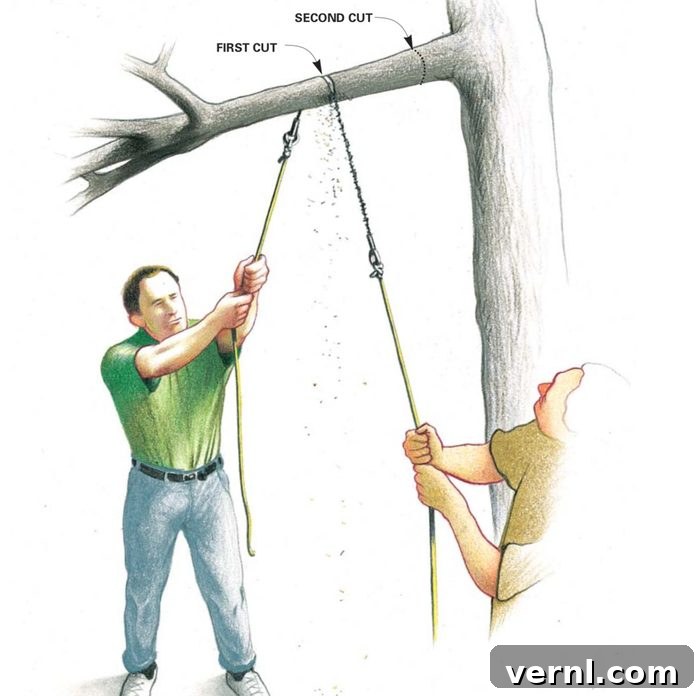
- Make the First Cut (Undercut): Once the saw is draped over the branch in the desired position, carefully adjust it to be approximately 6-12 inches away from the main trunk or the parent branch from which it originates. Begin the sawing motion by alternately pulling one rope, then the other, in a controlled, rhythmic manner. The saw will move back and forth, gradually cutting into the underside of the branch. This initial cut, known as an “undercut,” is paramount. Its purpose is to prevent the branch from tearing bark down the main trunk as it eventually breaks free, a damaging occurrence often referred to as “bark stripping” or “chaining.”
- Make the Second Cut (Overcut): After your undercut has penetrated about one-third to halfway through the branch’s diameter, reposition the saw further out on the branch, ideally about 1-2 feet beyond your initial undercut, towards the branch’s tip. Now, commence making a second cut from the top of the branch, sawing downwards using the same alternating rope-pulling motion. This second cut is the one that will ultimately sever the branch. The pre-made undercut will effectively absorb the weight and tension of the branch as it falls, preventing it from splitting or stripping bark from the parent tree.
- Control the Fall and Retrieve: As the branch nears complete severance, be fully prepared for it to fall. Maintain a safe distance and ensure that absolutely no one is within the projected drop zone. Once the branch has been successfully cut, carefully retrieve your saw and ropes, taking care not to snag them.
This ingenious method is particularly effective for branches that are just out of reach for standard hand tools but not large enough to necessitate the use of a chainsaw, offering a safer and more accessible alternative to climbing ladders with sharp tools.
Why Proper Tree Trimming Matters for Your Landscape
Beyond simply removing inconvenient branches, regular and correctly executed tree trimming offers a profound array of benefits for both the health of your trees and the overall well-being of your property:
- Enhanced Tree Health and Vigor: The removal of dead, diseased, or dying branches is crucial for preventing the spread of pathogens and pest infestations throughout the tree. This strategic pruning allows the tree to reallocate its valuable energy and resources towards healthy, productive growth. Additionally, proper trimming can significantly improve air circulation within the tree’s canopy, further reducing the risk of fungal diseases.
- Significantly Improved Safety: Overhanging dead branches, weak limbs, or structurally compromised sections of a tree pose a substantial hazard, especially during periods of high winds or severe storms. Proactive trimming of these hazardous elements drastically reduces the risk of branches falling onto people, damaging structures like your home or garage, or interfering with vital power lines.
- Boosted Aesthetic Appeal: Strategic shaping of trees, removing crossing or rubbing branches, and thinning overly dense canopies can greatly enhance their natural form, promoting a more balanced and attractive appearance. This contributes significantly to the overall beauty and visual harmony of your landscape.
- Increased Fruit Production: For those with fruit-bearing trees, targeted and timely pruning can stimulate more abundant and higher-quality fruit yields. It optimizes sunlight exposure and nutrient distribution, leading to healthier and more productive fruit.
- Improved Sunlight and Views: Thoughtful thinning of a tree’s canopy can allow more precious sunlight to penetrate to underlying plants in your garden, fostering their growth. It can also significantly improve views from your home, removing obstructions and opening up your outdoor vista.
Essential Safety Precautions for Every Tree Trimming Project
Safety must always be your absolute highest priority when undertaking any work involving trees, especially when sharp tools and elevated positions are involved. Neglecting proper safety protocols can lead to severe personal injuries, extensive property damage, or even fatalities.
- Stay Clear of Electrical Lines: This warning cannot be overemphasized. NEVER, under any circumstances, attempt to trim branches that are near electrical power lines. Even seemingly small contact between a branch and a live power line can result in electrocution. Always assume that all power lines are live and extremely dangerous. If any branch is within a 10-foot radius of power lines, or if you have even the slightest doubt about the proximity, immediately contact your local power company or a certified professional arborist. They have the training and specialized equipment to handle such hazardous situations safely.
- Wear Appropriate Personal Protective Equipment (PPE):
- Safety Glasses/Goggles: Absolutely mandatory to shield your eyes from wood chips, sawdust, snapping twigs, and any other falling debris.
- Heavy-Duty Gloves: Protect your hands from blisters, cuts, splinters, and provide a much better, slip-resistant grip on tools and ropes.
- Hard Hat: Essential for protecting your head from falling branches, tools, or other unforeseen impacts.
- Sturdy Footwear: Opt for closed-toe, robust shoes or boots with good traction to provide stability and protect your feet from falling objects or dropped tools.
- Use the Correct Tools for the Job: Ensure that all your tree trimming tools are sharp, meticulously clean, and in excellent working order. Dull tools require excessive force, increasing the likelihood of slips, strains, and accidents. Using the right tool for the specific branch size and type of cut is also paramount.
- Maintain Stable Footing: If using a ladder, ensure it is placed on a firm, level, and stable surface. Secure the ladder properly to prevent it from slipping or tipping. Critically, avoid overreaching; always reposition the ladder as needed to work comfortably and safely within your reach. Never cut a branch that is supporting your weight or balance.
- Clear the Work Area Thoroughly: Before making any cuts, meticulously inspect and clear the entire area directly beneath the branch. Ensure it’s free of people, children, pets, vehicles, or any valuable objects. Always plan the anticipated direction of the branch’s fall.
- Consider Working with a Partner: Especially for larger or more challenging trimming tasks, having another person to spot for you, hand you tools, warn others about falling branches, or simply observe for safety issues can significantly improve the overall safety and efficiency of the operation.
- Assess the Tree and Environmental Conditions: Before starting, carefully examine the tree for any signs of decay, rot, insect infestations, or unusual stress points that could compromise its structural integrity. Avoid working in wet conditions, which can make branches slippery and tools harder to handle. Never attempt tree trimming in strong winds, heavy rain, or during lightning storms.
- Know Your Limits: This is a crucial piece of advice. If a particular trimming job feels too dangerous, appears too complex, or is simply beyond your current skill level or available equipment, do not hesitate to call a certified arborist. This applies particularly to large branches, trees located close to structures, or those requiring any form of climbing.
Common Tree Trimming Tools Beyond the Rope Saw
While the ingenious rope saw trick excels in specific hard-to-reach scenarios, a comprehensive toolkit for effective tree care should encompass several other essential implements designed for various tasks and branch sizes:
- Hand Pruners (Secateurs): These are handheld tools ideal for making precise cuts on small branches, typically up to ¾ inch in diameter. Bypass pruners create clean, scissor-like cuts best for live wood, while anvil pruners feature a straight blade that cuts against a flat anvil, better suited for dead wood.
- Loppers: Designed for branches ranging from ¾ inch up to 1.5 to 2 inches in diameter, loppers provide significantly more leverage than hand pruners due to their longer handles, making cuts on thicker branches easier.
- Pruning Saws: For branches too large for loppers but too small to warrant a chainsaw, pruning saws are indispensable. They come in various forms, including curved-blade hand saws for ergonomic cutting and bow saws for larger, straighter cuts.
- Pole Pruners: These tools extend your reach significantly, typically ranging from 6 to 16 feet, allowing you to trim smaller branches from the ground without the need for a ladder. Most pole pruners combine a sharp cutting blade operated by a pull cord with a small saw for thicker sections.
- Chainsaws: Reserved for cutting large branches, felling trees, and extensive tree removal, chainsaws are powerful and inherently dangerous tools. Their use demands extensive safety training, protective gear (including chainsaw chaps, a helmet with a face shield, and ear protection), and a high level of experience. They should only be operated by individuals who are well-versed in their safe handling.
Avoiding Common Tree Trimming Mistakes for Healthier Trees
Improper or poorly executed pruning can inflict more harm than good on your trees, potentially weakening them, increasing their susceptibility to disease, and detracting from their natural beauty. Here are some of the most common pitfalls to actively avoid:
- Topping Trees: This highly damaging practice involves the severe removal of large upper branches, leaving behind unsightly stubs. Topping severely stresses the tree, encourages the rapid growth of weak, upright shoots (often called “water sprouts”), and creates large wounds that are slow to heal, inviting decay and insect infestation. It also ruins the natural form of the tree.
- Over-Pruning: Removing too much foliage from a tree in a single trimming session can shock it, drastically reduce its ability to produce food through photosynthesis, and make it highly vulnerable to pests, diseases, and environmental stress. As a general guideline, aim to remove no more than 25% of the tree’s entire canopy within a single growing season.
- Leaving Stubs: Cuts made too far from the branch collar—the slightly swollen area where a branch attaches to the main trunk or a larger limb—leave behind stubs. These stubs don’t heal properly and act as open invitations for pests, diseases, and internal decay, compromising the tree’s long-term health.
- Making Flush Cuts: Conversely, cutting too close to the trunk, inside the branch collar, removes vital cambial tissue that is essential for proper wound closure and healing. This creates a larger, more severe wound that takes much longer to seal over, making the tree more vulnerable to infection and decay.
- Pruning at the Wrong Time: While minor removal of deadwood can generally be performed at any time of year, major structural pruning should ideally occur during the tree’s dormant season (typically late fall to early spring) for most deciduous trees. This timing minimizes stress to the tree, reduces the risk of disease transmission, and allows for better visibility of the tree’s structure. Be aware that some trees, such as maples and birches, may “bleed” sap if pruned in late winter or early spring, which is messy but generally not harmful to the tree’s health.
When to Call a Professional Arborist for Tree Care
Despite the effectiveness and satisfaction of DIY methods for minor tree maintenance tasks, there are numerous situations where enlisting the services of a certified arborist is not merely recommended, but absolutely crucial for both safety and the long-term health of your trees. Arborists are highly trained professionals equipped with specialized knowledge, tools, and experience to handle complex and hazardous tree care scenarios.
- Large or Hazardous Trees: Any tree that requires climbing, involves the use of a chainsaw above shoulder height, or has branches larger than your arm’s thickness, warrants professional attention. Attempting such tasks without proper training and equipment is extremely dangerous.
- Proximity to Power Lines or Structures: If the tree or any of its branches are located near utility lines, your home, garage, fences, or other valuable property, the risk of significant damage or severe injury is simply too high for a DIY approach. Professionals have the expertise to safely navigate these complex situations.
- Diseased or Significantly Damaged Trees: If you suspect a tree has a severe disease, a widespread pest infestation, or significant structural damage (e.g., large cracks, extensive decay), an arborist can accurately diagnose the issue and recommend appropriate treatment or safely facilitate the tree’s removal if necessary.
- Trees Damaged by Storms: Trees that have sustained damage from storms often present unpredictable stresses and hidden dangers, making them exceptionally hazardous to work on. Professionals are trained and equipped to safely assess and mitigate these complex scenarios.
- Lack of Experience, Tools, or Comfort: If you do not possess the appropriate tools, the necessary knowledge, or simply feel uncomfortable and unsafe performing a particular tree care job, it is always the wisest and safest decision to defer to an expert.
Conclusion: Healthy Trees Foster Safe and Beautiful Living
Diligent and responsible maintenance of the trees on your property is a highly rewarding endeavor that significantly contributes to their longevity, enhances the overall beauty of your landscape, and critically, ensures the safety of your home and family. While clever, accessible tricks like the rope saw method empower homeowners to confidently tackle certain minor challenges independently, it is imperative to remember that truly responsible tree care is a thoughtful blend of informed DIY knowledge and the discerning awareness of when to enlist professional, expert assistance. Always prioritize safety above all else, diligently educate yourself on proper pruning techniques, and invest wisely in the right tools for the job. By consistently adhering to these comprehensive guidelines, you can ensure that your trees remain vibrant, healthy, structurally sound, and a continuous source of enjoyment and aesthetic pleasure for many years to come.
Further Reading: Cut Down a Tree Safely